Clarendon Lectures in English - Böcker
Visar alla böcker i serien Clarendon Lectures in English. Handla med fri frakt och snabb leverans.
20 produkter
20 produkter
658 kr
Skickas inom 5-8 vardagar
Most people most of the time want to live for ever. But there is another truth: the longing for oblivion. With pain, wit, and humour, the art of Samuel Beckett variously embodies this truth, this ancient enduring belief that it is better to be dead than alive, best of all never to have been born. Beckett is the supreme writer of an age which has created new possibilities and impossibilities even in the matter of death and its definition, an age of transplants and life-support.But how does a writer give life to dismay at life itself, to the not-simply-unwelcome encroachments of death? After all, it is for the life, the vitality of their language that we value writers. As a young man, Beckett himself praised Joyce's words. `They are alive'.Beckett became himself as a writer when he realized in his very words a principle of death. In clichés, which are dead but won't lie down. In a dead language and its memento mori. In words which mean their own opposites, cleaving and cleaving. In the self-stultifying or even suicidal turn dubbed the Irish bull. In what Beckett called a syntax of weakness.This book explores the relation between deep convictions about life or death and the incarnations which these take in the exact turns of a great writer, the realizations of an Irishman who wrote in English and in French, two languages with different apprehensions of life and of death.
701 kr
Skickas
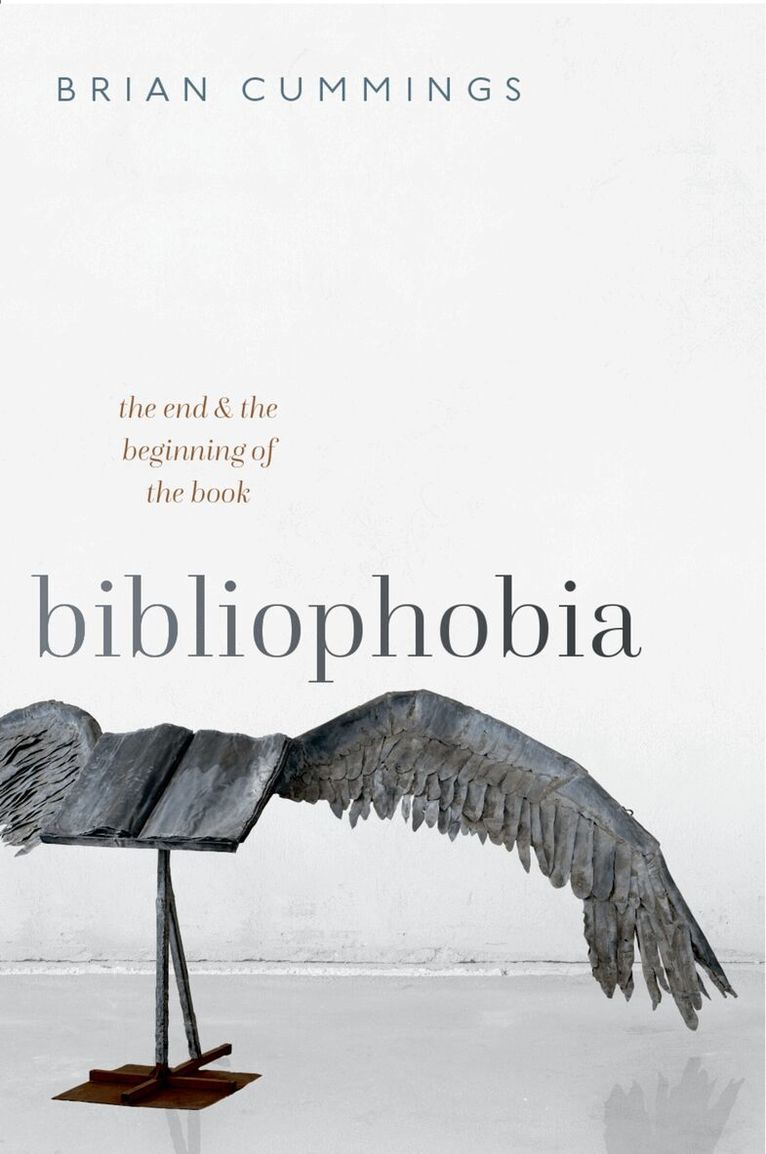
Bibliophobia is a book about material books, how they are cared for, and how they are damaged, throughout the 5000-year history of writing from Sumeria to the smartphone. Its starting point is the contemporary idea of 'the death of the book' implied by the replacement of physical books by digital media, with accompanying twenty-first-century experiences of paranoia and literary apocalypse. It traces a twin fear of omniscience and oblivion back to the origins of writing in ancient Babylon and Egypt, then forwards to the age of Google. It uncovers bibliophobia from the first Chinese emperor to Nazi Germany, alongside parallel stories of bibliomania and bibliolatry in world religions and literatures. Books imply cognitive content embodied in physical form, in which the body cooperates with the brain. At its heart this relationship of body and mind, or letter and spirit, always retains a mystery. Religions are founded on holy books, which are also sites of transgression, so that writing is simultaneously sacred and profane. In secular societies these complex feelings are transferred to concepts of ideology and toleration. In the ambiguous future of the internet, digital immateriality threatens human equilibrium once again.Bibliophobia is a global history, covering six continents and seven religions, describing written examples from each of the last thirty centuries (and several earlier). It discusses topics such as the origins of different kinds of human script; the development of textual media such as scrolls, codices, printed books, and artificial intelligence; the collection and destruction of libraries; the use of books as holy relics, talismans, or shrines; and the place of literacy in the history of slavery, heresy, blasphemy, censorship, and persecution. It proposes a theory of writing, how it relates to speech, images, and information, or to concepts of mimesis, personhood, and politics. Originating as the Clarendon Lectures in the Faculty of English at the University of Oxford, the methods of Bibliophobia range across book history; comparative religion; philosophy from Plato to Hegel and Freud; and a range of global literature from ancient to contemporary. Richly illustrated with textual forms, material objects, and art works, its inspiration is the power that books always (and continue to) have in the emotional, spiritual, bodily, and imaginative lives of readers.
1 079 kr
Skickas inom 5-8 vardagar
States of Fantasy is Jacqueline Rose's much-praised contribution to the current controversy over the limits of English Studies. Arguing for an expansion of the new boundaries of `English', and for the importance of psychoanalysis to the understanding of our literary and historical lives, Rose looks at Israel/Palestine and South Africa, and their place in the English literary and cultural imagination.Jacqueline Rose's fundamental question is the place of fantasy in public and private identities, and in these pages she pushes her investigation further into what might at first glance seem unlikely places. In September 1993, Israel and the PLO signed their first peace treaty; in April 1994, South Africa held its first non-racial democratic elections. States of Fantasy persuasively puts the case that nowhere demonstrates more clearly than these two arenas of historic conflict the need for a psychoanalytically informed understanding of historical process. In so doing, this book shows how the place of England and its writing in those histories emphasize the unbreakable line that runs between literature and politics. Stretching the limits of the `canon' debate, the author offers the strongest rebuttal to critics who try to sever the links between the study of literature and culture and the making and unmaking of the modern world. The central part of this wide-ranging and lively study was originally delivered as the 1994 Clarendon Lectures in Oxford.
Penpoints, Gunpoints, and Dreams
Towards a Critical Theory of the Arts and the State in Africa
Inbunden, Engelska, 1998
1 559 kr
Skickas inom 5-8 vardagar
Penpoints, Gunpoints, and Dreams explores the relationship between art and political power in society, taking as its starting point the experience of writers in contemporary Africa, where they are often seen as the enemy of the postcolonial state. This study, in turn, raises the wider issues of the relationship between the state of art and the art of the state, particularly in their struggle for the control of performance space in territorial, temporal, social, and even psychic contexts. Kenyan writer, Ngugi wa Thiong'o, calls for the alliance of art and people power, freedom and dignity against the encroachments of modern states. Art, he argues, needs to be active, engaged, insistent on being what it has always been, the embodiment of dreams for a truly human world.
Del 1997 - Clarendon Lectures in English
Psychoanalysis and the Scene of Reading
Inbunden, Engelska, 1999
3 125 kr
Skickas inom 7-10 vardagar
Psychoanalysis and the Scene of Reading explores some of the ways in which we think about reading and the effects reading has on us. Whether considered as a process, a representation, or a cultural activity, reading involves the idea about inner and outer, absence and boundaries, and the transmission of thoughts and feelings between one person or historical period and another. These ideas provide the basis for much of our thinking about subjectivity and receive their fullest elaboration in the twentieth-century discourse of psychoanalysis. Drawing on the rich tradition of British object relations, Psychoanalysis and the Scene of Reading is a literary critics approach to the scene of reading understood from a pyschoanalytic perspective. Linked essays on books and interiority, memory and landscape, trauma and literary transmission provide a subtle account of writing by Woolf, Austen, Rousseau, and Romantic women, as well as fictional accounts of slavery and colonialism, and Holocaust memoirs.
1 320 kr
Skickas inom 5-8 vardagar
This book traces the emergence of a self-consciously national tradition in Irish writing from the era of the French Revolution and, specifically, from Edmund Burke's counter-revolutionary writings. From Gerald Griffin's The Collegians, to Bram Stoker's Dracula, from James Hardiman's Irish Minstrelsy to Synge, Yeats, and Joyce, Irish writing is dominated by a number of inherited issuesthose of national character, of conflict between discipline and excess, of division between the languages of economics and sensibility, of modernity and backwardness. Almost all the activities of Irish print cultureits novels, songs, historical analyses, typefaces, poemstake place within the limits imposed by this complex inheritance. In the process, Ireland created a national literature that was also a colonial one. This was and is an achievement that is only now being fully recognised.
548 kr
Skickas inom 5-8 vardagar
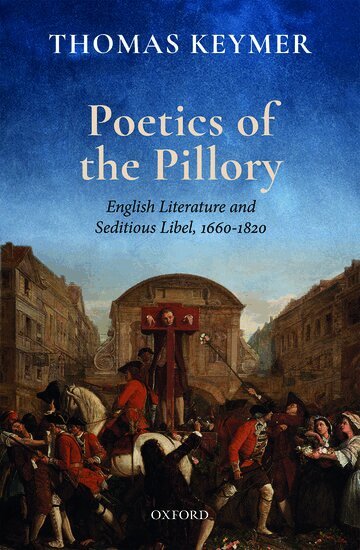
On the lapse of the Licensing Act in 1695, Thomas Macaulay wrote in his History of England, 'English literature was emancipated, and emancipated for ever, from the control of the government'. It's certainly true that the system of prior restraint enshrined in this Restoration measure was now at an end, at least for print. Yet the same cannot be said of government control, which came to operate instead by means of post-publication retribution, not pre-publication licensing, notably for the common-law offence of seditious libel. For many of the authors affected, from Defoe to Cobbett, this new regime was a greater constraint on expression than the old, not least for its alarming unpredictability, and for the spectacular punishment--the pillory--that was sometimes entailed. Yet we may also see the constraint as an energizing force. Throughout the eighteenth century and into the Romantic period, writers developed and refined ingenious techniques for communicating dissident or otherwise contentious meanings while rendering the meanings deniable. As a work of both history and criticism, this book traces the rise and fall of seditious libel prosecution, and with it the theatre of the pillory, while arguing that the period's characteristic forms of literary complexity--ambiguity, ellipsis, indirection, irony--may be traced to the persistence of censorship in the post-licensing world. The argument proceeds through case studies of major poets and prose writers including Dryden, Defoe, Pope, Fielding, Johnson, and Southey, and also calls attention to numerous little-known satires and libels across the extended period.
686 kr
Skickas inom 7-10 vardagar
We live in a psychological age. Contemporary culture is saturated with psychological concepts and ideas, from anxiety to narcissism to trauma. While it might seem that concern over psychological conditions and challenges is intrinsically oriented toward moral questions about what promotes individual and collective well-being, it is striking that from the advent of Freudian psychoanalysis in the late nineteenth-century up to recent findings in cognitive science, psychology has posed a continuing challenge to traditional concepts of moral deliberation, judgment, and action, all core components of moral philosophy and central to understandings of character and tragedy in literature. Psyche and Ethos: Moral Life After Psychology explores the nature of psychology's consequential effects on our understanding of the moral life. Using a range of examples from literature and literary criticism alongside discussions of psychological literature from psychoanalysis to recent cognitive science and social psychology, this study argues for a renewed look at the persistence of moral orientations toward life and the values of integrity, fidelity, and repair that they privilege. Writings by Shakespeare, Henry James, and George Eliot, and the powerful contributions of British object relations theorists in the post-war period, help to draw out the fundamental ways we experience moral time, the forms of elusive duration that constitute loss, grief, regret, and the desire for amends. Acknowledging the power and necessity of psychological frameworks, Psyche and Ethos aims to restore moral understanding and moral experience to a more central place in our understanding of psychic life and the literary tradition.
738 kr
Skickas inom 5-8 vardagar
This book, based on the Clarendon Lectures for 2016, is about the use made by poets and novelists of street songs and cries. Karlin begins with the London street-vendor's cry of 'Cherry-ripe!', as it occurs in poems from the sixteenth to the twentieth century: the 'Cries of London' (and Paris) exemplify the fascination of this urban art to writers of every period. Focusing on nineteenth and early twentieth century writers, the book traces the theme in works by William Wordsworth, Elizabeth Barrett Browning, Robert Browning, Walt Whitman, George Gissing, James Joyce, Virginia Woolf, and Marcel Proust. As well as street-cries, these writers incorporate ballads, folk songs, religious and political songs, and songs of their own invention into crucial scenes, and the singers themselves range from a one-legged beggar in Dublin to a famous painter in fifteenth-century Florence. The book concludes with the beautiful and unlikely 'song' of a knife-grinder's wheel. Throughout the book Karlin emphasizes the rich complexity of his subject. The street singer may be figured as an urban Orpheus, enchanting the crowd and possessed of magical powers of healing and redemption; but the barbaric din of the modern city is never far away, and the poet who identifies with Orpheus may also dread his fate. And the fugitive, transient nature of song offers writers a challenge to their more structured art. Overheard in fragments, teasing, ungraspable, the street song may be 'captured' by a literary work but is never, finally, tamed.
421 kr
Skickas inom 7-10 vardagar
This book, based on the Clarendon Lectures in English for 2017, argues that the literature of the English Reformation marks a turning point in Western thinking about literature and literariness. But instead of arguing that the Reformation fostered English literature, as scholars have often done, Victoria Kahn claims that literature helped undo the Reformation, with implications for both poetry and belief. Ultimately, literature in the Reformation is one vehicle by which religious belief was itself transformed into a human artifact, whether we understand this as a poetic artifact or a mental fiction. This transformation in turn helped produce the eighteenth-century discipline of aesthetics, with its emphasis on our experience of non-cognitive pleasure in the work of art, and the modern formalist definition of literature, according to which--in the words of one critic--'literature solves no problems and saves no souls.' This modern definition of literature, in short, has a history, this history is intertwined with the problem of belief, and by returning to the fraught years of the late sixteenth and seventeenth century in England, we can come to a new understanding of how the trouble with literature has shaped our discipline. The first lecture contrasts modern and early modern understandings of literature and literariness. The second and third lectures focus on Thomas Hobbes and John Milton. The fourth lecture treats the work of Immanuel Kant, Søren Kierkegaard, and J.M. Coetzee.
337 kr
Skickas inom 5-8 vardagar
Forensic Shakespeare illustrates Shakespeare's creative processes by revealing the intellectual materials out of which some of his most famous works were composed. Focusing on the narrative poem Lucrece, on four of his late Elizabethan plays (Romeo and Juliet, The Merchant of Venice, Julius Caesar and Hamlet) and on three early Jacobean dramas, (Othello, Measure for Measure and All's Well That Ends Well), Quentin Skinner argues that major speeches, and sometimes sequences of scenes, are crafted according to a set of rhetorical precepts about how to develop a persuasive judicial case, either in accusation or defence. Some of these works have traditionally been grouped together as 'problem plays', but here Skinner offers a different explanation for their frequent similarities of tone. There have been many studies of Shakespeare's rhetoric, but they have generally concentrated on his wordplay and use of figures and tropes. By contrast, this study concentrates on Shakespeare's use of judicial rhetoric as a method of argument. By approaching the plays from this perspective, Skinner is able to account for some distinctive features of Shakespeare's vocabulary, and also help to explain why certain scenes follow a recurrent pattern and arrangement. More broadly, he is able to illustrate the extent of Shakespeare's engagement with an entire tradition of classical and Renaissance humanist thought.
384 kr
Skickas inom 5-8 vardagar
How is poetry a living art? This is the question at the heart of Poetry's Nature. Although it is common to speak of "nature poetry," Stewart contends that the essential nature of poetry is bound up with the natural world: by looking to nature, we can better understand poetry and, in turn, our own situation within nature. The study draws on contemporary physics and philosophy to argue that all beings, and all matter, are enmeshed in relations to one another, and that such processural relations can help us to think about poetry as an ever-arriving, ever unfinished art. Based on Stewart's 2023 Clarendon Lectures in English at the University of Oxford, the volume's four chapters explore four paradigms that illuminate poetry's relation to other natural phenomena: the ways poems draw on birdsong to veer between language and sound, and hence between semantic density and meaninglessness; the experience of seasonality as a paradigm for the lyric's recursive use of time; the flows and forms of water as an inspiration for the enactment and depiction of motion and rest in poems; and, finally, the vast domain of the imperceptible as a resource for the imagination. Her examples range from medieval lyrics to Modernism. Poems are events that are felt in time rather than being merely cognized; rewarding of our attention, like the natural world; experienced, like the weather, in our bodies. By reframing poetry in its relation to nature, Poetry's Nature hopes to reframe our relation to the world in which we live, a task that is of ever greater urgency.
542 kr
Skickas
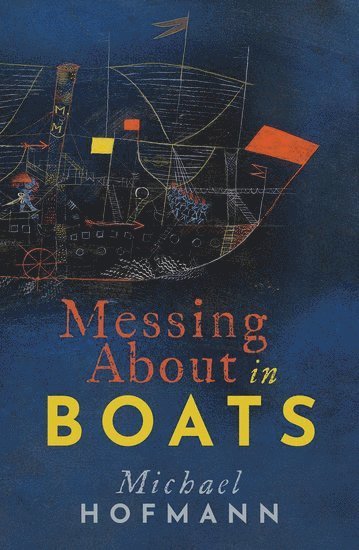
Written by the eminent poet Michael Hofmann, this approachable and companionable book offers readings of four poems on the subject of boats.Based on Michael Hofmann's Clarendon lectures, this volume offers readings of four poems in German, French, Italian, and English, by Rainer Maria Rilke, Arthur Rimbaud, Eugenio Montale, and Karen Solie. All four poems are on the subject of boats: 'Emigrant Ship', the 'Bateau Ivre', 'Boats on the Marne', and 'The World'. The volume suggests an affinity between boats and poems, offers a partial lineage of boats in poems, and pursues four variant destinies: the boat that stays in port, the boat that gives itself to the world, the boat that is washed away down the river, and the one that goes manically and hubristically on forever.The volume retains the style of lectures and has an improvisational character, with the same fire and detail as the things it is about. It is written with a sense of fun, of revelation, and in a spirit of respect and attention.
309 kr
Skickas inom 5-8 vardagar
Bibliophobia is a book about material books, how they are cared for, and how they are damaged, throughout the 5000-year history of writing from Sumeria to the smartphone. Its starting point is the contemporary idea of 'the death of the book' implied by the replacement of physical books by digital media, with accompanying twenty first-century experiences of paranoia and literary apocalypse. It traces a twin fear of omniscience and oblivion back to the origins of writing in ancient Babylon and Egypt, then forwards to the age of Google. It uncovers bibliophobia from the first Chinese emperor to Nazi Germany, alongside parallel stories of bibliomania and bibliolatry in world religions and literatures. Books imply cognitive content embodied in physical form, in which the body cooperates with the brain. At its heart this relationship of body and mind, or letter and spirit, always retains a mystery. Religions are founded on holy books, which are also sites of transgression, so that writing is simultaneously sacred and profane. In secular societies these complex feelings are transferred to concepts of ideology and toleration. In the ambiguous future of the internet, digital immateriality threatens human equilibrium once again.Bibliophobia is a global history, covering six continents and seven religions, describing written examples from each of the last thirty centuries (and several earlier). It discusses topics such as the origins of different kinds of human script; the development of textual media such as scrolls, codices, printed books, and artificial intelligence; the collection and destruction of libraries; the use of books as holy relics, talismans, or shrines; and the place of literacy in the history of slavery, heresy, blasphemy, censorship, and persecution. It proposes a theory of writing, how it relates to speech, images, and information, or to concepts of mimesis, personhood, and politics. Originating as the Clarendon Lectures in the Faculty of English at the University of Oxford, the methods of Bibliophobia range across book history; comparative religion; philosophy from Plato to Hegel and Freud; and a range of global literature from ancient to contemporary. Richly illustrated with textual forms, material objects, and art works, its inspiration is the power that books always (and continue to) have in the emotional, spiritual, bodily, and imaginative lives of readers.
678 kr
Skickas inom 7-10 vardagar
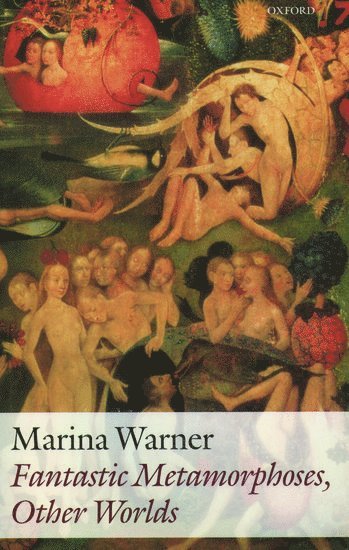
Metamorphosis is a dynamic principle of creation, vital to natural processes of generation and evolution, growth and decay, yet it also threatens personal identity if human beings are subject to a continual process of bodily transformation. Shape-shifting also belongs in the landscape of magic, witchcraft, and wonder, and enlivens classical mythology, early modern fairy tales and uncanny fictions of the nineteenth and twentieth centuries. This collection of essays, given as the Clarendon Lectures in English 2001, takes four dominant processes of metamorphosis: Mutating, Hatching, Splitting, and Doubling, and explores their metaphorical power in the evication of human personality. Marina Warner traces this story against a background of historical encounters with different cultures, especially with the Caribbean. Beginning with Ovid's great poem, The Metamorphoses, as the founding text of the metamorphic tradition, she takes us on a journey of exploration, into the fantastic art of Hieronymous Bosch, the legends of the Taino people, the life cycle of the butterfly, the myth of Leda and the Swan, the genealogy of the Zombie, the pantomime of Aladdin, the haunting of doppelgangers, the coming of photography, and the late fiction of Lewis Carroll.
868 kr
Skickas inom 7-10 vardagar
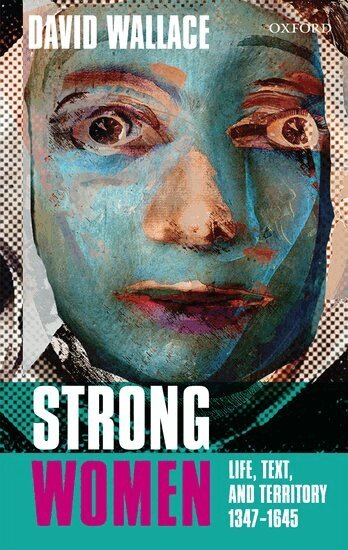
It takes a strong woman to secure bookish remembrance in future times; to see her life becoming a life. David Wallace explores the lives of four Catholic women - Dorothea of Montau (1347-1394) and Margery Kempe of Lynn (c. 1373-c. 1440); Mary Ward of Yorkshire (1585-1645) and Elizabeth Cary of Drury Lane (c. 1585-1639) and and the fate of their writings. All four shock, surprise, and court historical danger. Dorothea of Montau punishes her body and spends all day in church; eight of her nine neglected children die. Kempe, mother of fourteen, empties whole churches with a piercing cry learned at Jerusalem. Ward, living holily but un-immured, is denounced as an Amazon, a chattering hussy, an Apostolic Virago, and a galloping girl. Cary, having left her husband torturing Catholics in Dublin castle, converts to Roman Catholicism in Irish stables in London. Each of these women is mulier fortis, a strong woman: had she been otherwise, Wallace argues, her life would never have been written. The earliest texts of these lives are mostly near-contemporaneous with the women they represent, but their public reappearances have been partial and episodic, with their own complex histories.The lives of these strong women continue to be rewritten long after this premodern period. Incipient European war determines what Kempe must represent between her first discovery in 1934 and full publication in 1940. Dorothea of Montau, first promoted to counter eastern paganism, becomes a bastion against Bolshevism in the 1930s; her cult's meaning is fought out between Günter Grass and Josef Ratzinger. Cary's Catholic daughters, Benedictine nuns, must write of their mother as if she were a saint. Ward's work is not yet done: her followers, having won the right not to be enclosed, must now enter the closed spaces of Roman clerical power.
714 kr
Skickas inom 7-10 vardagar
The night can sweat with terror as beforeWe pieced our thoughts into philosophy,And planned to bring the world under a rule,Who are but weasels fighting in a hole. W.B. Yeats, 'Nineteen Hundred and Nineteen'This is a book about how poetry, seen through the instance of a single poem, seeks to make sense of a turbulent and dangerous world. Poetry must introduce order and shape where there is none, and also, in certain crucial cases, remain faithful to the disorder and shapelessness of experience. Many poems manage the first of these tasks; very few manage both. W.B. Yeats 'Nineteen Hundred and Nineteen' (written and first published in 1921) is one of them. It is a work which asks what happens when what is taken to be civilization crumbles. What apocalyptic events wait in the wings? What are history's victims (and executors) to do except mock and mourn? Successive chapters investigate the six parts of the poem, connecting them to Yeats' broader poetic practice, his interest in the occult and his changing vision of Irish nationalism; to the work of other poets (Irish, English, Russian German); and to Irish and European history between 1916 (the date of the Easter Uprising in Dublin) and 1923 (the date of the end of the Irish Civil War). Theoretical considerations of the shape and meaning of violence, both political and religious, link the chapters to each other.
524 kr
Skickas inom 3-6 vardagar
Forensic Shakespeare illustrates Shakespeare's creative processes by revealing some of the intellectual materials out of which some of his most famous works were composed. Focusing on the narrative poem Lucrece, on four of his late Elizabethan plays -- Romeo and Juliet, The Merchant of Venice, Julius Caesar and Hamlet -- and on three early Jacobean dramas, Othello, Measure for Measure and All's Well That Ends Well, Quentin Skinner argues that there are major speeches, and sometimes sequences of scenes, that are crafted according to a set of rhetorical precepts about how to develop a persuasive judicial case, either in accusation or defence. Some of these works have traditionally been grouped together as 'problem plays', but here Skinner offers a different explanation for their frequent similarities of tone. There have been many studies of Shakespeare's rhetoric, but they have generally concentrated on his wordplay and use of figures and tropes. By contrast, this study concentrates on Shakespeare's use of judicial rhetoric as a method of argument. By approaching the plays from this perspective, Skinner is able to account for some distinctive features of Shakespeare's vocabulary, and also help to explain why certain scenes follow a recurrent pattern and arrangement.
752 kr
Skickas inom 7-10 vardagar
When we think of breaking images, we assume that it happens somewhere else. We also tend to think of iconoclasts as barbaric. Iconoclasts are people like the Taliban, who blew up Buddhist statues in 2001. We tend, that is, to look with horror on iconoclasm.This book argues instead that iconoclasm is a central strand of Anglo-American modernity. Our horror at the destruction of art derives in part from the fact that we too did, and still do, that. This is most obviously true of England's iconoclastic century between 1538 and 1643. That century of legislated early modern image breaking, exceptional in Europe for its jurisdictional extension and duration, stands at the core of this book. That's when written texts, especially poems, rather than visual images became our living monuments.Surely, though, the story of image breaking stops in the eighteenth century, with its enlightened cultivation of the visual arts and the art market. Not so, argues Under the Hammer: once started, iconoclasm is difficult to stop. It ripples through cultures, into the psyche, and it ripples through history. Museums may have protected images from the iconoclast's hammer, but also subject images to metaphorical iconoclasm. Aesthetics may have drawn a protective circle around the image, but as it did so, it also neutralised the image. The ripple effect also continues across the Atlantic, into puritan culture, into twentieth-century American Abstract Expressionism, and into the puritan temple of modern art. That, in fact, is where this book starts, with mid-twentieth-century abstract painting: the image has survived, just, but it bears the scars of a 500 year history.
507 kr
Skickas inom 7-10 vardagar
It takes a strong woman to secure bookish remembrance in future times; to see her life becoming a life. David Wallace explores the lives of four Catholic women - Dorothea of Montau (1347-1394) and Margery Kempe of Lynn (c. 1373-c. 1440); Mary Ward of Yorkshire (1585-1645) and Elizabeth Cary of Drury Lane (c. 1585-1639) and and the fate of their writings. All four shock, surprise, and court historical danger. Dorothea of Montau punishes her body and spends all day in church; eight of her nine neglected children die. Kempe, mother of fourteen, empties whole churches with a piercing cry learned at Jerusalem. Ward, living holily but un-immured, is denounced as an Amazon, a chattering hussy, an Apostolic Virago, and a galloping girl. Cary, having left her husband torturing Catholics in Dublin castle, converts to Roman Catholicism in Irish stables in London. Each of these women is mulier fortis, a strong woman: had she been otherwise, Wallace argues, her life would never have been written. The earliest texts of these lives are mostly near-contemporaneous with the women they represent, but their public reappearances have been partial and episodic, with their own complex histories. The lives of these strong women continue to be rewritten long after this premodern period. Incipient European war determines what Kempe must represent between her first discovery in 1934 and full publication in 1940. Dorothea of Montau, first promoted to counter eastern paganism, becomes a bastion against Bolshevism in the 1930s; her cult's meaning is fought out between Günter Grass and Josef Ratzinger. Cary's Catholic daughters, Benedictine nuns, must write of their mother as if she were a saint. Ward's work is not yet done: her followers, having won the right not to be enclosed, must now enter the closed spaces of Roman clerical power.