Contemporary European Politics and Society – serie
Visar alla böcker i serien Contemporary European Politics and Society. Handla med fri frakt och snabb leverans.
10 produkter
10 produkter
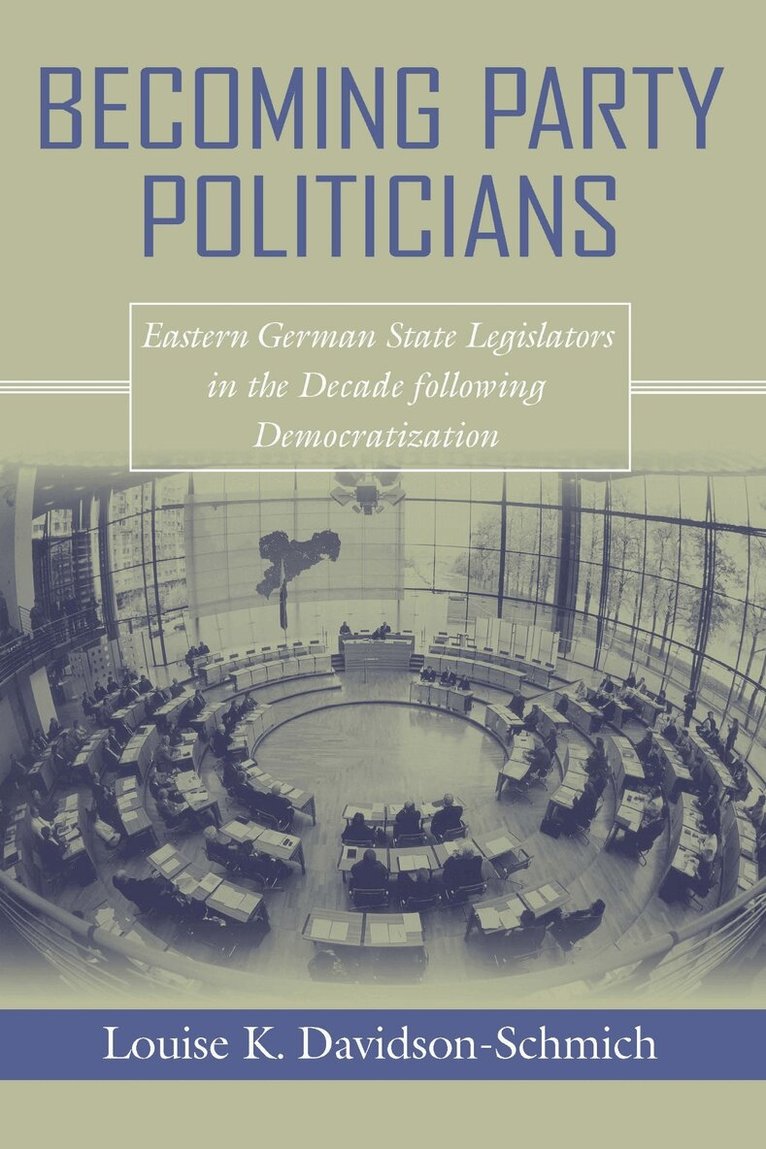
Becoming Party Politicians
East German State Legislators in the Decade Following Democratization
Häftad, Engelska, 2006
288 kr
Skickas inom 10-15 vardagar
After the Berlin Wall fell, scholars flocked to eastern Europe to conduct extensive opinion research on citizens' political attitudes and values. In eastern Germany, post-communist political elites were found to differ from western German politicians, exhibiting greater distrust of both political parties and party discipline, more political intolerance, a preference for economic equality over political freedom, and support for direct rather than representative democracy. These attitudes were expected to be hurdles to democratization.Yet only limited research has been done to determine whether eastern German politicians' attitudes and values actually influenced their actions. Becoming Party Politicians fills this empirical void by comparing eastern and western German state legislators in the decade following unification. While the two groups hold contrasting attitudes, they serve in virtually identical political institutions. The book finds little evidence to suggest that the political attitudes and values of eastern parliamentarians have hindered their adaptation to united Germany's political system.Instead, Germany's parliamentary and electoral institutions—together known as the party state—have created disciplined eastern parliamentarians. Placed in these identical parliamentary institutions, both eastern and western German legislators have responded similarly. Legislative voting on issues surrounding political tolerance, direct democracy, and economic equality can now be predicted on the basis of parliamentarians' partisan affiliation rather than their eastern or western origin.Davidson-Schmich's conclusions, based on personal interviews with state legislators and analysis of parliamentary debates between 1990 and 2002, not only shed light on German politics and the sources of legislator behavior; they also contribute to broader debates involving both the ability of western European political institutions to survive societal change and the influence of political institutions on the consolidation of democracy in post-communist settings.
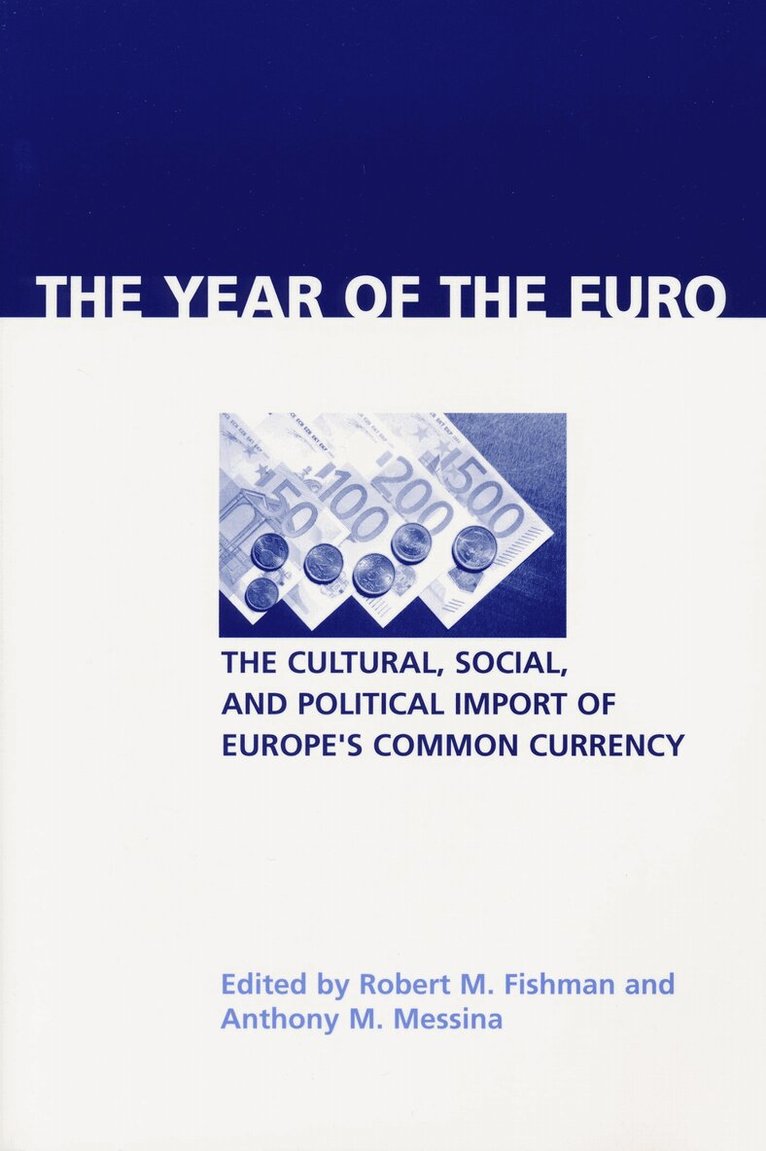
Year of the Euro
The Cultural, Social, and Political Import of Europe's Common Currency
Häftad, Engelska, 2006
328 kr
Skickas inom 10-15 vardagar
The Year of the Euro examines the wide-ranging importance of Europe's new single currency beyond its impact on financial markets and the economy itself. On January 1, 2002, when the new currency began to circulate in the twelve participating member states of the European Union, the long move toward a supranational European framework for trade and institutions finally entered the fabric of daily life for hundreds of millions of citizens. The contributing authors to this highly readable and interdisciplinary volume offer a variety of perspectives on this extraordinary episode in currency change and European convergence. The book's essays offer the assessments of leading scholars of European affairs—from the fields of history, political science, sociology, and law—as to whether the new common currency will reshape the continent's cultures, societies and political systems and, if so, in what ways. The discussions and debates found in these pages will inform those, within and outside academia, who are interested in the future of Europe and in the meaning of national currencies. The volume is also suitable for classroom use in courses on the European Union, cultural and economic sociology, comparative politics, and contemporary Europe.
395 kr
Skickas inom 10-15 vardagar
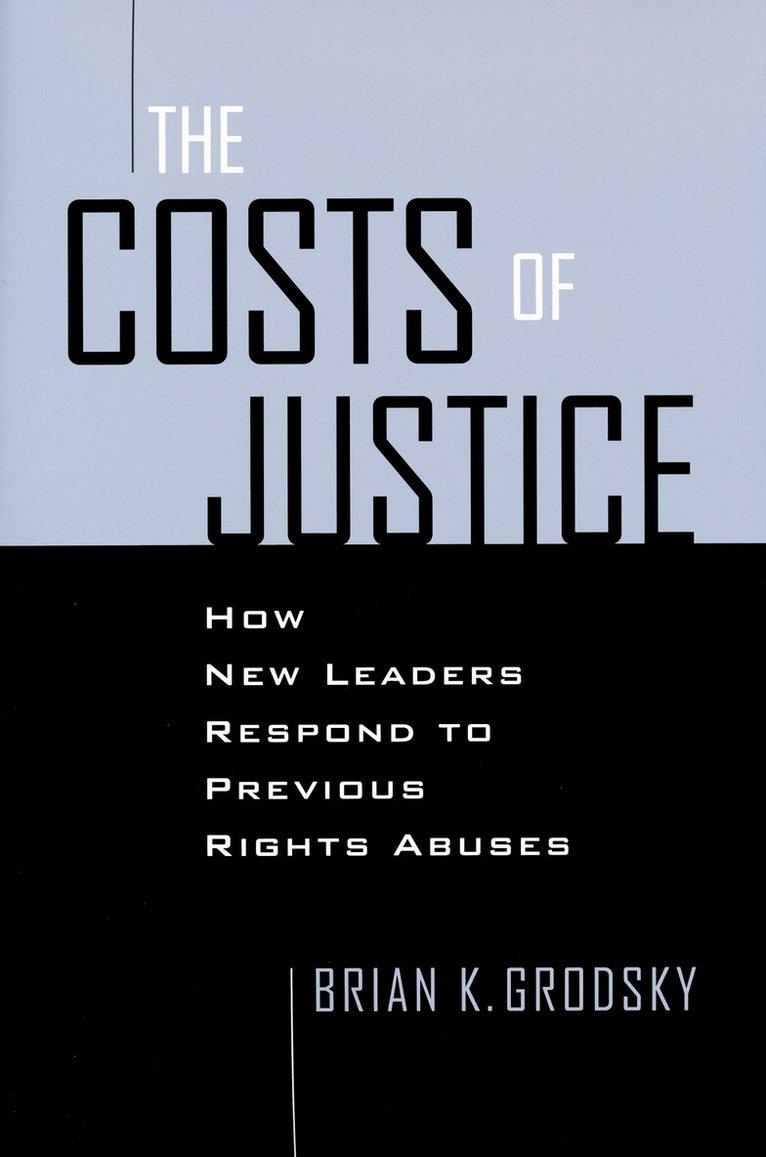
In The Costs of Justice, Brian K. Grodsky provides qualitative analyses of how transitional justice processes have evolved in diverse ways in postcommunist Poland, Croatia, Serbia, and Uzbekistan, by examining the decision-making processes and goals of those actors who contributed to key transitional justice policy decisions. Grodsky draws on extensive interviews with key political figures, human rights leaders, and representatives of various international, state, and nongovernmental bodies, as well as detailed analysis of international and local news reports, to offer a systematic and qualitatively compelling account of transitional justice from the perspective of activists who, at the end of a previous regime, were suddenly transformed from downtrodden victim to empowered judge. Grodsky challenges the argument that transitional justice in post-repressive states is largely a function of the relative power of new versus old elites. He maintains that a new regime's transitional justice policy is closely linked to its capacity to provide goods and services expected by constituents, not to political power struggles. In introducing this goods variable, so common to broad political analysis but largely overlooked in the transitional justice debate, Grodsky argues that we must revise our understanding of transitional justice. It is not an exceptional issue; it is but one of many political decisions faced by leaders in a transition state.
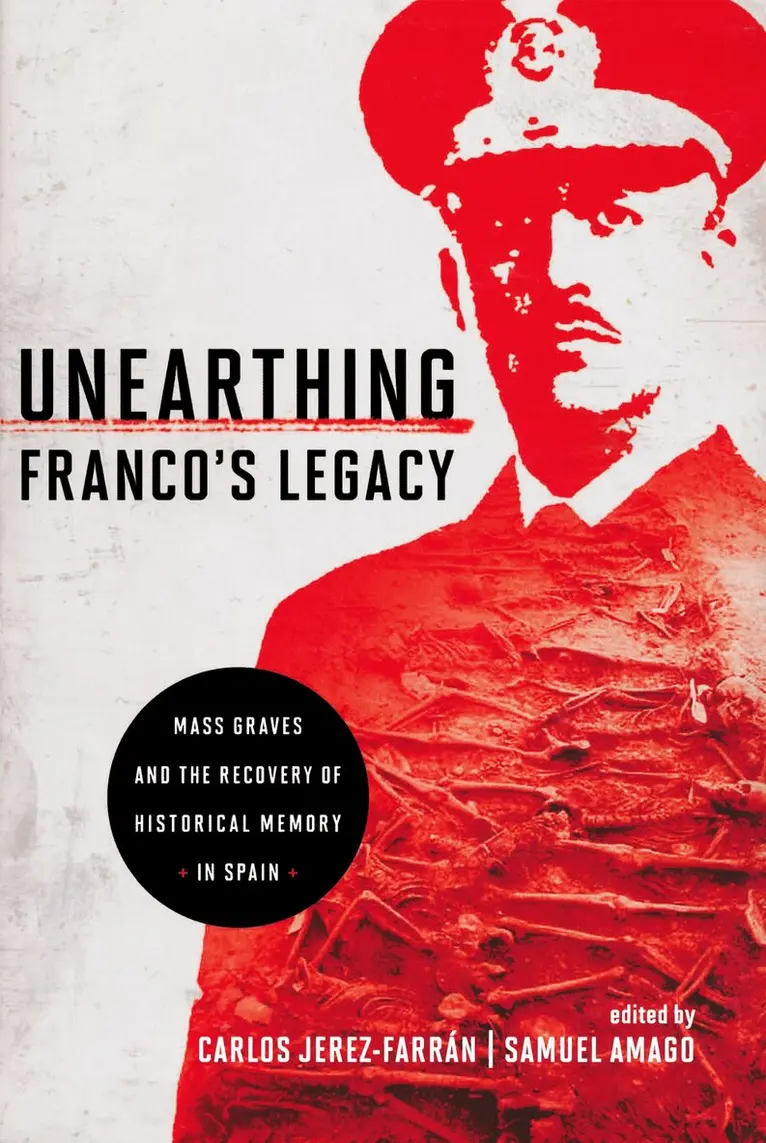
Unearthing Franco's Legacy
Mass Graves and the Recovery of Historical Memory in Spain
Häftad, Engelska, 2010
625 kr
Skickas inom 10-15 vardagar
Unearthing Franco's Legacy: Mass Graves and the Recovery of Historical Memory in Spain addresses the political, cultural, and historical debate that has ensued in Spain as a result of the recent discovery and exhumation of mass graves dating from the years during and after the Spanish Civil War (1936-39). The victor, General Francisco Franco, ruled as a dictator for thirty-six years, during which time he and his supporters had thousands of political dissidents or suspects and their families systematically killed and buried in anonymous mass graves. Although Spaniards living near the burial sites realized what was happening, the conspiracy of silence imposed by the Franco regime continued for many years after his death in 1975 and after the establishment of a democratic government. While the people of Germany, France, and Italy have confronted the legacies of the repressive regimes that came to power in those countries during the 1920s, '30s, and '40s, the unearthing of the anonymous dead in Spain has focused attention on how Spaniards have only recently begun to revisit their past and publicly confront Franco's legacy. The essays by historians, anthropologists, literary scholars, journalists, and cultural analysts gathered here represent the first interdisciplinary analysis of how present-day Spain has sought to come to terms with the violence of Franco's regime. Their contributions comprise an important example of how a culture critiques itself while mining its collective memory.
406 kr
Skickas inom 10-15 vardagar
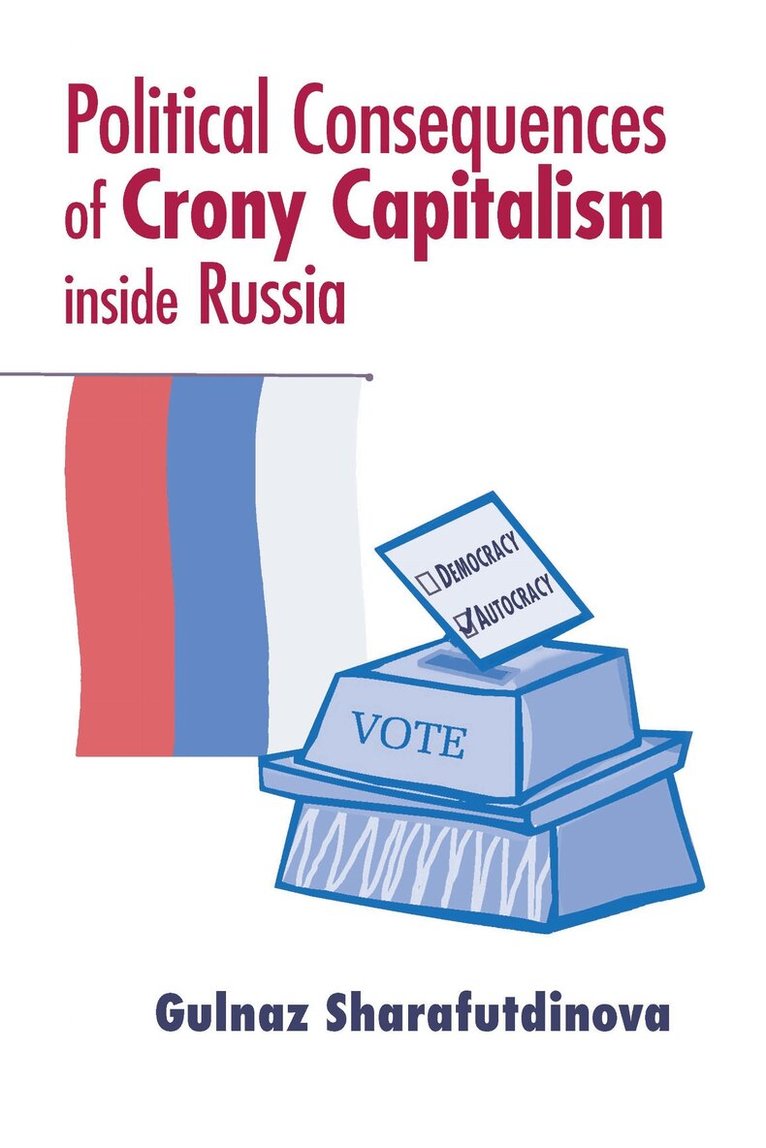
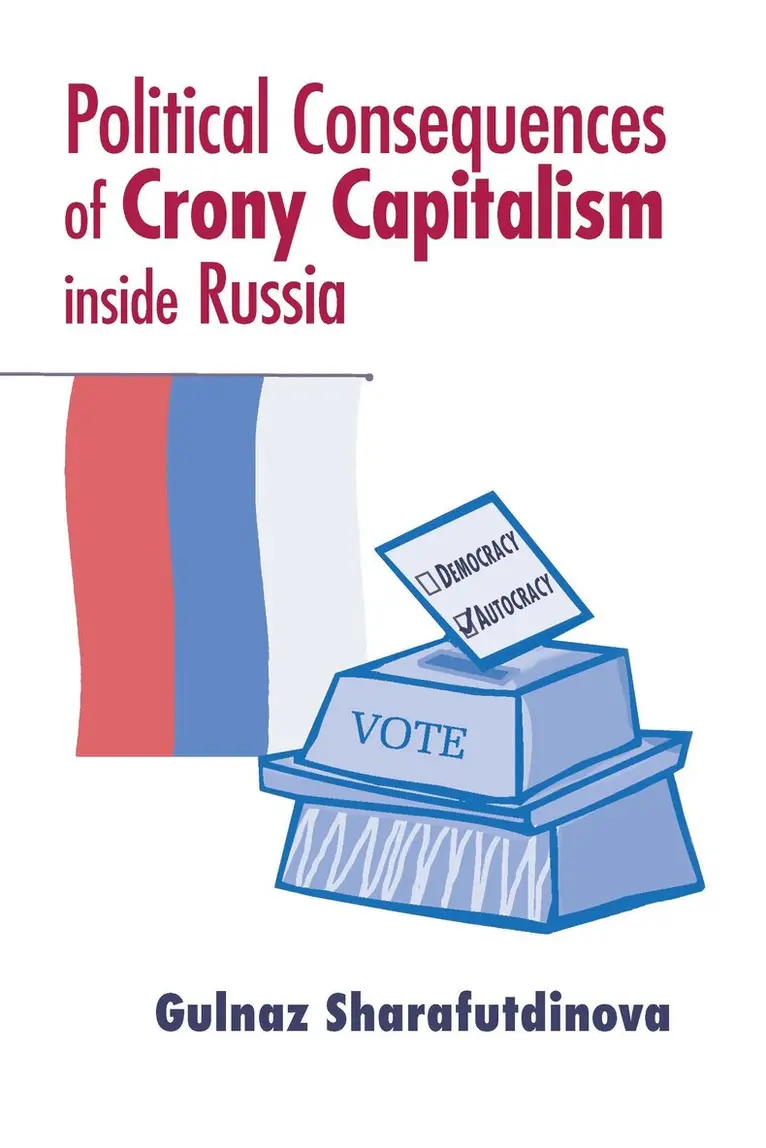
This book examines the coexistence of crony capitalism and traditionally democratic institutions such as political competition and elections in Russia after the collapse of communism. The combination, Gulnaz Sharafutdinova argues, has produced a distinct pattern of political evolution in contemporary Russia. Elections are meant to ensure government accountability and allow voters to elect a government responsive to their needs, but in postcommunist Russia the institutional forms of democracy did not result in the expected outcomes. Instead, democratic institutions in the context of crony capitalism—in which informal elite groups dominate policy making, and preferential treatment from the state, not market forces, is crucial to amassing and holding wealth—were widely devalued and discredited. As Sharafutdinova demonstrates, especially through her close scrutiny of elections in two regions of Russia, Nizhnii Novgorod and the Republic of Tatarstan, crony capitalism made elections especially intense struggles among the elites. Massive amounts of money flowed into campaigns to promote candidates by discrediting their rivals, money purchased candidates and power, and elites thereby solidified their control. As a result, the majority of citizens perceived elections as the means for the elite to access power and wealth rather than as expressions of public will. Through her detailed case studies and her analyses of contemporary Russia in general, Sharafutdinova argues persuasively that the turn toward authoritarianism associated with Vladimir Putin and supported by a majority of Russian citizens was a negative political response to the interaction of electoral processes and crony capitalism.
1 109 kr
Skickas inom 10-15 vardagar
The University of Notre Dame Press is pleased to bring Ernst Haas's classic work on European integration, The Uniting of Europe, back into print. First published in 1958 and last printed in 1968, this seminal volume is the starting point for anyone interested in the pre-history of the European Union. Haas uses the European Coal and Steel Community (ECSC) as a case study of the community formation processes that occur across traditional national and state boundaries. Haas points to the ECSC as an example of an organization with the "power to redirect the loyalties and expectations of political actors."In this pathbreaking book Haas contends that, based on his observations of the actual integration process, the idea of a "united Europe" took root in the years immediately following World War II. His careful and rigorous analysis tracks the development of the ECSC, including, in his 1968 preface, a discussion of the eventual loss of the individual identity of the ECSC through its absorption into the new European Community. Featuring a new introduction by Haas analyzing the impact of his book over time, as well as an updated bibliography, The Uniting of Europe is a must-have for political scientists and historians of modern and contemporary Europe. This book is the inaugural volume of Notre Dame's new Contemporary European Politics and Society Series.
324 kr
Skickas inom 10-15 vardagar
The University of Notre Dame Press is pleased to bring Ernst Haas's classic work on European integration, The Uniting of Europe, back into print. First published in 1958 and last printed in 1968, this seminal volume is the starting point for anyone interested in the pre-history of the European Union. Haas uses the European Coal and Steel Community (ECSC) as a case study of the community formation processes that occur across traditional national and state boundaries. Haas points to the ECSC as an example of an organization with the "power to redirect the loyalties and expectations of political actors."In this pathbreaking book Haas contends that, based on his observations of the actual integration process, the idea of a "united Europe" took root in the years immediately following World War II. His careful and rigorous analysis tracks the development of the ECSC, including, in his 1968 preface, a discussion of the eventual loss of the individual identity of the ECSC through its absorption into the new European Community. Featuring a new introduction by Haas analyzing the impact of his book over time, as well as an updated bibliography, The Uniting of Europe is a must-have for political scientists and historians of modern and contemporary Europe. This book is the inaugural volume of Notre Dame's new Contemporary European Politics and Society Series.
European Elections and Domestic Politics
Lessons from the Past and Scenarios for the Future
Häftad, Engelska, 2007
475 kr
Skickas inom 10-15 vardagar
This book analyzes how the behavior of voters, parties, and the mass media in European Parliament elections affects domestic politics and how, in turn, domestic politics affects those behaviors. The contributors discuss election turnout and party choice, the contract between the European Parliament and national elections, the importance of citizens' attitudes toward European integration, the relationship between political parties' domestic policies and their stances on European integration, and the ways in which the mass media and election campaigns affect electoral outcomes. On the basis of this information, the authors present possible scenarios for future European elections and their relationship to the domestic politics of the EU member-states.The product of superb empirical research, European Elections and Domestic Politics is based on a unique combination of data from voter surveys, party manifestos, and mass media reports across all members of the European Union. This book will be essential for anyone interested in the future of the EU.
1 344 kr
Skickas inom 10-15 vardagar
In The Costs of Justice, Brian K. Grodsky provides qualitative analyses of how transitional justice processes have evolved in diverse ways in postcommunist Poland, Croatia, Serbia, and Uzbekistan, by examining the decision-making processes and goals of those actors who contributed to key transitional justice policy decisions. Grodsky draws on extensive interviews with key political figures, human rights leaders, and representatives of various international, state, and nongovernmental bodies, as well as detailed analysis of international and local news reports, to offer a systematic and qualitatively compelling account of transitional justice from the perspective of activists who, at the end of a previous regime, were suddenly transformed from downtrodden victim to empowered judge. Grodsky challenges the argument that transitional justice in post-repressive states is largely a function of the relative power of new versus old elites. He maintains that a new regime's transitional justice policy is closely linked to its capacity to provide goods and services expected by constituents, not to political power struggles. In introducing this goods variable, so common to broad political analysis but largely overlooked in the transitional justice debate, Grodsky argues that we must revise our understanding of transitional justice. It is not an exceptional issue; it is but one of many political decisions faced by leaders in a transition state.
1 109 kr
Skickas inom 10-15 vardagar
This book examines the coexistence of crony capitalism and traditionally democratic institutions such as political competition and elections in Russia after the collapse of communism. The combination, Gulnaz Sharafutdinova argues, has produced a distinct pattern of political evolution in contemporary Russia. Elections are meant to ensure government accountability and allow voters to elect a government responsive to their needs, but in postcommunist Russia the institutional forms of democracy did not result in the expected outcomes. Instead, democratic institutions in the context of crony capitalism—in which informal elite groups dominate policy making, and preferential treatment from the state, not market forces, is crucial to amassing and holding wealth—were widely devalued and discredited. As Sharafutdinova demonstrates, especially through her close scrutiny of elections in two regions of Russia, Nizhnii Novgorod and the Republic of Tatarstan, crony capitalism made elections especially intense struggles among the elites. Massive amounts of money flowed into campaigns to promote candidates by discrediting their rivals, money purchased candidates and power, and elites thereby solidified their control. As a result, the majority of citizens perceived elections as the means for the elite to access power and wealth rather than as expressions of public will. Through her detailed case studies and her analyses of contemporary Russia in general, Sharafutdinova argues persuasively that the turn toward authoritarianism associated with Vladimir Putin and supported by a majority of Russian citizens was a negative political response to the interaction of electoral processes and crony capitalism.