Robert M. Fishman - Böcker
Visar alla böcker från författaren Robert M. Fishman. Handla med fri frakt och snabb leverans.
4 produkter
4 produkter
1 252 kr
Skickas inom 5-8 vardagar
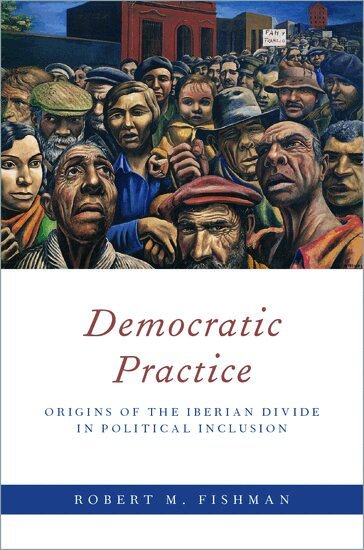
At a time of growing concern over the fate of contemporary democracy this book shows how vast differences between countries in forms of political conduct, and taken for granted assumptions, determine what democracies actually accomplish. In Democratic Practice, Robert M. Fishman elucidates why some democracies include the economically underprivileged, and cultural others within the circles of political relevance that set policies and the political agenda, whereas others exclude them. On the basis of in-depth research on Portugal and Spain, Fishman develops a theoretically innovative explanation for the breadth of democratic inclusion and draws out large implications for democracies everywhere. Democratic Practice examines the record of two countries that began the worldwide turn to democracy in the 1970s, showing how and why basic assumptions about what democracy is, and how political actors should treat one another, diverged. The book offers detailed empirical evidence on how an inclusive approach to democratic politics provides major benefits not only for the poor and excluded but also for others, drawing large lessons for contemporary democracies.
363 kr
Skickas inom 5-8 vardagar
At a time of growing concern over the fate of contemporary democracy this book shows how vast differences between countries in forms of political conduct, and taken for granted assumptions, determine what democracies actually accomplish. In Democratic Practice, Robert M. Fishman elucidates why some democracies include the economically underprivileged, and cultural others within the circles of political relevance that set policies and the political agenda, whereas others exclude them. On the basis of in-depth research on Portugal and Spain, Fishman develops a theoretically innovative explanation for the breadth of democratic inclusion and draws out large implications for democracies everywhere. Democratic Practice examines the record of two countries that began the worldwide turn to democracy in the 1970s, showing how and why basic assumptions about what democracy is, and how political actors should treat one another, diverged. The book offers detailed empirical evidence on how an inclusive approach to democratic politics provides major benefits not only for the poor and excluded but also for others, drawing large lessons for contemporary democracies.
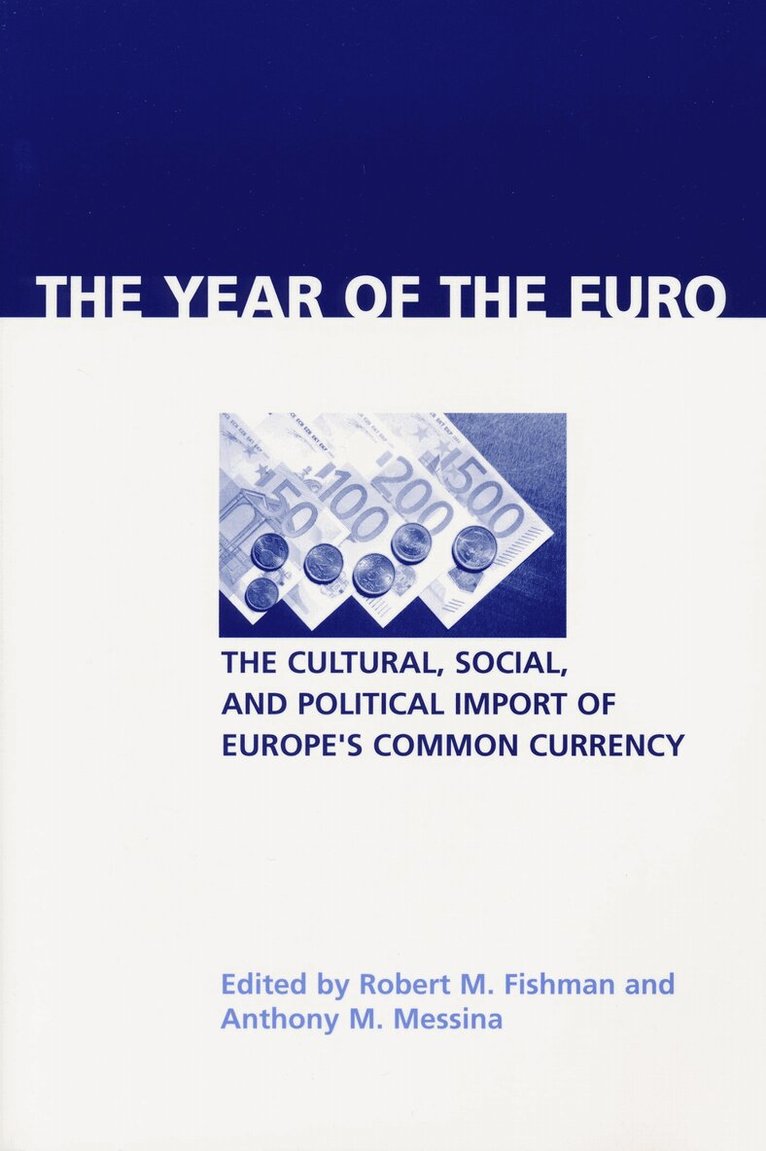
Year of the Euro
The Cultural, Social, and Political Import of Europe's Common Currency
Häftad, Engelska, 2006
327 kr
Skickas inom 10-15 vardagar
The Year of the Euro examines the wide-ranging importance of Europe's new single currency beyond its impact on financial markets and the economy itself. On January 1, 2002, when the new currency began to circulate in the twelve participating member states of the European Union, the long move toward a supranational European framework for trade and institutions finally entered the fabric of daily life for hundreds of millions of citizens. The contributing authors to this highly readable and interdisciplinary volume offer a variety of perspectives on this extraordinary episode in currency change and European convergence. The book's essays offer the assessments of leading scholars of European affairs—from the fields of history, political science, sociology, and law—as to whether the new common currency will reshape the continent's cultures, societies and political systems and, if so, in what ways. The discussions and debates found in these pages will inform those, within and outside academia, who are interested in the future of Europe and in the meaning of national currencies. The volume is also suitable for classroom use in courses on the European Union, cultural and economic sociology, comparative politics, and contemporary Europe.
487 kr
Skickas inom 10-15 vardagar
Building on one of sociology's core ideas—that social ties can shape collective outcomes—Democracy's Voices shows that connections across class boundaries can remake public rhetoric and thus the quality of democratic life. Robert M. Fishman takes up a question of enduring significance to people concerned with the quality of democratic public life, focusing on why political rhetoric proves engaging and broadly relevant, or disengaging and narrow. The answer to that question, he argues, is to be found not only in the deeds of prominent politicians and the nature of official institutions but also in the existence and the character of social connections among ordinary citizens. Fishman's book, based on long-term fieldwork and systematic survey research in Spain, identifies the special contribution to democratic quality made by conversations between intellectuals and workers. Fishman focuses on what he calls the "discursive horizons" of local leaders and communities: the actual location of the problems and proposed remedies articulated in political rhetorics. Democracy's Voices shows how the subcultural context of social ties may accentuate or diminish their power to reshape rhetorics. Fishman argues that conversations are able to remake public rhetorics whereas ties that take the form of brokerage lack that ability. The book also offers a general critique of social capital theory and argues that the full ability of social ties to shape collective outcomes can only be observed when one distinguishes in useful ways among types of ties.