Contemporary Indian Studies - Böcker
Visar alla böcker i serien Contemporary Indian Studies. Handla med fri frakt och snabb leverans.
9 produkter
9 produkter
712 kr
Skickas inom 11-20 vardagar
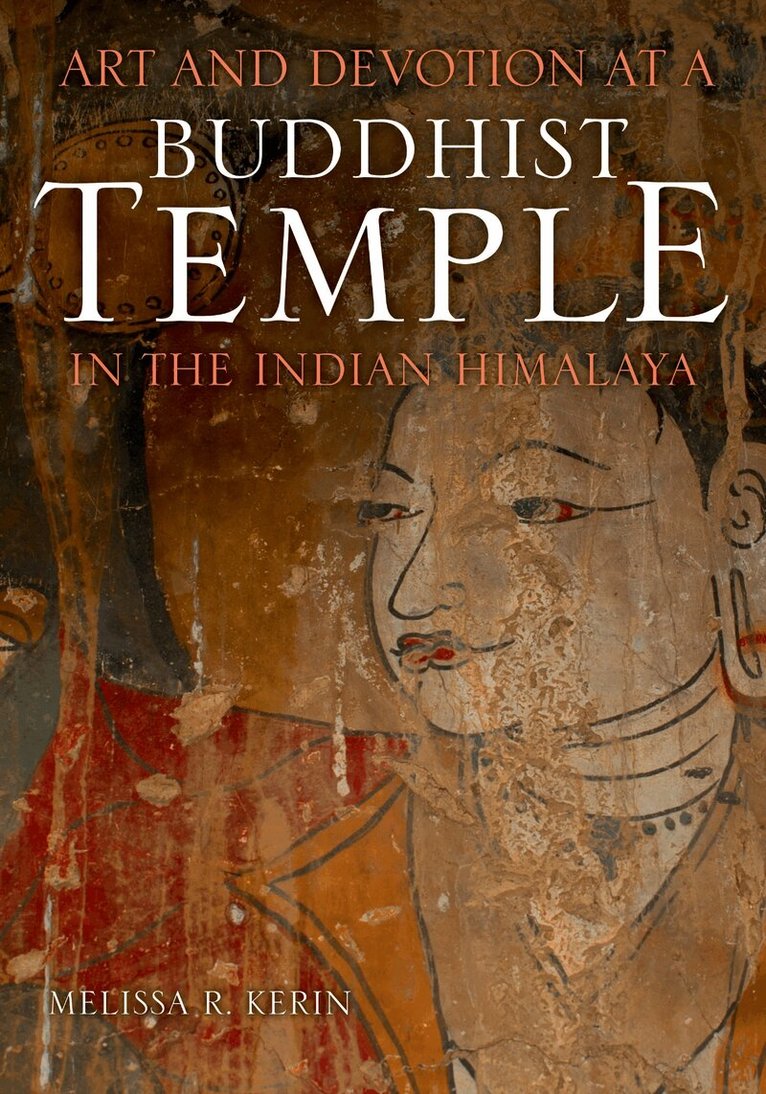
Sixteenth-century wall paintings in a Buddhist temple in the Tibetan cultural zone of northwest India are the focus of this innovative and richly illustrated study. Initially shaped by one set of religious beliefs, the paintings have since been reinterpreted and retraced by a later Buddhist community, subsumed within its religious framework and communal memory. Melissa Kerin traces the devotional, political, and artistic histories that have influenced the paintings' production and reception over the centuries of their use. Her interdisciplinary approach combines art historical methods with inscriptional translation, ethnographic documentation, and theoretical inquiry to understand religious images in context.
296 kr
Skickas inom 10-15 vardagar
India is widely regarded as the most celebrated case of a "failed" developmental state, seemingly the exception that belies the prediction of a triumphant Asian century. Its central political and economic institutions have been variously characterized as both "soft" and "strong"—at once weak, predatory, and interventionist. Aseema Sinha presents an innovative model that questions conventional views of economic development by showing that the Indian state is a divided leviathan: its developmental failure is the combined product of central-local interactions and political choices by regional elites. To develop this disaggregated model, she examines three regional states with sharply divergent development trajectories: Gujarat, West Bengal, and Tamil Nadu. Drawing on recent work in comparative political economy, the theory of nested games, incentive theory, and an ethnographic analysis of business actors, this study directs analytical attention at the creation of micro-institutions at the subnational level, explores the role of provinces in shaping investment flows, and considers the role of federalism as a mediating institution shaping the vertical strategies of provinces. A comparative chapter applies the model to data from China, Brazil, Russia, and the former Soviet Union.
230 kr
Skickas inom 7-10 vardagar
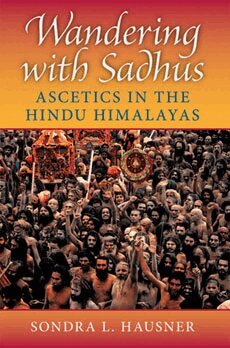
In this moving ethnographic portrait of Hindu renouncers—sadhus or ascetics—in northern India and Nepal, Sondra L. Hausner considers a paradox that shapes their lives: while ostensibly defined by their solitary spiritual practice, the stripping away of social commitments, and their break with family and community, renouncers in fact regularly interact with "householder" society. They form a distinctive, alternative community with its own internal structure, but one that is not located in any single place. Highly mobile and dispersed across the subcontinent, its members are regularly brought together through pilgrimage circuits on festival cycles. Drawing on many years of fieldwork, Hausner presents intimate portraits of individual sadhus as she examines the shared views of space, time, and the body that create the ground for everyday experience. Written with an extraordinary blend of empathy, compassion, and anthropological insight, this study will appeal to scholars, students, and general readers alike.
230 kr
Skickas inom 7-10 vardagar
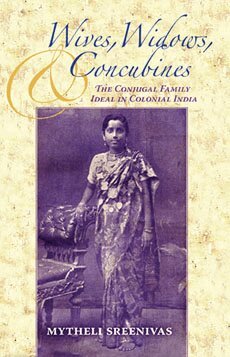
The family was at the center of intense debates about identity, community, and nation in colonial Tamil Nadu, India. Emerging ideas about love, marriage, and desire were linked to caste politics, the colonial economy, and nationalist agitation. In the first detailed historical study of Tamil families in colonial India, Wives, Widows, and Concubines maps changes in the late colonial family in relation to the region's culture, politics, and economy. Among professional and mercantile elites, the conjugal relationship displaced the extended family as the focal point of household dynamics. Conjugality provided a language with which women laid claim to new rights, even as the structures of the conjugal family reinscribed women's oppression inside and outside marriage.Published in association with the American Institute of Indian Studies.
353 kr
Skickas inom 7-10 vardagar
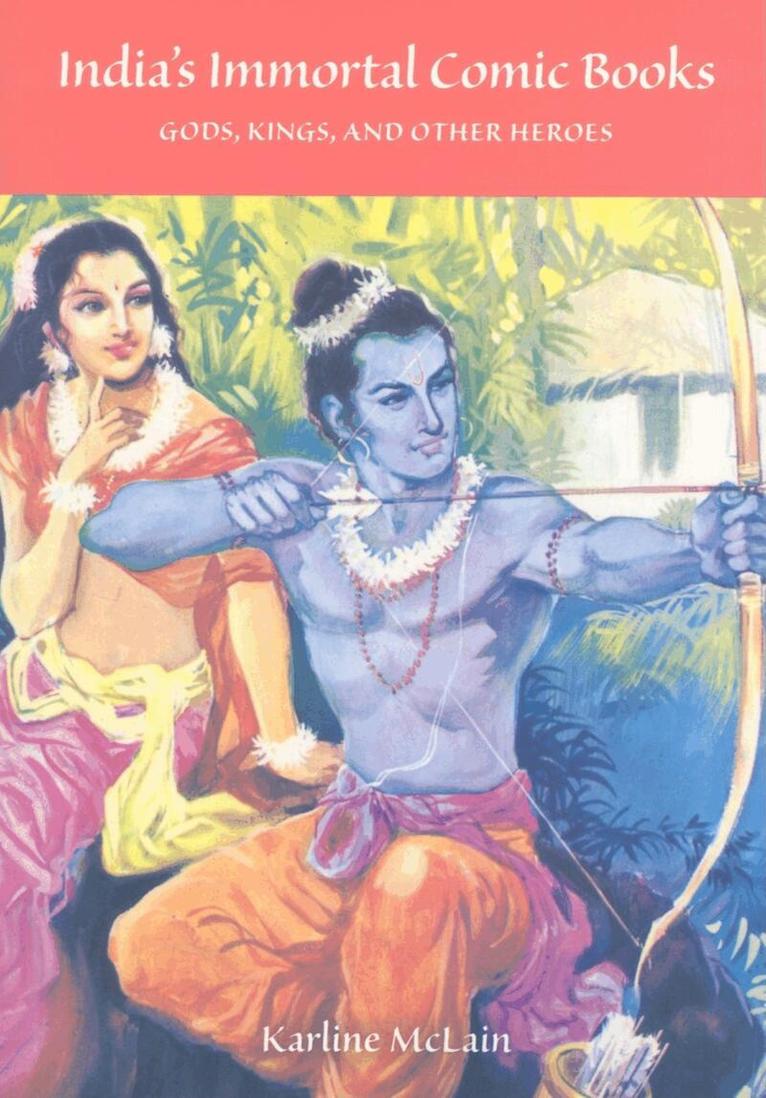
Combining entertainment and education, India's most beloved comic book series, Amar Chitra Katha, or "Immortal Picture Stories," is also an important cultural institution that has helped define, for several generations of readers, what it means to be Hindu and Indian. Karline McLain worked in the ACK production offices and had many conversations with Anant Pai, founder and publisher, and with artists, writers, and readers about why the comics are so popular and what messages they convey. In this intriguing study, she explores the making of the comic books and the kinds of editorial and ideological choices that go into their production.
291 kr
Skickas inom 7-10 vardagar
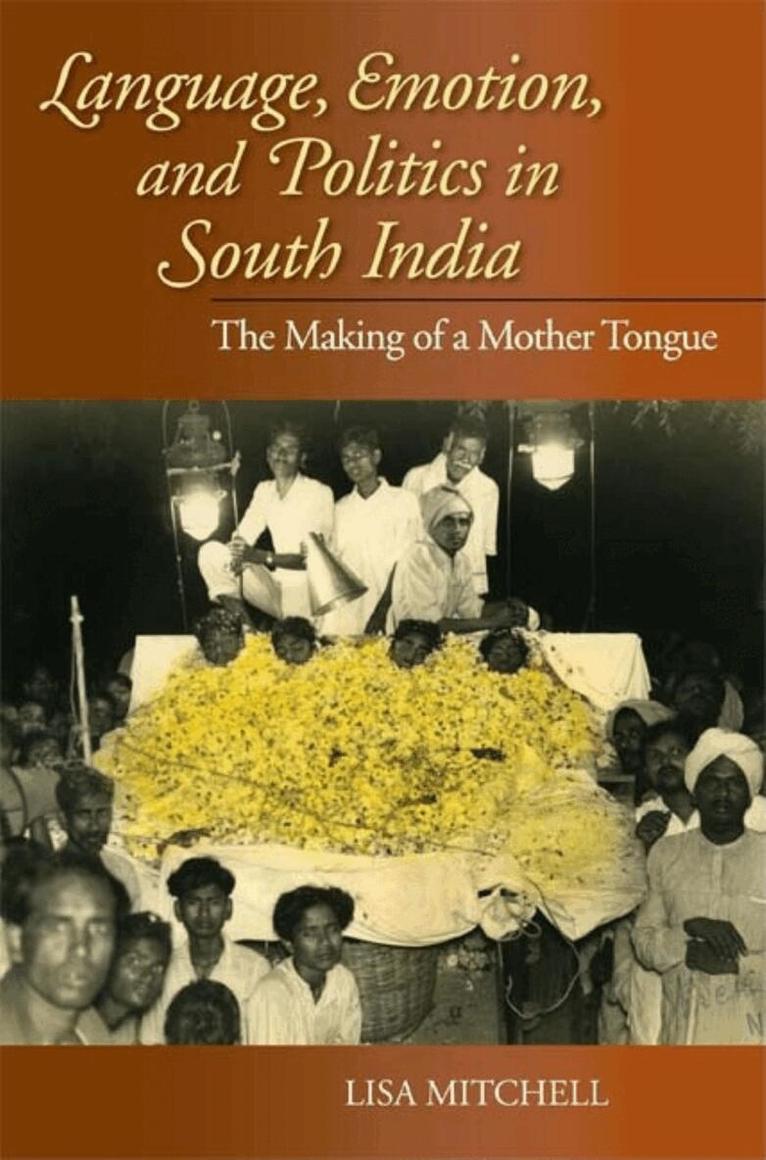
What makes someone willing to die, not for a nation, but for a language? In the mid-20th century, southern India saw a wave of dramatic suicides in the name of language. Lisa Mitchell traces the colonial-era changes in knowledge and practice linked to the Telugu language that lay behind some of these events. As identities based on language came to appear natural, the road was paved for the political reorganization of the Indian state along linguistic lines after independence.
283 kr
Skickas inom 7-10 vardagar
Often identified as leatherworkers or characterized as a criminal caste, Chamars of North India have long been stigmatized as untouchables. In this pathbreaking study, Ramnarayan S. Rawat shows that in fact the majority of Chamars have always been agriculturalists, and their association with the ritually impure occupation of leatherworking has largely been constructed through Hindu, colonial, and postcolonial representations of untouchability. Rawat undertakes a comprehensive reconsideration of the history, identity, and politics of this important Dalit group. Using Dalit vernacular literature, local-level archival sources, and interviews in Dalit neighborhoods, he reveals a previously unrecognized Dalit movement which has flourished in North India from the earliest decades of the 20th century and which has recently achieved major political successes.
364 kr
Skickas inom 10-15 vardagar
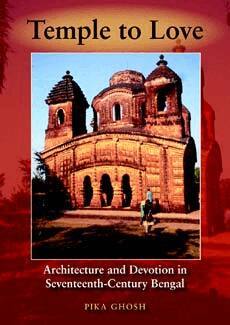
"[A]n excellent analytical study of a sensationally beautiful type of temple. . . . This work is not just art historical but embraces . . . religious studies, anthropology, history, and literature." —Catherine B. Asher"[A]dvances our knowledge of . . . Bengali temple building practices, the complex inter-reliance between religion, state power, and art, and the ways in which Western colonial assumptions have distorted correct interpretation. . . . A splendid book." —Rachel Fell McDermottIn the flux created by the Mughal conquest, Hindu landholders of eastern India began to build a spectacularly beautiful new style of brick temple, known as Ratna. This "bejeweled" style combined features of Sultanate mosques and thatched houses, and included second-story rooms conceived as the pleasure grounds of the gods, where Krishna and his beloved Radha could rekindle their passion. Pika Ghosh uses art historical, archaeological, textual, and ethnographic approaches to explore this innovation in the context of its times. Includes 82 stunning black-and-white images of rarely photographed structures.Published in association with the American Institute of Indian Studies
557 kr
Skickas inom 10-15 vardagar
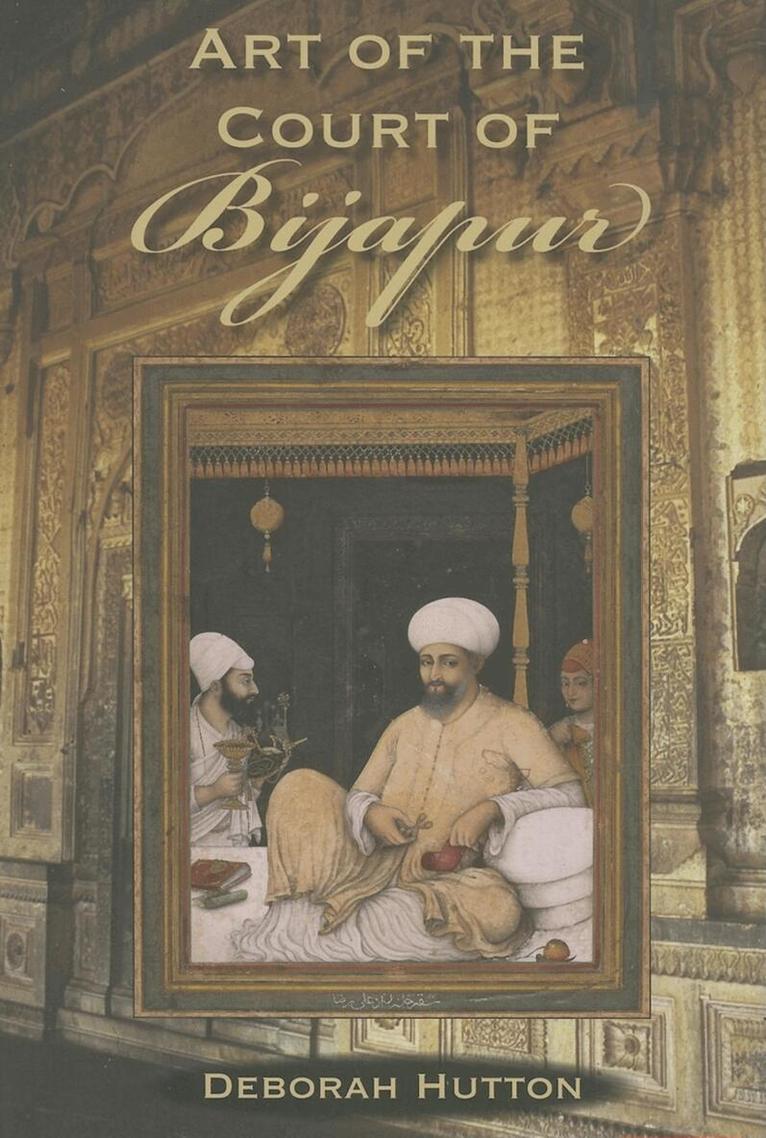
"[A]n impressive and original work of synthetic scholarship that one hopes will be emulated by others." —Phillip B. Wagoner, Wesleyan University"[A]n excellent and important work . . . [with] a wonderful sophistication of method." —Padma Kaimal, Colgate UniversityThe patrons and artists of Bijapur, an Islamic kingdom that flourished in the Deccan region of India in the 16th and 17th centuries, produced lush paintings and elaborately carved architecture, evidence of a highly cosmopolitan Indo-Islamic culture. Bijapur's most celebrated monument, the Ibrahim Rauza tomb complex, is carved with elegant calligraphy and lotus flowers and was once dubbed "the Taj Mahal of the South." This stunningly illustrated study traces the development of Bijapuri art and courtly identity through detailed examination of selected paintings and architecture, many of which have never before been published. They deserve our attention for their aesthetic qualities as well as for the ways they expand our understanding of the rich synthesis of cultures and religions in South Asian and Islamic art.