• Fri frakt över 249 kr
  • •
  • Snabba leveranser
  • •
  • Billiga böcker
Kundservice

Du är på sajten för privatpersoner.

Företag, bibliotek eller offentlig verksamhet?

Du handlar på classic.bokus.com, där alla dina funktioner finns intakta.
Till classic.bokus.com
Bokus logotyp. Gå till startsidan.
  • Erbjudanden
  • Nyheter
  • Student
  • Topplistor
  • Barn & ungdom
  • Bokus Play
  • E-böcker
  • Pocketböcker
  • Spel & pussel

10% rabatt på allt med kod: NYSTART10 →

Sidfot

Mina sidor

    Hjälp

    • Kundservice
    • Vanliga frågor och svar
    • Frakt och leverans
    • Retur vid ångerrätt
    • Reklamera vara
    • Betalning
    • Köpvillkor
    • Allmänna villkor
    • Information om webbplatsens tillgänglighet

    Om Bokus

    • Om oss
    • Pressrum
    • För studenter
    • För företag
    • För bibliotek och offentlig verksamhet
    • För leverantörer
    • Hållbarhet

    Populärt

    • Aktuella erbjudanden
    • Presentkort
    • Studentlitteratur
    • Nya böcker
    • Topplistor
    • Signerade böcker
    • Engelska böcker

    Inspiration

    • Boktips
    • BookTok
    • Populära bokserier
    • Barnbokskaraktärer
    • Populära författare
    Logotyp för Bokus
    Följ oss på Facebook (extern länk)Följ oss på Instagram (extern länk)Följ oss på YouTube (extern länk)Följ oss på TikTok (extern länk)
    bokus @ CookiesAnpassa cookiesIntegritetspolicyKöpvillkor
    Till Citymail hemsida (extern länk)Till Budbee hemsida (extern länk)Till Postnord hemsida (extern länk)Till Schenker hemsida (extern länk)Till Early Bird hemsida (extern länk)Till Walleys hemsida (extern länk)
    1. Samhälle och politik
    2. Samhälle och kultur
    3. Kultur och medier
    4. Referensverk och tvärvetenskap

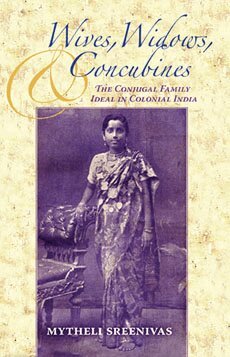
    Wives, Widows, and Concubines

    The Conjugal Family Ideal in Colonial India

    AvMytheli Sreenivas

    Häftad, Engelska, 2008

    Del i serien Contemporary Indian Studies

    240 kr

    Beställningsvara. Skickas inom 5-8 vardagar. Fri frakt över 249 kr.

    Beskrivning

    The family was at the center of intense debates about identity, community, and nation in colonial Tamil Nadu, India. Emerging ideas about love, marriage, and desire were linked to caste politics, the colonial economy, and nationalist agitation. In the first detailed historical study of Tamil families in colonial India, Wives, Widows, and Concubines maps changes in the late colonial family in relation to the region's culture, politics, and economy. Among professional and mercantile elites, the conjugal relationship displaced the extended family as the focal point of household dynamics. Conjugality provided a language with which women laid claim to new rights, even as the structures of the conjugal family reinscribed women's oppression inside and outside marriage.Published in association with the American Institute of Indian Studies.

    Produktinformation

    • Utgivningsdatum:2008-06-13
    • Mått:156 x 235 x 10 mm
    • Vikt:336 g
    • Format:Häftad
    • Språk:Engelska
    • Serie:Contemporary Indian Studies
    • Antal sidor:192
    • Förlag:Indiana University Press
    • ISBN:9780253219725

    Utforska kategorier

    • Referensverk och tvärvetenskap inom Samhälle och politik
    • Genusvetenskap inom Samhälle och politik

    Mer om författaren

    Mytheli Sreenivas is Assistant Professor of History and Women's Studies at The Ohio State University.

    Recensioner i media

    "Overall, this book is a valuable addition in the list of historical research works on the issues of women, community politics and colonial legislative ventures in southern India. The research related strength of the book is that it draws information from a variety of primary sources, ranging from archives of court cases, women's narratives and women's writings in the magazines. The author, in a very articulate manner, simplifies the complex history of family, politics, caste, class and economic pressures in Tamil Nadu.2009"—Human Rights and Human Welfare"Sreenivas's study is, without a doubt, a 'must read' for scholars interested in the history of the family, women and gender, as well as the development of anti-colonial nationalist politics. Her careful historicization of the 'family' as an equally powerful force alongside the 'nation,' and the many qualifications to Chatterjee's influential work that this approach pulls into the foreground makes 'Widows, Wives and Concubines' an invaluable addition to both Indian social history and colonial studies. Vol. 10.3 Winter 20009"—Journal of Colonialism and Colonial History"This volume about the changing family in colonial South India is a welcome addition to the literature on marriage and family.Volume 69/1, February 2010"—The Journal of Asian Studies"Sreenivas's discussion points to the importance for feminist scholarship of exploring the links among conjugality, kinship, and capitalisms both historically and today."—Feminist Formations"Scholarly and eminently readable, this book commends itself to both scholars and non-scholars across disciplines. While analysing the debates about 'family' that proliferated in the Tamil region of India during the late 19th century and the mid-20th century, it examines the claims about the family — its appropriate membership, its role in buttressing 'culture' and 'tradition', and the property relations of its members — that, according to the author, became critical to the formulation and contestation of Tamil social relations.Dec. 22, 2009"—The Hindu"This is . . . a well-researched, theoretically informed and stylistically refined study of the articulation of a new—the conjugal—family ideal in colonial India.Vol. 114. 4 Oct. 2009"—SUDHIR CHANDRA, Mizoram University"Rather than settling on one conception of the family, Sreenivas tracks how ideals changed over time through very public debates in Tamil society. She does not settle for quick or easy answers about family values and demonstrates how different social groups engaged the question to advance their interests in political and economic spheres.Vol. 21.2 August 2009"—DURBA GHOSH, Cornell University, USA"Whenever my husband felt amorous, he would occasionally cohabit with any woman and pay her occasionally. This is all. They were concubines."—Muthuverammal, 1885"The very principle of the joint family is against giving equal rights to females."—P. C. Tyagaraja Iyer, 1935"The Zemindar used to take his meals with me. The Zemindar used to sleep during nights in the upstairs of the new palace. I and he used to sleep in the same bed."—Menakshi Sundra Nachiar, 1893

    Innehållsförteckning

    • ContentsAcknowledgmentsNote on TransliterationIntroduction: Situating Families1. Colonizing the Family: Kinship, Household, and State2. Conjugality and Capital: Defining Women's Rights to Family Property3. Nationalizing Marriage: Indian and Dravidian Politics of Conjugality4. Marrying for Love: Emotion and Desire in Women's Print CultureConclusion: Families and HistoryNotesBibliographyIndex