Aseema Sinha – författare
Visar alla böcker från författaren Aseema Sinha. Handla med fri frakt och snabb leverans.
5 produkter
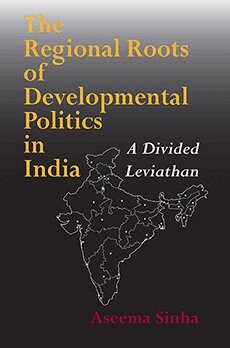
Regional Roots of Developmental Politics in India
A Divided Leviathan
Av Aseema Sinha
Häftad, 2005
313 kr
Lägg i varukorg
India is widely regarded as the most celebrated case of a "failed" developmental state, seemingly the exception that belies the prediction of a triumphant Asian century. Its central political and economic institutions have been variously characterized as both "soft" and "strong"—at once weak, …
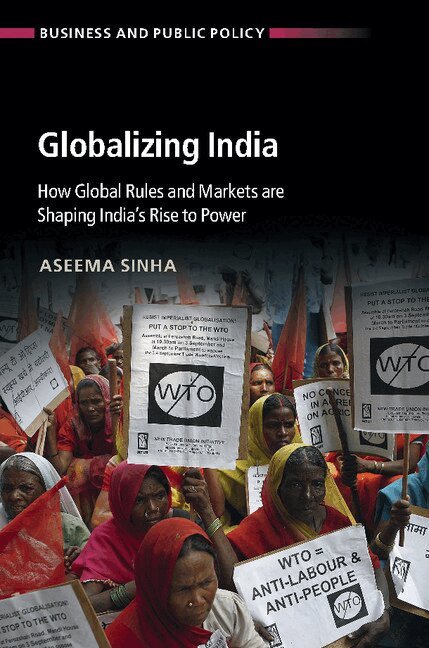
Globalizing India
How Global Rules and Markets are Shaping India's Rise to Power
Av Aseema Sinha
Inbunden, 2016
1184 kr
Lägg i varukorg
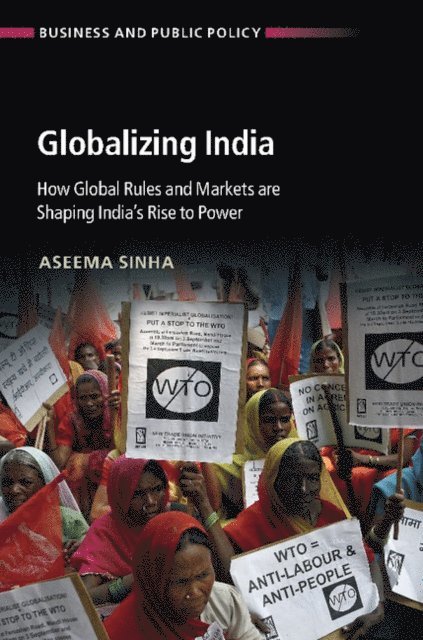
India's recent economic transformation has fascinated scholars, global leaders, and interested observers alike. In 1990, India was a closed economy and a hesitant and isolated economic power. By 2016, India has rapidly risen on the global economic stage; foreign trade now drives more than half of …
Globalizing India
How Global Rules and Markets are Shaping India's Rise to Power
Av Aseema Sinha
Häftad, 2016
477 kr
Lägg i varukorg
India's recent economic transformation has fascinated scholars, global leaders, and interested observers alike. In 1990, India was a closed economy and a hesitant and isolated economic power. By 2016, India has rapidly risen on the global economic stage; foreign trade now drives more than half of …
Globalizing India
How Global Rules and Markets are Shaping India''s Rise to Power
Av Aseema Sinha
E-bok, 2016
459 kr
Lägg i varukorg
India''s recent economic transformation has fascinated scholars, global leaders, and interested observers alike. In 1990, India was a closed economy and a hesitant and isolated economic power. By 2016, India has rapidly risen on the global economic stage; foreign trade now drives more than half of …
Globalizing India
How Global Rules and Markets are Shaping India''s Rise to Power
Av Aseema Sinha
E-bok, 2016
473 kr
Lägg i varukorg
India''s recent economic transformation has fascinated scholars, global leaders, and interested observers alike. In 1990, India was a closed economy and a hesitant and isolated economic power. By 2016, India has rapidly risen on the global economic stage; foreign trade now drives more than half of …