Crises in World Politics - Böcker
Visar alla böcker i serien Crises in World Politics. Handla med fri frakt och snabb leverans.
8 produkter
8 produkter
591 kr
Skickas inom 3-6 vardagar
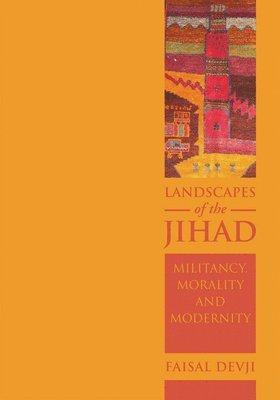
What are the motives behind Osama bin Laden's and Al-Qaeda's jihad against America and the West? Innumerable attempts have been made in recent years to explain that mysterious worldview. In Landscapes of the Jihad, Faisal Devji focuses on the ethical content of this jihad as opposed to its purported political intent. Al-Qaeda differs radically from such groups as Egypt's Muslim Brotherhood and Indonesia's Jemaah Islamiyah, which aim to establish fundamentalist Islamic states. In fact, Devji contends, Al-Qaeda, with its decentralized structure and emphasis on moral rather than political action, actually has more in common with multinational corporations, antiglobalization activists, and environmentalist and social justice organizations. Bin Laden and his lieutenants view their cause as a response to the oppressive conditions faced by the Muslim world rather than an Islamist attempt to build states.Al-Qaeda culls diverse symbols and fragments from Islam's past in order to legitimize its global war against the "metaphysical evil" emanating from the West. The most salient example of this assemblage, Devji argues, is the concept of jihad itself, which Al-Qaeda defines as an "individual duty" incumbent on all Muslims, like prayer. Although medieval Islamic thought provides precedent for this interpretation, Al-Qaeda has deftly separated the stipulation from its institutional moorings and turned jihad into a weapon of spiritual conflict. Al-Qaeda and its jihad, Devji suggests, are only the most visible manifestations of wider changes in the Muslim world. Such changes include the fragmentation of traditional as well as fundamentalist forms of authority. In the author's view, Al-Qaeda represents a new way of organizing Muslim belief and practice within a global landscape and does not require ideological or institutional unity. Offering a compelling explanation for the central purpose of Al-Qaeda's jihad against the West, the meaning of its strategies and tactics, and its moral and aesthetic dimensions, Landscapes of the Jihad is at once a sophisticated work of historical and cultural analysis and an invaluable guide to the world's most prominent terrorist movement.
805 kr
Skickas inom 3-6 vardagar
A former paratrooper in the British Army with extensive experience of conflict and post-conflict management in the countries of former Yugoslavia, Mark Etherington had just completed an M.Phil. in international relations at Cambridge University in 2003 when the British Foreign Office asked him to assume the governorship of Wasit Province in southern Iraq on behalf of the Coalition Provisional Authority or CPA.Etherington established a small team in the provincial capital of al-Kut on the banks of the Tigris in order to begin the process of reconstruction—both political and physical—of a province with a predominantly Shi'ia population of 900,000 and a long border with Iran.The province was plagued by poverty and beset by social paralysis. A demoralized and often corrupt police force was incapable of imposing the rule of law. Ba'ath party functionaries had been purged, local municipal authority was weak, and basic services were lacking. More challenging still was an escalating armed insurgency by the followers of Moqtada al-Sadr that would culminate in a sixteen-hour firefight for control over the CPA's base in Kut.This gritty and compelling firsthand account of post-conflict Iraq describes the turmoil visited on the country by outside intervention and the difficulties faced by the Coalition in fashioning a new political and civil apparatus.
639 kr
Skickas inom 3-6 vardagar
Years after the U.S. invasion of Iraq, a loosely organized insurgency continues to target American and Coalition soldiers, as well as Iraqi security forces and civilians, with devastating results. In this sobering account of the ongoing violence, Ahmed Hashim, a specialist on Middle Eastern strategic issues and on irregular warfare, reveals the insurgents behind the widespread revolt, their motives, and their tactics. The insurgency, he shows, is not a united movement directed by a leadership with a single ideological vision. Instead, it involves former regime loyalists, Iraqis resentful of foreign occupation, foreign and domestic Islamist extremists, and elements of organized crime. These groups have cooperated with one another in the past and coordinated their attacks; but the alliance between nationalist Iraqi insurgents on the one hand and religious extremists has frayed considerably. The U.S.-led offensive to retake Fallujah in November 2004 and the success of the elections for the Iraqi National Assembly in January 2005 have led more "mainstream" insurgent groups to begin thinking of reinforcing the political arm of their opposition movement and to seek political guarantees for the Sunni Arab community in the new Iraq.Hashim begins by placing the Iraqi revolt in its historical context. He next profiles the various insurgent groups, detailing their origins, aims, and operational and tactical modi operandi. He concludes with an unusually candid assessment of the successes and failures of the Coalition's counter-insurgency campaign. Looking ahead, Hashim warns that ethnic and sectarian groups may soon be pitted against one another in what will be a fiercely contested fight over who gets what in the new Iraq. Evidence that such a conflict is already developing does not augur well for Iraq's future stability. Both Iraq and the United States must work hard to ensure that slow but steady success over the insurgency is not overshadowed by growing ethno-sectarian animosities as various groups fight one another for the biggest slice of the political and economic pie. In place of sensational headlines, official triumphalism, and hand-wringing, Insurgency and Counter-Insurgency in Iraq offers a clear-eyed analysis of the increasingly complex violence that threatens the very future of Iraq.
880 kr
Skickas inom 3-6 vardagar
When the United States led the invasion of Iraq in March 2003, it expected to be able to establish a prosperous liberal democracy with an open economy that would serve as a key ally in the region. It sought to engage Iraqi society in ways that would defeat any challenge to that state building project and U.S. guidance of it. Eric Herring and Glen Rangwala argue that state building in Iraq has been crippled less by preexisting weaknesses in the Iraqi state, Iraqi sectarian divisions or U.S. policy mistakes than by the fact that the US has attempted-with only limited success-to control the parameters and outcome of that process. They explain that the very nature of U.S. state-building in Iraq has created incentives for unregulated local power struggles and patron-client relations. Corruption, smuggling, and violence have resulted.The main legacy of the US-led occupation, the authors contend, is that Iraq has become a fragmented state-that is, one in which actors dispute where overall political authority lies and in which there are no agreed procedures for resolving such disputes. As long as this is the case, the authority of the state will remain limited. Technocratic mechanisms such as training schemes for officials, political fixes such as elections, and the coercive tools of repression will not be able to overcome this situation.Placing the occupation within the context of regional, global, and U.S. politics, Herring and Rangwala demonstrate how the politics of co-option, coercion, and economic change have transformed the lives and allegiances of the Iraqi population. As uncertainty about the future of Iraq persists, this volume provides a much-needed analysis of the deeper forces that give meaning to the daily events in Iraq.
564 kr
Skickas inom 3-6 vardagar
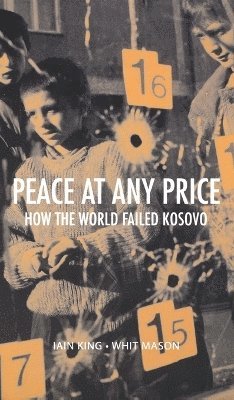
In June 1999, after three months of NATO air strikes had driven Serbian forces back from the province of Kosovo, the United Nations Security Council authorized creation of an interim civilian administration. Under this mandate, the UN was empowered to coordinate reconstruction, maintain law and order, protect human rights, and create democratic institutions. Six years later, the UN's special envoy to Kosovo, Kai Eide, described the state of Kosovo: "The current economic situation remains bleak.... respect for rule of law is inadequately entrenched and the mechanisms to enforce it are not sufficiently developed.... with regard to the foundation of a multiethnic society, the situation is grim."In Peace at Any Price, Iain King and Whit Mason describe why, despite an unprecedented commitment of resources, the UN Mission in Kosovo (UNMIK), supported militarily by NATO, has failed to achieve its goals. Their in-depth account is personal and passionate yet analytical and tightly argued. Both authors served with UNMIK and believe that the international community has a duty to intervene in regional conflicts, but they suggest that Kosovo reveals the difficult challenges inherent in such interventions. They also identify avoidable mistakes made at nearly every juncture by the UN and NATO. We can be sure that the international community will be called on to intervene again to restore the peace of shattered countries. The lessons of Kosovo, cogently presented in Peace at Any Price, will be critically important to those charged with future missions.
511 kr
Skickas inom 7-10 vardagar
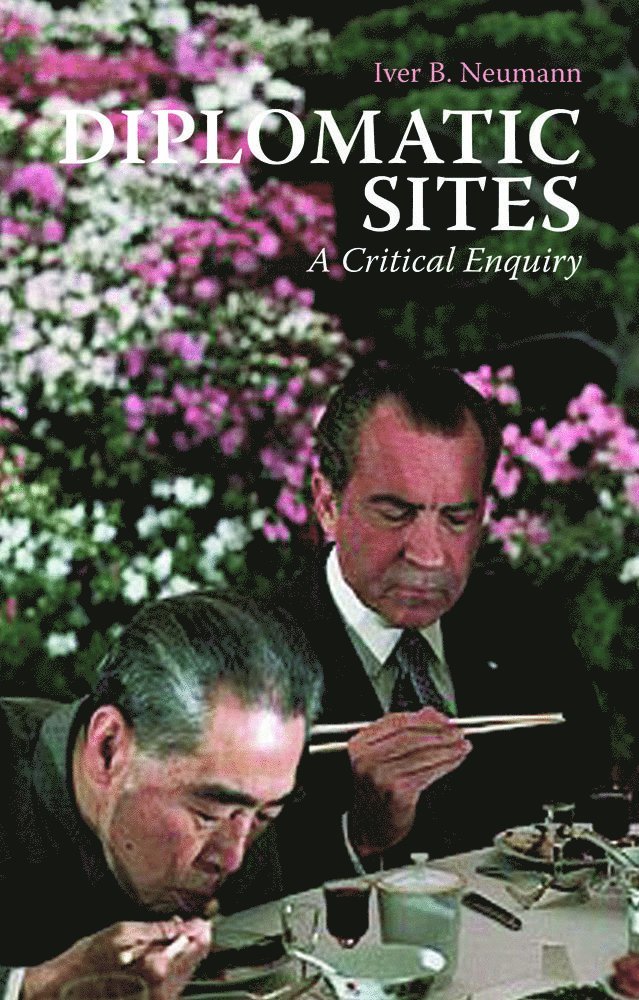
Although diplomacy increasingly takes place in non-traditional settings that are increasingly non-Western, our debates about diplomacy still focus on traditional points of contact such as the conference table, the ministerial office and the press conference. This book is framed as a discussion on whether increasing globalisation and the rise of powers such as China, India and Brazil will precipitate a crisis in diplomacy; it also tackles the problem of diplomatic Eurocentrism head on. The author, who has broad working experience of diplomacy, reflects on sites that range from the dining table - - a quotidian and elementary meeting place where all kinds of business is settled amid a variety of culturally specific but little-known practices - - via the civil-war interstices where diplomats from third parties try to facilitate and mediate conflict, to grand diplomatic extravaganzas, the object of which is to overwhelm the other party. In a media age, popular understanding of diplomacy is a force to be reckoned with, hence the book discusses how diplomacy is represented in an almost wholly overlooked space, namely that of popular culture. The author concludes that, far from being in crisis, diplomatic activity is increasingly in evidence in a variety of sites. Rather than being a dying art, in today's globalised world it positively thrives.
208 kr
Skickas inom 7-10 vardagar
The militant Islam represented by Al-Qaeda is often described as a global movement. Apart from the geographical range of its operations and support, little else is held to define it as 'global'.Landscapes of the Jihad explores the features that Al-Qaeda and other strands of militant Islam share in common with global movements. These include a decentralised organisation and an emphasis on ethical rather than properly political action.Devji brings these and other characteristics of Al-Qaeda together in an analysis of the jihad that locates it squarely within the transformationof political thought after the Cold War. The jihad emerges from the breakdown of traditional as well as modern forms of authority in the Muslim world. It is neither dogmatic in an old-fashioned way nor ideological in the modern sense, and concernedneither with correct doctrinal practice in the present nor with some revolutionary utopia of the future. Instead it is fragmented, dispersed and highly individualistic.
461 kr
Skickas inom 7-10 vardagar
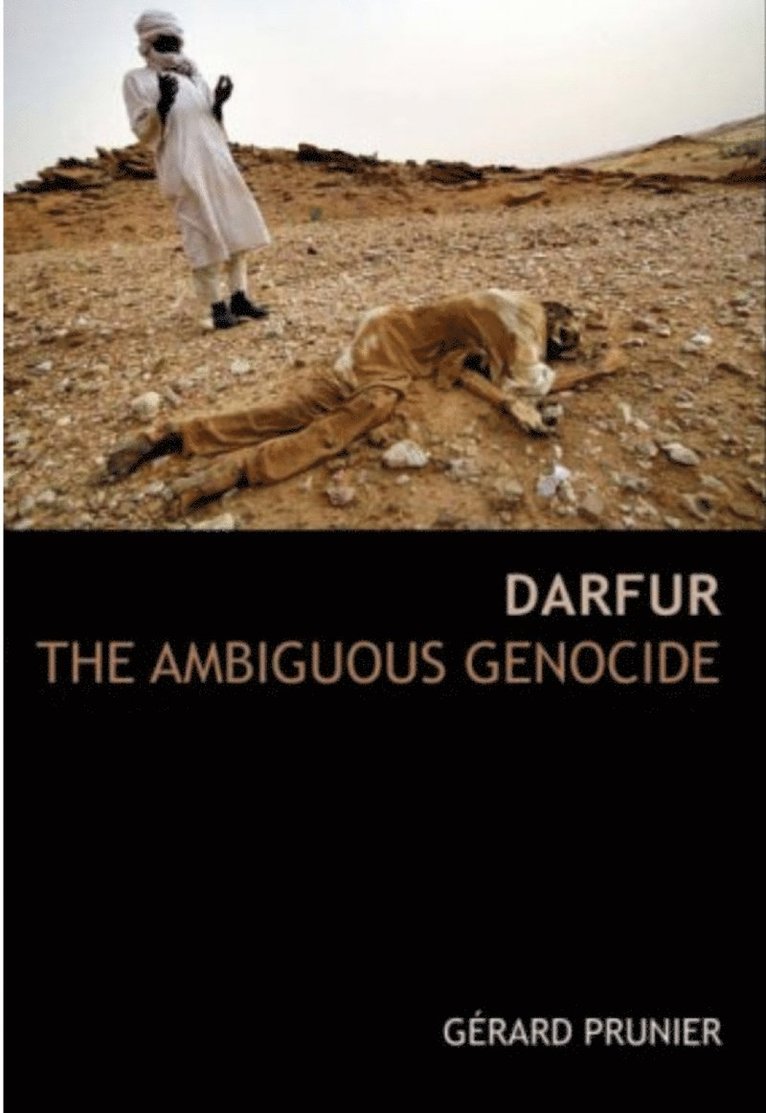
In mid-2004 the Darfur crisis in Western Sudan forced itself on to the centre stage of world affairs. A formerly obscure 'tribal conflict' in the heart of Africa has escalated into what could be the first genocide of the twenty-first century. Its characteristics - Arabism, Islamism, African consciousness, famine as a weapon of war, mass rape, international obfuscation and a refusal to look evil squarely in the face - reflect many of the problems of the global South in general and Africa in particular. Because of the urgent need for knowledge about this humanitarian catastrophe, journalistic explanations of the unfolding crisis have often been rushed and given to hurried generalisations and inaccuracies. Darfur: The Ambiguous Genocide explains what lies behind the conflict, how it came about, why it should not be over-simplified and why it is so relevant to the future of the continent. Prunier sets out the ethnopolitical make up of the Sudan and explains why the Darfur rebellion is regarded as a key threat to Arab power in the country, much more so than the secessionism of the Christian south. This, he argues, accounts for the government's deployment of 'exemplary violence' by the Janjaweed militias in order to cow other Black Muslims into subservience.