Debating Law - Böcker
Visar alla böcker i serien Debating Law. Handla med fri frakt och snabb leverans.
5 produkter
5 produkter
309 kr
Kommande
Who is best placed in medical decision-making, to decide: the patient or the doctor? In this important new volume in the Debating Law series, Imogen Goold argues that the law should strongly support individual choice and autonomy. Medical decisions, she argues, are deeply personal, with life-changing consequences, and it must be for the patient to make them. Even in the event of those decisions ultimately harming the patient, fully informed, autonomous decisions by the patient must be supported by the law. Jonathan Herring counters, arguing that placing the an overriding emphasis on personal autonomy does not always achieve the best outcome for the patient. He argues instead that in certain circumstances, best interest considerations must take precedence over autonomous decision-making. He suggests that the law does not support autonomy as is commonly claimed, but instead takes a much more nuanced approach, balancing the principle of autonomy against other principles and considerations. This is a fascinating addition to this compelling series which grapples with the most pressing issues facing lawyers today.
351 kr
Skickas inom 10-15 vardagar
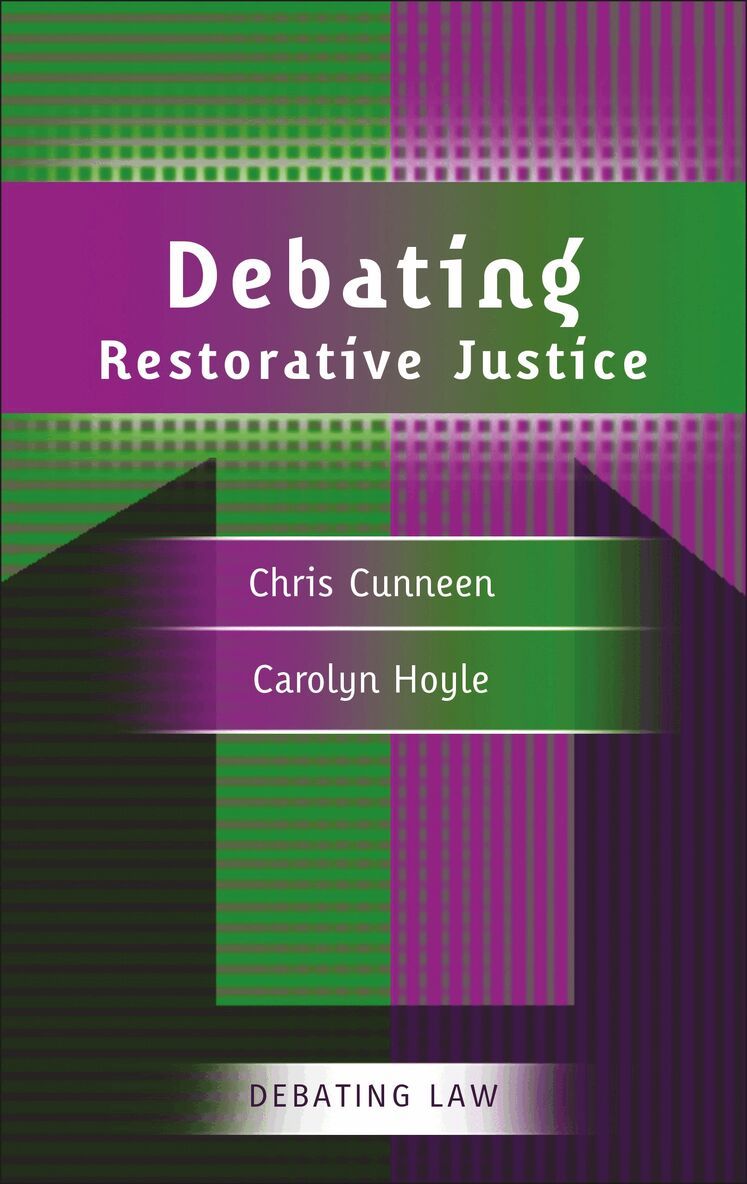
Debating Law is a new, exciting series that gives scholarly experts the opportunity to offer contrasting perspectives on significant topics of contemporary, general interest. In this first volume of the series Carolyn Hoyle argues that communities and the state should be more restorative in responding to harms caused by crimes, antisocial behaviour and other incivilities. She supports the exclusive use of restorative justice for many non-serious offences, and favours approaches that, by integrating restorative and retributive philosophies, take restorative practices into the 'deep end' of criminal justice. While acknowledging that restorative justice appears to have much to offer in terms of criminal justice reform, Chris Cunneen offers a different account, contending that the theoretical cogency of restorative ideas is limited by their lack of a coherent analysis of social and political power. He goes on to argue that after several decades of experimentation, restorative justice has not produced significant change in the criminal justice system and that the attempt to establish it as a feasible alternative to dominant practices of criminal justice has failed.This lively and valuable debate will be of great interest to everyone interested in the criminal justice system.
351 kr
Skickas inom 10-15 vardagar
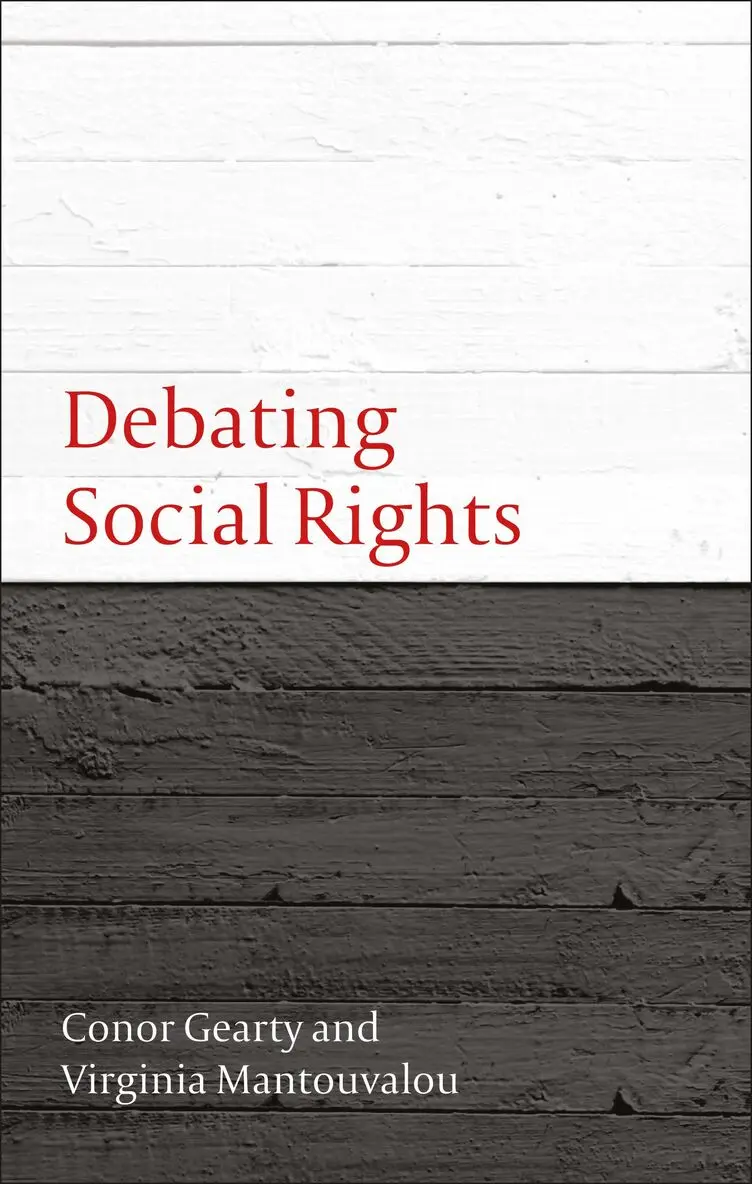
Debating Law is a new series that gives scholarly experts the opportunity to offer contrasting perspectives on significant topics of contemporary, general interest. In this second volume of the series, Conor Gearty argues that for rights to work effectively in the wider promotion of social justice, they need to be kept as far away as possible from the courts. He acknowledges the value of rights language in legal and political debate and accepts that human rights are not solely civil and political, with social rights language clearly having a progressive, emancipatory dimension. However he says that lawyers - even well-intentioned lawyers - damage the achievability of the kind of radical transformation in the priorities of states that a genuine commitment to social rights surely necessitates. Virginia Mantouvalou argues that social rights, defined as entitlements to the satisfaction of basic needs, are as essential for the well-being of the individual and the community as long-established civil and political rights. The real challenge, she suggests, is how best to give effect to social rights.Drawing on examples from around the world, she argues for their 'legalisation', and examines the role of courts and the role of legislatures in this process, both at a national and a international level.
351 kr
Skickas inom 10-15 vardagar
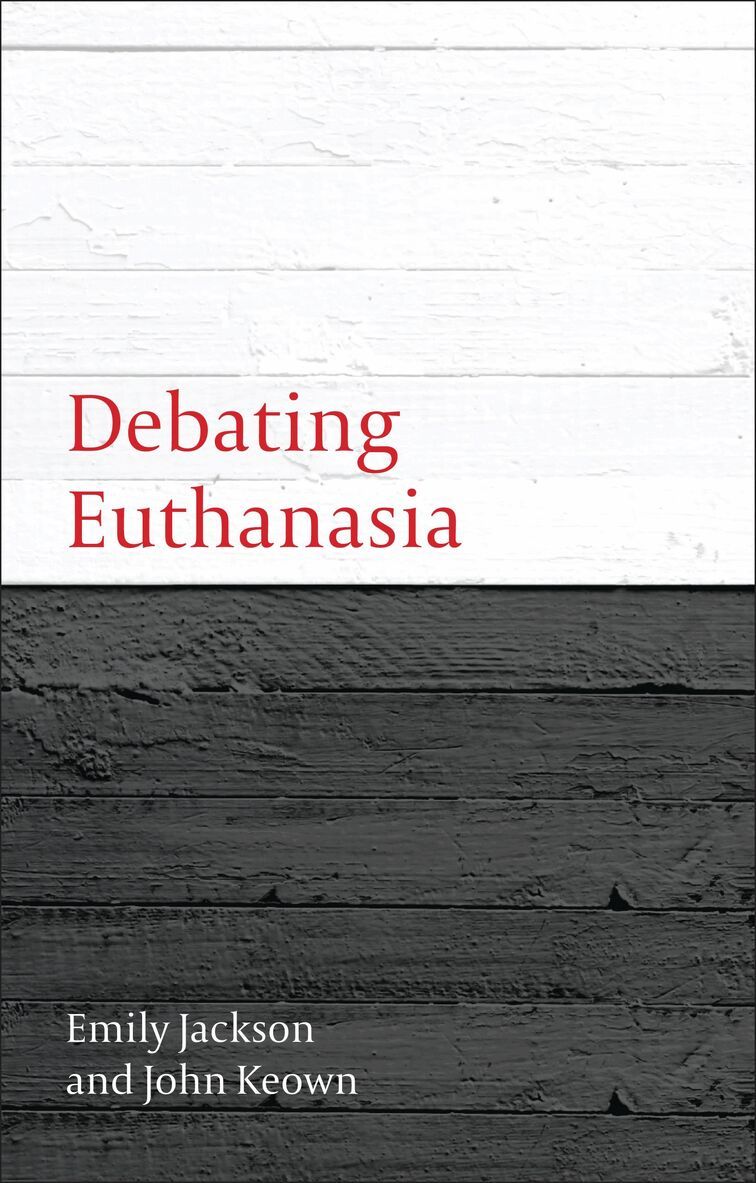
In this new addition to the 'Debating Law' series, Emily Jackson and John Keown re-examine the legal and ethical aspects of the euthanasia debate.Emily Jackson argues that we owe it to everyone in society to do all that we can to ensure that they experience a 'good death'. For a small minority of patients who experience intolerable and unrelievable suffering, this may mean helping them to have an assisted death. In a liberal society, where people's moral views differ, we should not force individuals to experience deaths they find intolerable. This is not an argument in favour of dying. On the contrary, Jackson argues that legalisation could extend and enhance the lives of people whose present fear of the dying process causes them overwhelming distress. John Keown argues that voluntary euthanasia and physician-assisted suicide are gravely unethical and he defends their continued prohibition by law. He analyses the main arguments for relaxation of the law - including those which invoke the experience of jurisdictions which permit these practices - and finds them wanting. Relaxing the law would, he concludes, be both wrong in principle and dangerous in practice, not least for the dying, the disabled and the disadvantaged.
367 kr
Kommande
Does hate speech undermine democracy, by attacking its most vulnerable members? Does it threaten the equal dignity of all citizens? Or are democracy and equality degraded not by hateful expression, but by censorship? Do hate speech bans give governments too much control over thought and ideas, or do bans secure the conditions for ideas to be meaningfully debated? Should each society choose its own rules? Or are some principles of free expression universal? Whom should hate speech bans protect: racial and ethnic groups, religious communities, women, sexual minorities, the disabled? Should we ban hateful words and images in public spaces but not on the internet? Heinze and Phillipson draw on law, politics, philosophy and ethics to debate these questions. For Phillipson, narrowly drawn hate speech bans are essential to the social contract – a prerequisite for democratic deliberation, and a symbolic protection of every citizen’s basic dignity. Heinze replies that punitive rules imposed to silence hateful views damage democracy, and governments have more legitimate and effective means of combating harmful speech. Drawing upon European, American and Commonwealth perspectives, this book will be of interest not only to lawyers, but also to readers in philosophy, politics and journalism.