Dimensions of Asian Spirituality – serie
Visar alla böcker i serien Dimensions of Asian Spirituality. Handla med fri frakt och snabb leverans.
13 produkter
13 produkter
200 kr
Karma has become a household word in the modern world, where it is associated with the belief in rebirth determined by one’s deeds in earlier lives. This belief was and is widespread in the Indian subcontinent as is the word “karma” itself. In lucid and accessible prose, this book presents karma in its historical, cultural, and religious context.Initially, karma manifested itself in a number of religious movements?most notably Jainism and Buddhism?and was subsequently absorbed into Brahmanism in spite of opposition until the end of the first millennium C.E. Philosophers of all three traditions were confronted with the challenge of explaining by what process rebirth and karmic retribution take place. Some took the drastic step of accepting the participation of a supreme god who acted as a cosmic accountant, others of opting for radical idealism. The doctrine of karma was confronted with alternative explanations of human destiny, among them the belief in the transfer of merit. It also had to accommodate itself to devotional movements that exerted a major influence on Indian religions.The book concludes with some general reflections on the significance of rebirth and karmic retribution, drawing attention to similarities between early Christian and Indian ascetical practices and philosophical notions that in India draw their inspiration from the doctrine of karma.
521 kr
Skickas inom 7-10 vardagar
Korea has one of the most dynamic and diverse religious cultures of any nation on earth. Koreans are highly religious, yet no single religious community enjoys dominance. Buddhists share the Korean religious landscape with both Protestant and Catholic Christians as well as with shamans, Confucians, and practitioners of numerous new religions. As a result, Korea is a fruitful site for the exploration of the various manifestations of spirituality in the modern world. At the same time, however, the complexity of the country's religious topography can overwhelm the novice explorer.Emphasizing the attitudes and aspirations of the Korean people rather than ideology, Don Baker has written an accessible aid to navigating the highways and byways of Korean spirituality. He adopts a broad approach that distinguishes the different roles that folk religion, Buddhism, Confucianism, Christianity, and indigenous new religions have played in Korea in the past and continue to play in the present while identifying commonalities behind that diversity to illuminate the distinctive nature of spirituality on the Korean peninsula.
178 kr
Skickas inom 7-10 vardagar
Korea has one of the most dynamic and diverse religious cultures of any nation on earth. Koreans are highly religious, yet no single religious community enjoys dominance. Buddhists share the Korean religious landscape with both Protestant and Catholic Christians as well as with shamans, Confucians, and practitioners of numerous new religions. As a result, Korea is a fruitful site for the exploration of the various manifestations of spirituality in the modern world. At the same time, however, the complexity of the country's religious topography can overwhelm the novice explorer.Emphasizing the attitudes and aspirations of the Korean people rather than ideology, Don Baker has written an accessible aid to navigating the highways and byways of Korean spirituality. He adopts a broad approach that distinguishes the different roles that folk religion, Buddhism, Confucianism, Christianity, and indigenous new religions have played in Korea in the past and continue to play in the present while identifying commonalities behind that diversity to illuminate the distinctive nature of spirituality on the Korean peninsula.
528 kr
Skickas inom 10-15 vardagar
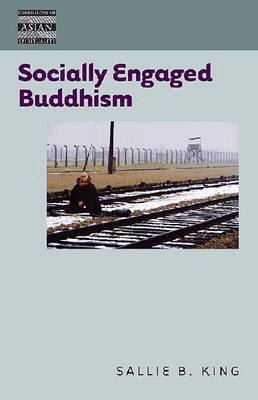
Socially Engaged Buddhism is an introduction to the contemporary movement of Buddhists, East and West, who actively engage with the problems of the world - social, political, economic, and environmental - on the basis of Buddhist ideas, values, and spirituality. Sallie B. King, one of North America's foremost experts on the subject, identifies in accessible language the philosophical and ethical thinking behind the movement and examines how key principles such as karma, the Four Noble Truths, interdependence, nonharmfulness, and nonjudgmentalism relate to social engagement. Many people believe that Buddhists focus exclusively on spiritual attainment. Professor King examines why Engaged Buddhists involve themselves with the problems of the world and how they reconcile this involvement with the Buddhist teaching of nonattachment from worldly things. Engaged Buddhists, she answers, point out that because the root of human suffering is in the mind, not the world, the pursuit of enlightenment does not require a turning away from the world. Working to reduce suffering in humans, living things, and the planet is integral to spiritual practice and leads to selflessness and compassion. ""Socially Engaged Buddhism"" is a sustained reflection on social action as a form of spirituality expressed in acts of compassion, grassroots empowerment, nonjudgmentalism, and nonviolence. It offers an inspiring example of how one might work for solutions to the troubles that threaten the peace and well-being of our planet and its people.
178 kr
Skickas inom 7-10 vardagar
Socially Engaged Buddhism is an introduction to the contemporary movement of Buddhists, East and West, who actively engage with the problems of the world - social, political, economic, and environmental - on the basis of Buddhist ideas, values, and spirituality. Sallie B. King, one of North America's foremost experts on the subject, identifies in accessible language the philosophical and ethical thinking behind the movement and examines how key principles such as karma, the Four Noble Truths, interdependence, nonharmfulness, and nonjudgmentalism relate to social engagement. Many people believe that Buddhists focus exclusively on spiritual attainment. Professor King examines why Engaged Buddhists involve themselves with the problems of the world and how they reconcile this involvement with the Buddhist teaching of nonattachment from worldly things. Engaged Buddhists, she answers, point out that because the root of human suffering is in the mind, not the world, the pursuit of enlightenment does not require a turning away from the world. Working to reduce suffering in humans, living things, and the planet is integral to spiritual practice and leads to selflessness and compassion. ""Socially Engaged Buddhism"" is a sustained reflection on social action as a form of spirituality expressed in acts of compassion, grassroots empowerment, nonjudgmentalism, and nonviolence. It offers an inspiring example of how one might work for solutions to the troubles that threaten the peace and well-being of our planet and its people.
528 kr
Skickas inom 10-15 vardagar
178 kr
Skickas inom 7-10 vardagar
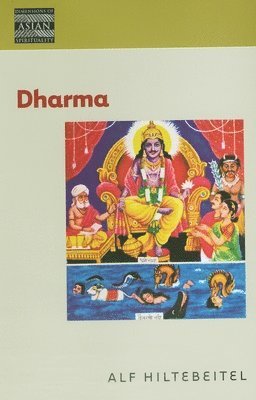
This introductory work proposes a fresh take on the ancient Indian concept dharma. By unfolding how, even in its developments as "law" and custom, dharma participates in nuanced and multifarious understandings of the term that play out in India’s great spiritual traditions, the book offers insights into the innovative character of both Hindu and Buddhist usages of the concept. Alf Hiltebeitel, in an original approach to early Buddhist usages, explores how the Buddhist canon brought out different meanings of dharma. This is followed by an exposition of the hypothesis that most, if not all, of the Hindu law books flowered after the third-century BC emperor Asoka, a Buddhist, made dharma the guiding principle of an entire realm and culture. A discussion built around the author’s expertise on the Sanskrit epics shows how their narratives amplified the new Brahmanical norms and brought out the ethical dilemmas and spiritual teachings that arose from inquiry into dharma.A chapter on the tale of the Life of the Buddha considers the relation between dharma, moksa/nirvana (salvation), and bhakti (devotion). Here, Hiltebeitel ties together a thread that runs through the entire story, which is the Buddha’s tendency to present dharma as a kind of civil discourse. In this sense, dharma challenges people to think critically or at least more creatively about their ethical principles and the foundations of their own spiritual values. A closing chapter on dharma in the twenty-first century explores its new cachet in an era of globalization, its diasporic implications, its openings into American popular culture, some implications for women, and the questions it is still raising for modern India.
528 kr
Skickas inom 10-15 vardagar
528 kr
Skickas inom 10-15 vardagar
Karma has become a household word in the modern world, where it is associated with the belief in rebirth determined by one’s deeds in earlier lives. This belief was and is widespread in the Indian subcontinent as is the word “karma” itself. In lucid and accessible prose, this book presents karma in its historical, cultural, and religious context.Initially, karma manifested itself in a number of religious movements?most notably Jainism and Buddhism?and was subsequently absorbed into Brahmanism in spite of opposition until the end of the first millennium C.E. Philosophers of all three traditions were confronted with the challenge of explaining by what process rebirth and karmic retribution take place. Some took the drastic step of accepting the participation of a supreme god who acted as a cosmic accountant, others of opting for radical idealism. The doctrine of karma was confronted with alternative explanations of human destiny, among them the belief in the transfer of merit. It also had to accommodate itself to devotional movements that exerted a major influence on Indian religions.The book concludes with some general reflections on the significance of rebirth and karmic retribution, drawing attention to similarities between early Christian and Indian ascetical practices and philosophical notions that in India draw their inspiration from the doctrine of karma.
528 kr
Skickas inom 10-15 vardagar
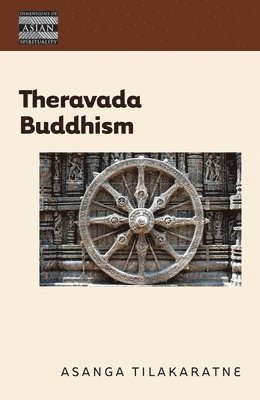
This book brings to life the age-old religious tradition of Theravada (literally, “view of the elders”) Buddhism as it is found in ancient texts and understood and practiced today in South and Southeast Asia. Following a brief introduction to the life of the historical Buddha and the beginning of his mission, the book examines the Triple Gem (the Buddha, his teachings, and the community of monastic followers) and the basic teachings of the Buddha in the earliest available Pali sources. Basic Buddhist concepts such as dependent co-origination, the four noble truths, the three trainings, and karma and its result are discussed in non-technical language, along with the Buddha’s message on social wellbeing.The author goes on to chronicle his own involvement as an observer-participant in “the Theravada world,” where he was born and raised. His is a rare first-hand account of living Theravada Buddhism not only in its traditional habitats, but also in the world at large at the dawn of the twenty-first century. He concludes with a discussion on what is happening to Theravada today across the globe, covering issues such as diaspora Buddhism, women’s Buddhism, and engaged Buddhism. The book’s accessible language and clear explication of Theravada doctrine and texts make this an ideal introduction for the student and general reader.
304 kr
Skickas inom 3-6 vardagar
This book brings to life the age-old religious tradition of Theravada (literally, “view of the elders”) Buddhism as it is found in ancient texts and understood and practiced today in South and Southeast Asia. Following a brief introduction to the life of the historical Buddha and the beginning of his mission, the book examines the Triple Gem (the Buddha, his teachings, and the community of monastic followers) and the basic teachings of the Buddha in the earliest available Pali sources. Basic Buddhist concepts such as dependent co-origination, the four noble truths, the three trainings, and karma and its result are discussed in non-technical language, along with the Buddha’s message on social wellbeing.The author goes on to chronicle his own involvement as an observer-participant in “the Theravada world,” where he was born and raised. His is a rare first-hand account of living Theravada Buddhism not only in its traditional habitats, but also in the world at large at the dawn of the twenty-first century. He concludes with a discussion on what is happening to Theravada today across the globe, covering issues such as diaspora Buddhism, women’s Buddhism, and engaged Buddhism. The book’s accessible language and clear explication of Theravada doctrine and texts make this an ideal introduction for the student and general reader.
528 kr
Skickas inom 10-15 vardagar
“What is the sound of one hand clapping?” “Does a dog have Buddha-nature?” These cryptic expressions are among the best-known examples of koans, the confusing, often contradictory sayings that form the centrepiece of Zen Buddhist learning and training. Viewed as an ideal method for attaining and transmitting an unimpeded experience of enlightenment, they became the main object of study in Zen meditation, where their contemplation was meant to exhaust the capacity of the rational mind and the expressiveness of speech. Koan compilations, which include elegant poetic and eloquent prose commentaries on cryptic dialogues, are part of a great literary tradition in China, Japan, and Korea that appealed to intellectuals who sought spiritual fulfilment through interpreting elaborate rhetoric related to mysterious metaphysical exchanges.In this compact volume, Steven Heine, who has written extensively on Zen Buddhism and koans, introduces and analyses the classic background of texts and rites and explores the contemporary significance of koans to illuminate the full implications of this ongoing tradition. He delves deeply into the inner structure of koan literature to uncover and interpret profound levels of metaphorical significance. At the same time, he takes the reader beyond the veil of vagueness and inscrutability to an understanding of how koan writings have been used in pre-modern East Asia and are coming to be evoked and implemented in modern American practice of Zen.By focusing on two main facets of the religious themes expressed in koan records—individual religious attainment and the role dialogues play in maintaining order in the monastic system—Zen Koans reveals the distinct yet interlocking levels of meaning reflected in different koan case records and helps make sense of the seemingly nonsensical. It is a book for anyone interested in untangling the web of words used in Zen exchanges and exploring their important place in the vast creative wellspring of East Asian religion and culture.
178 kr
Skickas inom 7-10 vardagar
“What is the sound of one hand clapping?” “Does a dog have Buddha-nature?” These cryptic expressions are among the best-known examples of koans, the confusing, often contradictory sayings that form the centrepiece of Zen Buddhist learning and training. Viewed as an ideal method for attaining and transmitting an unimpeded experience of enlightenment, they became the main object of study in Zen meditation, where their contemplation was meant to exhaust the capacity of the rational mind and the expressiveness of speech. Koan compilations, which include elegant poetic and eloquent prose commentaries on cryptic dialogues, are part of a great literary tradition in China, Japan, and Korea that appealed to intellectuals who sought spiritual fulfilment through interpreting elaborate rhetoric related to mysterious metaphysical exchanges.In this compact volume, Steven Heine, who has written extensively on Zen Buddhism and koans, introduces and analyses the classic background of texts and rites and explores the contemporary significance of koans to illuminate the full implications of this ongoing tradition. He delves deeply into the inner structure of koan literature to uncover and interpret profound levels of metaphorical significance. At the same time, he takes the reader beyond the veil of vagueness and inscrutability to an understanding of how koan writings have been used in pre-modern East Asia and are coming to be evoked and implemented in modern American practice of Zen.By focusing on two main facets of the religious themes expressed in koan records—individual religious attainment and the role dialogues play in maintaining order in the monastic system—Zen Koans reveals the distinct yet interlocking levels of meaning reflected in different koan case records and helps make sense of the seemingly nonsensical. It is a book for anyone interested in untangling the web of words used in Zen exchanges and exploring their important place in the vast creative wellspring of East Asian religion and culture.