Duckworth Debates in Archaeology - Böcker
Visar alla böcker i serien Duckworth Debates in Archaeology. Handla med fri frakt och snabb leverans.
12 produkter
12 produkter
446 kr
Skickas inom 5-8 vardagar
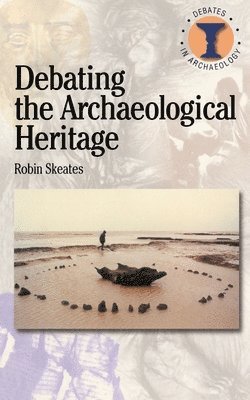
Throughout the world, competing interest groups lay claim to the material remains of the past. Archaeologists, developers, indigenous 'first peoples' , looters, museum curators, national government officals, New Age worshippers, private collectors, tourists - all want their share. This introduction to contemporary debates surrounding their rival claims deals with defining, owning, protecting, managing, interpreting, and experiencing the archaeological heritage. Fundamental questions are considered: What is 'archaeological heritage'? Who should own and control the material culture of the past? How should these remains be protected? How should the archaeological heritage be presented to the public? Robin Skeates calls for greater communication and co-operation between archaeologists and other interest groups, urging archaeologists to increase the involvement of local people in the culturally valuable and vulnerable material remains of their past, and in archaeological research that attempts to be objective.
446 kr
Skickas inom 5-8 vardagar
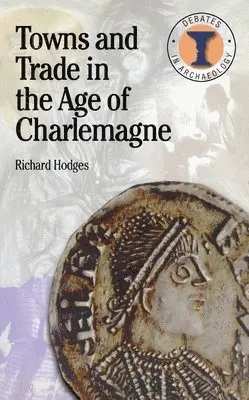
This text examines the important continuing discussion of the rebirth of urbanism in Carolingian Europe. Drawing upon a good deal of new archaeological evidence from southern and northern Europe, Richard Hodges looks at the end of towns in Roman antiquity, the phenomenon of the Dark Age emporium, and the hotly disputed mechanisms which led to the inception of market towns during the age of Charlemagne. Much use is made, in particular, of recently excavated evidence from the Mediterranean, as well as from England.
446 kr
Skickas inom 5-8 vardagar
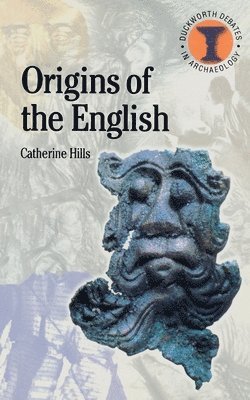
National origins remain as important as they have ever been to our sense of identity. Accounts of the early history of the peoples of Europe, including the English, are key tools in our construction of that identity. National identity has been studied through a range of different types of evidence - historical, archaeological, linguistic and most recently genetic. This has caused problems of interdisciplinary communication. In this book Catherine Hills carefully and succinctly unravels these different perceptions and types of evidence to assess how far it is really possible to understand when and how the people living in south and east Britain became 'English'.
398 kr
Skickas inom 5-8 vardagar
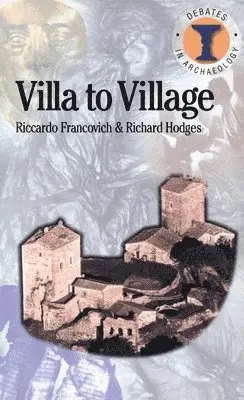
"Villa to Village" challenges the historical view that hilltop villages in Italy were first founded in the tenth century. Drawing upon recent excavations, the authors show that the makings of the medieval village lie in the demise of the Roman villa in late antiquity. The book describes the lively debate between archaeologists and historians on this issue. It also examines the evidence for the first manorial villages of the Carolingian era and describes how these were transformed into the familiar feudal villages that are characteristic of much of Italy.
446 kr
Skickas inom 5-8 vardagar
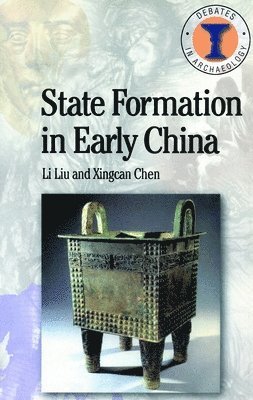
A study that makes use of an interdisciplinary approach to challenge traditional theories of state formation in China and promote debate on early Chinese history. Analyzing data from archaeology, geology, cultural geography, ethnohistory and ancient texts, the authors show how the procurement of key external resources - especially metal and salt - drove the dynamics of state formation in early China in the period of 1800-1400BC.
398 kr
Skickas inom 5-8 vardagar
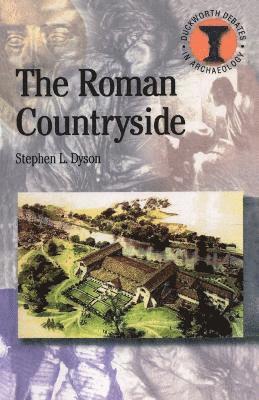
In this work, Stephen Dyson provides a new synthesis, describing current research on the Roman countryside within a topological rather than a geographical or historical framework. He first examines the Roman villa, looking at changing interpretations of the villa and the ways they have been shaped both by new information and evolving interpretative models, relating the survey-settlement evidence to larger questions of landscape use and landscape transformation during the Roman period. Focusing on areas where some of the most innovative rural research has been conducted - Italy, North Africa, Spain and France - he discusses what happened in rural areas in the period of transition between the end of Antiquity and the emergence of medieval society, showing that the period of transition was much longer than previously thought and that there was tremendous variation not only between one part of the Empire and another, but between micro-regions within a single province.
446 kr
Skickas inom 5-8 vardagar
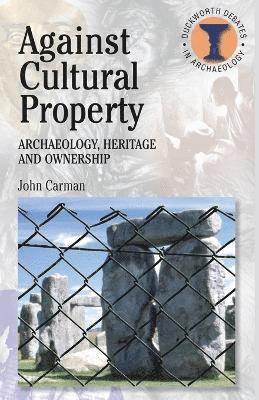
This series of short volumes, each devoted to a theme which is the subject of contemporary debate in archaeology, ranges from issues in theory and method to aspects of world archaeology. If 'all property is theft', then cultural property is nothing less than the theft of culture. The term 'cultural property' is widespread in the field of heritage management and is a particularly powerful concept in legal approaches. The term and the concept it represents are never discussed, however. The idea that material that comes to us from the past should be considered 'property' accordingly seems to be taken for granted by those charged with its care. Any debate that does take place is limited to comparing private with state ownership, often under the pretence that the latter represents a form of 'stewardship'. This radical work seeks to challenge the dominance of these limiting ideas by looking for alternatives. Taking as a starting-point the four different types of property relation generally recognised by lawyers and economists, the book explores the implications for cultural objects of different property regimes.In presenting an argument that the concept of 'property' is inappropriate for the heritage, the book challenges much that is taken for granted and undiscussed in the field of heritage management.
446 kr
Skickas inom 5-8 vardagar
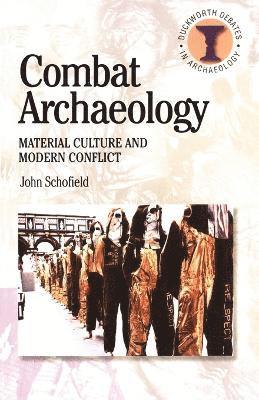
This series of short volumes, each devoted to a theme which is the subject of contemporary debate in archaeology, ranges from issues in theory and method to aspects of world archaeology. The archaeology of recent conflict is a fast-moving field of research. It is challenging and provocative. It deals with established historical events for which the material remains are unquestionably 'heritage', but also the more recent, tragic and heavily politicised events, actions and places whose meaning and significance is more ambiguous. But although recent and familiar, it is also a subject that draws closely on established principles of archaeological theory and practice, while also connecting with the related fields of history, anthropology, sociology, philosophy, art and representation. Here the author draws together projects and ideas from a diverse literature and from his own research, presenting them as a worked example of contemporary archaeology, of heritage management practice and of archaeological principles and theory. This study encapsulates a lively area of current debate: fascinating, challenging, controversial, contemporary and cross-disciplinary.
446 kr
Skickas inom 5-8 vardagar
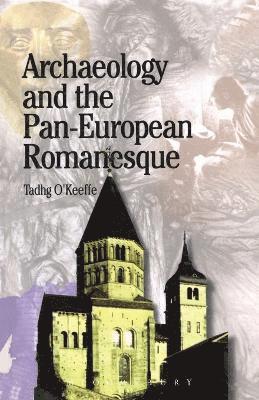
Romanesque is the style name given to the art and architecture of Europe in the eleventh and twelfth centuries. First used in the early nineteenth century to express the perceived indebtedness of the visual-artistic and architectural cultures of this period to their Classical antecedents, the term has survived two centuries of increasingly sophisticated readings of the relevant medieval buildings and objet d'art. The study of Romanesque as a stylistic phenomenon is now almost exclusively the preserve of art historians, particularly in the English-speaking world. Here 'the Romanesque' is subjected to a long overdue, theoretically-informed, archaeological inquiry. The ideological foundations and epistemological boundaries of Romanesque scholarship are critiqued, and the constructs of 'Romanesque' and 'Europe' are deconstructed, and alternative strategies for interpreting Romanesque's constituent material are mapped out. This book should, at the very least, illuminate the need for debate.
446 kr
Skickas inom 5-8 vardagar
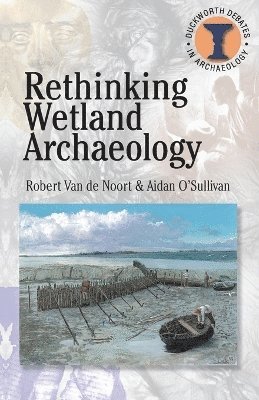
This series of short volumes, each devoted to a theme, which is the subject of contemporary debate in archaeology, ranges from issues in theory and method to aspects of world archaeology. Wetland archaeology has provided some of the most exciting discoveries in world archaeology, from bog bodies in northern Europe, to prehistoric and medieval wetland dwellings in central and western Europe, New Zealand, Japan and the Pacific Northwest. Arguably, however, the amount of evidence from these sites and the need for intense multidisciplinary scientific analysis, allied to a general tendency towards empiricist research, has led to wetland archaeology being isolated from current theoretical debates. "Rethinking Wetland Archaeology" shows how wetland studies can be contextualised within broader geographical, cultural and theoretical frameworks. It discusses how wetland archaeological discoveries can be understood in terms of past people's perception and understanding of landscape, which was not only a source of economic benefit, but a storehouse of, and a metaphor for, cultural values and beliefs.It argues that archaeologists interested in the temporal rhythms of life, and in cultural biographies of place and objects, should look again at the astonishingly detailed narratives produced by wetland archaeology. Finally, it considers the past and future role of wetland archaeologists in contemporary political and social discourses.
446 kr
Skickas inom 5-8 vardagar
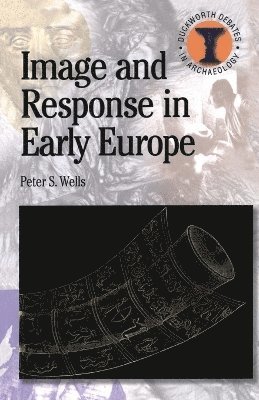
Did people in the Iron Age see their bronze figurines and sculpted stones differently from the way we see them today? How can we approach the problem of determining how they saw things? How different was their experience viewing these objects in the course of their use, from ours as we look at them in museum cases or through photographs in books? Recent research in cognitive neuroscience and cognitive psychology forms the theoretical basis for a new approach to understanding the visual basis of communication in early Europe. The focus is on societies from the Early Iron Age to the early medieval period in temperate Europe, at the time that traditions of writing were gradually being adopted in this part of the world.Following review of the most relevant results of new experiments and observations in those sciences, Peter S. Wells examines the visual aspects of the archaeological evidence to investigate the role that visuality - the visual quality of things - played in the expression of the self, in interaction between members of social groups, in ritual activity, and in the creation and experience of cultural landscapes.
446 kr
Skickas inom 5-8 vardagar
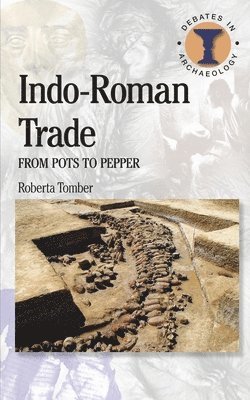
This book brings together for the first time archaeological findings from key ports throughout the Indian Ocean - the Red Sea, South Arabia, the Gulf and India - to build up a balanced picture of relations between East and West. Combined evidence from artefacts and documents reveals a complex situation whereby ordinary goods were carried alongside the more costly items - such as pepper, aromatics and gems - that drove the trade. Here the focus is on ordinary artefacts that uncover a network of Romans, Arabs, Sasanians and Indians who participated in the trade. The evidence from ceramics, especially, shows the interplay between these different ethnic groups, where they lived, when the trade was active, and even how it was organised. The book is arranged geographically, drawing on new evidence from archaeological sites and materials on the Red Sea and in India. A final chapter sketches the changing fortunes of trade between the first century BC and the seventh century AD in the light of these important new archaeological discoveries.