Aidan O'Sullivan – författare
Visar alla böcker från författaren Aidan O'Sullivan. Handla med fri frakt och snabb leverans.
9 produkter
9 produkter
E-bok
PDF, Engelska, 20121 698 kr
Läs direkt efter köp
The Oxford Handbook of Wetland Archaeology is the most comprehensive survey of global wetland archaeology ever published. Well known for the spectacular quality of its surviving evidence, from both an archaeological and environmental perspective, wetland archaeology enables scholars to investigate and reconstruct past people''s dwellings, landscapes, material culture, and daily lives in great detail. Through concise essays written by some of the world''s leading scholars in the field, this Handbook describes the key principles, methodologies, and revealing results of past and present archaeological investigations of wetland environments. The volume provides unique insights into past human interactions with lakes, bogs, rivers, and coastal marshlands across the world from prehistory to modern times. Opening with a detailed introduction by the editors, the Handbook is divided into seven parts and contains 54 essays and over 230 photographs, figures, maps, and graphs.
E-bok
Engelska, 20121 698 kr
Läs direkt efter köp
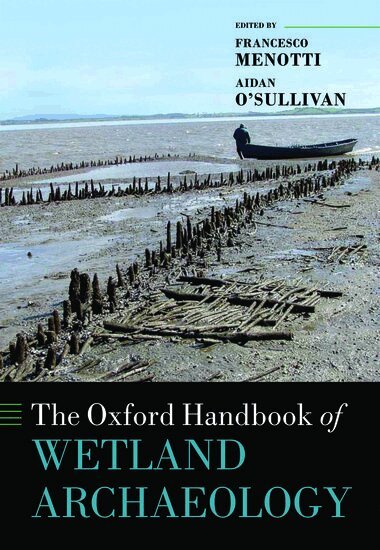
The Oxford Handbook of Wetland Archaeology is the most comprehensive survey of global wetland archaeology ever published. Well known for the spectacular quality of its surviving evidence, from both an archaeological and environmental perspective, wetland archaeology enables scholars to investigate and reconstruct past people''s dwellings, landscapes, material culture, and daily lives in great detail. Through concise essays written by some of the world''s leading scholars in the field, this Handbook describes the key principles, methodologies, and revealing results of past and present archaeological investigations of wetland environments. The volume provides unique insights into past human interactions with lakes, bogs, rivers, and coastal marshlands across the world from prehistory to modern times. Opening with a detailed introduction by the editors, the Handbook is divided into seven parts and contains 54 essays and over 230 photographs, figures, maps, and graphs.
Inbunden, Engelska, 2012
3 281 kr
Skickas inom 3-6 vardagar
The Oxford Handbook of Wetland Archaeology is the most comprehensive survey of global wetland archaeology ever published. Well known for the spectacular quality of its surviving evidence, from both an archaeological and environmental perspective, wetland archaeology enables scholars to investigate and reconstruct past people's dwellings, landscapes, material culture, and daily lives in great detail. Through concise essays written by some of the world's leading scholars in the field, this Handbook describes the key principles, methodologies, and revealing results of past and present archaeological investigations of wetland environments. The volume provides unique insights into past human interactions with lakes, bogs, rivers, and coastal marshlands across the world from prehistory to modern times. Opening with a detailed introduction by the editors, the Handbook is divided into seven parts and contains 54 essays and over 230 photographs, figures, maps, and graphs.
Häftad, Engelska, 2006
390 kr
Skickas inom 10-15 vardagar
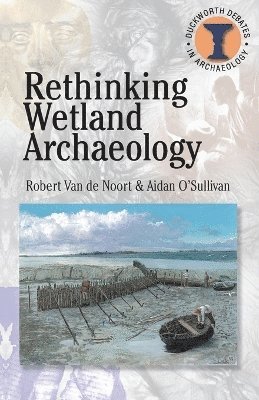
This series of short volumes, each devoted to a theme, which is the subject of contemporary debate in archaeology, ranges from issues in theory and method to aspects of world archaeology. Wetland archaeology has provided some of the most exciting discoveries in world archaeology, from bog bodies in northern Europe, to prehistoric and medieval wetland dwellings in central and western Europe, New Zealand, Japan and the Pacific Northwest. Arguably, however, the amount of evidence from these sites and the need for intense multidisciplinary scientific analysis, allied to a general tendency towards empiricist research, has led to wetland archaeology being isolated from current theoretical debates. "Rethinking Wetland Archaeology" shows how wetland studies can be contextualised within broader geographical, cultural and theoretical frameworks. It discusses how wetland archaeological discoveries can be understood in terms of past people's perception and understanding of landscape, which was not only a source of economic benefit, but a storehouse of, and a metaphor for, cultural values and beliefs.It argues that archaeologists interested in the temporal rhythms of life, and in cultural biographies of place and objects, should look again at the astonishingly detailed narratives produced by wetland archaeology. Finally, it considers the past and future role of wetland archaeologists in contemporary political and social discourses.
Del 2604 - BAR International Series
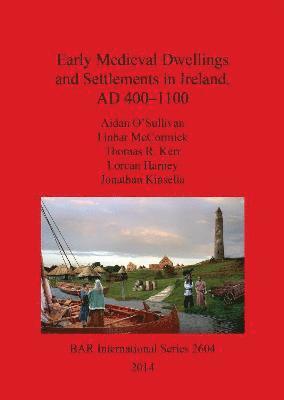
Early Medieval Dwellings and Settlements in Ireland AD 400-1100
Häftad, Engelska, 2014
1 556 kr
Skickas inom 5-8 vardagar
Del 2647 - BAR International Series
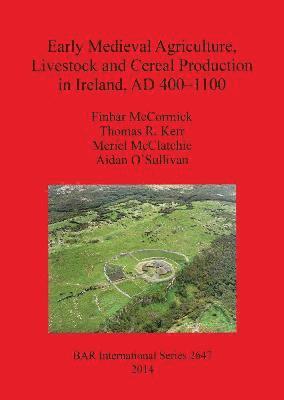
Early Medieval Agriculture Livestock and Cereal Production in Ireland AD 400-1100
Häftad, Engelska, 2014
1 870 kr
Skickas inom 5-8 vardagar
Del 2707 - BAR International Series
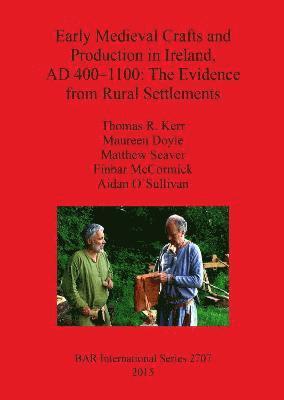
Early Medieval Crafts and Production in Ireland AD 400-1100: The Evidence from Rural Settlements
Häftad, Engelska, 2015
1 998 kr
Skickas inom 5-8 vardagar
Häftad, Engelska, 2019
668 kr
Skickas inom 3-6 vardagar
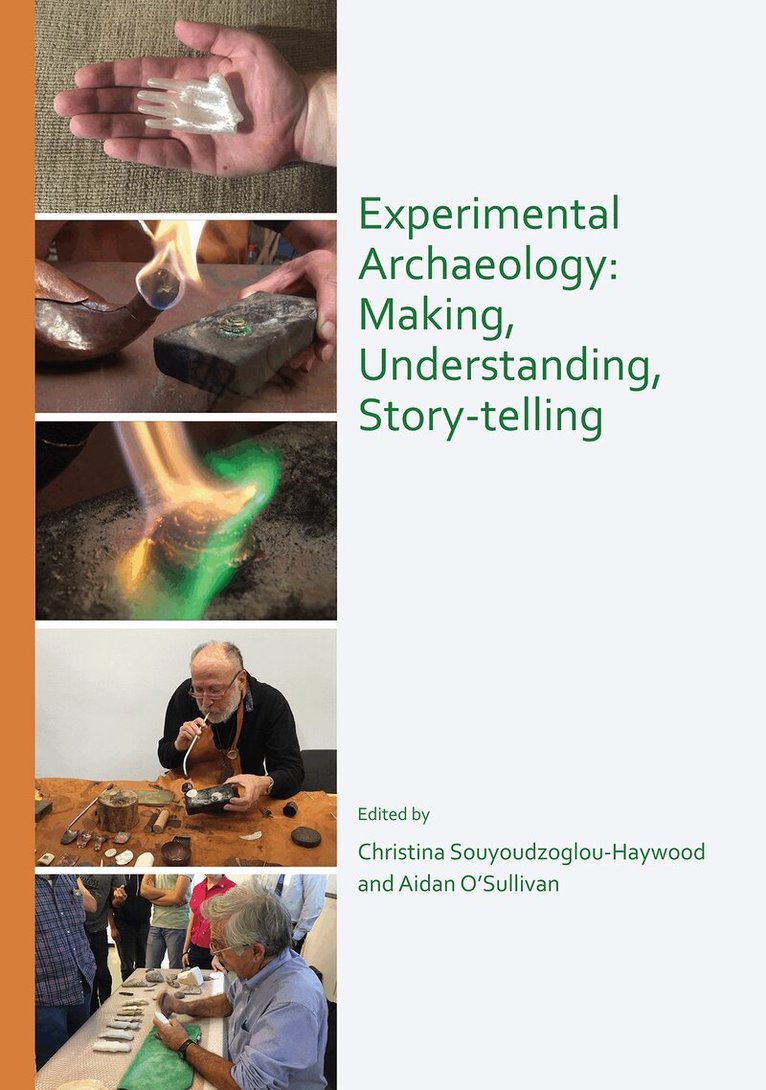
Experimental Archaeology: Making, Understanding, Story-telling is based on the proceedings of a two-day workshop on experimental archaeology at the Irish Institute of Hellenic Studies at Athens in 2017, in collaboration with UCD Centre for Experimental Archaeology and Material Culture. Scholars, artists and craftspeople explore how people in the past made things, used and discarded them, from prehistory to the Middle Ages. The papers include discussions of the experimental archaeological reconstruction and likely past experience of medieval houses, and also about how people cast medieval bronze brooches, or sharpened Bronze Age swords, made gold ornaments, or produced fresco wall paintings using their knowledge, skills and practices. The production of ceramics is explored through a description of the links between Neolithic pottery and textiles, through the building and testing of a Bronze Age Cretan pottery kiln, and through the replication and experience of Minoan figurines. The papers in this volume show that experimental archaeology can be about making, understanding, and storytelling about the past, in the present.
Häftad, Engelska, 2026
671 kr
Skickas
This volume provides a unique new Europe-wide perspective on the impact of infrastructure‑led archaeology on our knowledge of medieval rural settlement.Across the 5th–16th centuries, most of Europe’s population lived and worked in the countryside, based in villages, hamlets, farms and small towns. Some of these medieval settlements persist today, but many others were abandoned and, over time, erased from memory. Good infrastructure is essential for modern society to function well, but its construction can be immensely destructive of archaeological sites including medieval settlements whose remains are rarely sufficiently monumental to warrant costly redesign to preserve them intact. However, since the adoption across Europe of the ‘polluter pays’ principle obliging developers to fund the identification, investigation and recording for posterity of at-risk archaeological remains, our understanding of the extent and range of medieval settlement remains in the landscape has expanded substantially.The volume explores the paradox that ‘While large‑scale infrastructure projects represent a major challenge for archaeology, they also offer opportunities to expand scientific knowledge’ (Rácz & Sárosi, this volume). Fifteen new reviews by experts in medieval archaeology and heritage management in Austria, Belgium, Bulgaria, Croatia, Czech Republic, Denmark, England, France, Germany, Hungary, Ireland, Italy, Poland, Scotland and Spain consider the impact of discoveries from infrastructure-led archaeology on knowledge of rural settlement in the past, and on archaeological practice today. The volume culminates in a synthesising overview distilling transnational themes and identifying ten key actions shown by experience across these fifteen different states to maximise the knowledge dividend of infrastructure archaeology.This volume is essential reading for anyone interested in the historic countryside, heritage management or impactful archaeological investigation.