Edinburgh History of Ancient Rome – serie
Visar alla böcker i serien Edinburgh History of Ancient Rome. Handla med fri frakt och snabb leverans.
10 produkter
10 produkter
426 kr
Skickas inom 3-6 vardagar
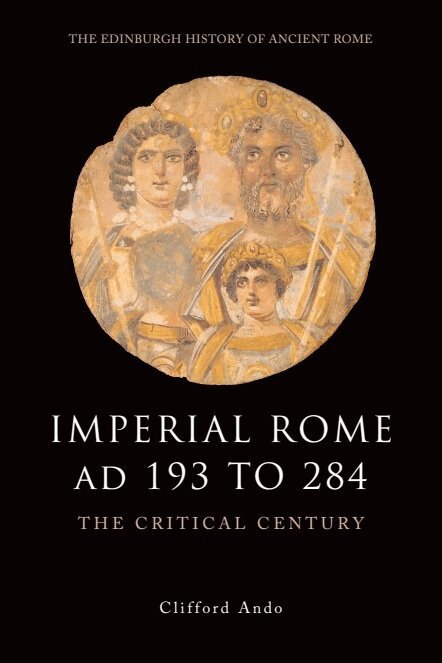
A pioneering history of this period of crisisThe Roman empire during the period framed by the accession of Septimus Severus in 193 and the rise of Diocletian in 284 has conventionally been regarded as one of crisis. Between 235 and 284, at least eighteen men held the throne of the empire, for an average of less than three years, a reckoning which does not take into account all the relatives and lieutenants with whom those men shared power. Compared to the century between the accession of Nerva and the death of Commodus, this appears to be a period of near unintelligibility. The middle of the century also witnessed catastrophic, if temporary, ruptures in the territorial integrity of the empire. Large portions of the eastern and western halves of the empire passed under the control of powers and principalities who assumed the mantle of Roman government and exercised meaningful and legitimate power over millions. Even those regions that remained Roman were subjected to deprivation and pillage by invading armies. The Roman peace, which had become in the last instance the justification for empire, had been shattered.Clifford Ando describes and integrates the contrasting histories of different parts of the empire and assesses the impacts of administrative, political and religious change.Key features:o Follows Rome's confrontation and conflict with a new world power, Sassanian Persia, in which two Roman emperors lost their liveso Devotes special attention to legal historyo Examines the changing nature of religious pluralism and the Christian persecutions
2 229 kr
Skickas inom 3-6 vardagar
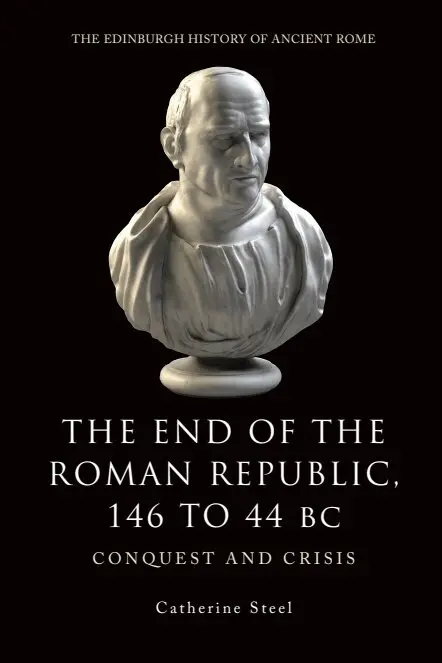
A crucial and turbulent centuryBy 146, Rome had established itself as the leading Mediterranean power.Over the next century, it consolidated its power into an immense territorial empire. At the same time, the internal balance of power shifted dramatically, as a narrow ruling elite was challenged first by the rest of Italy, and then by military commanders, a process which culminated in the civil war between Pompey and Caesar and the re-establishment of monarchy. Catherine Steel tells the history of this crucial and turbulent century, focussing on the issues of freedom, honour, power, greed and ambition, and the cherished but abused institutions of the Republic which were central to events then and which have preoccupied historians ever since.Key features:" traces the processes of change which transformed Rome from a republic to a monarchy" explores a period of political crisis in relation to its military and cultural dynamism" analyses the political culture of the Roman Republic as a dynamic and evolving system which reflected changes in citizenship and in the ruling elite
426 kr
Skickas
A crucial and turbulent centuryBy 146, Rome had established itself as the leading Mediterranean power.Over the next century, it consolidated its power into an immense territorial empire. At the same time, the internal balance of power shifted dramatically, as a narrow ruling elite was challenged first by the rest of Italy, and then by military commanders, a process which culminated in the civil war between Pompey and Caesar and the re-establishment of monarchy. Catherine Steel tells the history of this crucial and turbulent century, focussing on the issues of freedom, honour, power, greed and ambition, and the cherished but abused institutions of the Republic which were central to events then and which have preoccupied historians ever since.Key features:" traces the processes of change which transformed Rome from a republic to a monarchy" explores a period of political crisis in relation to its military and cultural dynamism" analyses the political culture of the Roman Republic as a dynamic and evolving system which reflected changes in citizenship and in the ruling elite
Augustan Rome 44 BC to AD 14
The Restoration of the Republic and the Establishment of the Empire
Inbunden, Engelska, 2012
2 592 kr
Skickas inom 3-6 vardagar
Augustus: How the Roman Empire came aboutThe reign of Augustus, the first of the Roman emperors, has been seen, both by contemporaries and over the centuries that have followed, as a pivotal moment in the history of Rome. The final stage in the move to monarchical government and the structures he put in place, which were to last largely unchanged for over two hundred years, ensured this; but Augustus himself remains an enigmatic figure. J. S. Richardson explores the processes which resulted in such a massive shift, and the often unforeseen events which led to the establishment of an empire and a dynasty.Key features:* a pivotal volume in the series* traces the changing shape of the entity that was ancient Rome through its political, cultural and economic history* demonstrates how the effectiveness and dominance of Rome as the centre of work power became increasingly obviousKeywords:Augustus; Roman Empire.
Augustan Rome 44 BC to AD 14
The Restoration of the Republic and the Establishment of the Empire
Häftad, Engelska, 2012
439 kr
Skickas
Augustus: How the Roman Empire came aboutThe reign of Augustus, the first of the Roman emperors, has been seen, both by contemporaries and over the centuries that have followed, as a pivotal moment in the history of Rome. The final stage in the move to monarchical government and the structures he put in place, which were to last largely unchanged for over two hundred years, ensured this; but Augustus himself remains an enigmatic figure. J. S. Richardson explores the processes which resulted in such a massive shift, and the often unforeseen events which led to the establishment of an empire and a dynasty.Key features:* a pivotal volume in the series* traces the changing shape of the entity that was ancient Rome through its political, cultural and economic history* demonstrates how the effectiveness and dominance of Rome as the centre of work power became increasingly obviousKeywords:Augustus; Roman Empire.
726 kr
Skickas inom 3-6 vardagar
A distinct perspective on the momentous religious change in the regionDiocletian (284-305) and his principal successor, Constantine (306-337), would rule the Roman world for over half a century and Constantine's sons would build on their legacy. Administrative reform encouraged the rise of a bureaucratic culture, provincial government was reshaped and became more hierarchical and the court became more structured. The period was also one of momentous religious change. With Constantine's adoption of Christianity as the favoured recipient of imperial patronage, the religious landscape would, over time, be radically reshaped.Jill Harries combines the administrative reform and religious change with accounts of war, women and imperial cities to offer a new and revealing view of the region.Key features:Focuses on the Emperor Constantine as a major figure and offers a context to his achievementAddresses the role of imperial women, often ignored for this periodStudies the control of empires and how rulers fashion their claims to legitimacyKeywords:Roman history; Late Antiquity; Later Roman Empire; History of Christianity; Diocletian; Constantine; Emperor Julian.
1 822 kr
Skickas inom 7-10 vardagar
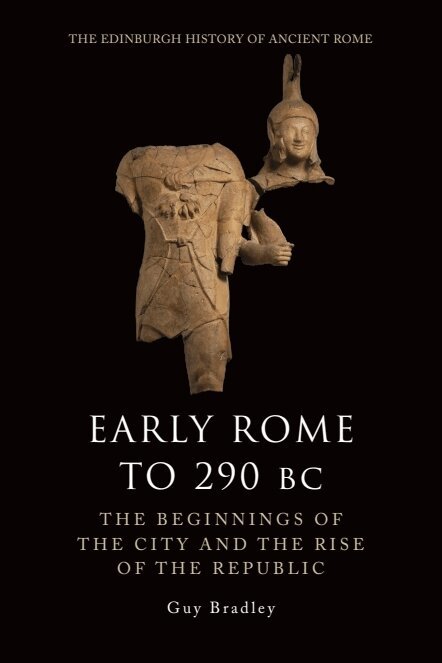
A new view of early Rome as a highly mobile society within a wider interconnected Mediterranean networkCovers the rise of Rome from small scale community to supremacy in central ItalyUses the latest archaeological evidence to demonstrate the sophisticated and cosmopolitan nature of early RomeAnalyses the origins of Rome's Republican form of government and of its aggressive drive to conquerIn the first few centuries of its existence, Rome developed from a minor settlement on the Tiber into the most powerful city-state in Italy. Guy Bradley examines the reasons for Rome's emergence and success within a highly competitive Italian environment, and how much it owed to its neighbours. He explains how many of Rome's key characteristics, such as its powerful ruling elite, its stable political institutions, its openness to outsiders, and its intensely militaristic society, were shaped by their origins in the monarchy and early Republic.
414 kr
Skickas
A new view of early Rome as a highly mobile society within a wider interconnected Mediterranean networkCovers the rise of Rome from small scale community to supremacy in central ItalyUses the latest archaeological evidence to demonstrate the sophisticated and cosmopolitan nature of early RomeAnalyses the origins of Rome's Republican form of government and of its aggressive drive to conquerIn the first few centuries of its existence, Rome developed from a minor settlement on the Tiber into the most powerful city-state in Italy. Guy Bradley examines the reasons for Rome's emergence and success within a highly competitive Italian environment, and how much it owed to its neighbours. He explains how many of Rome's key characteristics, such as its powerful ruling elite, its stable political institutions, its openness to outsiders, and its intensely militaristic society, were shaped by their origins in the monarchy and early Republic.
461 kr
Skickas inom 3-6 vardagar
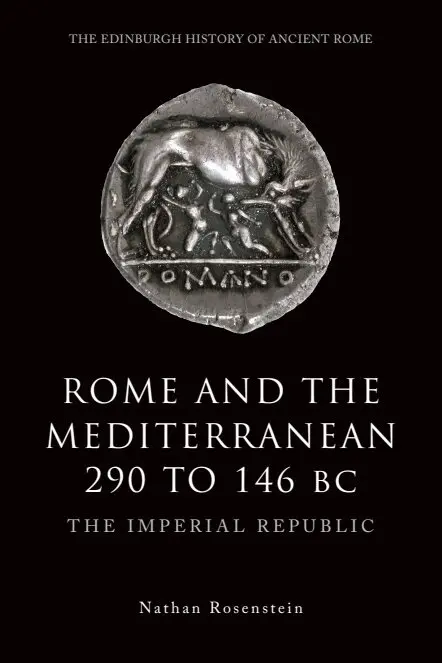
Rome's stunning rise to mastery of the ancient MediterraneanNathan Rosenstein charts Rome's incredible journey and command of the Mediterranean over the course of the third and second centuries BC. He describes the Republic's great wars - against Pyrrhus, Carthage and Hannibal, and the kings of Macedon and Syria - as well as its subjugation of Gallic northern Italy and Spain.This book reveals why and shows how Rome engaged in war so frequently; it highlights the secret of Rome's extraordinary military success and the significant impact on both Italy and Rome.Key features:" Explains the political dynamics of the Republican aristocracy and the economic and demographic foundations of Roman power" Demonstrates how it integrated many thousands of citizens across the whole of central Italy into a single body politic" Analyses the operation of the Roman army on campaign and in combatKeywords:Rome, Pyrrhus, Middle Republic, Heraclea, Asculum, Beneventum, Maleventum, First Punic War, Second Punic War, Hannibalic War, Trasimene
726 kr
Skickas inom 3-6 vardagar
The final dramatic centuries of Roman historyBetween the deaths of the Emperors Julian (363) and Justinian (565), the Roman Empire underwent momentous changes. Most obviously, control of the west was lost to barbarian groups during the fifth century, and although parts were recovered by Justinian, the empire's centre of gravity shifted irrevocably to the east, with its focal point now the city of Constantinople. Equally important was the increasing dominance of Christianity not only in religious life, but also in politics, society and culture. Doug Lee charts these and other significant developments which contributed to the transformation of ancient Rome and its empire into Byzantium and the early medieval west. By emphasising the resilience of the east during late antiquity and the continuing vitality of urban life and the economy, this volume offers an alternative perspective to the traditional paradigm of decline and fall.Key features:• Provides a clear analytical narrative of pivotal political, military, and religious developments• Complements this with an examination of overarching trends in urban life and the economy• Gives particular attention to the dynamics of political and religious power and of Roman-barbarian relations during the fifth centuryKeywords: Late Antiquity, Late Roman Empire, Fall of the Empire, Early Byzantine Empire, barbarians, Goths, vandals, Theodosius, Justinian