Elements in the Philosophy of Friedrich Nietzsche – serie
Visar alla böcker i serien Elements in the Philosophy of Friedrich Nietzsche. Handla med fri frakt och snabb leverans.
14 produkter
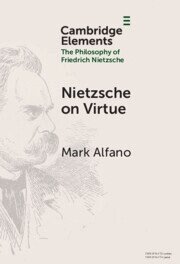
Nietzsche on Virtue
Av Mark Alfano
Häftad, 2025
308 kr
Lägg i varukorg
This Element argues for an interpretation of Nietzsche on virtue according to which he believes that because different people have different constellations of instincts and other drives, and because instincts and drives can only be shaped and redirected within boundaries, he recommends different …
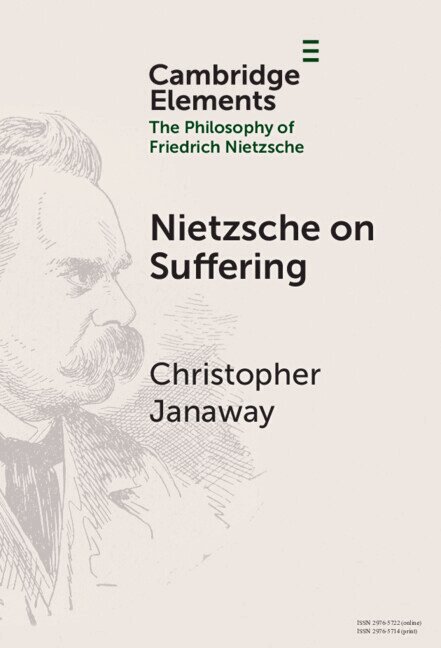
Nietzsche on Suffering
Häftad, 2026
308 kr
Lägg i varukorg
Suffering is a theme throughout Nietzsche's writings. His views are often controversial and challenging. He explores ways of understanding suffering not as an 'objection to life', but as something that can enhance life. This Element examines Nietzsche's views on suffering from different angles: his …
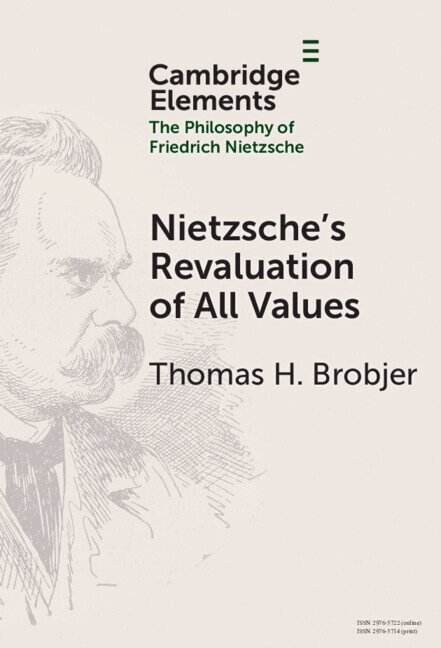
Nietzsche's Revaluation of All Values
Häftad, 2025
308 kr
Lägg i varukorg
Why is Nietzsche's thought and philosophy still regarded as relevant today? There are a large number of possible answers to a question like this, but one of the most important and persuasive is that Nietzsche questioned and discussed the nature, character and value of our values. Nietzsche …
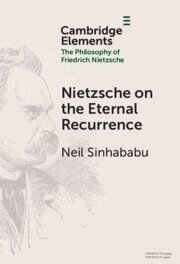
Nietzsche on the Eternal Recurrence
Häftad, 2025
354 kr
Lägg i varukorg
The idea of the eternal recurrence is that we will live the exact same lives again an infinite number of times. Nietzsche appreciates that this would multiply the value of a single life by infinity, justifying intense emotional responses. His unpublished notes provide a cosmological argument for …
Nietzsche's Critique of Pity
Häftad, 2026
282 kr
Kommande
Nietzsche's critique of pity is, by his own account, the initiating move in his broad-scale critique of morality. Despite this, it has received limited scholarly attention. This Element develops and defends a detailed account of three different kinds of argument that Nietzsche makes against pity, …
Nietzsche's Critique of Pity
Inbunden, 2026
791 kr
Kommande
Nietzsche's critique of pity is, by his own account, the initiating move in his broad-scale critique of morality. Despite this, it has received limited scholarly attention. This Element develops and defends a detailed account of three different kinds of argument that Nietzsche makes against pity, …
Nietzsche on Education
Av Robert Miner
Inbunden, 2026
911 kr
Lägg i varukorg
If one were asked to name Nietzsche's primary concepts (e.g. will to power, death of God, eternal recurrence), education would likely appear near the bottom of the list. Nevertheless, Nietzsche was intensely occupied with the topic. To see how Nietzsche formulates his basic questions about the …
Nietzsche on Education
Av Robert Miner
Häftad, 2026
282 kr
Lägg i varukorg
If one were asked to name Nietzsche's primary concepts (e.g. will to power, death of God, eternal recurrence), education would likely appear near the bottom of the list. Nevertheless, Nietzsche was intensely occupied with the topic. To see how Nietzsche formulates his basic questions about the …
Nietzsche on Virtue
Av Mark Alfano
Inbunden, 2025
911 kr
Lägg i varukorg
This Element argues for an interpretation of Nietzsche on virtue according to which he believes that because different people have different constellations of instincts and other drives, and because instincts and drives can only be shaped and redirected within boundaries, he recommends different …
Nietzsche on the Eternal Recurrence
Inbunden, 2025
1048 kr
Lägg i varukorg
The idea of the eternal recurrence is that we will live the exact same lives again an infinite number of times. Nietzsche appreciates that this would multiply the value of a single life by infinity, justifying intense emotional responses. His unpublished notes provide a cosmological argument for …
Nietzsche's Revaluation of All Values
Inbunden, 2025
892 kr
Lägg i varukorg
Why is Nietzsche's thought and philosophy still regarded as relevant today? There are a large number of possible answers to a question like this, but one of the most important and persuasive is that Nietzsche questioned and discussed the nature, character and value of our values. Nietzsche …
Nietzsche on Suffering
Inbunden, 2026
911 kr
Lägg i varukorg
Suffering is a theme throughout Nietzsche's writings. His views are often controversial and challenging. He explores ways of understanding suffering not as an 'objection to life', but as something that can enhance life. This Element examines Nietzsche's views on suffering from different angles: his …
Nietzsche on Fate
Av Robin Small
Inbunden, 2026
911 kr
Lägg i varukorg
This Element explores Nietzsche's thinking about fate. As a doctrine, fatalism asserts that whatever happens does so necessarily. 'Fate', however, implies an overall pattern for every individual life which imposes its own necessity on the events of that life, although with some contribution from …
Nietzsche on Fate
Av Robin Small
Häftad, 2026
308 kr
Lägg i varukorg
This Element explores Nietzsche's thinking about fate. As a doctrine, fatalism asserts that whatever happens does so necessarily. 'Fate', however, implies an overall pattern for every individual life which imposes its own necessity on the events of that life, although with some contribution from …