History of Everyday Life in Scotland – serie
Visar alla böcker i serien History of Everyday Life in Scotland. Handla med fri frakt och snabb leverans.
5 produkter
5 produkter
726 kr
Skickas inom 3-6 vardagar
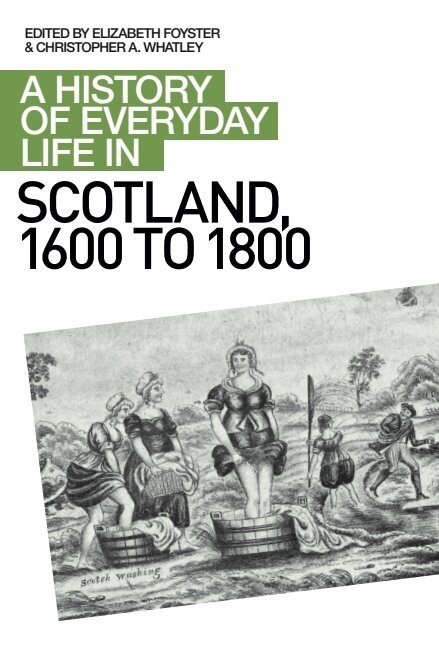
This book explores the ordinary daily routines, behaviours, experiences and beliefs of the Scottish people during a period of immense political, social and economic change. It underlines the importance of the church in post-Reformation Scottish society, but also highlights aspects of everyday life that remained the same, or similar, notwithstanding the efforts of the kirk, employers and the state to alter behaviours and attitudes.Drawing upon and interrogating a range of primary sources, the authors create a richly coloured, highly-nuanced picture of the lives of ordinary Scots from birth through marriage to death. Analytical in approach, the coverage of topics is wide, ranging from the ways people made a living, through their non-work activities including reading, playing and relationships, to the ways they experienced illness and approached death.This volume:*Provides a rich and finely nuanced social history of the period 1600-1800 *Gets behind the politics of Union and Jacobitism, and the experience of agricultural and industrial 'revolution'*Presents the scholarly expertise of its contributing authors in a accessible way*Includes a guide to further reading indicating sources for further study
414 kr
Skickas
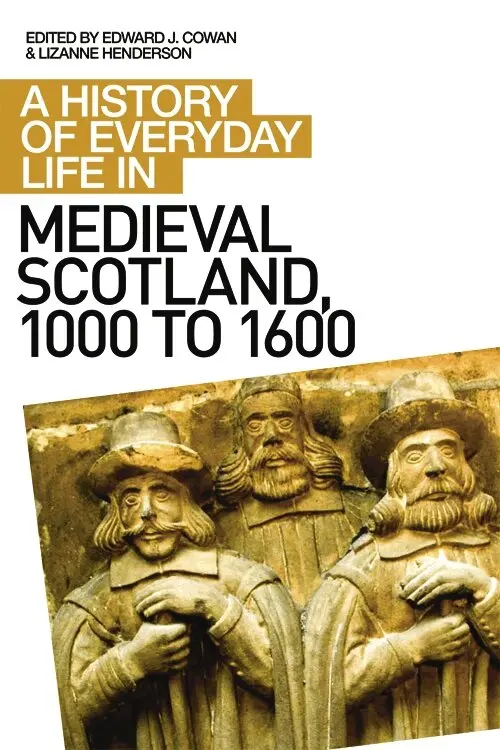
This book examines the ordinary, routine, daily behaviour, experiences and beliefs of people in Scotland from the earliest times to 1600. Its purpose is to discover the character of everyday life in Scotland over time and to do so, where possible, within a comparative context. Its focus is on the mundane, but at the same time it takes heed of the people’s experience of wars, famine, environmental disaster and other major causes of disturbance, and assesses the effects of longer-term processes of change in religion, politics, and economic and social affairs. In showing how the extraordinary impinged on the everyday, the book draws on every possible kind of evidence including a diverse range of documentary sources, artefactual, environmental and archaeological material, and the published work of many disciplines. The authors explore the lives of all the people of Scotland and provide unique insights into how the experience of daily life varied across time according to rank, class, gender, age, religion and ethnic group. They look at the contextual nature of everyday experience and consider how this was shaped by national, regional and tribal considerations. They reveal the variations between Highland and Lowland, the Western Isles and the Northern Isles, inland and coastal, and urban and rural. They examine the role played by language, whether Gaelic, Welsh, English, Pictish, Norse, Latin or Scots. The book shows the distinctively Scottish aspects of diurnal life and how, through trading and contact with migrants, the lives of Scots were affected by other cultures and nations. Taken as a whole it represents a new way of looking at medieval Scotland and has implications and relevance for historians and their public across the discipline.
1 422 kr
Tillfälligt slut
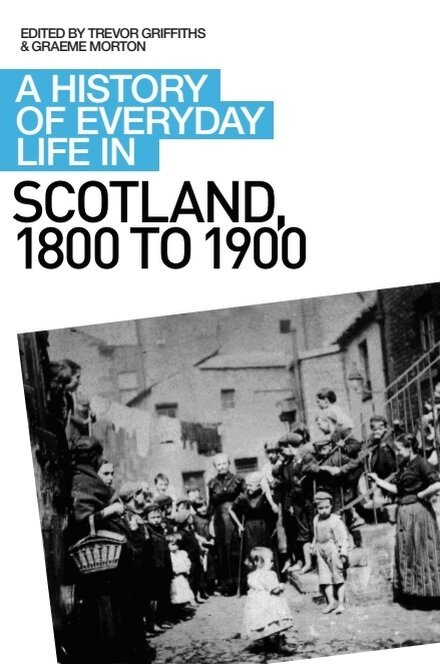
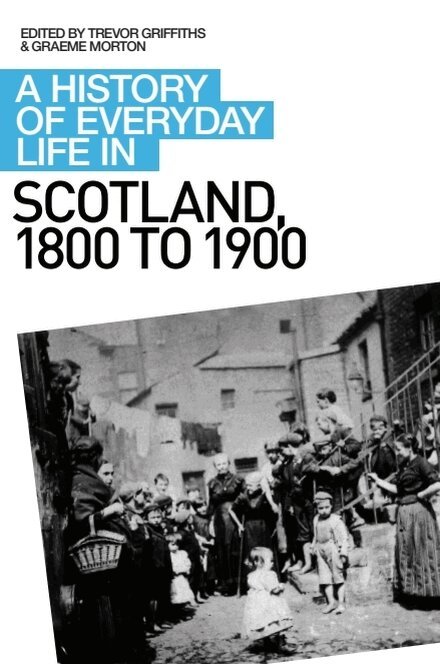
The nineteenth century was a period of profound change in Scottish history. Industrialisation, improved communications, agricultural transformation, country to town migration, upheavals in the church, increased trade, and imperialism – all these affected the pace and rhythm of everyday life across the country. At the same time increased literacy helped to generate new patterns of identity, extending beyond the local to encompass the nation, which challenged certainties of how the world was viewed. With new styles of living came new dangers to the physical and moral health of the population, and increased apprehension of crime and disorder. Industrialisation created opportunities for consumption and recreation but with tangible environmental and economic costs. Rural Scotland adjusted to changes in farming practice and the traumas of population loss and began to look to the opportunities presented by recreation and tourism. The large-scale creation and survival of documentary evidence and records make the study of everyday life during this period practicable in depth for the first time. This volume presents a vivid account that includes the experiences of all the people of Scotland. It draws on every kind of available evidence and on work in social and cultural history, sociology and anthropology.The series will be complete in four volumes. x and x are already available. x is forthcoming.
414 kr
Skickas
The nineteenth century was a period of profound change in Scottish history. Industrialisation, improved communications, agricultural transformation, country to town migration, upheavals in the church, increased trade, and imperialism – all these affected the pace and rhythm of everyday life across the country. At the same time increased literacy helped to generate new patterns of identity, extending beyond the local to encompass the nation, which challenged certainties of how the world was viewed. With new styles of living came new dangers to the physical and moral health of the population, and increased apprehension of crime and disorder. Industrialisation created opportunities for consumption and recreation but with tangible environmental and economic costs. Rural Scotland adjusted to changes in farming practice and the traumas of population loss and began to look to the opportunities presented by recreation and tourism. The large-scale creation and survival of documentary evidence and records make the study of everyday life during this period practicable in depth for the first time. This volume presents a vivid account that includes the experiences of all the people of Scotland. It draws on every kind of available evidence and on work in social and cultural history, sociology and anthropology.The series will be complete in four volumes. x and x are already available. x is forthcoming.
654 kr
Skickas inom 3-6 vardagar
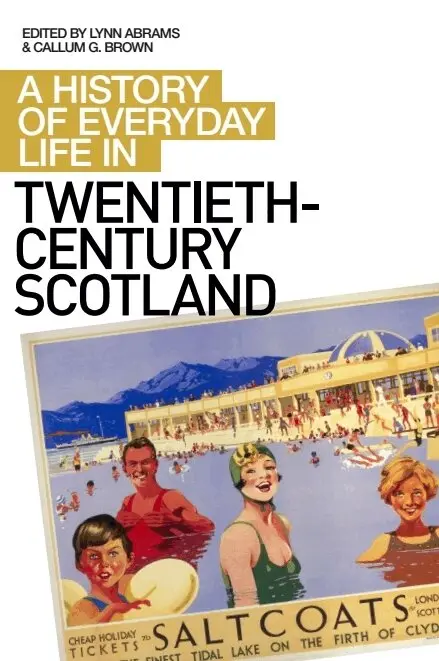
Over the twentieth century Scots' lives changed in fast, dramatic and culturally significant ways. By examining their bodies, homes, working lives, rituals, beliefs and consumption, this volume exposes how the very substance of everyday life was composed, tracing both the intimate and the mass changes that the people endured. Using novel perspectives and methods, chapters range across the experiences of work, art and death, the way Scots conceived of themselves and their homes, and the way the 'old Scotland' of oppressive community rules broke down from mid-century as the country reinvented its everyday life and culture. This volume brings together leading cultural historians of twentieth-century Scotland to study the apparently mundane activities of people's lives, traversing the key spaces where daily experience is composed to expose the controversial personal and national politics that ritual and practice can generate. Key features: *Contains an overview of the material changes experienced by Scots in their everyday lives during the course of the century*Focuses on some of the key areas of change in everyday experience, from the way Scots spent their Sundays to the homes in which they lived, from the work they undertook to the culture they consumed and eventually the way they died. *Pays particular attention to identity as well as experience