Christopher A. Whatley – författare
Visar alla böcker från författaren Christopher A. Whatley. Handla med fri frakt och snabb leverans.
21 produkter
The Industrial Revolution in Scotland
Inbunden, 1997
672 kr
Lägg i varukorg
The Industrial Revolution in Scotland is the first new student text on this subject for more than two decades. While the focus is on Scotland, Dr Whatley's approach is largely comparative and he places the Scottish experience of industrialisation within the context of the debate about the 'British' …
The Industrial Revolution in Scotland
Av Christopher A. Whatley, Maurice Kirby
Häftad, 1997
485 kr
Lägg i varukorg
The Industrial Revolution in Scotland is the first new student text on this subject for more than two decades. While the focus is on Scotland, Dr Whatley's approach is largely comparative and he places the Scottish experience of industrialisation within the context of the debate about the 'British' …
Scottish society 1707–1830
Beyond Jacobitism, towards industrialisation
Häftad, 2000
374 kr
Lägg i varukorg
Scottish Society, 1707-1830 challenges much conventional wisdom and provides readers with many new insights into Scottish social and economic history.. Argues that the Union of 1707 was vital for Scottish success, but in ways which have hitherto been overlooked.. Contests received wisdom on issues …
History of Everyday Life in Scotland, 1600 to 1800
Av Elizabeth A Foyster, Christopher A Whatley
Häftad, 2010
757 kr
Lägg i varukorg
This book explores the ordinary daily routines, behaviours, experiences and beliefs of the Scottish people during a period of immense political, social and economic change. It underlines the importance of the church in post-Reformation Scottish society, but also highlights aspects of everyday life …
Union of 1707
New Dimensions: Scottish Historical Review Supplementary Issue
Av S J Brown, Christopher A Whatley
Häftad, 2008
757 kr
Lägg i varukorg
This collection brings together a series of papers that in May 2007 were presented at a Royal Society of Edinburgh conference organised to mark the 300th anniversary of the Union of 1707. One of the guiding objectives of the RSE event was to showcase the work of younger historians, and to present …
Scots and the Union
Then and Now
Häftad, 2014
377 kr
Lägg i varukorg
An updated edition on the 1707 Union between Scotland and England in a modern context The Scots and the Union: Then and Now is a refreshed, revised and extended edition of The Scots and the Union, which appeared in 2006. It was acclaimed then as a path-breaking, game-changing account of the making …
Harvie's Dyke
The People, their Liberty and the Clyde
Häftad, 2025
253 kr
Lägg i varukorg
In the early 1820s, Thomas Harvie, a newly rich, arrogant Glasgow distiller, bought Westthorn estate on the eastern edge of the city close to the north bank of the River Clyde. To establish the bounds of his property and keep out intruders, he erected two walls, the larger of which (‘Harvie’s …
Triumph of Textiles
Industrial Dundee, c. 1700–1918
Av Christopher A Whatley, Jim Tomlinson
Inbunden, 2024
1883 kr
Lägg i varukorg
A fresh account of the remarkable rise of Dundee as a global industrial city and the origins of its later demise. The background to jute, the product most closely associated with Dundee, is investigated in unprecedented depth. The role of flax and linen as foundations for the jute industry is …
Triumph of Textiles
Industrial Dundee, c. 1700–1918
Av Christopher A Whatley, Jim Tomlinson
Häftad, 2025
259 kr
Lägg i varukorg
A fresh account of the remarkable rise of Dundee as a global industrial city and the origins of its later demise. The background to jute, the product most closely associated with Dundee, is investigated in unprecedented depth. The role of flax and linen as foundations for the jute industry is …
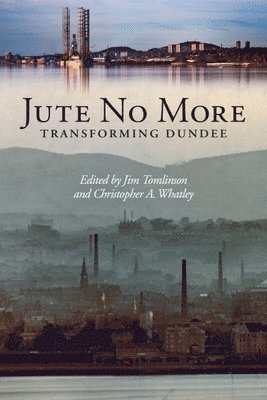
Jute No More
Transforming Dundee
Av Jim Tomlinson, Christopher A Whatley
Häftad, 2026
322 kr
Lägg i varukorg
As the Victorian era drew to a close, Dundee was the world's jute manufacturing capital - 'Juteopolis'. But behind that success was a harsh working environment and low wages, especially for the predominantly female workforce. There was appalling social distress, resulting in part from abysmal …
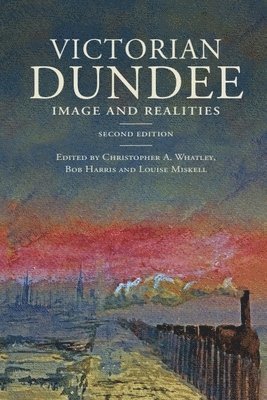
Victorian Dundee
Image and Realities
Av Christopher A Whatley, Bob Harris m. fl.
Häftad, 2026
322 kr
Lägg i varukorg
Victorian Dundee: a city grown prosperous on more than a century's lead in linen production and for a time the world's jute capital - 'Juteopolis'. But textile production was accompanied by a strong sense of civic pride, some remarkable architectural triumphs and perhaps a surprising enthusiasm for …
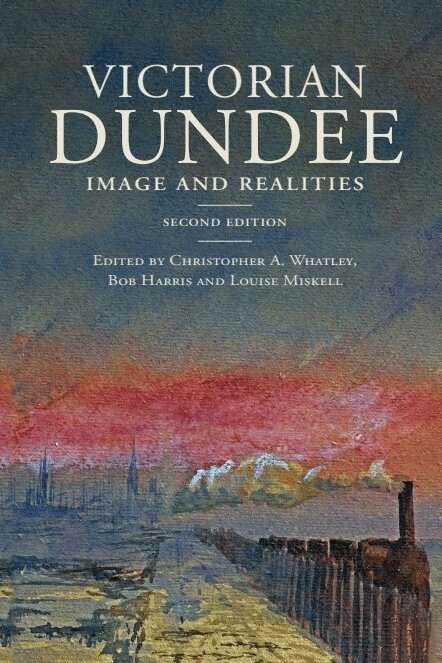
Victorian Dundee
Image and Realities
Av Christopher A Whatley, Bob Harris m. fl.
E-bok, 2019
385 kr
Lägg i varukorg
Victorian Dundee: a city grown prosperous on more than a century''s lead in linen production and for a time the world''s jute capital - ''Juteopolis''. But textile production was accompanied by a strong sense of civic pride, some remarkable architectural triumphs and perhaps a surprising enthusiasm …
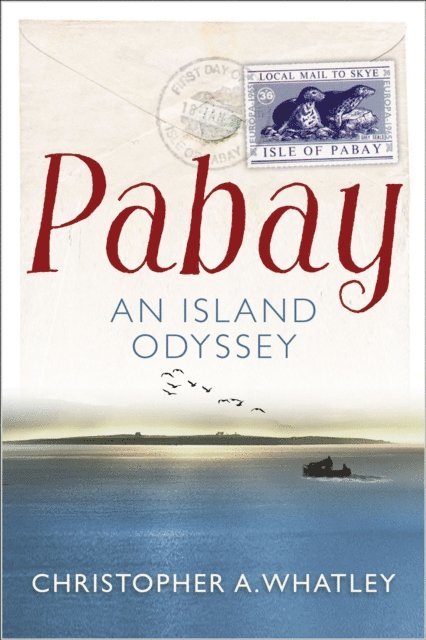
Pabay
An Island Odyssey
E-bok, 2019
242 kr
Lägg i varukorg
The tiny diamond-shaped island of Pabay lies in Skye''s Inner Sound, just two and a half miles from the bustling village of Broadford. One of five Hebridean islands of that name, it derives from the Norse papa-ey, meaning ''island of the priest''. Many visitors since the first holy men built their …
Immortal Memory
Burns and the Scottish People
E-bok, 2016
528 kr
Lägg i varukorg
Robert Burns was by far and away the most iconic figure in nineteenth-century Scotland. Multiple editions of his works poured incessantly from the presses. Unprecedentedly large crowds gathered to commemorate him at huge festivals and at the unveiling of memorials. His work was at the heart of the …
Modern Scottish History: 1707 to the Present
Volume 1: The Transformation of Scotland, 1707-1850
Av Christopher A. Whatley, Ann MacSween m. fl.
E-bok, 2008
315 kr
Lägg i varukorg
This is the first volume of a distance-learning history of Scotland course. The 26 major topics are covered in five books, designed for self-study and written to accompany the course. These volumes are: two tutorial volumes, two volumes of reprinted articles and essays, and a volume of documents. …
Modern Scottish History: 1707 to the Present
Volume 2: The Modernisation of Scotland, 1850 to Present
Av Christopher A. Whatley, Ann MacSween m. fl.
E-bok, 2008
315 kr
Lägg i varukorg
This is the second volume of a distance-learning history of Scotland course. This book covers 1850 to the present. The 26 major topics are covered in five books, designed for self-study and written to accompany the course. These volumes are: two tutorial volumes, two volumes of reprinted articles …
Harvie's Dyke
The People, their Liberty and the Clyde
E-bok, 2025
205 kr
Lägg i varukorg
In the early 1820s, Thomas Harvie, a newly rich, arrogant Glasgow distiller, bought Westthorn estate on the eastern edge of the city close to the north bank of the River Clyde. To establish the bounds of his property and keep out intruders, he erected two walls, the larger of which (''Harvie''s …
Jute No More
Transforming Dundee
Av Jim Tomlinson, Christopher A Whatley
Inbunden, 2011
1958 kr
Lägg i varukorg
Victorian Dundee
Image and Realities
Av Christopher A Whatley, Bob Harris m. fl.
Inbunden, 2011
1883 kr
Lägg i varukorg
Victorian Dundee: a city grown prosperous on more than a century's lead in linen production and for a time the world's jute capital - 'Juteopolis'. But textile production was accompanied by a strong sense of civic pride, some remarkable architectural triumphs and perhaps a surprising enthusiasm for …
Salt
Scotland’s Newest Oldest Industry
Av Christopher A. Whatley, Joanna Hambly
Häftad, 2023
280 kr
Lägg i varukorg
Discover the story of Scotland, salt and the world.Salt is a vital commodity. For many centuries it sustained life for Scots as seasoning for a diet dominated by grains (mainly oats), and for preservation of fish and cheese.Sea-salt manufacturing is one of Scotland’s oldest industries, dating to …
Dundee
Renaissance to Enlightenment
Av Charles McKean, Bob Harris m. fl.
Inbunden, 2009
1223 kr
Tillfälligt slut
This fascinating title traces the evolution of Dundee from wealthy renaissance port --- and second city of Scotland --- to international textiles manufacturer and trader. Until now, despite being at the heart of key events in Scottish history, Dundee has remained invisible behind its later …