History of Toxicology and Environmental Health – serie
History of Toxicology and Environmental Health
Toxicology in Antiquity Volume I
271 kr
Skickas inom 7-10 vardagar
309 kr
Skickas inom 7-10 vardagar
509 kr
Skickas inom 7-10 vardagar
History of Risk Assessment in Toxicology guides the reader through the historical narrative of the evolution of risk assessment thinking in human and environmental practices. Risk assessment concepts are used in many different professional practice areas. In the health and environmental practices of risk assessment, the critical issue is often what chemical concentration in air, water, food, or a solid substance is acceptable, or considered not to result in any adverse effect.
The book reviews examples from early scientific and health studies to showcase the foundations of risk assessment. The book also explores the development of risk assessment as practiced by major regulatory bodies such as the US Food and Drug Administration (FDA), the Occupational Safety & Health Administration (OSHA), and the US Environmental Protection Agency (EPA) to reveal how risk assessment has evolved in the 20th and 21st centuries.
Modern technology has created opportunities in silicon in vitro, computational modeling, omics, and big data techniques to assess the toxicity of chemicals, while traditional approaches to risk assessment are being challenged with new and innovative approaches. Finally, current issues being debated and tested in risk assessment are outlined with possible future avenues suggested.
Presents the first dedicated history on the evolution of risk assessment in toxicology Reviews the development of major US and EU regulatory bodies Provides a context to current debates surrounding the future of risk assessment Reviews examples from early scientific and health studies to showcase the foundations of risk assessment384 kr
Skickas inom 7-10 vardagar
Toxicology in the Middle Ages and Renaissance provides an authoritative and fascinating exploration into the use of toxins and poisons in the Middle Ages and Renaissance. Part of the History of Toxicology and Environmental Health series, this volume is a follow-up, chronologically, to the first two volumes which explored toxicology in antiquity.
The book approximately covers the 1100s through the 1600s, delving into different aspects of toxicology, such as the contributions of scientific scholars of the time, sensational poisoners and poisoning cases, as well as myths. Historical figures, such as the Borgias and Catherine de Medici are discussed. Toxicologists, students, medical researchers, and those interested in the history of science will find insightful and relevant material in this volume.
Provides the historical background for understanding modern toxicology Illustrates the ways previous civilizations learned to distinguish safe from hazardous substances, how to avoid them, and how to use them against enemies Explores the way famous historical figures used toxins710 kr
Kommande
1 238 kr
Skickas inom 7-10 vardagar
The History of Alternative Test Methods in Toxicology uses a chronological approach to demonstrate how the use of alternative methods has evolved from their conception as adjuncts to traditional animal toxicity tests to replacements for them. This volume in the History of Toxicology and Environmental Health series explores the history of alternative test development, validation, and use, with an emphasis on humanity and good science, in line with the Three Rs (Replacement,Reduction, Refinement) concept expounded by William Russell and Rex Burch in 1959 in their now classic volume, The Principles of Humane Experimental Technique.
The book describes the historical development of technologies that have influenced the application of alternatives in toxicology and safety testing. These range from single cell monocultures to sophisticated, miniaturised and microfluidic organism-on-a-chip devices, and also include molecular modelling, chemoinformatics and QSAR analysis, and the use of stem cells, tissue engineering and hollow fibre bioreactors. This has been facilitated by the wider availability of human tissues, advances in tissue culture, analytical and diagnostic methods, increases in computational processing, capabilities, and a greater understanding of cell biology and molecular mechanisms of toxicity.
These technological developments have enhanced the range and information content of the toxicity endpoints detected, and therefore the relevance of test systems and data interpretation, while new techniques for non-invasive diagnostic imaging and high resolution detection methods have permitted an increased role for human studies. Several key examples of how these technologies are being harnessed to meet 21st century safety assessment challenges are provided, including their deployment in integrated testing schemes in conjunction with kinetic modelling, and in specialized areas, such as inhalation toxicity studies.
The History of Alternative Test Methods in Toxicology uses a chronological approach to demonstrate how the use of alternative methods has evolved from their conception as adjuncts to traditional animal toxicity tests to replacements for them. This volume in the History of Toxicology and Environmental Health series explores the history of alternative test development, validation, and use, with an emphasis on humanity and good science, in line with the Three Rs (Replacement, Reduction, Refinement) concept expounded by William Russell and Rex Burch in 1959 in their now-classic volume, The Principles of Humane Experimental Technique.
The book describes the historical development of technologies that have influenced the application of alternatives in toxicology and safety testing. These range from single cell monocultures to sophisticated miniaturised and microfluidic organism-on-a-chip devices, and also include molecular modelling, chemoinformatics and QSAR analysis, and the use of stem cells, tissue engineering and hollow fibre bioreactors. This has been facilitated by the wider availability of human tissues, advances in tissue culture, analytical and diagnostic methods, increases in computational processing capabilities, and a greater understanding of cell biology and molecular mechanisms of toxicity.
These technological developments have enhanced the range and information content of the toxicity endpoints detected, and therefore the relevance of test systems and data interpretation, while new techniques for non-invasive diagnostic imaging and high resolution detection methods have permitted an increased role for human studies. Several key examples of how these technologies are being harnessed to meet 21st century safety assessment challenges are provided, including their deployment in integrated testing schemes in conjunction with kinetic modelling, and in specialised areas, such as inhalation toxicity studies.
Covers each global region in a systematic fashion, showing how regions compare in terms of problems faced and resolution approaches Includes a thorough chronology of alternatives research, thus providing a complete overview Focuses on methods of direct relevance to humans to address issues of efficacy and waste1 238 kr
Skickas inom 7-10 vardagar
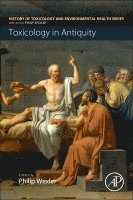
Toxicology in Antiquity provides an authoritative and fascinating exploration into the use of toxins and poisons in antiquity. It brings together the two previously published shorter volumes on the topic, as well as adding considerable new information. Part of the History of Toxicology and Environmental Health series, it covers key accomplishments, scientists, and events in the broad field of toxicology, including environmental health and chemical safety. This first volume sets the tone for the series and starts at the very beginning, historically speaking, with a look at toxicology in ancient times. The book explains that before scientific research methods were developed, toxicology thrived as a very practical discipline. People living in ancient civilizations readily learned to distinguish safe substances from hazardous ones, how to avoid these hazardous substances, and how to use them to inflict harm on enemies. It also describes scholars who compiled compendia of toxic agents. New chapters in this edition focus chiefly on evidence for the use of toxic agents derived from religious texts.
Provides the historical background for understanding modern toxicology Illustrates the ways previous civilizations learned to distinguish safe from hazardous substances, how to avoid the hazardous substances and how to use them against enemies Explores the way famous historical figures used toxins New chapters focus on evidence of the use of toxins derived from religious texts1 515 kr
Kommande
1 213 kr
Skickas inom 7-10 vardagar
1 238 kr
Skickas inom 7-10 vardagar