• Fri frakt över 249 kr
  • •
  • Snabba leveranser
  • •
  • Billiga böcker
Kundservice

Du är på sajten för privatpersoner.

Företag, bibliotek eller offentlig verksamhet?

Du handlar på classic.bokus.com, där alla dina funktioner finns intakta.
Till classic.bokus.com
Bokus logotyp. Gå till startsidan.
  • Erbjudanden
  • Nyheter
  • Student
  • Topplistor
  • Barn & ungdom
  • Bokus Play
  • E-böcker
  • Pocketböcker
  • Spel & pussel

10% rabatt på allt med kod: NYSTART10 →

Sidfot

Mina sidor

    Hjälp

    • Kundservice
    • Vanliga frågor och svar
    • Frakt och leverans
    • Retur vid ångerrätt
    • Reklamera vara
    • Betalning
    • Köpvillkor
    • Allmänna villkor
    • Information om webbplatsens tillgänglighet

    Om Bokus

    • Om oss
    • Pressrum
    • För studenter
    • För företag
    • För bibliotek och offentlig verksamhet
    • För leverantörer
    • Hållbarhet

    Populärt

    • Aktuella erbjudanden
    • Presentkort
    • Studentlitteratur
    • Nya böcker
    • Topplistor
    • Signerade böcker
    • Engelska böcker

    Inspiration

    • Boktips
    • BookTok
    • Populära bokserier
    • Barnbokskaraktärer
    • Populära författare
    Logotyp för Bokus
    Följ oss på Facebook (extern länk)Följ oss på Instagram (extern länk)Följ oss på YouTube (extern länk)Följ oss på TikTok (extern länk)
    bokus @ CookiesAnpassa cookiesIntegritetspolicyKöpvillkor
    Till Citymail hemsida (extern länk)Till Budbee hemsida (extern länk)Till Postnord hemsida (extern länk)Till Schenker hemsida (extern länk)Till Early Bird hemsida (extern länk)Till Walleys hemsida (extern länk)
    1. Medicin
    2. Medicin: allmänt
    3. Medicinhistoria

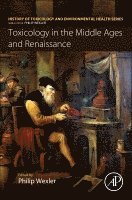
    Toxicology in the Middle Ages and Renaissance

    AvPhilip Wexler

    Häftad, Engelska, 2017

    Del i serien History of Toxicology and Environmental Health

    392 kr

    Beställningsvara. Skickas inom 10-15 vardagar. Fri frakt över 249 kr.

    Beskrivning

    Toxicology in the Middle Ages and Renaissance provides an authoritative and fascinating exploration into the use of toxins and poisons in the Middle Ages and Renaissance. Part of the History of Toxicology and Environmental Health series, this volume is a follow-up, chronologically, to the first two volumes which explored toxicology in antiquity.

    The book approximately covers the 1100s through the 1600s, delving into different aspects of toxicology, such as the contributions of scientific scholars of the time, sensational poisoners and poisoning cases, as well as myths. Historical figures, such as the Borgias and Catherine de Medici are discussed. Toxicologists, students, medical researchers, and those interested in the history of science will find insightful and relevant material in this volume.


    • Provides the historical background for understanding modern toxicology
    • Illustrates the ways previous civilizations learned to distinguish safe from hazardous substances, how to avoid them, and how to use them against enemies
    • Explores the way famous historical figures used toxins

    Produktinformation

    • Utgivningsdatum:2017-03-20
    • Mått:152 x 229 x 15 mm
    • Vikt:200 g
    • Format:Häftad
    • Språk:Engelska
    • Serie:History of Toxicology and Environmental Health
    • Antal sidor:192
    • Förlag:Elsevier Science
    • ISBN:9780128095546

    Utforska kategorier

    • Medicinhistoria inom Medicin
    • Farmakologi inom Medicin

    Mer om författaren

    Philip Wexler has written and edited numerous publications related to toxicology and toxico-informatics, as well as taught and otherwise lectured globally on these topics. He has been Editor-in-Chief of Elsevier’s Encyclopedia of Toxicology including the current, 4th edition (2023) since its inception as well as Information Resources in Toxicology (Elsevier. 5th ed. 2020), and Chemicals, Environment, Health: A Global Management Perspective (CRC Press/Taylor and Francis. 2011). He has served as Associate Editor for Toxicology Information and Resources for Elsevier's journal, Toxicology and edited special issues on Digital Information and Tools. Phil is also overseeing a monographic series on Toxicology History. Volumes have been published on Antiquity, the Middle Ages and Renaissance, modern clinical toxicology, risk assessment, alternative test methods, food and nutrition, and disasters, with more in the planning stages. He is a co-Editor-in-Chief of the Taylor and Francis journal, Global Security: Health, Science, and Policy and a past recipient of the US Society of Toxicology’s (SOT) Public Communications Award.Phil recently retired from a long federal career as a Technical Information Specialist at the National Library of Medicine’s (NLM) Toxicology and Environmental Health Information Program, within its Specialized Information Services Division (SIS). His initial position at NLM was as a Fellow of its Associate Program and early work included a brief stint in the Reference Services Section. A recipient of the NLM Regents Award for Scholarly or Technical Achievement and the Distinguished Technical Communication Award of the Washington chapter of the Society for Technical Communication, he was team leader for the development of the ToxLearn online multi-module tutorials, a joint activity with the SOT. Phil had also been project officer for the LactMed file on drugs and lactation, and the IRIS (Integrated Risk Information System) and ITER (International Toxicity Estimates for Risk) risk assessment databases.Additionally, Phil had been the guiding force behind, and federal liaison to, the World Library of Toxicology, Chemical Safety, and Environmental Health (WLT) prototype, a free global Web portal that provided the scientific community and public with links to major government agencies, non-governmental organizations, universities, professional societies, and other groups addressing issues related to toxicology, public health, and environmental health prior to its migration to the INND/Toxipedia group. This multilingual tool, fed by information from a roster of international Country Correspondents, has been praised as a successful test resource for overcoming barriers to the sharing of information between countries, enhancing collaboration, and minimizing duplication. Currently on hiatus, it awaits a visionary funding source to become operational.A trustee of the Toxicology Education Foundation (TEF), Phil had previously served as its federal liaison. He is a past Chair of SOT’s World Wide Web Advisory Team, and active in its Ethical, Legal, Forensics, and Social Issues Specialty Section. He was a member of the Education and Communications Work Group of the CDC/ATSDR’s National Conversation on Public Health and Chemical Exposure. A co-developer of the Toxicology History Room, he is co-founder and was federal liaison to the Toxicology History Association. For many years he organized and emceed the popular Toxicology Quiz Bowl at the annual SOT meetings.In addition to pursuing toxicology-related activities in his retirement, Phil is happy to have more time to embrace other lifelong interests. He is the author of five poetry collections, a mosaic artist, and a cactus and succulent enthusiast.

    Innehållsförteckning

    • 1. Poison and Its Dose: Paracelsus on Toxicology2. The Golden Age of Medieval Islamic Toxicology3. Maimonides’ Book on Poisons and the Protection Against Lethal Drugs4. Pietro d’Abano, De venenis: Reintroducing Greek Toxicology into Late Medieval Medicine5. The Case Against the Borgias: Motive, Opportunity, and Means6. Aqua Tofana7. Poisons and the Prince: Toxicology and Statecraft at the Medici Grand Ducal Court8. Georgius Agricola, a Pioneer in the Toxic Hazards of Mining, and His Influence9. Jan Baptist Van Helmont and the Medical–Alchemical Perspectives of Poison10. Origin of Myths Related to Curative, Antidotal and Other Medicinal Properties of Animal “Horns” in the Middle Ages11. Animal Stones and the Dark Age of Bezoars12. Fossil Sharks’ Teeth as Alexipharmics13. Catherine La Voisin: Poisons and Magic at the Royal Court of Louis XIV14. A Late Medieval Criminal Prosecution for Poisoning: The Failed Murder Trial of Margarida de Portu (1396)15. Animal Venoms in the Middle Ages16. Medical Literature on Poison, c. 1300–1600