• Fri frakt över 249 kr
  • •
  • Snabba leveranser
  • •
  • Billiga böcker
Kundservice

Du är på sajten för privatpersoner.

Företag, bibliotek eller offentlig verksamhet?

Du handlar på classic.bokus.com, där alla dina funktioner finns intakta.
Till classic.bokus.com
Bokus logotyp. Gå till startsidan.
  • Erbjudanden
  • Nyheter
  • Student
  • Topplistor
  • Barn & ungdom
  • Bokus Play
  • E-böcker
  • Pocketböcker
  • Spel & pussel

10% rabatt på allt med kod: NYSTART10 →

Sidfot

Mina sidor

    Hjälp

    • Kundservice
    • Vanliga frågor och svar
    • Frakt och leverans
    • Retur vid ångerrätt
    • Reklamera vara
    • Betalning
    • Köpvillkor
    • Allmänna villkor
    • Information om webbplatsens tillgänglighet

    Om Bokus

    • Om oss
    • Pressrum
    • För studenter
    • För företag
    • För bibliotek och offentlig verksamhet
    • För leverantörer
    • Hållbarhet

    Populärt

    • Aktuella erbjudanden
    • Presentkort
    • Studentlitteratur
    • Nya böcker
    • Topplistor
    • Signerade böcker
    • Engelska böcker

    Inspiration

    • Boktips
    • BookTok
    • Populära bokserier
    • Barnbokskaraktärer
    • Populära författare
    Logotyp för Bokus
    Följ oss på Facebook (extern länk)Följ oss på Instagram (extern länk)Följ oss på YouTube (extern länk)Följ oss på TikTok (extern länk)
    bokus @ CookiesAnpassa cookiesIntegritetspolicyKöpvillkor
    Till Citymail hemsida (extern länk)Till Budbee hemsida (extern länk)Till Postnord hemsida (extern länk)Till Schenker hemsida (extern länk)Till Early Bird hemsida (extern länk)Till Walleys hemsida (extern länk)
    1. Naturvetenskap och teknik
    2. Geovetenskap
    3. Miljövetenskap och miljöpolitik

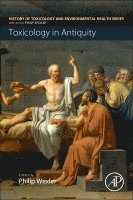
    Toxicology in Antiquity

    AvWexler,Phili,Philip Wexler

    Häftad, Engelska, 2018

    Del i serien History of Toxicology and Environmental Health

    1 265 kr

    Beställningsvara. Skickas inom 10-15 vardagar. Fri frakt över 249 kr.

    Beskrivning

    Toxicology in Antiquity provides an authoritative and fascinating exploration into the use of toxins and poisons in antiquity. It brings together the two previously published shorter volumes on the topic, as well as adding considerable new information. Part of the History of Toxicology and Environmental Health series, it covers key accomplishments, scientists, and events in the broad field of toxicology, including environmental health and chemical safety. This first volume sets the tone for the series and starts at the very beginning, historically speaking, with a look at toxicology in ancient times. The book explains that before scientific research methods were developed, toxicology thrived as a very practical discipline. People living in ancient civilizations readily learned to distinguish safe substances from hazardous ones, how to avoid these hazardous substances, and how to use them to inflict harm on enemies. It also describes scholars who compiled compendia of toxic agents. New chapters in this edition focus chiefly on evidence for the use of toxic agents derived from religious texts.


    • Provides the historical background for understanding modern toxicology
    • Illustrates the ways previous civilizations learned to distinguish safe from hazardous substances, how to avoid the hazardous substances and how to use them against enemies
    • Explores the way famous historical figures used toxins
    • New chapters focus on evidence of the use of toxins derived from religious texts

    Produktinformation

    • Utgivningsdatum:2018-10-30
    • Mått:152 x 229 x 25 mm
    • Vikt:840 g
    • Format:Häftad
    • Språk:Engelska
    • Serie:History of Toxicology and Environmental Health
    • Antal sidor:510
    • Upplaga:2
    • Förlag:Elsevier Science
    • Medarbetare:Philip Wexler
    • ISBN:9780128153390

    Utforska kategorier

    • Miljövetenskap och miljöpolitik inom Naturvetenskap och teknik
    • Farmakologi inom Medicin
    • Miljöteknik inom Naturvetenskap och teknik

    Mer om författaren

    Philip Wexler has written and edited numerous publications related to toxicology and toxico-informatics, as well as taught and otherwise lectured globally on these topics. He has been Editor-in-Chief of Elsevier’s Encyclopedia of Toxicology including the current, 4th edition (2023) since its inception as well as Information Resources in Toxicology (Elsevier. 5th ed. 2020), and Chemicals, Environment, Health: A Global Management Perspective (CRC Press/Taylor and Francis. 2011). He has served as Associate Editor for Toxicology Information and Resources for Elsevier's journal, Toxicology and edited special issues on Digital Information and Tools. Phil is also overseeing a monographic series on Toxicology History. Volumes have been published on Antiquity, the Middle Ages and Renaissance, modern clinical toxicology, risk assessment, alternative test methods, food and nutrition, and disasters, with more in the planning stages. He is a co-Editor-in-Chief of the Taylor and Francis journal, Global Security: Health, Science, and Policy and a past recipient of the US Society of Toxicology’s (SOT) Public Communications Award.Phil recently retired from a long federal career as a Technical Information Specialist at the National Library of Medicine’s (NLM) Toxicology and Environmental Health Information Program, within its Specialized Information Services Division (SIS). His initial position at NLM was as a Fellow of its Associate Program and early work included a brief stint in the Reference Services Section. A recipient of the NLM Regents Award for Scholarly or Technical Achievement and the Distinguished Technical Communication Award of the Washington chapter of the Society for Technical Communication, he was team leader for the development of the ToxLearn online multi-module tutorials, a joint activity with the SOT. Phil had also been project officer for the LactMed file on drugs and lactation, and the IRIS (Integrated Risk Information System) and ITER (International Toxicity Estimates for Risk) risk assessment databases.Additionally, Phil had been the guiding force behind, and federal liaison to, the World Library of Toxicology, Chemical Safety, and Environmental Health (WLT) prototype, a free global Web portal that provided the scientific community and public with links to major government agencies, non-governmental organizations, universities, professional societies, and other groups addressing issues related to toxicology, public health, and environmental health prior to its migration to the INND/Toxipedia group. This multilingual tool, fed by information from a roster of international Country Correspondents, has been praised as a successful test resource for overcoming barriers to the sharing of information between countries, enhancing collaboration, and minimizing duplication. Currently on hiatus, it awaits a visionary funding source to become operational.A trustee of the Toxicology Education Foundation (TEF), Phil had previously served as its federal liaison. He is a past Chair of SOT’s World Wide Web Advisory Team, and active in its Ethical, Legal, Forensics, and Social Issues Specialty Section. He was a member of the Education and Communications Work Group of the CDC/ATSDR’s National Conversation on Public Health and Chemical Exposure. A co-developer of the Toxicology History Room, he is co-founder and was federal liaison to the Toxicology History Association. For many years he organized and emceed the popular Toxicology Quiz Bowl at the annual SOT meetings.In addition to pursuing toxicology-related activities in his retirement, Phil is happy to have more time to embrace other lifelong interests. He is the author of five poetry collections, a mosaic artist, and a cactus and succulent enthusiast.

    Innehållsförteckning

    • 1. The Prehistory of Poison Arrows2. Beetle and Plant Arrow Poisons of the San People of Southern Africa3. Toxicology in Ancient Egypt4. The Death of Cleopatra: Suicide by Snakebite or Poisoned by Her Enemies?5. Kohl Use in Antiquity: Effects on the Eye6. Nicander, Thêriaka, and Alexipharmaka: Venoms, Poisons, and Literature7. The Case Against Socrates and His Execution8. Murder, Execution, and Suicide in Ancient Greece and Rome9. The Oracle at Delphi: The Pythia and the Pneuma, Intoxicating Gas Finds, and Hypotheses10. Alexander the Great: A Questionable Death11. Mithridates of Pontus and His Universal Antidote12. Theriaca Magna: The Glorious Cure-All Remedy13. The gates to hell in antiquity and their relation to geogenic CO2 emissions14. Lead Poisoning and the Downfall of Rome: Reality or Myth?15. Poisons, Poisoners, and Poisoning in Ancient Rome16. Chemical and Biological Warfare in Antiquity17. Asclepius and the Snake as Toxicological Symbols in Ancient Greece and Rome18. Anthropogenic Air Pollution in Ancient Times19. Poisoning in Ancient Rome: Images and Rules20. “Gleaming and Deadly White”: Toxic Cosmetics in the Roman World21. Cherchez la femme: three infamous poisoners of ancient Rome22. Did Hannibal really poison himself?23. Drugs, Suppositories, and Cult Worship in Antiquity24. Entheogens in Ancient Times: Wine and the Rituals of Dionysus25. Entheogens (Psychedelic Drugs) and the Ancient Mystery Religions26. Ancient Mystery Initiation: Toxic Priestesses and Vaginal Communion27. Harmful Botanicals28. Pearl, an Ancient Antidote of Eastern Origin29. Rhetoric, Demons, and the Poisoner's Tongue in Judaism and Early Christianity30. Poisonous Medicine in Ancient China31. Toxicity of Ayurvedic Medicines and Safety Concerns: Ancient and Modern Perspectives32. Mushroom Intoxication in Mesoamerica