How Things Worked – serie
Visar alla böcker i serien How Things Worked. Handla med fri frakt och snabb leverans.
20 produkter
20 produkter
Häftad, Engelska, 2014
309 kr
Skickas inom 5-8 vardagar
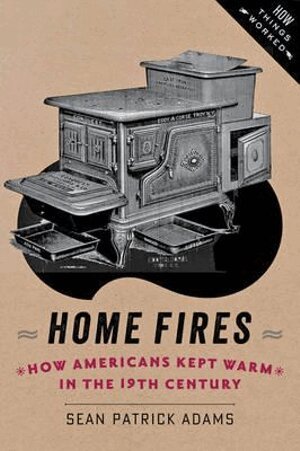
Home Fires tells the fascinating story of how changes in home heating over the nineteenth century spurred the growth of networks that helped remake American society. Sean Patrick Adams reconstructs the ways in which the "industrial hearth" appeared in American cities, the methods that entrepreneurs in home heating markets used to convince consumers that their product designs and fuel choices were superior, and how elite, middle-class, and poor Americans responded to these overtures. Adams depicts the problem of dwindling supplies of firewood and the search for alternatives; the hazards of cutting, digging, and drilling in the name of home heating; the trouble and expense of moving materials from place to place; the rise of steam power; the growth of an industrial economy; and questions of economic efficiency, at both the individual household and the regional level. Home Fires makes it clear that debates over energy sources, energy policy, and company profit margins have been around a long time. The challenge of staying warm in the industrializing North becomes a window into the complex world of energy transitions, economic change, and emerging consumerism.Readers will understand the struggles of urban families as they sought to adapt to the ever-changing nineteenth-century industrial landscape. This perspective allows a unique view of the development of an industrial society not just from the ground up but from the hearth up.
Häftad, Engelska, 2014
330 kr
Skickas inom 5-8 vardagar
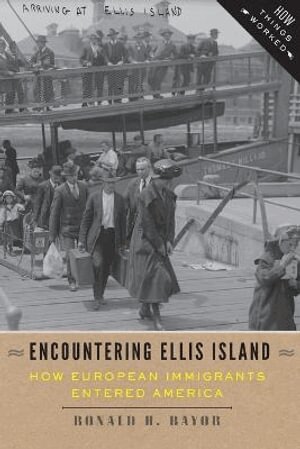
America is famously known as a nation of immigrants. Millions of Europeans journeyed to the United States in the peak years of 1892-1924, and Ellis Island, New York, is where the great majority landed. Ellis Island opened in 1892 with the goal of placing immigration under the control of the federal government and systematizing the entry process. Encountering Ellis Island introduces readers to the ways in which the principal nineteenth- and early twentieth-century American portal for Europeans worked in practice, with some comparison to Angel Island, the main entry point for Asian immigrants. What happened along the journey? How did the processing of so many people work? What were the reactions of the newly arrived to the process (and threats) of inspection, delays, hospitalization, detention, and deportation? How did immigration officials attempt to protect the country from diseased or "unfit" newcomers, and how did these definitions take shape and change? What happened to people who failed screening? And how, at the journey's end, did immigrants respond to admission to their new homeland? Ronald H.Bayor, a senior scholar in immigrant and urban studies, gives voice to both immigrants and Island workers to offer perspectives on the human experience and institutional imperatives associated with the arrival experience. Drawing on firsthand accounts from, and interviews with, immigrants, doctors, inspectors, aid workers, and interpreters, Bayor paints a vivid and sometimes troubling portrait of the immigration process. In reality, Ellis Island had many liabilities as well as assets. Corruption was rife. Immigrants with medical issues occasionally faced a hostile staff. Some families, on the other hand, reunited in great joy and found relief at their journey's end. Encountering Ellis Island lays bare the profound and sometimes-victorious story of people chasing the American Dream: leaving everything behind, facing a new language and a new culture, and starting a new American life.
Inbunden, Engelska, 2014
565 kr
Skickas inom 5-8 vardagar
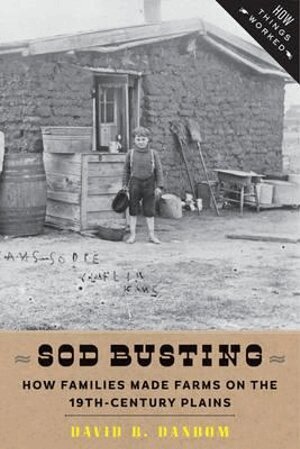
Prairie busting is central to the lore of westward expansion, but how was it actually accomplished with little more than animal and human power? In Sod Busting, David B. Danbom tells the story of Great Plains settlement in a way it has seldom been told before. Stretching beyond the sweeping accounts typical of standard textbooks, Danbom challenges students to think about the many practicalities of surviving on the Great Plains in the late nineteenth century by providing a detailed account of how settlers acquired land and made homes, farms, and communities. He examines the physical and climatic obstacles of the plains-perhaps America's most inhospitable frontier-and shows how settlers sheltered themselves, gained access to fuel and water, and broke the land for agriculture. Treating the Great Plains as a post-industrial frontier, Danbom delves into the economic motivations of settlers, as well as the physically and economically difficult process of farm making. He explains how settlers got the capital they needed to succeed and how they used the labor of the entire family to survive until farms returned profits.He examines closely the business decisions that determined the success or failure of these farmers in a boom-and-bust economy; details the creation of churches, schools, and service centers that enriched the social and material lives of the settlers; and shows how the support of government, railroads, and other businesses contributed to the success of plains settlement. Based on contemporary accounts, settlers' reminiscences, and the work of other historians, Sod Busting dives deeply into the practical realities of how things worked to make vivid one of the quintessentially American experiences, breaking new land.
Häftad, Engelska, 2014
271 kr
Skickas inom 5-8 vardagar
Prairie busting is central to the lore of westward expansion, but how was it actually accomplished with little more than animal and human power? In Sod Busting, David B. Danbom tells the story of Great Plains settlement in a way it has seldom been told before. Stretching beyond the sweeping accounts typical of standard textbooks, Danbom challenges students to think about the many practicalities of surviving on the Great Plains in the late nineteenth century by providing a detailed account of how settlers acquired land and made homes, farms, and communities. He examines the physical and climatic obstacles of the plains-perhaps America's most inhospitable frontier-and shows how settlers sheltered themselves, gained access to fuel and water, and broke the land for agriculture. Treating the Great Plains as a post-industrial frontier, Danbom delves into the economic motivations of settlers, as well as the physically and economically difficult process of farm making. He explains how settlers got the capital they needed to succeed and how they used the labor of the entire family to survive until farms returned profits.He examines closely the business decisions that determined the success or failure of these farmers in a boom-and-bust economy; details the creation of churches, schools, and service centers that enriched the social and material lives of the settlers; and shows how the support of government, railroads, and other businesses contributed to the success of plains settlement. Based on contemporary accounts, settlers' reminiscences, and the work of other historians, Sod Busting dives deeply into the practical realities of how things worked to make vivid one of the quintessentially American experiences, breaking new land.
Inbunden, Engelska, 2016
565 kr
Skickas inom 5-8 vardagar
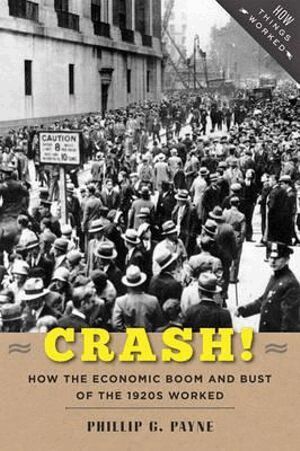
Speculation - an economic reality for centuries-is a hallmark of the modern US economy. But how does speculation work? Is it really caused, as some insist, by popular delusions and the madness of crowds, or do failed regulations play a greater part? And why is it that investors never seem to learn the lessons of past speculative bubbles? Crash! explores these questions by examining the rise and fall of the American economy in the 1920s. Phillip G Payne frames the story of the 1929 stock market crash within the booming New Era economy of the 1920s and the bust of the Great Depression. Taking into account the emotional drivers of the consumer market, he offers a clear, concise explanation of speculation's complex role in creating one of the greatest financial panics in US history. Crash! explains how post-World War I changes in the global financial markets transformed the world economy, examines the role of boosters and politicians in promoting speculation, and describes in detail the disastrous aftermath of the 1929 panic. Payne's book will help students recognize the telltale signs of bubbles and busts, so that they may become savvier consumers and investors.
Häftad, Engelska, 2016
271 kr
Skickas inom 5-8 vardagar
Speculation - an economic reality for centuries-is a hallmark of the modern US economy. But how does speculation work? Is it really caused, as some insist, by popular delusions and the madness of crowds, or do failed regulations play a greater part? And why is it that investors never seem to learn the lessons of past speculative bubbles? Crash! explores these questions by examining the rise and fall of the American economy in the 1920s. Phillip G Payne frames the story of the 1929 stock market crash within the booming New Era economy of the 1920s and the bust of the Great Depression. Taking into account the emotional drivers of the consumer market, he offers a clear, concise explanation of speculation's complex role in creating one of the greatest financial panics in US history. Crash! explains how post-World War I changes in the global financial markets transformed the world economy, examines the role of boosters and politicians in promoting speculation, and describes in detail the disastrous aftermath of the 1929 panic. Payne's book will help students recognize the telltale signs of bubbles and busts, so that they may become savvier consumers and investors.
Inbunden, Engelska, 2017
678 kr
Skickas inom 5-8 vardagar
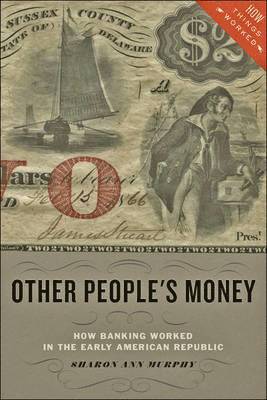
Pieces of paper that claimed to be good for two dollars upon redemption at a distant bank. Foreign coins that fluctuated in value from town to town. Stock certificates issued by turnpike or canal companies-worth something...or perhaps nothing. IOUs from farmers or tradesmen, passed around by people who could not know the person who first issued them. Money and banking in antebellum America offered a glaring example of free-market capitalism run amok-unregulated, exuberant, and heading pell-mell toward the next "panic" of burst bubbles and hard times. In Other People's Money, Sharon Ann Murphy explains how banking and money worked before the federal government, spurred by the chaos of the Civil War, created the national system of US paper currency. Murphy traces the evolution of banking in America from the founding of the nation, when politicians debated the constitutionality of chartering a national bank, to Andrew Jackson's role in the Bank War of the early 1830s, to the problems of financing a large-scale war.She reveals how, ultimately, the monetary and banking structures that emerged from the Civil War also provided the basis for our modern financial system, from its formation under the Federal Reserve in 1913 to the present. Touching on the significant role that numerous historical figures played in shaping American banking-including Alexander Hamilton, James Madison, Benjamin Franklin, Henry Clay, Daniel Webster, and Louis Brandeis- Other People's Money is an engaging guide to the heated political fights that surrounded banking in early America as well as to the economic causes and consequences of the financial system that emerged from the turmoil. By helping readers understand the financial history of this period and the way banking shaped the society in which ordinary Americans lived and worked, this book broadens and deepens our knowledge of the Early American Republic.
Häftad, Engelska, 2017
271 kr
Skickas inom 5-8 vardagar
Pieces of paper that claimed to be good for two dollars upon redemption at a distant bank. Foreign coins that fluctuated in value from town to town. Stock certificates issued by turnpike or canal companies-worth something...or perhaps nothing. IOUs from farmers or tradesmen, passed around by people who could not know the person who first issued them. Money and banking in antebellum America offered a glaring example of free-market capitalism run amok-unregulated, exuberant, and heading pell-mell toward the next "panic" of burst bubbles and hard times. In Other People's Money, Sharon Ann Murphy explains how banking and money worked before the federal government, spurred by the chaos of the Civil War, created the national system of US paper currency. Murphy traces the evolution of banking in America from the founding of the nation, when politicians debated the constitutionality of chartering a national bank, to Andrew Jackson's role in the Bank War of the early 1830s, to the problems of financing a large-scale war.She reveals how, ultimately, the monetary and banking structures that emerged from the Civil War also provided the basis for our modern financial system, from its formation under the Federal Reserve in 1913 to the present. Touching on the significant role that numerous historical figures played in shaping American banking-including Alexander Hamilton, James Madison, Benjamin Franklin, Henry Clay, Daniel Webster, and Louis Brandeis- Other People's Money is an engaging guide to the heated political fights that surrounded banking in early America as well as to the economic causes and consequences of the financial system that emerged from the turmoil. By helping readers understand the financial history of this period and the way banking shaped the society in which ordinary Americans lived and worked, this book broadens and deepens our knowledge of the Early American Republic.
Häftad, Engelska, 2017
330 kr
Skickas inom 5-8 vardagar
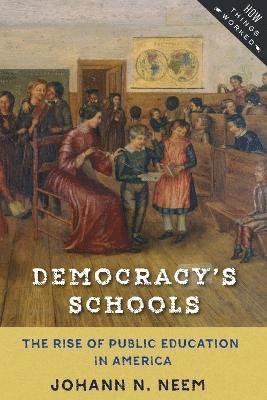
At a time when Americans are debating the future of public education, Johann N. Neem tells the inspiring story of how and why Americans built a robust public school system in the decades between the Revolution and the Civil War. It's a story in which ordinary people in towns across the country worked together to form districts and build schoolhouses and reformers sought to expand tax support and give every child a liberal education. By the time of the Civil War, most northern states had made common schools free, and many southern states were heading in the same direction. Americans made schooling a public good. Yet back then, like today, Americans disagreed over the kind of education needed, who should pay for it, and how schools should be governed. Neem explores the history and meaning of these disagreements. As Americans debated, teachers and students went about the daily work of teaching and learning. Neem takes us into the classrooms of yore so that we may experience public schools from the perspective of the people whose daily lives were most affected by them. Ultimately, Neem concludes, public schools encouraged a diverse people to see themselves as one nation.By studying the origins of America's public schools, Neem urges us to focus on the defining features of democratic education: promoting equality, nurturing human beings, preparing citizens, and fostering civic solidarity.
Häftad, Engelska, 2018
271 kr
Skickas inom 5-8 vardagar
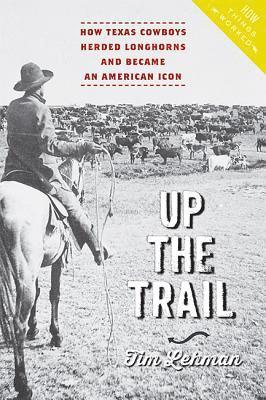
How did cattle drives come about—and why did the cowboy become an iconic American hero?Cattle drives were the largest, longest, and ultimately the last of the great forced animal migrations in human history. Spilling out of Texas, they spread longhorns, cowboys, and the culture that roped the two together throughout the American West. In cities like Abilene, Dodge City, and Wichita, buyers paid off ranchers, ranchers paid off wranglers, and railroad lines took the cattle east to the packing plants of St. Louis and Chicago. The cattle drives of our imagination are filled with colorful cowboys prodding and coaxing a line of bellowing animals along a dusty path through the wilderness. These sturdy cowhands always triumph over stampedes, swollen rivers, and bloodthirsty Indians to deliver their mighty-horned companions to market—but Tim Lehman’s Up the Trail reveals that the gritty reality was vastly different. Far from being rugged individualists, the actual cow herders were itinerant laborers—a proletariat on horseback who connected cattle from the remote prairies of Texas with the nation’s industrial slaughterhouses. Lehman demystifies the cowboy life by describing the origins of the cattle drive and the extensive planning, complicated logistics, great skill, and good luck essential to getting the cows to market. He reveals how drives figured into the larger story of postwar economic development and traces the complex effects the cattle business had on the environment. He also explores how the premodern cowboy became a national hero who personified the manly virtues of rugged individualism and personal independence. Grounded in primary sources, this absorbing book takes advantage of recent scholarship on labor, race, gender, and the environment. The lively narrative will appeal to students of Texas and western history as well as anyone interested in cowboy culture.
Inbunden, Engelska, 2014
457 kr
Tillfälligt slut
Home Fires tells the fascinating story of how changes in home heating over the nineteenth century spurred the growth of networks that helped remake American society. Sean Patrick Adams reconstructs the ways in which the "industrial hearth" appeared in American cities, the methods that entrepreneurs in home heating markets used to convince consumers that their product designs and fuel choices were superior, and how elite, middle-class, and poor Americans responded to these overtures. Adams depicts the problem of dwindling supplies of firewood and the search for alternatives; the hazards of cutting, digging, and drilling in the name of home heating; the trouble and expense of moving materials from place to place; the rise of steam power; the growth of an industrial economy; and questions of economic efficiency, at both the individual household and the regional level. Home Fires makes it clear that debates over energy sources, energy policy, and company profit margins have been around a long time. The challenge of staying warm in the industrializing North becomes a window into the complex world of energy transitions, economic change, and emerging consumerism.Readers will understand the struggles of urban families as they sought to adapt to the ever-changing nineteenth-century industrial landscape. This perspective allows a unique view of the development of an industrial society not just from the ground up but from the hearth up.
Inbunden, Engelska, 2014
403 kr
Tillfälligt slut
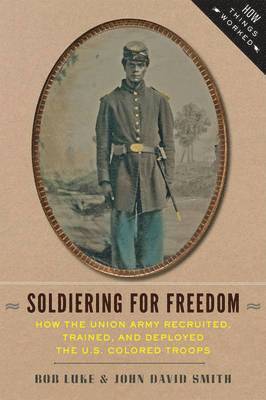
After President Lincoln issued the final Emancipation Proclamation of January 1, 1863, Confederate slaves who could reach Union lines often made that perilous journey. A great many of the young and middle-aged among them, along with other black men in the free and border slave states, joined the Union army. These U.S. Colored Troops (USCT), as the War Department designated most black units, materially helped to win the Civil War - performing a variety of duties, fighting in some significant engagements, and proving to the Confederates that Northern manpower had practically no limits. Soldiering for Freedom explains how Lincoln's administration came to recognize the advantages of arming free blacks and former slaves and how doing so changed the purpose of the war. Bob Luke and John David Smith narrate and analyze how former slaves and free blacks found their way to recruiting centers and made the decision to muster in. As Union military forces recruited, trained, and equipped ex-slave and free black soldiers in the last two years of the Civil War, white civilian and military authorities often regarded the African American soldiers with contempt.They relegated the men of the USCT to second-class treatment compared to white volunteers. The authors show how the white commanders deployed the black troops, and how the courage of the African American soldiers gave hope for their full citizenship after the war. Including twelve evocative historical engravings and photographs, this engaging and meticulously researched book provides a fresh perspective on a fascinating topic. Appropriate for history students, scholars of African American history, or military history buffs, this compelling and informative account will provide answers to many intriguing questions about the U.S. Colored Troops, Union military strategy, and race relations during and after the tumultuous Civil War.
Häftad, Engelska, 2014
208 kr
Tillfälligt slut
After President Lincoln issued the final Emancipation Proclamation of January 1, 1863, Confederate slaves who could reach Union lines often made that perilous journey. A great many of the young and middle-aged among them, along with other black men in the free and border slave states, joined the Union army. These U.S. Colored Troops (USCT), as the War Department designated most black units, materially helped to win the Civil War - performing a variety of duties, fighting in some significant engagements, and proving to the Confederates that Northern manpower had practically no limits. Soldiering for Freedom explains how Lincoln's administration came to recognize the advantages of arming free blacks and former slaves and how doing so changed the purpose of the war. Bob Luke and John David Smith narrate and analyze how former slaves and free blacks found their way to recruiting centers and made the decision to muster in. As Union military forces recruited, trained, and equipped ex-slave and free black soldiers in the last two years of the Civil War, white civilian and military authorities often regarded the African American soldiers with contempt.They relegated the men of the USCT to second-class treatment compared to white volunteers. The authors show how the white commanders deployed the black troops, and how the courage of the African American soldiers gave hope for their full citizenship after the war. Including twelve evocative historical engravings and photographs, this engaging and meticulously researched book provides a fresh perspective on a fascinating topic. Appropriate for history students, scholars of African American history, or military history buffs, this compelling and informative account will provide answers to many intriguing questions about the U.S. Colored Troops, Union military strategy, and race relations during and after the tumultuous Civil War.
Inbunden, Engelska, 2014
675 kr
Tillfälligt slut
America is famously known as a nation of immigrants. Millions of Europeans journeyed to the United States in the peak years of 1892-1924, and Ellis Island, New York, is where the great majority landed. Ellis Island opened in 1892 with the goal of placing immigration under the control of the federal government and systematizing the entry process. Encountering Ellis Island introduces readers to the ways in which the principal nineteenth- and early twentieth-century American portal for Europeans worked in practice, with some comparison to Angel Island, the main entry point for Asian immigrants. What happened along the journey? How did the processing of so many people work? What were the reactions of the newly arrived to the process (and threats) of inspection, delays, hospitalization, detention, and deportation? How did immigration officials attempt to protect the country from diseased or "unfit" newcomers, and how did these definitions take shape and change? What happened to people who failed screening? And how, at the journey's end, did immigrants respond to admission to their new homeland? Ronald H.Bayor, a senior scholar in immigrant and urban studies, gives voice to both immigrants and Island workers to offer perspectives on the human experience and institutional imperatives associated with the arrival experience. Drawing on firsthand accounts from, and interviews with, immigrants, doctors, inspectors, aid workers, and interpreters, Bayor paints a vivid and sometimes troubling portrait of the immigration process. In reality, Ellis Island had many liabilities as well as assets. Corruption was rife. Immigrants with medical issues occasionally faced a hostile staff. Some families, on the other hand, reunited in great joy and found relief at their journey's end. Encountering Ellis Island lays bare the profound and sometimes-victorious story of people chasing the American Dream: leaving everything behind, facing a new language and a new culture, and starting a new American life.
Inbunden, Engelska, 2017
551 kr
Tillfälligt slut
At a time when Americans are debating the future of public education, Johann N. Neem tells the inspiring story of how and why Americans built a robust public school system in the decades between the Revolution and the Civil War. It's a story in which ordinary people in towns across the country worked together to form districts and build schoolhouses and reformers sought to expand tax support and give every child a liberal education. By the time of the Civil War, most northern states had made common schools free, and many southern states were heading in the same direction. Americans made schooling a public good. Yet back then, like today, Americans disagreed over the kind of education needed, who should pay for it, and how schools should be governed. Neem explores the history and meaning of these disagreements. As Americans debated, teachers and students went about the daily work of teaching and learning. Neem takes us into the classrooms of yore so that we may experience public schools from the perspective of the people whose daily lives were most affected by them. Ultimately, Neem concludes, public schools encouraged a diverse people to see themselves as one nation.By studying the origins of America's public schools, Neem urges us to focus on the defining features of democratic education: promoting equality, nurturing human beings, preparing citizens, and fostering civic solidarity.
Inbunden, Engelska, 2018
551 kr
Tillfälligt slut
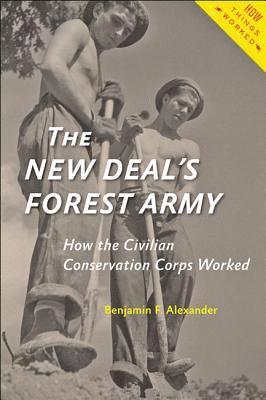
How the Civilian Conservation Corps constructed, rejuvenated, and protected American forests and parks at the height of the Great Depression.Propelled by the unprecedented poverty of the Great Depression, President Franklin D. Roosevelt established an array of massive public works programs designed to provide direct relief to America’s poor and unemployed. The New Deal’s most tangible legacy may be the Civilian Conservation Corps’s network of parks, national forests, scenic roadways, and picnic shelters that still mark the country’s landscape. CCC enrollees, most of them unmarried young men, lived in camps run by the Army and worked hard for wages (most of which they had to send home to their families) to preserve America’s natural treasures. In The New Deal’s Forest Army, Benjamin F. Alexander chronicles how the corps came about, the process applicants went through to get in, and what jobs they actually did. He also explains how the camps and the work sites were run, how enrollees spent their leisure time, and how World War II brought the CCC to its end. Connecting the story of the CCC with the Roosevelt administration’s larger initiatives, Alexander describes how FDR’s policies constituted a mixed blessing for African Americans who, even while singled out for harsh treatment, benefited enough from the New Deal to become an increasingly strong part of the electorate behind the Democratic Party. The CCC was the only large-scale employment program whose existence FDR foreshadowed in speeches during the 1932 campaign—and the dearest to his heart throughout the decade that it lasted. Alexander reveals how the work itself left a lasting imprint on the country’s terrain as the enrollees planted trees, fought forest fires, landscaped public parks, restored historic battlegrounds, and constructed dams and terraces to prevent floods. A uniquely detailed exploration of life in the CCC, The New Deal’s Forest Army compellingly demonstrates how one New Deal program changed America and gave birth to both contemporary forestry and the modern environmental movement.
Häftad, Engelska, 2018
208 kr
Tillfälligt slut
How the Civilian Conservation Corps constructed, rejuvenated, and protected American forests and parks at the height of the Great Depression.Propelled by the unprecedented poverty of the Great Depression, President Franklin D. Roosevelt established an array of massive public works programs designed to provide direct relief to America’s poor and unemployed. The New Deal’s most tangible legacy may be the Civilian Conservation Corps’s network of parks, national forests, scenic roadways, and picnic shelters that still mark the country’s landscape. CCC enrollees, most of them unmarried young men, lived in camps run by the Army and worked hard for wages (most of which they had to send home to their families) to preserve America’s natural treasures. In The New Deal’s Forest Army, Benjamin F. Alexander chronicles how the corps came about, the process applicants went through to get in, and what jobs they actually did. He also explains how the camps and the work sites were run, how enrollees spent their leisure time, and how World War II brought the CCC to its end. Connecting the story of the CCC with the Roosevelt administration’s larger initiatives, Alexander describes how FDR’s policies constituted a mixed blessing for African Americans who, even while singled out for harsh treatment, benefited enough from the New Deal to become an increasingly strong part of the electorate behind the Democratic Party. The CCC was the only large-scale employment program whose existence FDR foreshadowed in speeches during the 1932 campaign—and the dearest to his heart throughout the decade that it lasted. Alexander reveals how the work itself left a lasting imprint on the country’s terrain as the enrollees planted trees, fought forest fires, landscaped public parks, restored historic battlegrounds, and constructed dams and terraces to prevent floods. A uniquely detailed exploration of life in the CCC, The New Deal’s Forest Army compellingly demonstrates how one New Deal program changed America and gave birth to both contemporary forestry and the modern environmental movement.
Inbunden, Engelska, 2018
551 kr
Tillfälligt slut
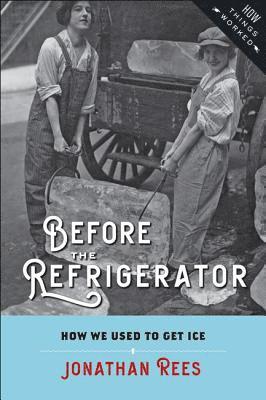
How increased access to ice—decades before refrigeration—transformed American life.During the late nineteenth and early twentieth centuries, Americans depended upon ice to stay cool and to keep their perishable foods fresh. Jonathan Rees tells the fascinating story of how people got ice before mechanical refrigeration came to the household. Drawing on newspapers, trade journals, and household advice books, Before the Refrigerator explains how Americans built a complex system to harvest, store, and transport ice to everyone who wanted it, even the very poor.Rees traces the evolution of the natural ice industry from its mechanization in the 1880s through its gradual collapse, which started after World War I. Meatpackers began experimenting with ice refrigeration to ship their products as early as the 1860s. Starting around 1890, large, bulky ice machines the size of small houses appeared on the scene, becoming an important source for the American ice supply. As ice machines shrunk, more people had access to better ice for a wide variety of purposes. By the early twentieth century, Rees writes, ice had become an essential tool for preserving perishable foods of all kinds, transforming what most people ate and drank every day. Reviewing all the inventions that made the ice industry possible and the way they worked together to prevent ice from melting, Rees demonstrates how technological systems can operate without a central controlling force. Before the Refrigerator is ideal for history of technology classes, food studies classes, or anyone interested in what daily life in the United States was like between 1880 and 1930.
Häftad, Engelska, 2018
208 kr
Tillfälligt slut
How increased access to ice—decades before refrigeration—transformed American life.During the late nineteenth and early twentieth centuries, Americans depended upon ice to stay cool and to keep their perishable foods fresh. Jonathan Rees tells the fascinating story of how people got ice before mechanical refrigeration came to the household. Drawing on newspapers, trade journals, and household advice books, Before the Refrigerator explains how Americans built a complex system to harvest, store, and transport ice to everyone who wanted it, even the very poor.Rees traces the evolution of the natural ice industry from its mechanization in the 1880s through its gradual collapse, which started after World War I. Meatpackers began experimenting with ice refrigeration to ship their products as early as the 1860s. Starting around 1890, large, bulky ice machines the size of small houses appeared on the scene, becoming an important source for the American ice supply. As ice machines shrunk, more people had access to better ice for a wide variety of purposes. By the early twentieth century, Rees writes, ice had become an essential tool for preserving perishable foods of all kinds, transforming what most people ate and drank every day. Reviewing all the inventions that made the ice industry possible and the way they worked together to prevent ice from melting, Rees demonstrates how technological systems can operate without a central controlling force. Before the Refrigerator is ideal for history of technology classes, food studies classes, or anyone interested in what daily life in the United States was like between 1880 and 1930.
Inbunden, Engelska, 2018
604 kr
Tillfälligt slut
How did cattle drives come about—and why did the cowboy become an iconic American hero?Cattle drives were the largest, longest, and ultimately the last of the great forced animal migrations in human history. Spilling out of Texas, they spread longhorns, cowboys, and the culture that roped the two together throughout the American West. In cities like Abilene, Dodge City, and Wichita, buyers paid off ranchers, ranchers paid off wranglers, and railroad lines took the cattle east to the packing plants of St. Louis and Chicago. The cattle drives of our imagination are filled with colorful cowboys prodding and coaxing a line of bellowing animals along a dusty path through the wilderness. These sturdy cowhands always triumph over stampedes, swollen rivers, and bloodthirsty Indians to deliver their mighty-horned companions to market—but Tim Lehman’s Up the Trail reveals that the gritty reality was vastly different. Far from being rugged individualists, the actual cow herders were itinerant laborers—a proletariat on horseback who connected cattle from the remote prairies of Texas with the nation’s industrial slaughterhouses. Lehman demystifies the cowboy life by describing the origins of the cattle drive and the extensive planning, complicated logistics, great skill, and good luck essential to getting the cows to market. He reveals how drives figured into the larger story of postwar economic development and traces the complex effects the cattle business had on the environment. He also explores how the premodern cowboy became a national hero who personified the manly virtues of rugged individualism and personal independence. Grounded in primary sources, this absorbing book takes advantage of recent scholarship on labor, race, gender, and the environment. The lively narrative will appeal to students of Texas and western history as well as anyone interested in cowboy culture.