Human-centred Systems – serie
Visar alla böcker i serien Human-centred Systems. Handla med fri frakt och snabb leverans.
16 produkter
16 produkter
Häftad, Engelska, 1988
556 kr
Skickas inom 10-15 vardagar
Issues raised by the Theory of Knowledge, a central theme in the development of Artificial Intelligence, are the main topic of this book. The major questions are: How is the expert's knowledge to be elicited, what are the limits and possibilities? How can skill be developed and maintained in a more and more computerized and abstract working life? This last question is also closely related to the discussion on programs for education and training in society and working life. Long term effects on skill formation in working life in relation to new technology are a very important area of research. Case studies form the basis for philosophical reflections with the main concept of tacit knowledge as the central issue of skill and new technology. To a great extent the discussion is based on current case studies of professional groups with experience in advanced computer technology. The contributions of this book demonstrate the complicated nature of human knowledge. They introduce different theoretical perspectives on the issue of knowledge acquisition and elicitation.
Häftad, Engelska, 1989
540 kr
Skickas inom 10-15 vardagar
This second book in our series Artificial Intelligence and Society explores the issues involved in the design and application of human-centred systems in the manufacturing area. At first glance it may appear that a book on this topic is somewhat peripheral to the main concerns of the series. In fact, although starting from an engineering perspective, the book addresses some of the pivotal issues confronting those who apply new technology in general and artificial intelligence (AI) systems in particular. Above all, the book invites us to consider whether the present applications of technology are such as to make the best use of human skill and ingenuity and at the same time provide for realistic and economically sustainable systems design solutions. To do so it is necessary to provide systems which support the skill, and are amenable to the cultures, of the areas of application in question. In a philosophical sense it means providing tools to support skills rather than machines which replace them, to use Heidegger's distinction. The book gives an authoritative account of the University of Manchester Institute of Science and Technology (UMIST) tradition of human-centredness and provides a participatory design ap proach which focuses on collaborative learning and enhancement and creation of new skills. It also argues that collaboration should be supported by institutions through the creation of supportive infrastructures and research environments. It emphasises the optimisation of practical knowledge with the help of scientific knowledge and rejects the alternative.
Häftad, Engelska, 1990
556 kr
Skickas inom 10-15 vardagar
The Stockholm conference, organised by the Swedish Arbetslivascentrum in 1988, on Culture, Language and Artificial Intelligence, brought together over three hundred and sixty people interested in the cultural impact of technology, particularly of AI. The premise behind the conference - and this book - is the conclusion of the Swedish Centre for Working Life: that mathematical and engineering models are not in themselves sufficient to explain the effects of computers on the concept and exercise of knowledge. The book contains 29 challenging papers under the headings - language and knowledge - tacit knowledge - the information society - education, training skills and work - expert systems.
Häftad, Engelska, 1991
556 kr
Skickas inom 10-15 vardagar
This book aims to demonstrate the breadth and complexity of the concept of "dialogue", particularly in relation to new technolgy and what follows in its wake: the effects it has on the development and preservation of occupational knowledge and skills, and its effects on society, culture and language. The philosophical and aesthetic nature of the contributions is due to the influence of the Dialogue Seminar, which was held continuously at the Royal Dramatic Theatre in Stockholm during the conference, and in which several of the contributors to this book participated. This monograph on computer science, artificial intelligence, human-centred technology and philosophy of science is intended for researchers in AI and the philosophy of science, computer scientists, psychologists, philosophers and economists.
Häftad, Engelska, 1990
540 kr
Skickas inom 10-15 vardagar
Mike Cooley One of the most remarkable features of modern industrial society, is the gap between that which technology could provide for society (its potential) and that which it actually does provide for society (its reality). We have for example, complex control systems which can guide a missile to another continent with extraordinary accuracy, yet the blind and the disabled have to stagger around our cities in very much the same way as they did in mediaeval times. There are advanced communication systems enabling messages to be sent around the world in a fraction of a second, but it now takes longer to send an ordinary letter from Washington to New York than it did in the days of the stage coach. Such a growing chasm between potential and reality, is giving rise to a thorough questioning of many of the orthodoxies in these areas and the priorities on which they are based. Similar contradictions, even if at this stage less obvious and dramatic, abound in the field of manufacturing technology. There, we find technologies which have the potential of liberating human beings from soul destroying, routine, backbreaking tasks and leave them free to engage in more creative work, but which in reality, often end up reducing the human being to a mere machine appendage, acted upon by the technology and becoming a passive, pathetic element in the productive system rather than a creative, dynamic human being.
Häftad, Engelska, 1990
556 kr
Skickas inom 10-15 vardagar
This treatise argues that successful applications of artificial intelligence are possible only within an understanding of human institutions and the limitations of technology. Products of artificial intelligence research are becoming widely available to non-specialists using low-cost computer systems, but there has been a lack of communication between researchers and community groups. Taking the "weak AI" position, the book explores the way insights and tools from artificial intelligence can be valuable in coming to terms with real world problems. Drawing on the author's extensive practical experience in AI research and management, the book brings together case studies from the fields of education, training, business, engineering, defence, health and community work, and suggests future directions. The book seeks to use AI concepts to illuminate the practical and theoretical concerns of institutions and organizations, opening up possibilities for new areas of collaborative work, and revealing new sources of references and ideas.
Häftad, Engelska, 1991
885 kr
Skickas inom 10-15 vardagar
The debate on the feasibility and applications of artificial intelligence has concentrated on the arguments about the concept of "intelligence", largely neglecting the concept of the "artificial". Most of the recent literature is concerned with whether or not the concept of intelligence is transferable to the computer. Apart from the book by H.A. Simon, "The Sciences of the Artificial" (1969), no serious attempt has been made to define a conceptual framework for understanding the true nature of intelligent machines independently of the "human" features claimed, or denied, for them. "Understanding the Artificial" aims to promote a "second wave" of debate on AI which may help human culture to adapt itself to the artificial rather than to assimilate it according to a user-oriented philosophy. This collection of papers, edited by Professor Massimo Negrotti, discusses the potential losses and gains from AI if we abandon the original anthropomorphic pretension. The authors aim to clarify the main differences between human knowledge processes and computer information processing and suggest the most plausible alternatives to the original ambitions of AI.The authors aim to redefine the epistemology and the objectives of the discipline by highlighting potential problems and possible solutions which should be accepted as typical of the concept of the "artificial" rather than of an information-based imitation of man. This monograph on computer science, artificial intelligence, philosophy of science and sociology is intended for researchers and postgraduate students.
Häftad, Engelska, 1991
540 kr
Skickas inom 10-15 vardagar
This book examines the emergence of a new philosophy based on the idea of "human-centred technology" and, through the use of a case study, illustrates the ways in which users, social scientists, managers and engineers can participate in the design and development of human-centred computer integrated manufacturing (CIM) system. The book offers a unique insight into a large European project (ESPRIT project 1217) aimed at the design and development of human-centred CIM system. The book examines the problems inherent in developing interdisciplinary design methods and of "crossing the border" between the social and engineering sciences. The authors offer proposals and guidelines for overcoming such problems based on their experience within this project. This book will be of particluar interest to researchers and practitioners in the area of factory automation, to students and researchers in AI, and to all those interested in the human and organisational issues surrounding the computerized factory of the future.
540 kr
Skickas inom 10-15 vardagar
Drawing on the experiences of four major EC countries, this book documents the way computer technology has changed the pattern of women's work in the manufacturing sector. The 16 contributors are leading authorities on the subject and analyze how technology has transformed employment in the clothing industry, which is still the major employer of female blue - collar workers in the EC. The contributors assess the aspects of computerization that particularly affect women's employment opportunities - flexible hours, flexible work locations and flexible specialization. The book also contains evaluations of post-Fordism and human-centred technology, two leading issues in the debate about the applications of artificial intelligence and computer-aided technology. These essays highlight a growing polarization in the job market and suggest training schemes which can equip women for technical and managerial employment.
Häftad, Engelska, 1992
540 kr
Skickas inom 10-15 vardagar
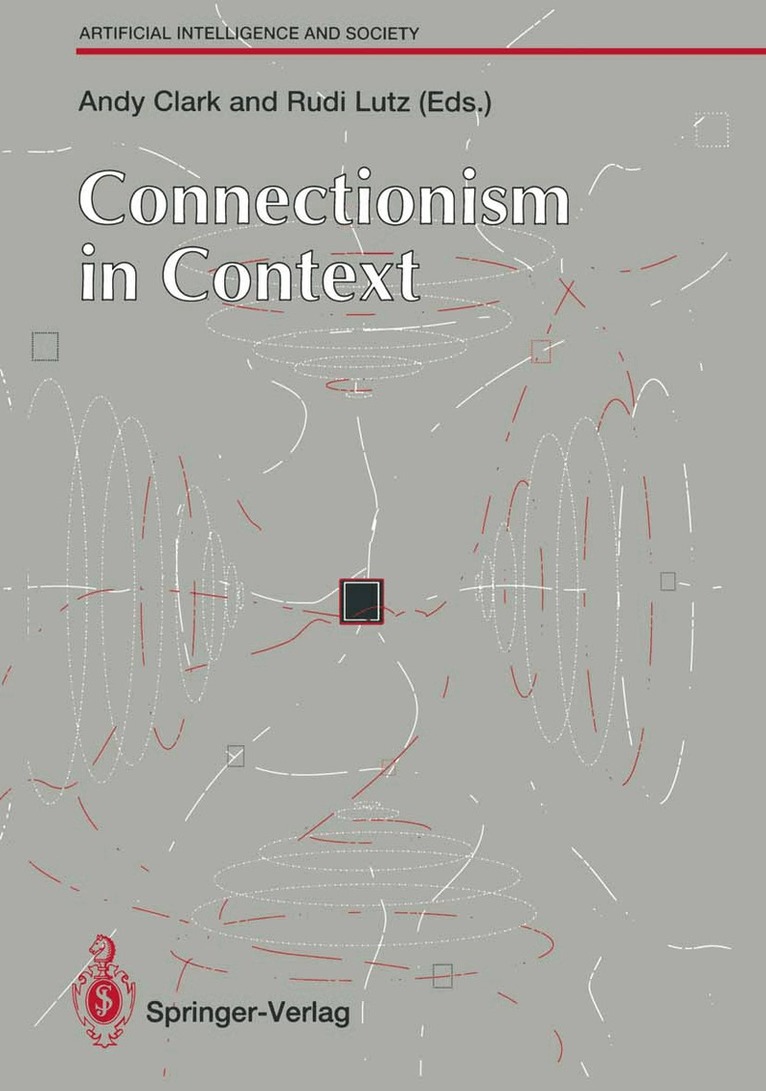
Connectionism in Context aims to broaden and extend the debate concerning the significance of connectionist models. The volume collects together a variety of perspectives by experimental and developmental psychologists, philosophers and active AI researchers. These contributions relate con- nectionist ideas to historical psychlogical debates, e.g., over behaviourism and associationism, to develop- mental and philosophical issues. The result is a volume which addresses both familiar, but central, topics such as the relation between connectionism and classical AI, and less familiar, but highly challenging topics, such as connectionism,associationism and behaviourism, the dis- tinction between perception and cognition, the role of en- vironmental structure, and the potential value ofconnec- tionism as a means of "symbol grounding". The nine essays have been written with an interdisciplinary audience in mind and avoid both technical jargon and heavy mathematics.
Häftad, Engelska, 1992
556 kr
Skickas inom 10-15 vardagar
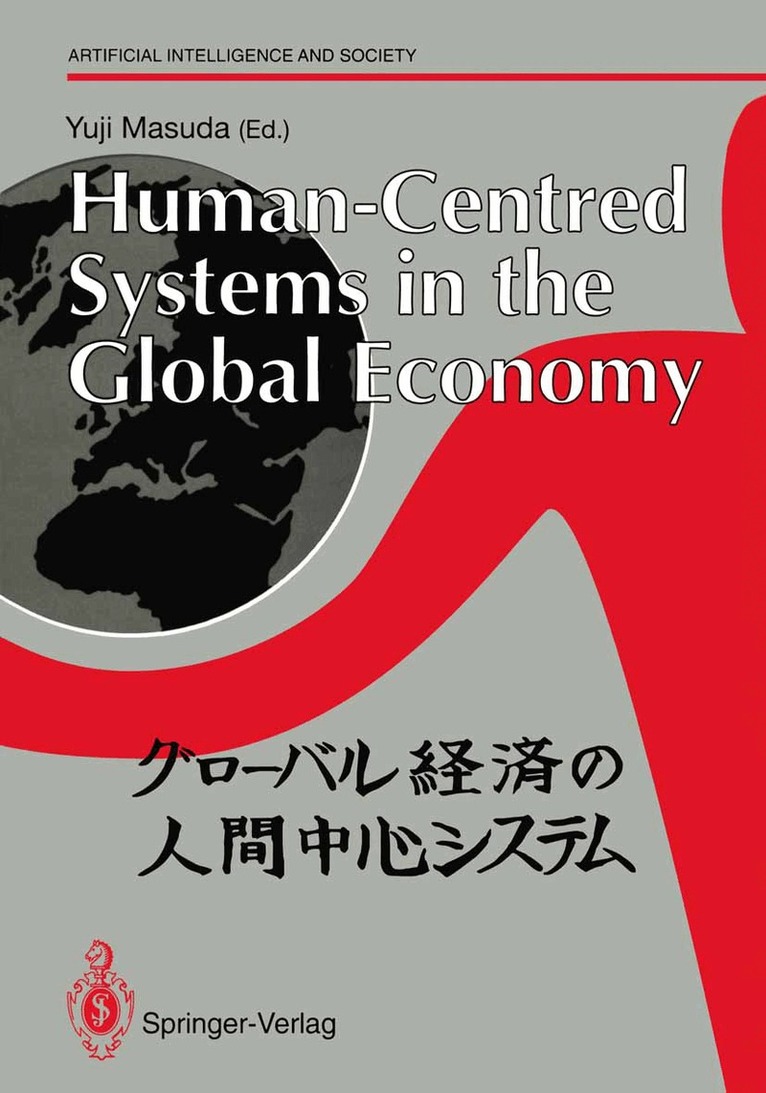
The arrival of the information society in Japan has radically altered the industrial structure, work patterns and cultural values of its society. The innovation and implementation of information technology has accelerated this change and made its effects more profoundly felt. Because of this, there is now a need to widen to debate on human-centred manufacturing systems to include broader issues such as industrial culture, international economies and global knowledge. "Human Centred Systems in the Global Economy" contains the proceedings of an international workshop held at Tokyo Keizai University which looked at the design of human-centred systems in the context of these technological and social changes. The workshop attracted contributions from internationally known researhers in Europe, Japan, the USA, South East Asia, Eastern Europe and the USSR. The resulting volume addresses the relationship of information technology to Japanese society as a whole, rather than concentrating on technical issues. The papers have been divided into three areas, covering the structure, dimensions, and policies and perspectives of the information society.Specific areas covered include: social and cultural shaping of technology, economic interdependence, technology and knowledge transfer, computer-aided design, management culture and communication technologies.
Häftad, Engelska, 1992
556 kr
Skickas inom 10-15 vardagar
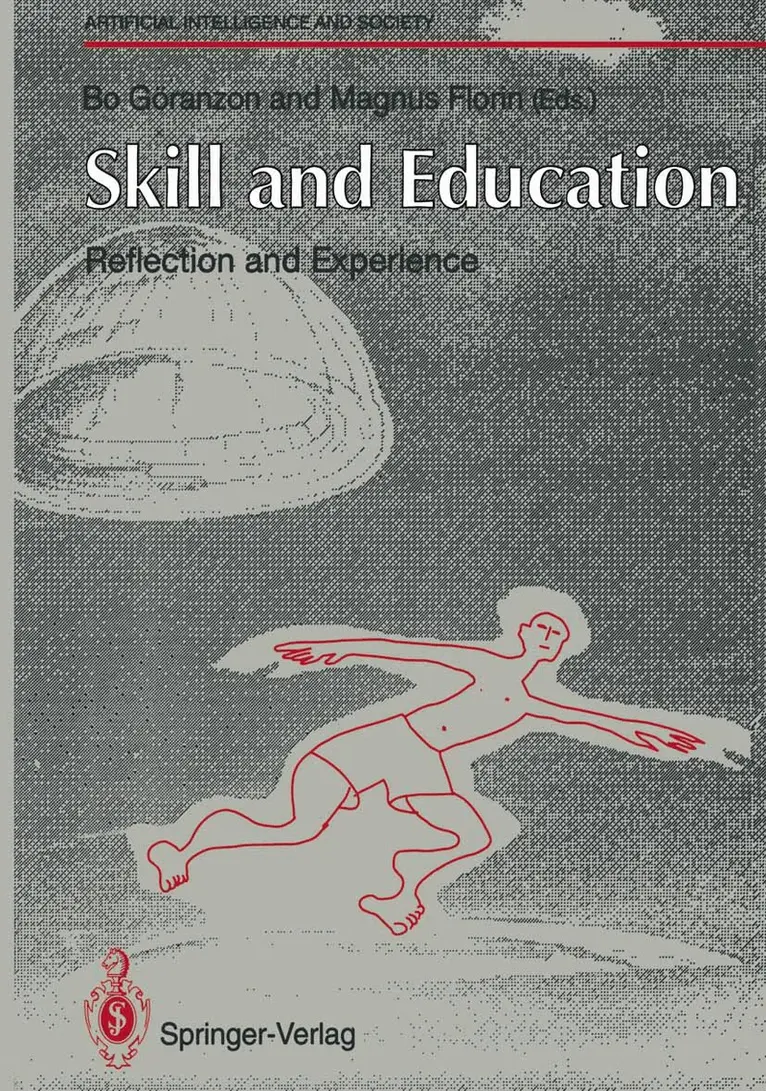
This volume is based on the 1988 Stockholm Conference on Culture, Language and Artificial Intelligence. The conference, attended by over 300 researchers and practitioners in areas such as technology, philosophy, social science and linguistics, examined the impact of artificial intelligence on existing professional knowledge and practise. Skill and Education: Reflection and Experience is divided into two parts: part one examines how humans acquire knowledge and looks at the implications of this for expert systems design. The contributors cover important issues such as tacit knowledge, apprenticeship, theoretical acquisition of knowledge through scientific description, and actual developments in the relationship between IT and professional skill. Part two contains papers by participants in the Diderot project, an international research program into the social impact of computer technology in the workplace. The implementation of IT is assessed and enlightenment, skill and education are proposed as the basis for a humanised and productive use of new technology.
Häftad, Engelska, 1992
556 kr
Skickas inom 10-15 vardagar
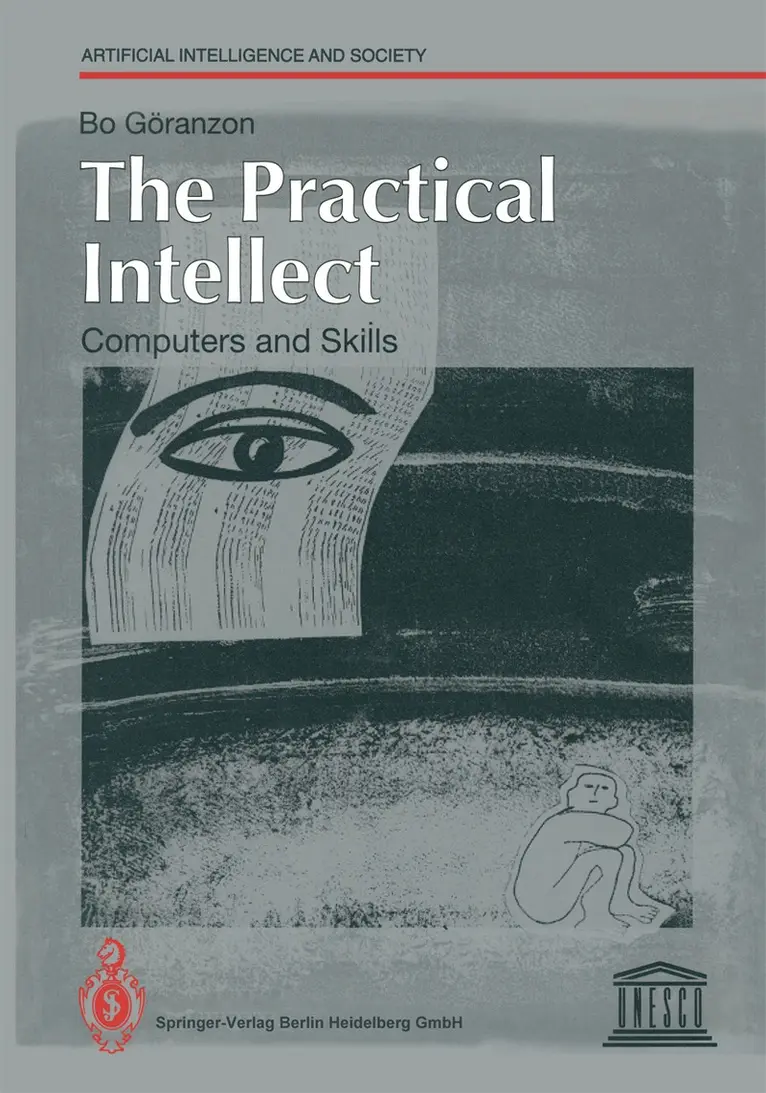
The epistemology of professional knowledge is a relatively new area of research which is concerned with the development and maintenance of professional knowledge at the level of the individual, the work group and the community. One of its major aims is to illustrate the effect of information technology in professional knowledge and to create the basis for a sound social and productive implementation of new technology in the workplace. "The Practical Intellect: Computers and Skills" is the latest in a series which aim to define the contours of this new research field. Rather than examining the technical relationship between natural and artificial intelligence, it is designed to encourage philosophical reflection on previously neglected areas. Through a series of case studies - such as the computerization of the work of forest rangers - Professor Goranzon examines the conflict between mathematical calculation and human judgement which arises when new technology competes with existing professional knowledge.He also provides a useful context for the major issues by looking at the historical development of the useful context for the major issues by looking at the historical development of the computer as a tool and examining the scientific and intellectual traditions which have shaped current design approaches. A chapter on education and professional knowledge provides a context for understanding the significance of AI developments in general and looks at the problems of balancing technology, human knowledge and working practices. In "The Practical Intellect: Computers and Skills" Professor Goranzon uses his experience as a mathematician and computer scientist over the last ten years to examine this important new area. This volume should be of interest to researchers, lecturers and postgraduate students of AI and also to anyone involved in multidisciplinary work concerning computers, education and the social sciences.
Häftad, Engelska, 1994
540 kr
Skickas inom 10-15 vardagar
Skill, Technology and Enlightenment: On practical Philosophy explores the problems of developing a perspective on technology and society, on the limits of enlightment, the relationship between cultural criticism and the epistemology of practical knowledge, tacit knowledge and a non-elitist conception of expertise, the role of the arts as a basis for reflection, and many other relevant topics.The 1993 international conference in Stockholm was - among other things - part of a process of building a curriculum for an international graduate programme in the area of culture, skill and technology, a process that has been under way since 1989.
Häftad, Engelska, 1996
1 073 kr
Skickas inom 10-15 vardagar
This volume examines the human-centred approach to designing systems and technologies, which emphasises the symbiosis of human capability and machine capacity. Its main ideas have become integral to many design methodologies, including social ergonomics and cognitive technology. Human Machine Symbiosis offers a unique coverage of the topic: it brings together various strands of human-centred systems philosophy, and gives a comprehensive overview of relevant traditions, approaches, methodologies, and practices. It provides theoretical and methodological underpinnings for the design and application of technologies and systems, along with frameworks and models for designing information, communication and multimedia technologies. It contains contributions from a variety of leading researchers in the field, including some of the pioneers of the European human-centred tradition.
Häftad, Engelska, 1996
1 073 kr
Skickas inom 10-15 vardagar
Human-centredness: A Challenge to Post-industrial Europe? The key power in industrial society has been linked to the possession of capital and factory. In the "information society" it could be rather different. If one accepts that that the key power in the information society will be linked not so much to the ownership of information but to human creativity nourished by that information, the productive force of today and tomorrow, could be more and more the human brain. Making use of one's intelligence is always accompanied by positive emotion, which in turn further activates the intelligence. But, unfortunately, under present conditions workers of all levels live in fear, anxiety and stress rather than desire and motivation. The question of "basic human ecology" (quality of life) is, therefore, a major strategic factor. It is precisely the opposite to the mechanisms of exclusion that currently dominate our society: exclusion of young people through joblessness - but also exclusion through technology, as with the helplessness of older people or the poorly educated confronted with ticket dispensing machines or other automats. This is not idle theorizing, it corresponds to concrete facts. It is, for example, how some observers interpret the crisis at IBM. Because its programs were less 'human-friendly', it was shaken to its foundations by Apple and Microsof- though it seems since to have learnt its lesson.