Bo Göranzon – författare
Visar alla böcker från författaren Bo Göranzon. Handla med fri frakt och snabb leverans.
15 produkter
15 produkter
Häftad, Svenska, 2011
92 kr
Skickas
Denna bok är en introduktion till det bildningstänkande som utvecklats inom ramen för Dialogseminariet och i forskarskolan Yrkeskunnande och teknologi. I korthet går det ut på att utveckla ett kritiskt reflekterande förhållningssätt som hämtar kunskapsnäring från både vetenskapens precision och den beprövade erfarenheten.Att vara bildad innefattar att se och ta tillvara båda dessa kunskapsformer och att bejaka det praktiska kunnandet vilket inte är ett resultat av teoretiska modeller.
Häftad, Engelska, 1988
566 kr
Skickas inom 10-15 vardagar
Issues raised by the Theory of Knowledge, a central theme in the development of Artificial Intelligence, are the main topic of this book. The major questions are: How is the expert's knowledge to be elicited, what are the limits and possibilities? How can skill be developed and maintained in a more and more computerized and abstract working life? This last question is also closely related to the discussion on programs for education and training in society and working life. Long term effects on skill formation in working life in relation to new technology are a very important area of research. Case studies form the basis for philosophical reflections with the main concept of tacit knowledge as the central issue of skill and new technology. To a great extent the discussion is based on current case studies of professional groups with experience in advanced computer technology. The contributions of this book demonstrate the complicated nature of human knowledge. They introduce different theoretical perspectives on the issue of knowledge acquisition and elicitation.
Häftad, Engelska, 1990
566 kr
Skickas inom 10-15 vardagar
This book springs from a conference held in Stockholm in May June 1988 on Culture, Language and Artificial Intelligence. It assembled more than 300 researchers and practitioners in the fields of technology, philosophy, history of ideas, literature, lin guistics, social science, etc. It was an initiative from the Swedish Center for Working Life, based on the project AI-Based Systems and the Future of Language, Knowledge and Responsibility in Professions within the COST 13 programme of the European Commission. Participants in the conference, or in some cases researchers related to its aims, were chosen to contribute to this book. It was preceded by Knowledge, Skill and Artificial Intelligence (ed. B. G6ranzon and 1. Josefson, Springer-Verlag, London, 1988) and will be followed by Dialogue and Technology (ed. M. Florin and B. Goranzon, Springer-Verlag, London, 1990). The contributors' thinking in this field varies greatly; so do their styles of writing. For example: contributors have varied in their choice of 'he' or 'he/she' for the third person. No distinction is intended but chapters have been left with the original usage to avoid extensive changes. Similarly, individual contributor's preferences as to notes or references lists have been followed. We want to thank our researcher Satinder P. Gill for excellent work with summaries and indexes, and Sandi Irvine of Springer Verlag for eminent editorial work.
Häftad, Engelska, 1991
566 kr
Skickas inom 10-15 vardagar
This book springs from a conference held in Stockholm in May June 1988 on Culture, Language and Artificial Intelligence. It assembled more than 300 researchers and practitioners in the fields of technology, philosophy, history of ideas, literature, linguistics, social· science, etc. The conference was an initiative from the Swedish Center for Working Life, based on the project AI-Based Systems mzd the Future of Language, Knowledge and Re sponsibility in Professions within the COST 13 programme of the European Commission. Participants in the conference, or in some cases researchers in areas related to its aims, were chosen to contribute to this book. It was preceded by Knowledge, Skill and Artificial Intelligence (ed. B. Gbranzon and I. Josefson, Springer-Verlag, London, 1988) and Artificial Intelligence, Culture and Language (ed. B. Gbranzon and M. Florin, Springer-Verlag, 1990). The latter book springs, as this one, from the 1988 conference, and one further book will follow: Skill and Education: Reflection and Experience (Springer Verlag, planned autumn 1991). The philosophical and aesthetic interest of the contributions in the present volume is in large part due to the framework of the Dialogue Seminar, held regularly at the Royal Dramatic Theatre in Stockholm, in which several of the contributors have participated.
Häftad, Engelska, 1992
566 kr
Skickas inom 10-15 vardagar
This book has an important starting point in the conference held in Stockholm in May-June 1988 on Culture, Language and Artifidal Intelligence. It assembled more than 300 researchers and practitioners in the fields of technology, philosophy, history of ideas, literature, linguistics, sodal science etc. The conference was an initiative from the Swedish Center for Working Life, based on the project AI-Based Systems and the Future of Language, Knowledge and Responsibility in Professions within the COST 13 programme of the European Commission. Partidpants in the conference and researchers related to its aims were chosen to contribute to this book. It is preceded by Knowledge, Skill and Artificial Intelligence (ed. B. Göranzon and I. Josefson, Springer-Verlag, 1988), Artifidal Intelligence, Culture and Language (ed. B. Göranzon and M. Florin, Springer-Verlag, 1990) and Dialogue and Technology: Art and Knowledge (ed. B. Göranzon and M. Florin, Springer-Verlag, 1991). The two latter books have the same conference connection as this one, and their aim is to present the contours of a research field with a multitude of issues that demands thorough investigation. The contributors' thinking in this field varies greatly; so do their styles of writing. For example: contributors have varied in their choice of "he" or "helshe" for the third person. No distinc tion is intended, but chapters have been left with the original usage to avoid extensive changes. Similarly, individual contribu tor's preference as to notes or reference lists have been followed.
Häftad, Engelska, 1992
566 kr
Skickas inom 10-15 vardagar
The intention of this book is not to add another technical work to the series of publications already available on matters connected with the relations between natural and artificial intelligence, nor to repeat the positions already well expressed in, for example, the debate between John Searle, Daniel Dennet and Hubert Dreyfus. It is an attempt to encourage philosophical reflection on dimensions of the subject that have hitherto been somewhat neglected. This book, which explores a number of case studies, is the fifth in the series, the previous four books being: (i) Knowledge, Skill and Artificial Intelligence (Bo Goranzon and Ingela Josefson (Eds. ), Springer-Verlag, London, 1988) (ii) Artificial Intelligence, Culture and Language: On Education and Work (Bo Goranzon and Magnus Florin (Eds. ), Springer Verlag, London, 1990) (iii) Dialogue and Technology: Art and Knowledge (Bo Goranzon and Magnus Florin (Eds. ), Springer-Verlag, London, 1991) (iv) Skill and Education: Reflection and Experience (Bo Goranzon and Magnus Florin (Eds. ), Springer-Verlag, London, 1992) An important connection between these four books is the conference on Culture, Language and Artificial Intelligence held in Stockholm in May-June, 1988. The conference was attended by more than 300 researchers and practitioners, from over 15 countries, in the fields of technology, philosophy, the history of ideas, literature and linguistics. Contributions to the books were solicited from among those who attended the conference and from researchers involved in work related to its aim.
Häftad, Engelska, 1994
550 kr
Skickas inom 10-15 vardagar
Skill, Technology and Enlightenment: On practical Philosophy explores the problems of developing a perspective on technology and society, on the limits of enlightment, the relationship between cultural criticism and the epistemology of practical knowledge, tacit knowledge and a non-elitist conception of expertise, the role of the arts as a basis for reflection, and many other relevant topics.The 1993 international conference in Stockholm was - among other things - part of a process of building a curriculum for an international graduate programme in the area of culture, skill and technology, a process that has been under way since 1989.
Häftad, Engelska, 2009
293 kr
Skickas inom 5-8 vardagar
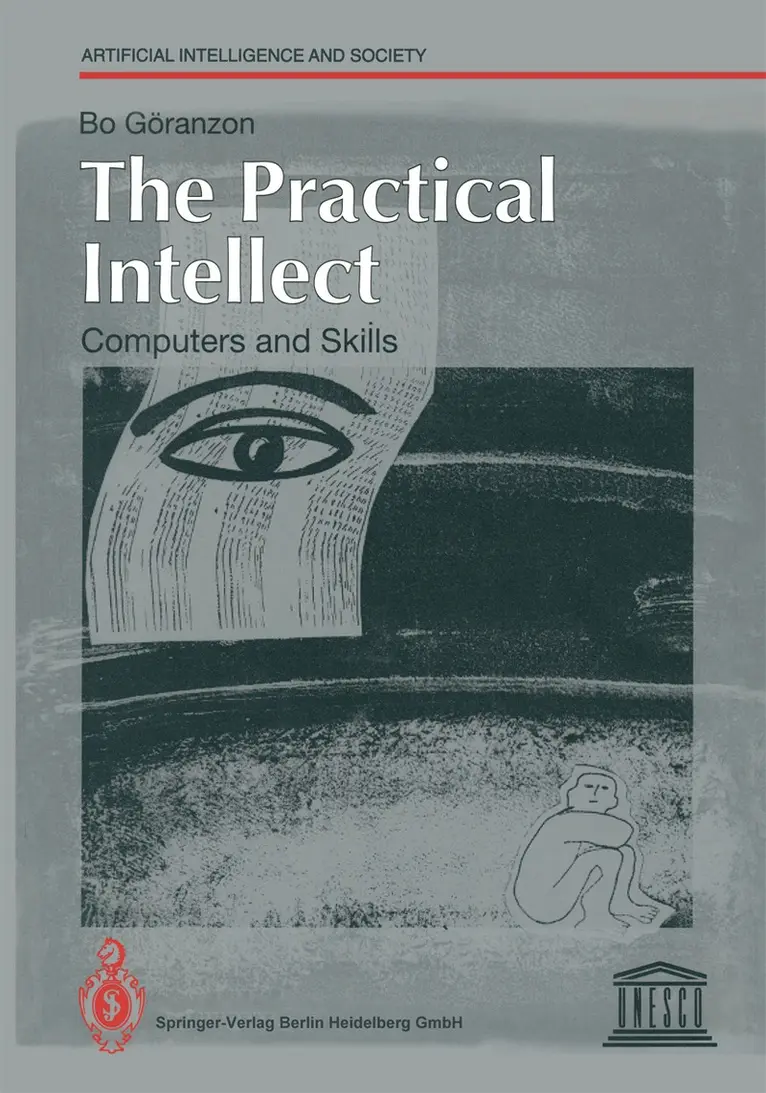
The epistemology of professional knowledge is a research field that occupies itself with the development and maintenance of professional knowledge at both an individual and working group level, but also at a community level. One of its major aims is to illustrate the effect of information technology on professional knowledge and to create the basis for a sound social and productive implementation of new technology in the workplace. This book strives to define the contours of this research field. The study extends directly into the centre of debates on the philosophy of the mind. Through a series of case studies, the author examines the conflict between mathematical calculation and human judgement, which arises when new technology competes with existing professional knowledge. He also provides a useful context for the major issues by looking at the historical development of the computer as a tool and examining the scientific and intellectual traditions, which have shaped design approaches. A chapter on education and professional knowledge covers the problems of balancing technology, human knowledge and working practices. Professor Göranzon insists that work studies require an understanding of the fact that thinking about work and skill is always rooted in a tradition and that the awareness of a number of different historical perspectives on these matters has a liberating effect. Bo Göranzon is professor emeritus of Skill and Technology at the Royal Institute of Technology (KTH), Stockholm and Life Long Research Fellow of Clare Hall at Cambridge University. Since 1985 he's Artistic Director for the Dialogue Seminar at The Royal Dramatic Theatre in Stockholm.
Häftad, Svenska, 2009
317 kr
Skickas inom 5-8 vardagar
De fallstudier som står i centrum gäller datorstöd for verksamheter med ett beräkningskunnande i fokus. De kan vara en spegel for reflektion; det finns möjligheter for läsaren att "känna igen sig" liksom att se olikheterna i förhållande till den egna verksamheten. Reflektion över praxis är ett nödvändigt inslag för en fördjupning av yrkeskunnandet. För att kunna tematisera det slag av kunskap som yrkeskunskap utgör - vilket innebär en kunskap som används i praktiska situationer, for att lösa arbetsuppgifter man står inför behövs ett filosofiskt arbete. Ett nära samarbete med filosofer har varit av avgörande betydelse. "Jag skulle vilja beteckna Dialogseminariets experimentella verksamhet som ett praktiskt filosofiskt laboratorium med ambitionen att återuppfinna (ett nytt slags) humanvetenskap i en kontext präglad av naturvetenskapliga-teknologiska kunskapskulturer."Bengt Kristensson Uggla, professor i filosofi, kultur och företagsledning vid Åbo Akademi
Svenska, 2011
152 kr
Skickas inom 5-8 vardagar
Detta nummer av Dialoger rymmer följande teman: Den tredje kulturen, Erövra ett språk och Paradoxernas underjord.
Häftad, Svenska, 2011
179 kr
Skickas
År 1951 ställde matematikern Alan Turing frågan "Kan en maskin tänka?" Hans fråga inspirerade 1972 till att formulera idén om informationssamhället. När idéns förverkligande i samtiden utvärderades i en studie 1985 användes termen funktionell autism för att beskriva formaliseringen av arbets- och samhällsliv som kraftigt reducerade människans möjligheter att agera utifrån eget omdöme. Studien fokuserade på kunskapsteori och pekade på nödvändigheten av balans mellan teknologi, filosofi, historia och litteratur när vetenskap och teknik utvecklas. År 1985/86 inrättades Dialogseminariet och tidskriften Dialoger för att konfrontera de bärande idéerna kring informationssamhället. Med detta temanummer, som också blir det sista av tidskriften Dialoger, firar tidskriften 25-årsjubileum.
Häftad, Svenska, 2015
191 kr
Skickas inom 5-8 vardagar
"Till bildningsbegreppet hör förmågan att kunna upprätthålla dubbla perspektiv, att kunna se både möjligheter och gränser och att kunna se såväl likheter som skillnader mellan människans olika konstnärliga och vetenskapliga aktiviteter. Detta är något radikalt annorlunda än att vara "flexibel", ett honnörsord i tiden utan substans och riktning. Att vara bildad är att ha utvecklat sitt omdöme så att man kan leva i och hantera paradoxala fält som är typiska för praktisk verksamhet under utveckling." Bo Göranzon
Inbunden, Svenska, 2018
306 kr
Skickas
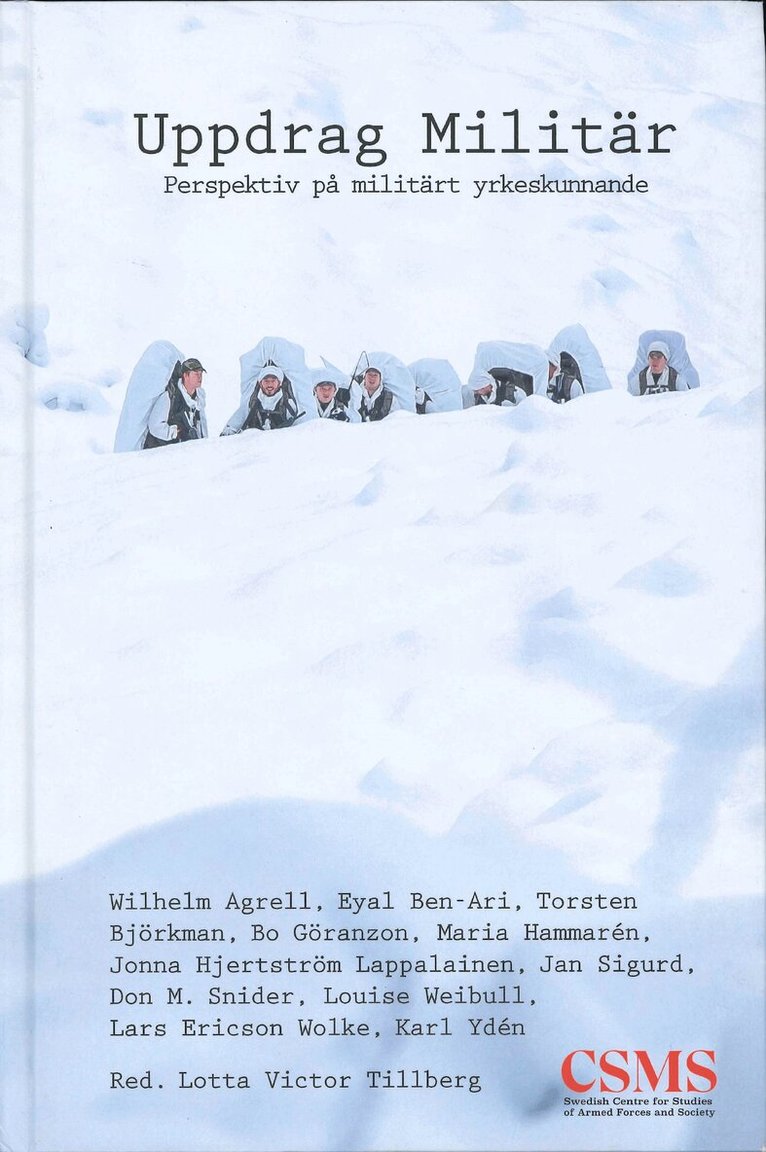
Få utomstående har insyn i militär verksamhet. Det är ett förhållande denna bok syftat till att ändra på. I de tre föregående Uppdragsböckerna har militärer med egna ord beskrivit vad de gör, när de gör de som de tränats för.Vilka uppdrag ska hanteras? Vad möter dem, och vilka utmaningar ställs de inför? Hur ser det yrkeskunnande ut som härbärgerar både förmågan att bruka dödligt våld men också förmågan att skapa relationer, förtroende och samarbete?I den här boken bidrar elva olika forskare utifrån skiftande perspektiv, med sina reflektioner över militär yrkespraktik, dess möjligheter och dess utmaningar.
Inbunden, Svenska, 2001
356 kr
Skickas
En essäsamling som visar hur experiment med konstnärliga uttrycksformer bryter vaneseende och vidgar perspektivet på praktiskt formad kunskap.
Svenska, 2007
168 kr
Skickas
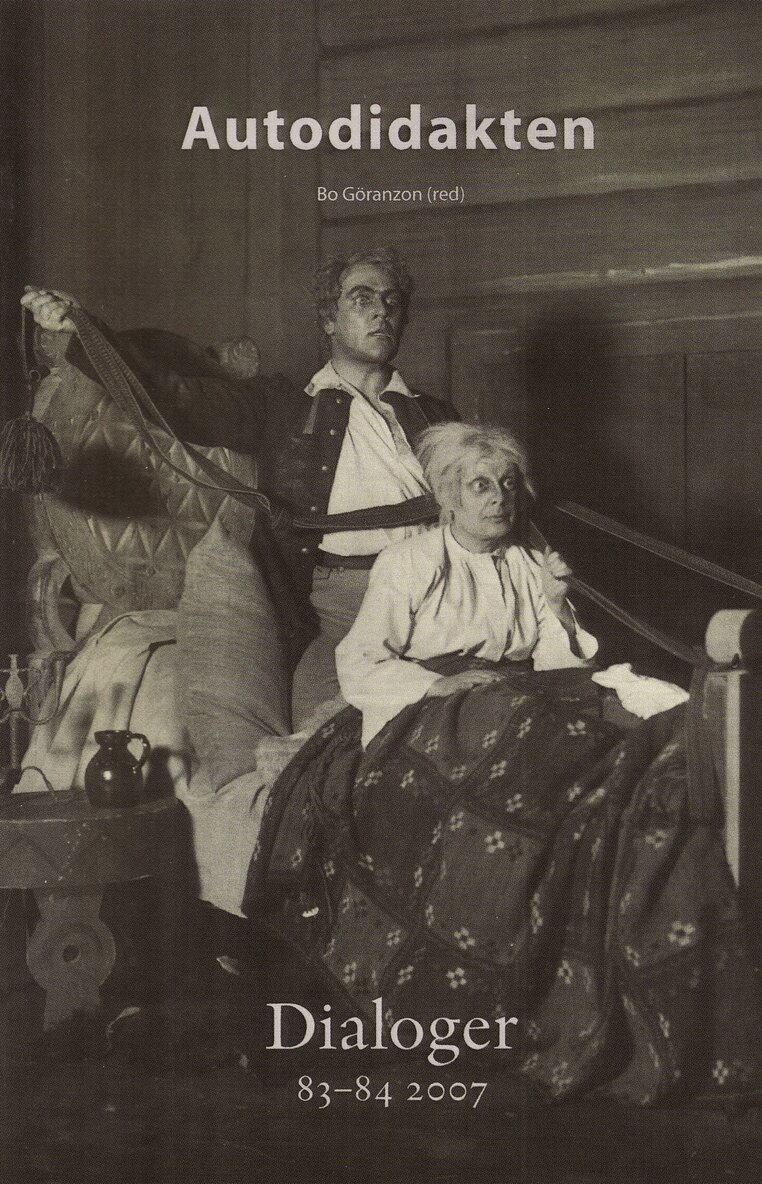
InnehållBo Göranzon "Redaktionell kommentar" Siri Meyer "Innovatörerna kommer" Johan Svahn "Skapandeprocesser - systemutveckling och litterära analogier" Agneta Pleijel "Om det ungefärliga i ingenjörsarbete Opposition vid Göran Backlunds doktorsavhandling" Gunnar Bergendal "Självlärd" Nils Friberg "Ingenjör K. - en av de grå och talanglösa" Henrik Åhsberg "Michelangelos kupol" Johan Berglund "Banal ondska och formaliserat vetande" Clas Pehrsson "Jag - en autodidakt" Kjell Fagéus "Autodidakt och olika lärstilar" Cristine Sarrimo "Samtal pågår på författarskolan om hantverk, kvalitet och etablering"