• Fri frakt över 249 kr
  • •
  • Snabba leveranser
  • •
  • Billiga böcker
Kundservice

Du är på sajten för privatpersoner.

Företag, bibliotek eller offentlig verksamhet?

Du handlar på classic.bokus.com, där alla dina funktioner finns intakta.
Till classic.bokus.com
Bokus logotyp. Gå till startsidan.
  • Erbjudanden
  • Nyheter
  • Student
  • Topplistor
  • Barn & ungdom
  • Bokus Play
  • E-böcker
  • Pocketböcker
  • Spel & pussel

10% rabatt på allt med kod: NYSTART10 →

Sidfot

Mina sidor

    Hjälp

    • Kundservice
    • Vanliga frågor och svar
    • Frakt och leverans
    • Retur vid ångerrätt
    • Reklamera vara
    • Betalning
    • Köpvillkor
    • Allmänna villkor
    • Information om webbplatsens tillgänglighet

    Om Bokus

    • Om oss
    • Pressrum
    • För studenter
    • För företag
    • För bibliotek och offentlig verksamhet
    • För leverantörer
    • Hållbarhet

    Populärt

    • Aktuella erbjudanden
    • Presentkort
    • Studentlitteratur
    • Nya böcker
    • Topplistor
    • Signerade böcker
    • Engelska böcker

    Inspiration

    • Boktips
    • BookTok
    • Populära bokserier
    • Barnbokskaraktärer
    • Populära författare
    Logotyp för Bokus
    Följ oss på Facebook (extern länk)Följ oss på Instagram (extern länk)Följ oss på YouTube (extern länk)Följ oss på TikTok (extern länk)
    bokus @ CookiesAnpassa cookiesIntegritetspolicyKöpvillkor
    Till Citymail hemsida (extern länk)Till Budbee hemsida (extern länk)Till Postnord hemsida (extern länk)Till Schenker hemsida (extern länk)Till Early Bird hemsida (extern länk)Till Walleys hemsida (extern länk)
    1. Naturvetenskap och teknik
    2. Teknik och industri
    3. Övrig teknik och tillämpad vetenskap

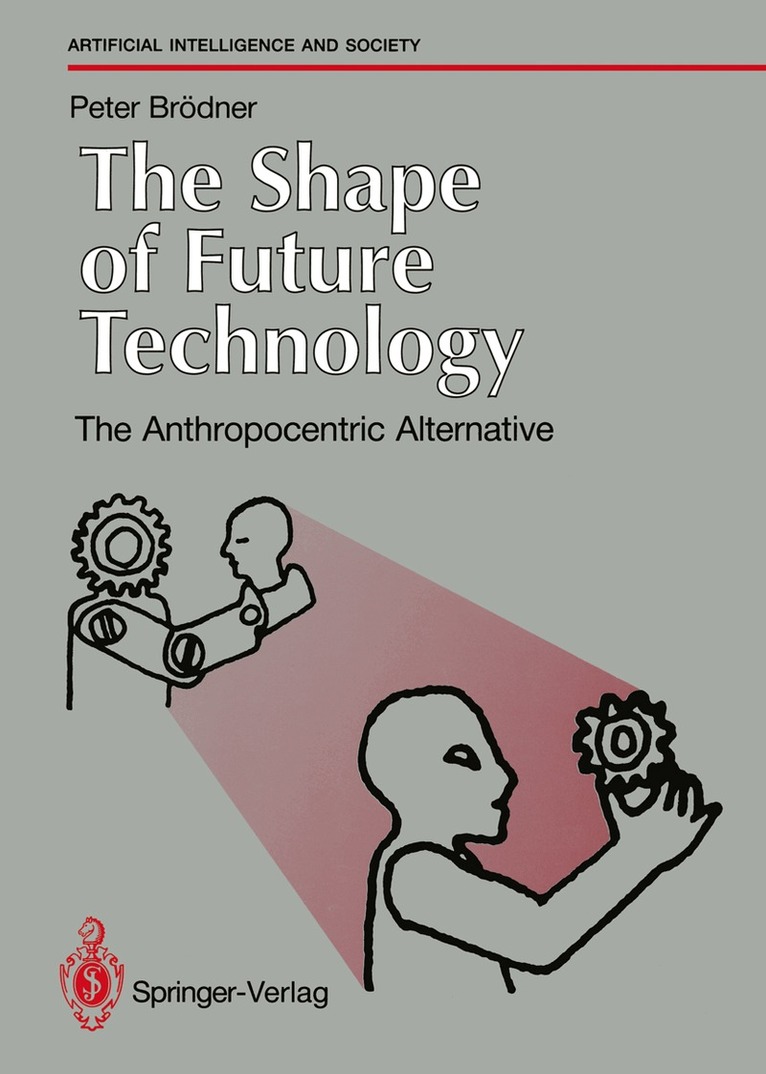
    Shape of Future Technology

    The Anthropocentric Alternative

    AvPeter Brödner

    Häftad, Engelska, 1990

    Del i serien Human-centred Systems

    546 kr

    Beställningsvara. Skickas inom 10-15 vardagar. Fri frakt över 249 kr.

    Beskrivning

    Mike Cooley One of the most remarkable features of modern industrial society, is the gap between that which technology could provide for society (its potential) and that which it actually does provide for society (its reality). We have for example, complex control systems which can guide a missile to another continent with extraordinary accuracy, yet the blind and the disabled have to stagger around our cities in very much the same way as they did in mediaeval times. There are advanced communication systems enabling messages to be sent around the world in a fraction of a second, but it now takes longer to send an ordinary letter from Washington to New York than it did in the days of the stage coach. Such a growing chasm between potential and reality, is giving rise to a thorough questioning of many of the orthodoxies in these areas and the priorities on which they are based. Similar contradictions, even if at this stage less obvious and dramatic, abound in the field of manufacturing technology. There, we find technologies which have the potential of liberating human beings from soul­ destroying, routine, backbreaking tasks and leave them free to engage in more creative work, but which in reality, often end up reducing the human being to a mere machine appendage, acted upon by the technology and becoming a passive, pathetic element in the productive system rather than a creative, dynamic human being.

    Produktinformation

    • Utgivningsdatum:1990-09-24
    • Mått:170 x 242 x 9 mm
    • Vikt:267 g
    • Format:Häftad
    • Språk:Engelska
    • Serie:Human-centred Systems
    • Antal sidor:136
    • Förlag:Springer-Verlag Berlin and Heidelberg GmbH & Co. KG
    • ISBN:9783540195764

    Utforska kategorier

    • Övrig teknik och tillämpad vetenskap inom Naturvetenskap och teknik

    Innehållsförteckning

    • 1. The Factory of the Future.- 1.1 Prophecies by the Dozen.- 1.2 Banish the False Prophets!.- 1.3 The Workshop, not the Production Line.- 2. The Origins and Nature of the Factory.- 2.1 The Heroic Phase.- 2.2 The Computer and the Automation of “One-offs”.- 2.3 Today’s Factory: Unresolved Problems.- 3. The Technocentric Route: Fossilized Taylorism.- 3.1 “The Ghost Shift”: Forerunner of the Workerless Factory?.- 3.2 White-Collar Automation.- 3.3 The Failure of Isolated Systems.- 3.4 The Second “Heroic Phase”: CIM and Expert Systems.- 4. The Anthropocentric Route: The Return of the Human Being.- 4.1 The Workerless Factory: Signs of Return.- 4.2 Human or Machine: Who Controls?.- 4.3 Group Technology: A Non-Taylorist Route.- 4.4 Forces of Inertia.- 5. Horizons New: Farewell to Necessary Work?.- 5.1 Investment Decision Making: Pastures New.- 5.2 Work Planning is Available in Every Case.- 5.3 The Dangers of Segmentation.- 5.4 Conclusion: For and Against the Anthropocentric Production Concept.