IMS Monograph Series - Böcker
Visar alla böcker i serien IMS Monograph Series. Handla med fri frakt och snabb leverans.
8 produkter
8 produkter
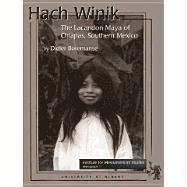
Hach Winik, the Lacandon Maya of Southern Mexico
A Comparative Study of Two Lowland Maya Societies
Häftad, Engelska, 1998
222 kr
Tillfälligt slut
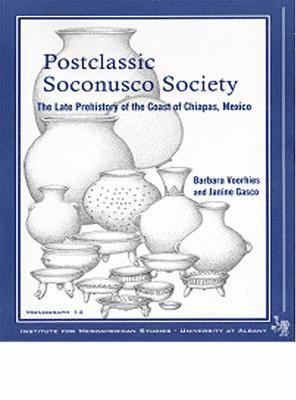
Postclassic Soconusco Society
The Late Prehistory of the Coast of Chiapas, Mexico
Häftad, Engelska, 2004
414 kr
Tillfälligt slut
816 kr
Tillfälligt slut
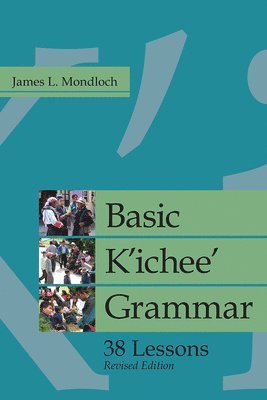
The K’ichee’an languages—K’ichee’, Kaqchikel, Tz¢utujil, Sakapulteko, Achi, and Sipakapense—occupy a prominent place among the indigenous languages of the Americas because of both their historical significance and the number of speakers (more than one million total). Basic K'ichee' Grammar is an extensive and accurate survey of the principal grammatical structures of K’ichee’. Written in a clear, nontechnical style to facilitate the learning of the language, it is the only K’ichee’ grammar available in English. A pedagogical rather than a reference grammar, the book is a thorough presentation of the basics of the K’ichee’ Maya language organized around graded grammatical lessons accompanied by drills and exercises. Author James L. Mondloch spent ten years in K’ichee’-speaking communities and provides a complete analysis of the K’ichee’ verb system based on the everyday speech of the people and using a wealth of examples and detailed commentaries on actual usage. A guide for learning the K’ichee’ language, Basic K'ichee' Grammar is a valuable resource for anyone seeking a speaking and reading knowledge of modern K’ichee’, including linguists, anthropologists, and art historians, as well as nonacademics working in K’ichee’ communities, such as physicians, dentists, community development workers, and educators.
386 kr
Skickas inom 5-8 vardagar
The K’ichee’an languages—K’ichee’, Kaqchikel, Tz¢utujil, Sakapulteko, Achi, and Sipakapense—occupy a prominent place among the indigenous languages of the Americas because of both their historical significance and the number of speakers (more than one million total). Basic K'ichee' Grammar is an extensive and accurate survey of the principal grammatical structures of K’ichee’. Written in a clear, nontechnical style to facilitate the learning of the language, it is the only K’ichee’ grammar available in English. A pedagogical rather than a reference grammar, the book is a thorough presentation of the basics of the K’ichee’ Maya language organized around graded grammatical lessons accompanied by drills and exercises. Author James L. Mondloch spent ten years in K’ichee’-speaking communities and provides a complete analysis of the K’ichee’ verb system based on the everyday speech of the people and using a wealth of examples and detailed commentaries on actual usage. A guide for learning the K’ichee’ language, Basic K'ichee' Grammar is a valuable resource for anyone seeking a speaking and reading knowledge of modern K’ichee’, including linguists, anthropologists, and art historians, as well as nonacademics working in K’ichee’ communities, such as physicians, dentists, community development workers, and educators.
1 277 kr
Tillfälligt slut
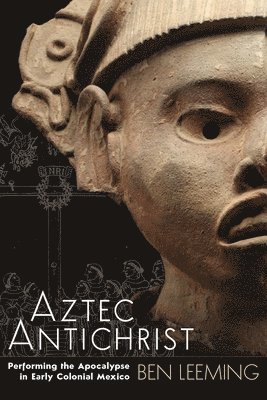
In Aztec Antichrist, Ben Leeming presents a transcription, translation, and study of two sixteenth-century Nahuatl religious plays that are likely the earliest surviving presentations of the Antichrist legend in the Americas, and possibly the earliest surviving play scripts in the whole of the New World in any language. Discovered in the archives of the Hispanic Society of America in New York inside a notebook of miscellaneous Nahuatl-Christian texts written almost entirely by an Indigenous writer named Fabían de Aquino, the plays are filled with references to human sacrifice, bloodletting, ritual divination, and other religious practices declared “idolatrous” at a time when ecclesiastical authorities actively sought to suppress writing about Indigenous religion. These are Indigenous plays for an Indigenous audience that reveal how Nahuas made sense of Christianity and helped form its colonial image—the title figure is a powerful Indigenous being, an “Aztec Antichrist,” who violently opposes the evangelizing efforts of the church and seeks to draw converted Nahuas back to the religious practices of their ancestors. These practices include devotion to Nahua deities such as Tlaloc, Quetzalcoatl, and Tezcatlipoca who, in one of the most striking moves made by Aquino, are cast as characters in the plays. Along with the translations, Leeming provides context and analysis highlighting these rare and fascinating examples of early Indigenous American literature that offer a window into the complexity of Nahua interactions with Christianity in the early colonial period. The work is extremely valuable to all students and scholars of Latin American religion, colonialism, Indigenous history, and early modern history and theater.
508 kr
Skickas
In Aztec Antichrist, Ben Leeming presents a transcription, translation, and study of two sixteenth-century Nahuatl religious plays that are likely the earliest surviving presentations of the Antichrist legend in the Americas, and possibly the earliest surviving play scripts in the whole of the New World in any language. Discovered in the archives of the Hispanic Society of America in New York inside a notebook of miscellaneous Nahuatl-Christian texts written almost entirely by an Indigenous writer named Fabían de Aquino, the plays are filled with references to human sacrifice, bloodletting, ritual divination, and other religious practices declared “idolatrous” at a time when ecclesiastical authorities actively sought to suppress writing about Indigenous religion. These are Indigenous plays for an Indigenous audience that reveal how Nahuas made sense of Christianity and helped form its colonial image—the title figure is a powerful Indigenous being, an “Aztec Antichrist,” who violently opposes the evangelizing efforts of the church and seeks to draw converted Nahuas back to the religious practices of their ancestors. These practices include devotion to Nahua deities such as Tlaloc, Quetzalcoatl, and Tezcatlipoca who, in one of the most striking moves made by Aquino, are cast as characters in the plays. Along with the translations, Leeming provides context and analysis highlighting these rare and fascinating examples of early Indigenous American literature that offer a window into the complexity of Nahua interactions with Christianity in the early colonial period. The work is extremely valuable to all students and scholars of Latin American religion, colonialism, Indigenous history, and early modern history and theater.
1 088 kr
Tillfälligt slut
Copublished with the Institute for Mesoamerican Studies, University at AlbanyIMS Monograph SeriesStaging Christ’s Passion in Eighteenth-Century Nahua Mexico explores the Passion plays performed in Nahuatl (Aztec) by Indigenous Mexicans living under Spanish colonial occupation. Though sourced from European writings and devotional practices that emphasized the suffering of Christ and his mother, this Nahuatl theatrical tradition grounded the Passion story in the Indigenous corporate community. Passion plays had courted controversy in Europe since their twelfth-century origin, but in New Spain they faced Catholic authorities who questioned the spiritual and intellectual capacity of Indigenous people and, in the eighteenth century, sought to suppress these performances. Six surviving eighteenth-century scripts, variants of an original play possibly composed early in the seventeenth century, reveal how Nahuas passed along this model text while modifying it with new dialogue, characters, and stage techniques. Louise M. Burkhart explores the way Nahuas merged the Passion story with their language, cultural constructs, social norms, and religious practices while also responding to surveillance by Catholic churchmen. Analytical chapters trace significant themes through the six plays and key these to a composite play in English included in the volume.A cast with over fifty distinct roles acted out events extending from Palm Sunday to Christ’s death on the cross. One actor became a localized embodiment of Jesus through a process of investiture and mimesis that carried aspects of pre-Columbian materialized divinity into the later colonial period. The play told afar richer version of the Passion story than what later colonial Nahuas typically learned from their priests or catechists. And by assimilating Jesus to an Indigenous, or macehualli, identity, the players enacted a protest against colonial rule.The situation in eighteenth-century New Spain presents both a unique confrontation between Indigenous communities and Enlightenment era religious reformers and a new chapter in an age-old power game between popular practice and religious orthodoxy. By focusing on how Nahuas localized the universalizing narrative of Christ’s Passion, Staging Christ’s Passion in Eighteenth-Century Nahua Mexico offers an unusually in-depth view of religious life under colonial rule.Burkhart’s accompanying website also makes available transcriptions and translations of the six Nahuatl-language plays, four Spanish-language plays composed in response to the suppression of the Nahuatl practice, and related documentation, providing a valuable resource for anyone interested in consulting the original material.
525 kr
Skickas inom 5-8 vardagar
Staging Christ’s Passion in Eighteenth-Century Nahua Mexico explores the Passion plays performed in Nahuatl (Aztec) by Indigenous Mexicans living under Spanish colonial occupation. Though sourced from European writings and devotional practices that emphasized the suffering of Christ and his mother, this Nahuatl theatrical tradition grounded the Passion story in the Indigenous corporate community. Passion plays had courted controversy in Europe since their twelfth-century origin, but in New Spain they faced Catholic authorities who questioned the spiritual and intellectual capacity of Indigenous people and, in the eighteenth century, sought to suppress these performances. Six surviving eighteenth-century scripts, variants of an original play possibly composed early in the seventeenth century, reveal how Nahuas passed along this model text while modifying it with new dialogue, characters, and stage techniques. Louise M. Burkhart explores the way Nahuas merged the Passion story with their language, cultural constructs, social norms, and religious practices while also responding to surveillance by Catholic churchmen. Analytical chapters trace significant themes through the six plays and key these to a composite play in English included in the volume.A cast with over fifty distinct roles acted out events extending from Palm Sunday to Christ’s death on the cross. One actor became a localized embodiment of Jesus through a process of investiture and mimesis that carried aspects of pre-Columbian materialized divinity into the later colonial period. The play told afar richer version of the Passion story than what later colonial Nahuas typically learned from their priests or catechists. And by assimilating Jesus to an Indigenous, or macehualli, identity, the players enacted a protest against colonial rule.The situation in eighteenth-century New Spain presents both a unique confrontation between Indigenous communities and Enlightenment era religious reformers and a new chapter in an age-old power game between popular practice and religious orthodoxy. By focusing on how Nahuas localized the universalizing narrative of Christ’s Passion, Staging Christ’s Passion in Eighteenth-Century Nahua Mexico offers an unusually in-depth view of religious life under colonial rule.Burkhart’s accompanying website also makes available transcriptions and translations of the six Nahuatl-language plays, four Spanish-language plays composed in response to the suppression of the Nahuatl practice, and related documentation, providing a valuable resource for anyone interested in consulting the original material. Comments restricted to single pageplays composed in response to the suppression of the Nahuatl practice, and related documentation,providing a valuable resource for anyone interested in consulting the original material