Brookings / Ash Center Series, "Innovative Governance in the 21st Century" – serie
Visar alla böcker i serien Brookings / Ash Center Series, "Innovative Governance in the 21st Century". Handla med fri frakt och snabb leverans.
14 produkter
14 produkter
287 kr
Skickas inom 10-15 vardagar
The Innovations in American Government Awards Program began in 1985 with a grant from the Ford Foundation to the Kennedy School of Government at Harvard to conduct a program of awards for innovations in state and local government. The foundation's objective was ambitious and, in an era of ""government is the problem"" rhetoric, determinedly proactive. It sought to counter declining public confidence in government by highlighting innovative and effective programs. Over twenty years later, research, recognition, and replication are the source of the program's continuing influence and its vitality. What is the future of government innovation? How can innovation enhance the quality of life for citizens and strengthen democratic governance? Innovations in Government: Research, Recognition, and Replication answers these questions by presenting a comprehensive approach to advancing the practice and study of innovation in government. The authors discuss new research on innovation, explore the impact of several programs that recognize innovation, and consider challenges to the replication of innovations. Contributors include Eugene Bardach (University of California Berkeley), Robert Behn (Harvard University), John D. Donahue (Harvard University), Marta Ferreira Santos Farah (Center for Public Administration and Government, Fundação Getulio Vargas), Archon Fung (Harvard University), Jean Hartley (University of Warwick), Steven Kelman (Harvard University), Gowher Rizvi (Ash Institute for Democratic Governance and Innovation, Harvard University), Peter Spink (Center for Public Administration and Government, Fundação Getulio Vargas), and Jonathan Walters (Governing).
434 kr
Skickas inom 10-15 vardagar
The trend toward greater decentralization of governance activities, now accepted as commonplace in the West, has become a worldwide movement. This international developmentlargely a product of globalization and democratizationis clearly one of the key factors reshaping economic, political, and social conditions throughout the world. Rather than the top-down, centralized decisionmaking that characterized communist economies and Third World dictatorships in the twentieth century, today's world demands flexibility, adaptability, and the autonomy to bring those qualities to bear. In this thought-provoking book, the first in a new series on Innovations in Governance, experts in government and public management trace the evolution and performance of decentralization concepts, from the transfer of authority within government to the sharing of power, authority, and responsibilities among broader governance institutions. This movement is not limited to national governmentit also affects subnational governments, NGOs, private corporations, and even civil associations. The contributors assess the emerging concepts of decentralization (e.g., devolution, empowerment, capacity building, and democratic governance). They detail the factors driving the movement, including political changes such as the fall of the Iron Curtain and the ascendance of democracy; economic factors such as globalization and outsourcing; and technological advances (e.g. increased information technology and electronic commerce). Their analysis covers many different contexts and regions. For example, William Ascher of Claremont McKenna College chronicles how decentralization concepts are playing out in natural resources policy, while Kadmeil Wekwete (United Nations) outlines the specific challenges to decentralizing governance in sub-Saharan Africa. In each case, contributors explore the objectives of a decentralizing strategy as well as the benefits and difficulties that will likely result.
354 kr
Skickas inom 10-15 vardagar
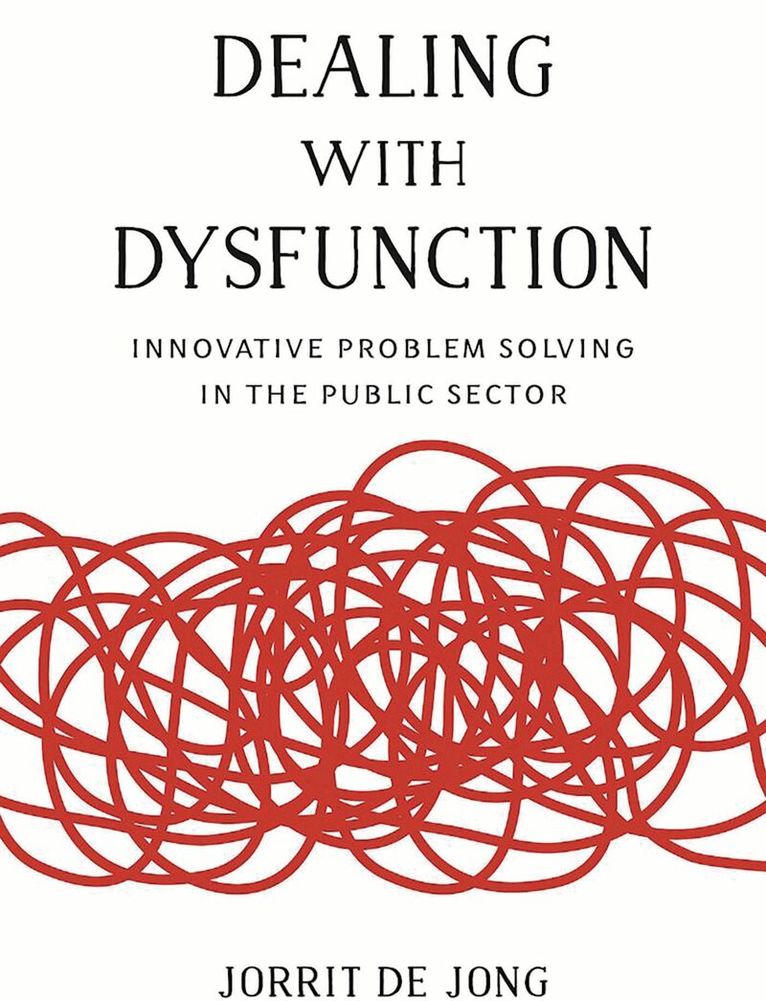
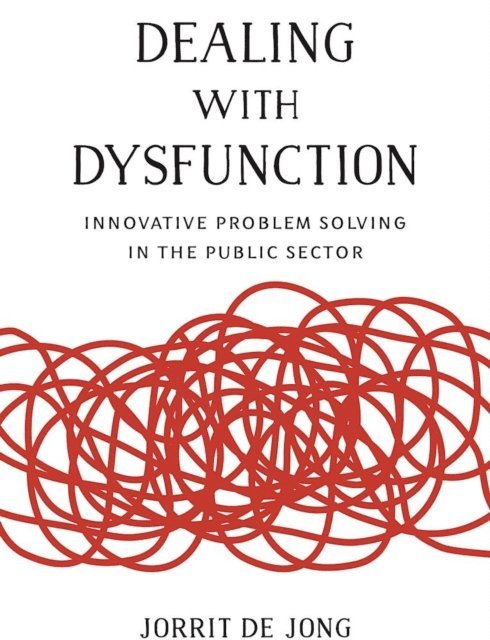
How can we intervene in the systemic bureaucratic dysfunction that beleaguers the public sector? De Jong examines the roots of this dysfunction and presents a novel approach to solving it. Drawing from academic literature on bureaucracy and problem solving in the public sector, and the clinical work of the Kafka Brigadea social enterprise based in the Netherlands dedicated to diagnosing and remedying bureaucratic dysfunction in practice, this study reveals the shortcomings of conventional approaches to bureaucratic reform. The usual methods have failed to diagnose problems, distinguish symptoms, or identify root causes in a comprehensive or satisfactory way. They have also failed to engage clients, professionals, and midlevel managers in understanding and addressing the dysfunction that plagues them. This book offers conceptual frameworks, theoretical insights, and practical lessons for dealing with the problem. It sets a course for rigorous public problem solving to create governments that can be more effective, efficient, equitable, and responsive to social concerns.De Jong argues that successfully remedying bureaucratic dysfunction depends on employing diagnostics capable of distinguishing and dissecting various kinds of dysfunction. The Anna Karenina principle” applies here: all well functioning bureaucracies are alike; every dysfunctional bureaucracy is dysfunctional in its own way. The author also asserts that the worst dysfunction occurs when multiple organizations share responsibility for a problem, but no single organization is primarily responsible for solving it. This points to a need for creating and reinforcing distributed problem solving capacity focused on deep (cross-)organizational learning and revised accountability structures. Our best approach to dealing with dysfunction may therefore not be top-down regulatory reform, but rather relentless bottom-up and cross-boundary leadership and innovation. Using fourteen clinical cases of bureaucratic dysfunction investigated by the Kafka Brigade, the author demonstrates how a proper process for identifying, defining, diagnosing, and remedying the problem can produce better outcomes.
434 kr
Skickas inom 10-15 vardagar
In Ports in a Storm a team of Harvard Kennedy School scholars focus diverse conceptual lenses on a single high-stakes management taskenhancing port security across the United States. Their aims are two: to understand how a public manager might confront that complex undertaking, and to explore the similarities, differences, and complementarities of their alternative approaches to public management.The book takes as its pivot point the singular case of U.S. Coast Guard Captain Suzanne Englebert and her leadership of efforts to secure America's ports after the September 11 attacks. The Coast Guard had always been responsible for securing America's ports and coastline. But now it was tasked with safeguarding these critical, complex, and vulnerable assets during a time of war, a job it clearly could not handle alone.Ports in a Storm considers the monumental challenge of driving rapid change in a complex system involving hundreds of private organizations and scores of government agencies with their operations intricately intertwined. The book examines Englebert's actions from varied conceptual vantage points, sometimes critiquing questionable calls but more often celebrating her initiative, creativity, persistence, and skill.The authors use the Coast Guard episode as a testing ground for the eclectic intellectual constructs they have been developing to guide public managers. Instead of starting with theory and searching for examples that fit, they begin with the concrete and then harness scholarship to the service of better practice. And rather than mimic management principles from the business world, they tailor their approach to the very different challenges of managing in a public sector context. The volume allows readers in both the scholarly and practical worlds to see how the theories measure up.Contributors, including the two volume editors, are Robert D. Behn, John D. Donahue, Archon Fung, Stephen Goldsmith, Elaine Kamarck, Herman B. Leonard, Mark H. Moore, Malcolm K. Sparrow, Pamela Varley, and Richard Zeckhauser.
434 kr
Skickas inom 10-15 vardagar
A Brookings Institution Press and Ash Center for Democratic Governance and Innovation publicationWhile governments around the world struggle to maintain service levels amid fiscal crises, social innovators are improving social outcomes for citizens by changing the system from within. In Agents of Change, three cutting-edge thinkers and entrepreneurs present case studies of social innovation that have led to significant social change. Drawing on original empirical research in the United States, Canada, Japan, Germany, Denmark, and the Netherlands, they examine how ordinary people accomplished extraordinary results.Sanderijn Cels, Jorrit de Jong, and Frans Nauta offer lively illustrations and insightful interpretations of how innovators, social entrepreneurs, and change agents are dealing with powerful opponents, the burdens of bureaucracy, and the challenge of securing resources and support. This book will appeal to anyone who is intrigued by imaginative, cross-boundary thinking and transformative change. It will be of particular interest to those who want to know how exactly innovators pull it off. With practitioners, scholars, and students of public policy and management in mind, the authors dissect the strategies and tactics that social innovators employ to navigate the risky waters of their institutional environments.ContentsPart 1: Introduction: Chess Masters and Acrobats1. Strategy and Tactics2. Crafting the Case: The Art of Making a Start3. Prompting Progress: The Art of Making Things Happen4. Managing Meaning: The Art of Making SensePart 2: Front-Line Innovations5. Under the Radar: Medical Informatics in Japan6. Relentless Incrementalism: Financial Literacy Training for Newcomers in Canada7. Join the Club! Alzheimer Cafés in the Netherlands8. Just a Tool? Implementing the Vulnerability Index in New OrleansPart 3: Innovations in Governance9. The Sun Kings: Solar Energy in Germany10. Change on Steroids: Public Education in New Orleans11. The Value of Values: Higher Education in Virginia12. A Window of Opportunity: Institutional Reform in DenmarkConclusion: Innovating Strategically
447 kr
Skickas inom 10-15 vardagar
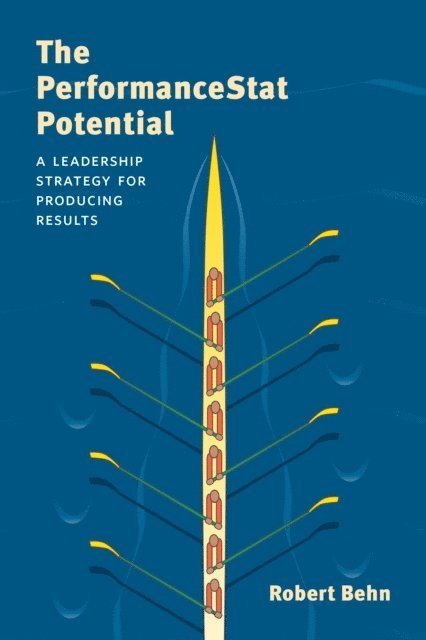
It started two decades ago with CompStat in the New York City Police Department, and quickly jumped to police agencies across the U.S. and other nations. It was adapted by Baltimore, which created CitiStatthe first application of this leadership strategy to an entire jurisdiction. Today, governments at all levels employ PerformanceStat: a focused effort by public executives to exploit the power of purpose and motivation, responsibility and discretion, data and meetings, analysis and learning, feedback and follow-upall to improve government's performance.Here, Harvard leadership and management guru Robert Behn analyzes the leadership behaviors at the core of PerformanceStat to identify how they work to produce results. He examines how the leaders of a variety of public organizations employ the strategythe way the Los Angeles County Department of Public Social Services uses its DPSSTATS to promote economic independence, how the City of New Orleans uses its BlightStat to eradicate blight in city neighborhoods, and what the Federal Emergency Management Agency does with its FEMAStat to ensure that the lessons from each crisis response, recovery, and mitigation are applied in the future. How best to harness the strategy's full capacity? The PerformanceStat Potential explains all.
434 kr
Skickas inom 10-15 vardagar
Sandford Borins addresses the enduring significance of innovation in government as practiced by public servants, analyzed by scholars, discussed by media, documented by awards, and experienced by the public. In The Persistence of Innovation in Government, he maps the changing landscape of American public sector innovation in the twenty-first century, largely by addressing three key questions: Who innovates? When, why, and how do they do it? What are the persistent obstacles and the proven methods for overcoming them?Probing both the process and the content of innovation in the public sector, Borins identifies major shifts and important continuities. His examination of public innovation combines several elements: his analysis of the Harvard Kennedy School's Innovations in American Government Awards program; significant new research on government performance; and a fresh look at the findings of his earlier, highly praised book Innovating with Integrity: How Local Heroes Are Transforming American Government. He also offers a thematic survey of the field's burgeoning literature, with a particular focus on international comparison.
354 kr
Skickas inom 10-15 vardagar
A Brookings Institution Press and Ash Center for Democratic Governance and Innovation publicationParticipatory Budgetingthe experiment in democracy that could redefine how public budgets are decided in the United States.Democracy Reinvented is the first comprehensive academic treatment of participatory budgeting in the United States, situating it within a broader trend of civic technology and innovation. This global phenomenon, which has been called revolutionary civics in action” by the New York Times, started in Brazil in 1989 but came to America only in 2009. Participatory budgeting empowers citizens to identify community needs, work with elected officials to craft budget proposals, and vote on how to spend public funds.Democracy Reinvented places participatory budgeting within the larger discussion of the health of U.S. democracy and focuses on the enabling political and institutional conditions. Author and former White House policy adviser Hollie Russon Gilman presents theoretical insights, indepth case studies, and interviews to offer a compelling alternative to the current citizen disaffection and mistrust of government. She offers policy recommendations on how to tap online tools and other technological and civic innovations to promote more inclusive governance.While most literature tends to focus on institutional changes without solutions, this book suggests practical ways to empower citizens to become change agents. Democracy Reinvented also includes a discussion on the challenges and opportunities that come with using digital tools to re-engage citizens in governance.
365 kr
Skickas inom 10-15 vardagar
A critical examination of the history of US-Palestinian relationsThe United States has invested billions of dollars and countless diplomatic hours in the pursuit of Israeli-Palestinian peace and a two-state solution. Yet American attempts to broker an end to the conflict have repeatedly come up short. At the center of these failures lay two critical factors: Israeli power and Palestinian politics.While both Israelis and Palestinians undoubtedly share much of the blame, one also cannot escape the role of the United States, as the sole mediator in the process, in these repeated failures. American peacemaking efforts ultimately ran aground as a result of Washington's unwillingness to confront Israel's ever-deepening occupation or to come to grips with the realities of internal Palestinian politics. In particular, the book looks at the interplay between the U.S.-led peace process and internal Palestinian politicsnamely, how a badly flawed peace process helped to weaken Palestinian leaders and institutions and how an increasingly dysfunctional Palestinian leadership, in turn, hindered prospects for a diplomatic resolution. Thus, while the peace process was not necessarily doomed to fail, Washington's management of the process, with its built-in blind spot to Israeli power and Palestinian politics, made failure far more likely than a negotiated breakthrough.Shaped by the pressures of American domestic politics and the special relationship with Israel, Washington's distinctive blind spot to Israeli power and Palestinian politics has deep historical roots, dating back to the 1917 Balfour Declaration and the British Mandate. The size of the blind spot has varied over the years and from one administration to another, but it is always present.
434 kr
Skickas inom 10-15 vardagar
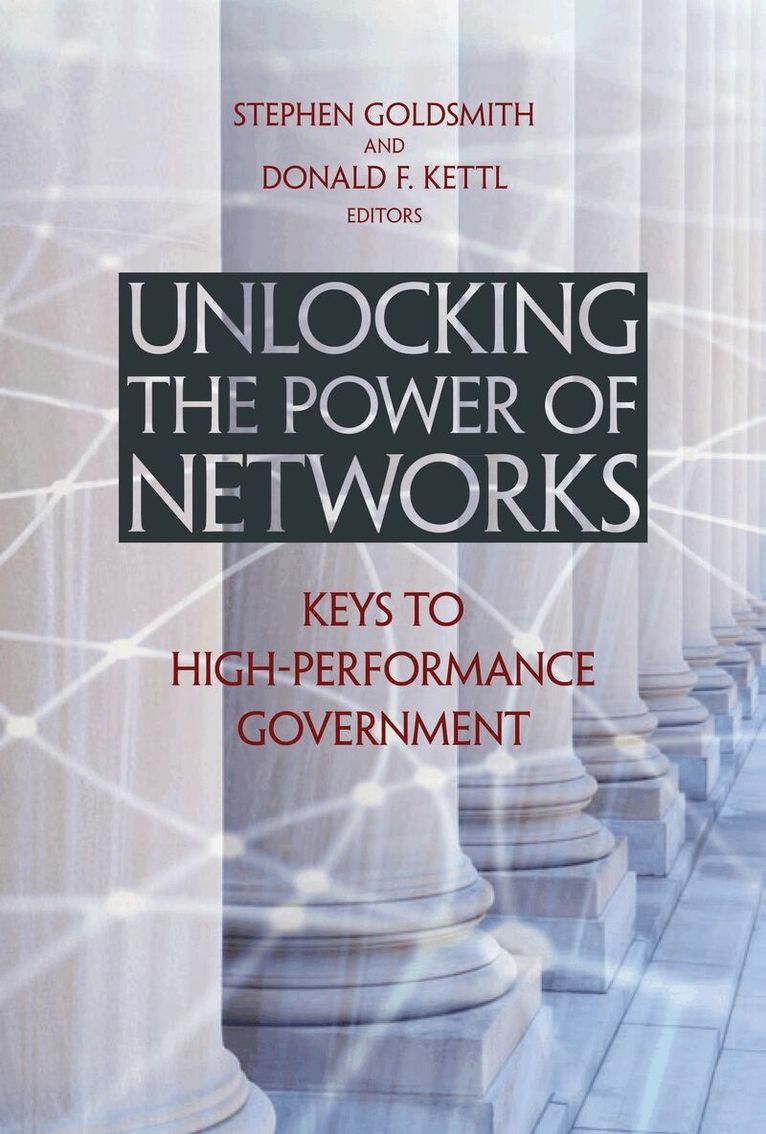
The era of strict top-down, stovepiped public management in America is over. The traditional dichotomy between public ownership and privatization is an outdated notion. Public executives have shifted their focus from managing workers and directly providing services to orchestrating networks of public, private, and nonprofit organizations to deliver those services. Unlocking the Power of Networks employs original sector-specific analyses to reveal how networked governance achieves previously unthinkable policy goals.Stephen Goldsmith and Donald F. Kettl head a stellar cast of policy practitioners and scholars exploring the potential, strategies, and best practices of high-performance networks while identifying next-generation issues in public-sector network management. They cover the gamut of public policy issues, including national security, and the book even includes a thought-provoking look at how jihadist terrorists use the principles of network management to pursue their goals.Contributors: William G. Berberich (Virginia Tech), Tim Burke (Harvard University), G. Edward DeSeve (University of Pennsylvania),William D. Eggers (Manhattan Institute), Anne M. Khademian (Virginia Tech), H. Brinton Milward (University of Arizona), Mark H. Moore (Harvard University), Paul Posner (George Mason University), Jörg Raab (Tilburg University), and Barry G. Rabe (University of Michigan).
434 kr
Skickas inom 10-15 vardagar
Proposing an entirely new governance model to unleash innovation throughout local governmentAt a time when trust is dropping precipitously and American government at the national level has fallen into a state of long-term, partisan-based gridlock, local government can still be effectiveindeed more effective and even more responsive to the needs of its citizens. Based on decades of direct experience and years studying successful models around the world, the authors of this intriguing book propose a new operating system (O/S) for cities. Former mayor and Harvard professor Stephen Goldsmith and New York University professor Neil Kleiman suggest building on the giant leaps that have been made in technology, social engagement, and big data.Calling their approach distributed governance, Goldsmith and Kleiman offer a model that allows public officials to mobilize new resources, surface ideas from unconventional sources, and arm employees with the information they need to become pre-emptive problem solvers. This book highlights lessons from the many innovations taking place in today's cities to show how a new O/S can create systemic transformation.For students of government, A New City O/S: The Power of Distributed Governance presents a groundbreaking strategy for rethinking the governance of cities, marking an important evolution of the current bureaucratic authority-based model dating from the 1920s. More important, the book is designed for practitioners, starting with public-sector executives, managers, and frontline workers. By weaving real-life examples into a coherent model, the authors have created a step-by-step guide for all those who would put the needs of citizens front and center. Nothing will do more to restore trust in government than solutions that work. A New City O/S: The Power of Distributed Governance puts those solutions within reach of those public officials responsible for their delivery.
515 kr
Skickas inom 10-15 vardagar
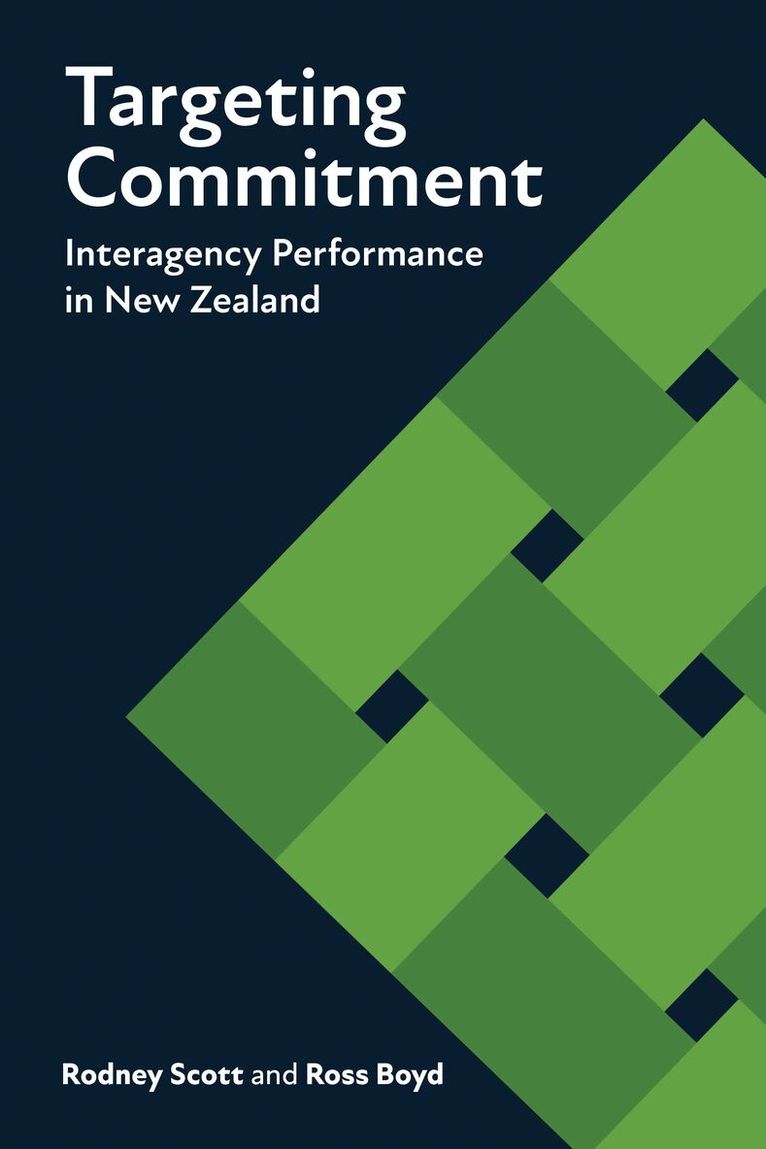
New Zealand's deceptively simple but effective program to improve public servicesNew Zealand has long been considered at the forefront of public administration, experimenting with new ways of organizing and delivering public services. Even so, successive New Zealand governments had mixed results from using traditional public management tools to lift the performance of the public service and address persistent problems that required multi-agency action.In 2012 the government decided to try something different. As part of a reform package called Better Public Services, the government challenged the public service to organize itself around achieving just ten results that had proven resistant to previous interventions. The plan was deceptively simple: set ambitious targets and publicly report on progress every six months; hold small groups of public managers collectively responsible; use lead indicators; and learn from both success and failure.This book explores how and why the New Zealand government made progress and how the program was able to create and sustain the commitment of public servants and unleash the creativity of public entrepreneurs.The authors combine case studies based on the experience of people involved in the change, together with public management research. They explain how ambitious targets and public accountability were used as levers to overcome the bureaucratic barriers that impeded public service delivery, and how data, evidence, and innovation were used to change practice. New Zealand experimented, failed, succeeded, and learned from the experience over five years. This New Zealand experience demonstrates that interagency performance targets are a potentially powerful tool for fostering better public services and thus improving social outcomes.
447 kr
Skickas inom 10-15 vardagar
Tested, practical ideas to meet current and future skilling needs of both workers and employersThe labor market in the United States faces seemingly contradictory challenges: Many employers have trouble finding qualified applicants for current and future jobs, while millions of Americans are out of work or are underemployed—their paths to living-wage jobs blocked by systemic barriers or lack of adequate skills.Growing Fairly offers workforce development reforms that meet the needs of both workers and employers. Based on the experiences of hundreds of leaders and workers, the authors set out ten principles for designing a more effective and equitable system that helps workers obtain the skills necessary for economic mobility.The principles outlined in the book argue for a more comprehensive view of the skilling needs of current and prospective workers. They spell out the attributes of effective programs and make the case for skill-based hiring, widely distributed performance data, and collaboration. The book emphasizes the importance of local action to overcome the structural barriers that challenge even the most determined would-be learners. Growing Fairly shows cross sector leaders how to work across organizational boundaries to change the trajectory of individuals struggling to make a living wage.This is not a book of untested theories. Instead, it is written by practitioners for practitioners. Much of it is told through the voices of those who run programs and people who have taken advantage of them. While the issues the book addresses are profound, its take on the subject is optimistic.Between them, the authors have spent decades searching out and supporting effective practices. Even more critically, they have learned how to knit competing agencies and organizations into cohesive systems with coordinated missions. Their practical ideas will benefit a wide range of readers, from practitioners in the field to students and scholars of the American labor system.
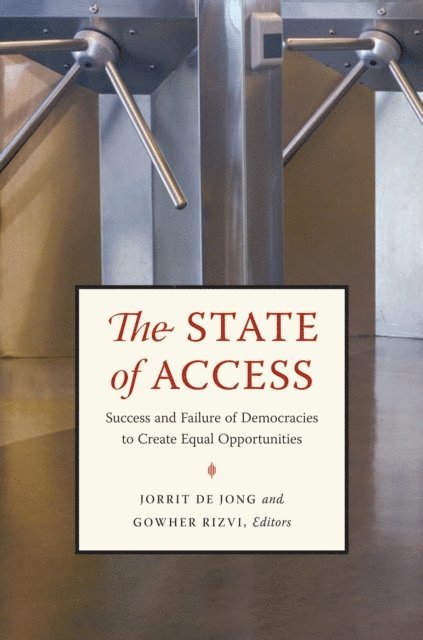
State of Access
Success and Failure of Democracies to Create Equal Opportunities
Häftad, Engelska, 2008
434 kr
Skickas inom 10-15 vardagar
This book documents a worrisome gap between principles and practice in democratic governance. The State of Access is a comparative, cross-disciplinary exploration of the ways in which democratic institutions fail or succeed to create the equal opportunities that they have promised to deliver to the people they serve. In theory, rules and regulations may formally guarantee access to democratic processes, public services, and justice. But reality routinely disappoints, for a number of reasonsexclusionary policymaking, insufficient attention to minorities, underfunded institutions, inflexible bureaucracies. The State of Access helps close the gap between the potential and performance in democratic governance.