John Dewey Lecture - Böcker
Visar alla böcker i serien John Dewey Lecture. Handla med fri frakt och snabb leverans.
5 produkter
5 produkter
322 kr
Skickas inom 7-10 vardagar
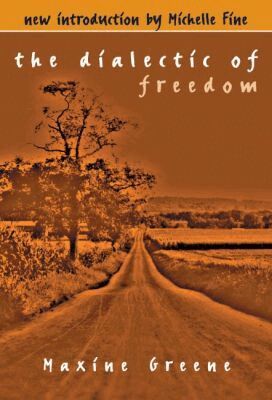
Special 2018 EditionFrom the new Introduction by Michelle Fine, Graduate Center, CUNY :"Why now, you may ask, should I return to a book written in 1988? Because, in Maxine's words: 'When freedom is the question, it is always time to begin.'"In The Dialectic of Freedom, Maxine Greene argues that freedom must be achieved through continuing resistance to the forces that limit, condition, determine, and—too frequently—oppress.Examining the interrelationship between freedom, possibility, and imagination in American education, Greene taps the fields of philosophy, history, educational theory, and literature in order to discuss the many struggles that have characterized Americans’ quests for freedom in the midst of what is conceived to be a free society. Accounts of the lives of women, immigrants, and minority groups highlight the ways in which Americans have gone in search of openings in their lived situations, learned to look at things as if they could be otherwise, and taken action on what they found.Greene presents a unique overview of American concepts and images of freedom from Jefferson’s time to the present. She examines the ways in which the disenfranchised have historically understood and acted on their freedom—or lack of it—in dealing with perceived and real obstacles to expression and empowerment. Strong emphasis is placed on the focal role of the arts and art experience in releasing human imagination and enabling the young to reach toward their vision of the possible.The author concludes with suggestions for approaches to teaching and learning that can provoke both educators and students to take initiatives, to transcend limits, and to pursue freedom—not in solitude, but in reciprocity with others, not in privacy, but in a public space
224 kr
Skickas inom 7-10 vardagar
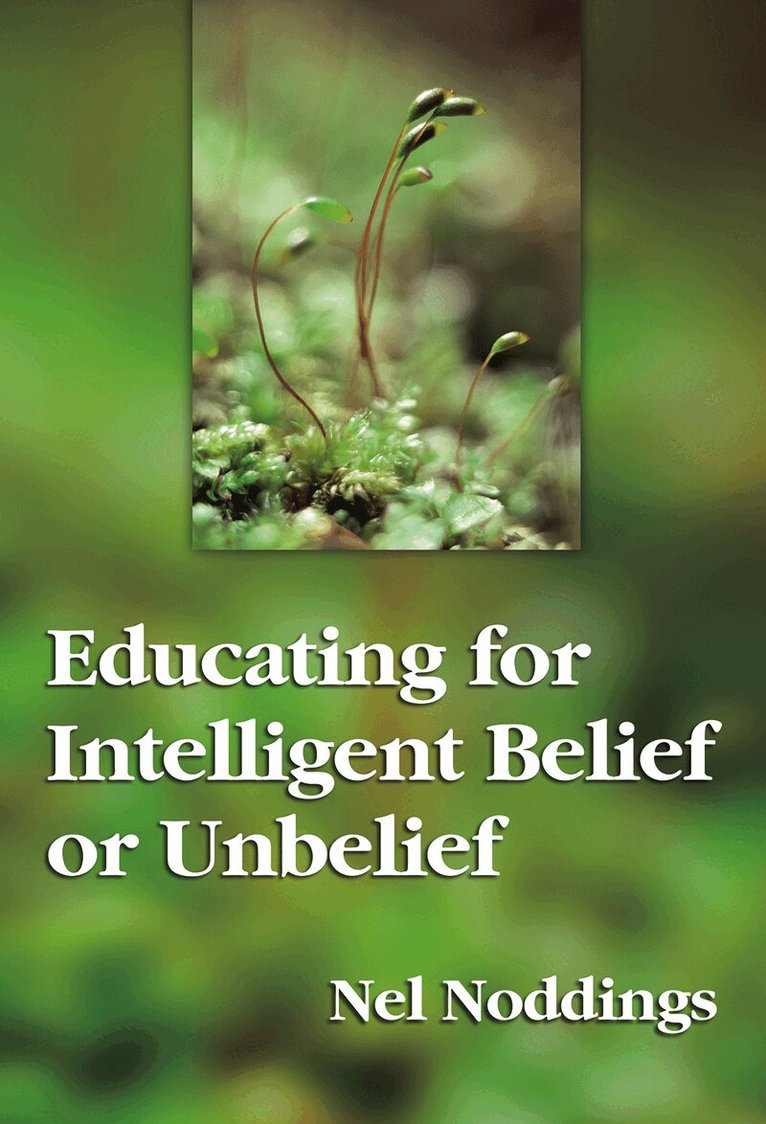
One of the most enduring and controversial issues in American education concerns the place of individual beliefs and moral standards in the classroom. Noddings argues that public schools should address the fundamental questions that teenagers inevitably rasie about the nature, value and meaning of life (and death), and to do so across the curriculum without limiting such existential and metaphysical discussions to separate religion, philosophy or even history classes. Explorations of the existence of a God or gods, and the value and validity of religious belief for societies or individuals, she writes ""whether they are initiated by students or teachers, should be part of the free exchange of human concerns - a way in which people share their awe, doubts, fears, hopes, knowledge and ignorance."" Such basic human concerns, Noddings maintains, are relevant to nearly every subject and should be both non-coercive and free from academic evalution.
268 kr
Skickas inom 11-20 vardagar
In this text, readers are taken on a journey into the mind of John Dewey. By analyzing Dewey's attempts to revise the introduction to one of his most important books, ""Experience and Nature"", Philip W. Jackson explores Dewey's efforts (both intellectually and emotionally) to explain the relationship between philosophy and human affairs. This story of Dewey's life-long struggle with a complex philosophical question (one that continues to challenge philosophers) is also the story of Jackson's own struggle to understand Dewey's quest. Written for anyone interested in philosophy or the writings of Dewey, this book should be useful for understanding the philosophic method and the philosopher's task of inquiry.
279 kr
Skickas inom 11-20 vardagar
In this engaging and accessible volume, Jane Roland Martin develops a brilliantly innovative approach to education that illuminates one of the most pressing issues of our day - the passing down of ""cultural liabilities,"" such as violence in the home, school, and world at large and hatred of other races, religions, genders, ethnicities, or sexual orientations. By encouraging readers to look at education from the standpoint of culture, new questions emerge: How is a culture's wealth to be defined? Who is qualified to contribute to it? How can we preserve a culture's assets for the next generation? Cultural Miseducation: Constructs a new framework for viewing education, school, and curriculum. Develops more inclusive, democratic definitions of culture and citizenship. Expands the concept of educational agency to include all groups and institutions in our society. Covers such important issues as a national curriculum, violence in the media, hate speech, censorship, and standardized testing.
360 kr
Skickas inom 11-20 vardagar
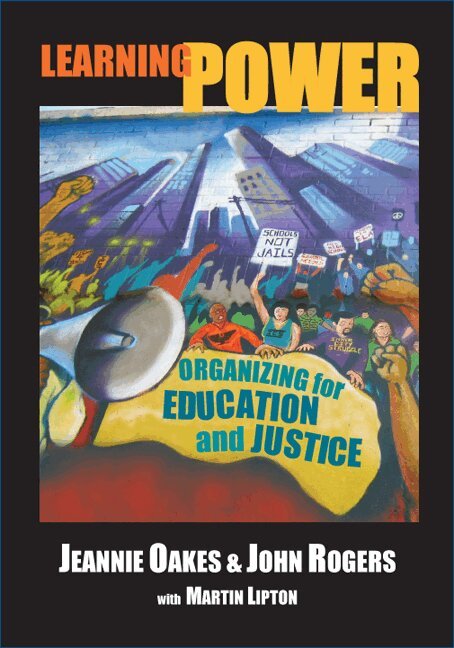
In cities across the nation, low-income African American and Latino parents hope that their children's education will bring a better life. But their schools, typically, are overcrowded, ill equipped, and shamefully under-staffed. Unless things change dramatically, more than half the students will never graduate and many will face a life of poverty-wage work. ""Learning Power"" documents a radical approach to school reform that includes: grassroots public activism informed by social inquiry as the best way to realize Brown v. Board of Education's promise of ""education on equal terms""; activist young people, teachers, parents, and community organizations working to improve schools in our nation's poorest neighborhoods; the voices, images, and actions of people who are organizing to fight for better schools; and a comprehensive critique of the prevailing logic of American schooling and an alternative logic based on justice and participatory democracy. Here are the best arguments against those who want to give up on public schools in America. Read ""Learning Power"" for clear examples of how ordinary people can influence schooling through their organizing and social critique.