Late Antique and Medieval Islamic Near East – Serie
Visar alla böcker i serien Late Antique and Medieval Islamic Near East. Handla med fri frakt och snabb leverans.
6 produkter
6 produkter
Del 1 - Late Antique and Medieval Islamic Near East
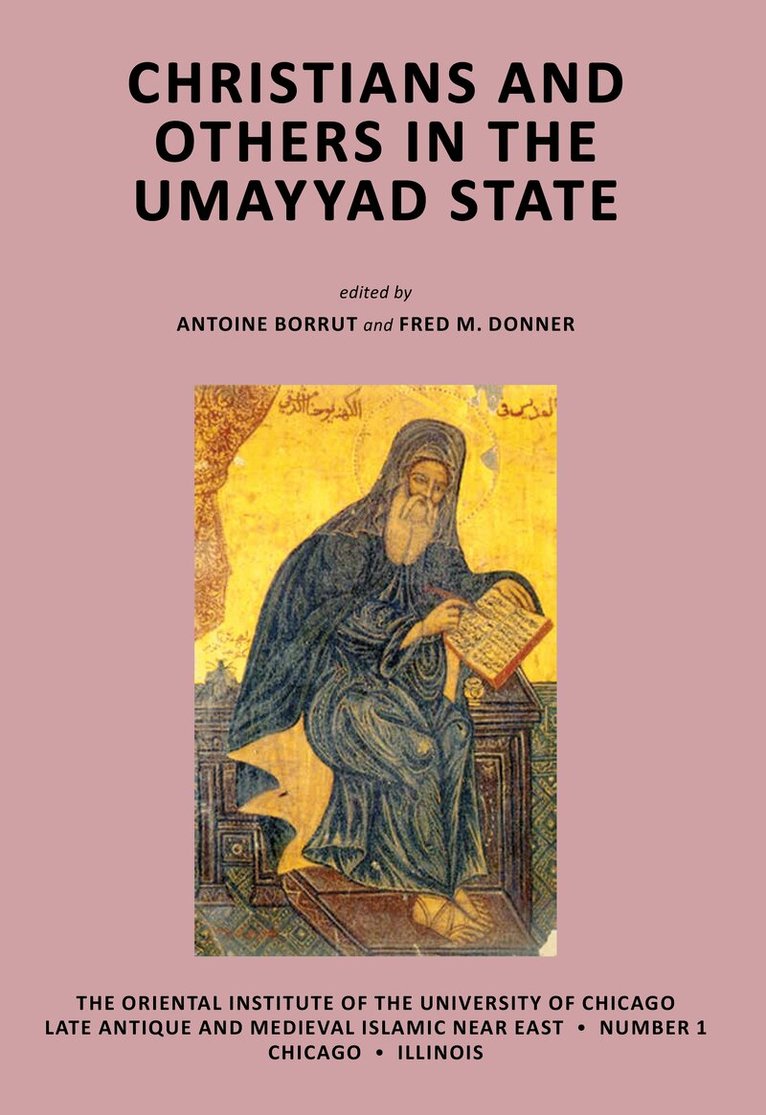
Christians and Others in the Umayyad State
Häftad, Engelska, 2016
406 kr
Skickas inom 5-8 vardagar
The papers in this first volume of the new Oriental Institute series LAMINE are derived from a conference entitled "Christians, Jews, and Zoroastrians in the Umayyad State," held at the University of Chicago on June 17-18, 2011. The goal of the conference was to address a simple question: Just what role did non-Muslims play in the operations of the Umayyad state? It has always been clear that the Umayyad family (r. 41-132/661-750) governed populations in the rapidly expanding empire that were overwhelmingly composed of non-Muslims - mainly Christians, Jews, and Zoroastrians - and the status of those non-Muslim communities under Umayyad rule, and more broadly in early Islam, has been discussed continuously for more than a century. The role of non-Muslims within the Umayyad state has been, however, largely neglected. The eight papers in this volume thus focus on non-Muslims who participated actively in the workings of the Umayyad government." This new Oriental Institute series - Late Antique and Medieval Islamic Near East (LAMINE) - aims to publish a variety of scholarly works, including monographs, edited volumes, critical text editions, translations, studies of corpora of documents - in short, any work that offers a significant contribution to understanding the Near East between roughly 200 and 1000 CE. "
Del 2 - Late Antique and Medieval Islamic Near East
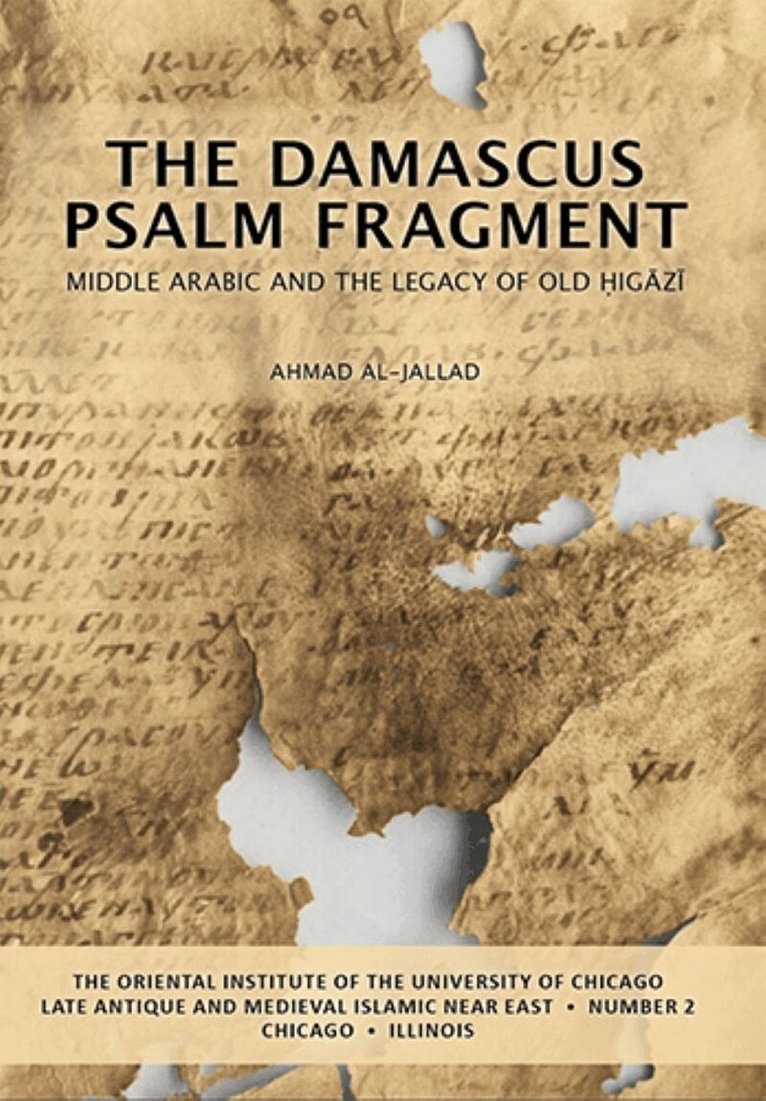
Damascus Psalm Fragment
Middle Arabic and the Legacy of Old Higazi
Häftad, Engelska, 2020
636 kr
Skickas inom 5-8 vardagar
The Damascus Palm Fragment investigates Arabic's transformative historical phase, the passage from the pre-Islamic to the Islamic period, through a new approach. It asks, What would Arabic's early history look like if we wrote it based on the documentary evidence? The book frames this question through the linguistic investigation of the Damascus Psalm Fragment (PF), the longest Arabic text composed in Greek letters from the early Islamic period. It is argued that its language is a witness to the Arabic vernacular of the early Islamic period, and then moves to understand its relationship with Arabic of the pre-Islamic period, the Qur'anic Consonantal Text, and the first Islamic century papyri, arguing that all of this material belongs to a dialectal complex that we call Old Higazi. The book concludes by presenting a scenario for the emergence of standard Classical Arabic as the literary language of the late eighth century and beyond.This is the second volume to appear in the new Oriental Institute series - Late Antique and Medieval Islamic Near East (LAMINE) - which aims to publish a variety of scholarly works, including monographs, edited volumes, critical text editions, translations, studies of corpora of documents, in short any work that offers a significant contribution to understanding the Near East between roughly 200 and 1000 CE.
Del 3 - Late Antique and Medieval Islamic Near East
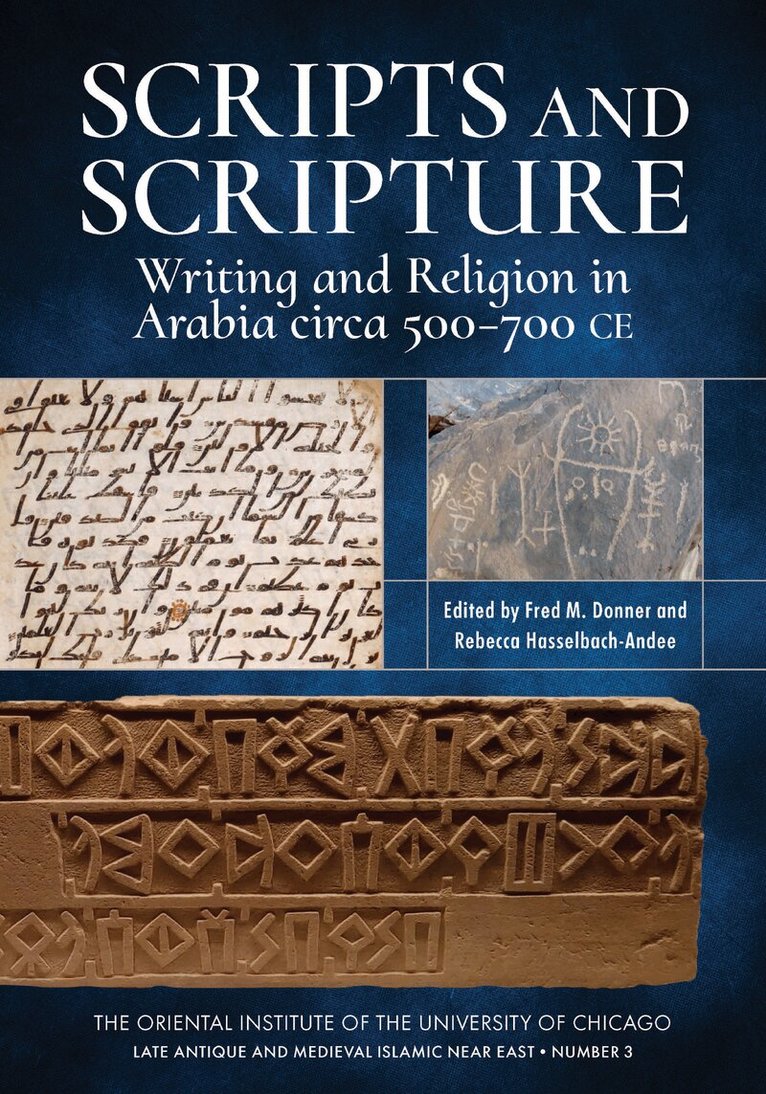
Scripts and Scripture
Writing and Religion in Arabia circa 500-700 CE
Häftad, Engelska, 2022
566 kr
Skickas inom 11-20 vardagar
How did Islam's sacred scripture, the Arabic Qur'an, emerge from western Arabia at a time when the region was religiously fragmented and lacked a clearly established tradition of writing to render the Arabic language? The studies in this volume, the proceedings of a scholarly conference, address different aspects of this question. They include discussions of the religious concepts found in Arabia in the centuries preceding the rise of Islam, which reflect the presence of polytheism and of several varieties of monotheism including Judaism and Christianity. Also discussed at length are the complexities surrounding the way languages of the Arabian Peninsula were written in the centuries before and after the rise of Islam-including Nabataean and various North Arabian dialects of Semitic-and the gradual emergence of the now-familiar Arabic script from the Nabataean script originally intended to render a dialect of Aramaic. The religious implications of inscriptions from the pre-Islamic and early Islamic centuries receive careful scrutiny. The early coalescence of the Qur'an, the kind of information it contains on Christianity and other religions that formed part of the environment in which it first appeared, the development of several key Qur'anic concepts, and the changing meaning of certain terms used in the Qur'an also form part of this rich volume.
Del 4 - Late Antique and Medieval Islamic Near East
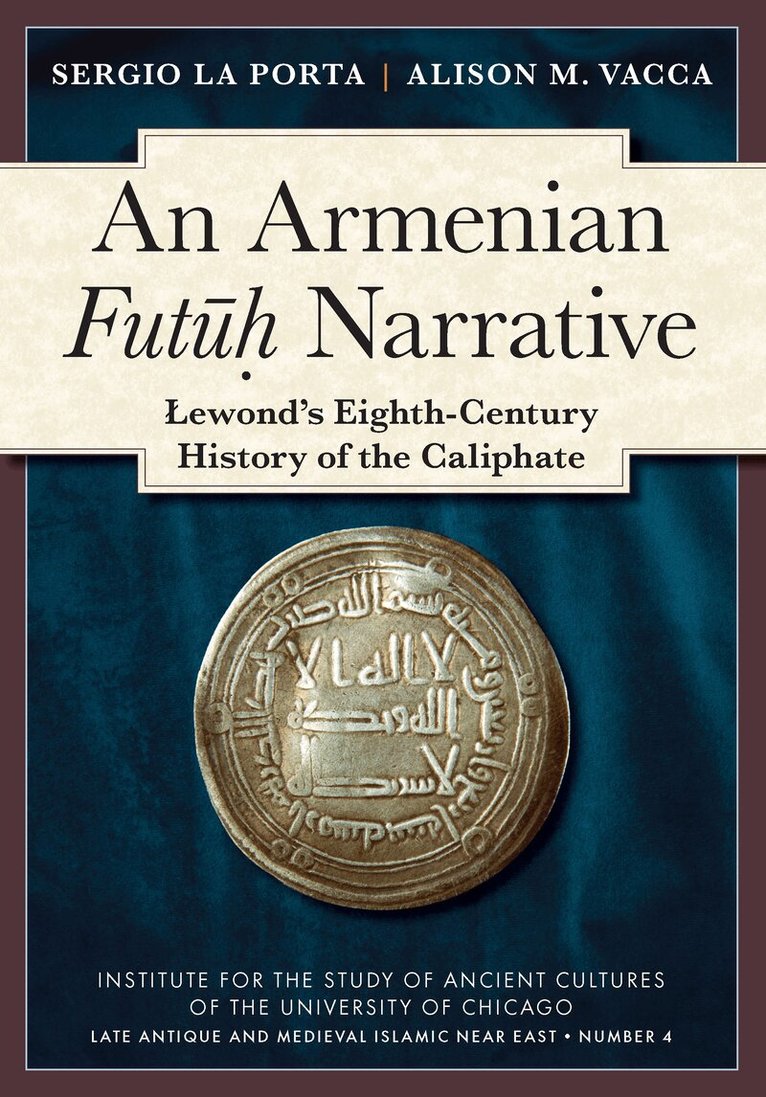
Armenian Futuh Narrative
Lewond's Eighth-Century History of the Caliphate
Häftad, Engelska, 2024
680 kr
Skickas inom 5-8 vardagar
The History of the Armenian priest Łewond is an important source for the history of early Islamic rule and the only contemporary chronicle of second/eighth-century caliphal rule in Armenia. This volume presents a diplomatic edition and new English translation of Łewond's text, which describes events that took place during the century and a half following the Prophet Muḥammad's death in AH 11/632 CE. The authors address Łewond's account as a work of caliphal history, written in Armenian, from within the Caliphate. As such, this book provides a critical reading of the Caliphate from one of its most significant provinces.Reading notes clarify many aspects of the period covered to make the text understandable to students and specialists alike. Extensive commentary elucidates Łewond's narrative objectives and situates his History in a broader Near Eastern historiographical context by bringing the text into new conversations with a constellation of Arabic, Greek, and Syriac works that cover the same period. The book thus stresses the multiplicity of voices operating in the Caliphate in this pivotal period of Near Eastern history.
Del 5 - Late Antique and Medieval Islamic Near East
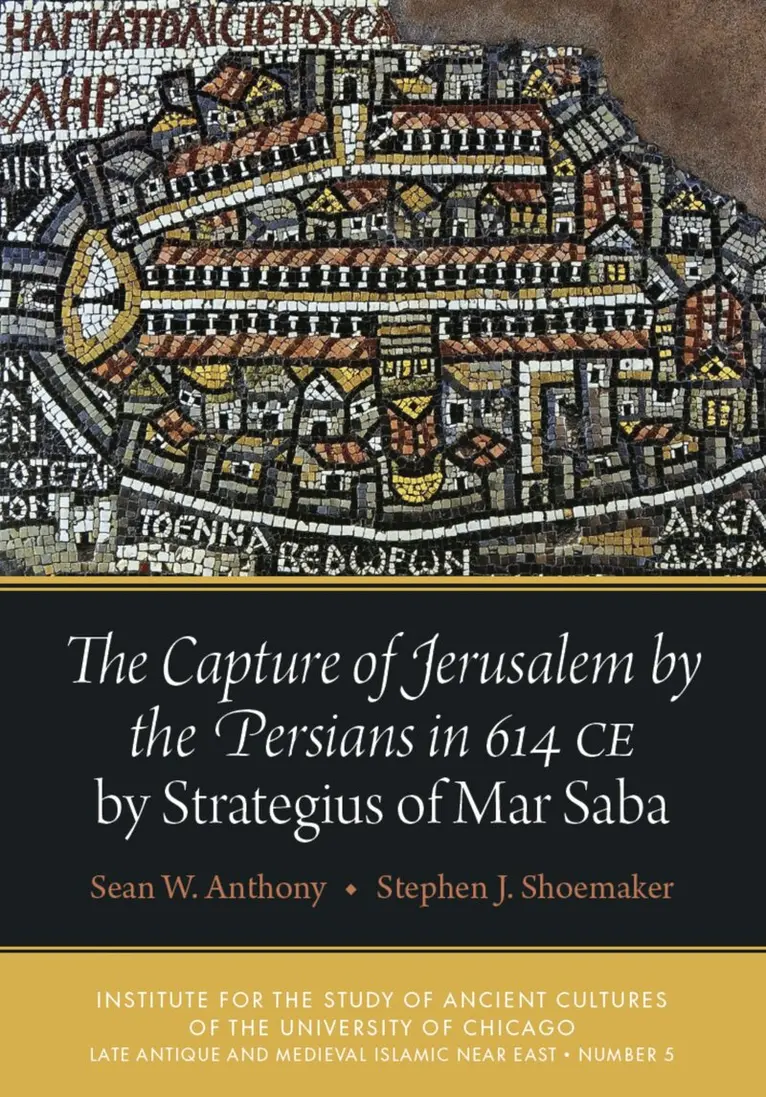
Capture of Jerusalem by the Persians in 614 CE by Strategius of Mar Saba
Häftad, Engelska, 2025
497 kr
Skickas inom 5-8 vardagar
In 614 CE, the armies of Sasanid Persia shocked the Eastern Roman Empire when they besieged and captured Jerusalem, taking a large swath of its population into captivity along with the city's patriarch and the famed relic of the True Cross. This astounding Persian victory over Christian Jerusalem was a key episode in the last war between Rome and Persia in 602-628 CE and occurred at the high tide of Persian advances into the Roman territories in Asia Minor, the Levant, and Egypt.Among those taken captive was a certain Strategius, a monk of Mar Saba, who subsequently took it upon himself to compose a homily recounting the events leading up to the Persian siege of the Holy City and its aftermath. Strategius presents his pious and harrowing account as that of an eyewitness to many of the events he recounts. For events he did not himself witness, he purports to rely on contemporary informants who did, making his treatise a source with few parallels in late antiquity.Although Strategius's original account in Greek is lost, it survives via later translations into Georgian and Christian Arabic, two languages that attained prominence in the monasteries of Palestine during the Islamic period. This volume provides, for the first time, a complete side-by-side English translation of both the Georgian and the Arabic recensions.
Del 6 - Late Antique and Medieval Islamic Near East
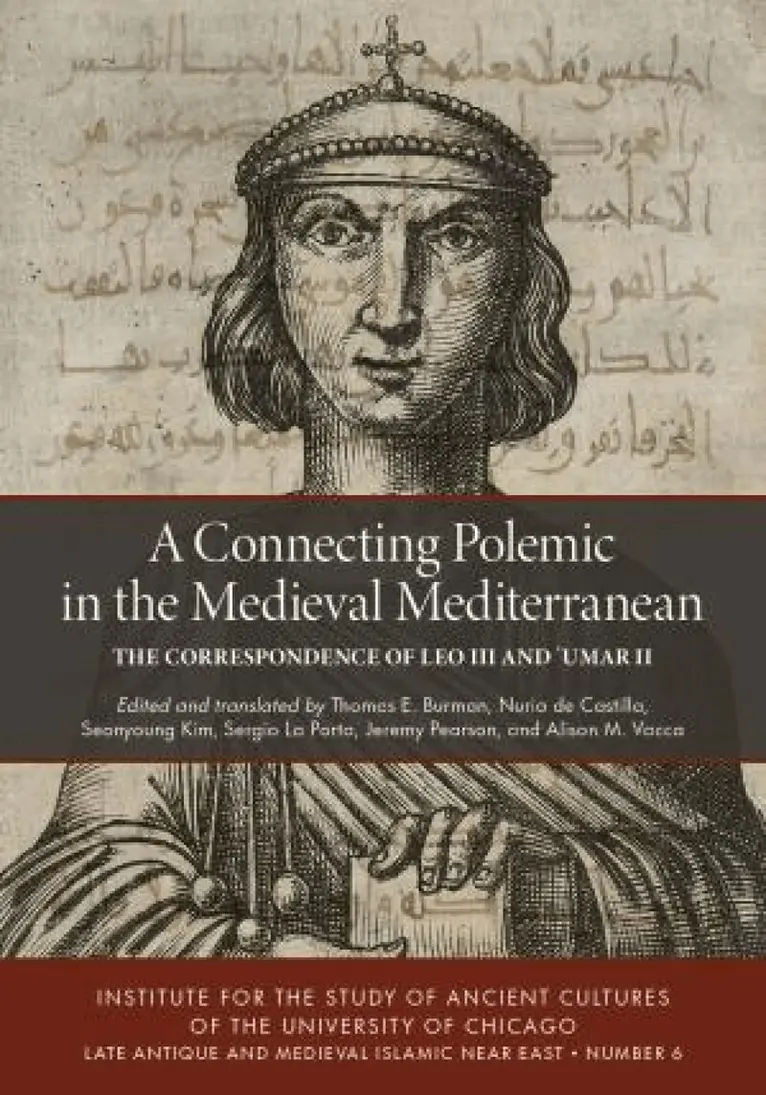
Connecting Polemic in the Medieval Mediterranean
The Correspondence of Leo III and 'Umar II
Häftad, Engelska, 2026
588 kr
Kommande
This book offers the first comprehensive edition and translation of all surviving versions—Latin, Armenian, Arabic, and Aljamiado—of the polemical correspondence attributed to the Byzantine emperor Leo III and the Umayyad caliph ?Umar II.Far from simple diplomatic communication, these letters form part of a centuries-long Christian–Muslim exchange, rooted in fictional authorship but widely circulated across the Mediterranean from the eighth to the sixteenth century. The book explores their multilingual transmission and textual fluidity, as well as the evolution of their arguments, especially regarding scriptural reliability and Christology, to demonstrate how diverse communities adapted the texts to local polemical contexts. It identifies three main textual groupings and traces recurring argumentative strands, many of which derive from specific Qur?anic passages, suggesting their origins in an oral, cross-confessional polemical milieu.The correspondence not only reflects shared themes of religious disputation but also continuously imagines itself as one episode in a larger, unending dialogue between Christianity and Islam. By situating these texts within vibrant Mediterranean networks, the book provides crucial insights into the construction, adaptation, and transmission of polemical literature in the premodern world.