Rebecca Hasselbach-Andee - Böcker
Visar alla böcker från författaren Rebecca Hasselbach-Andee. Handla med fri frakt och snabb leverans.
5 produkter
5 produkter
2 221 kr
Skickas inom 7-10 vardagar
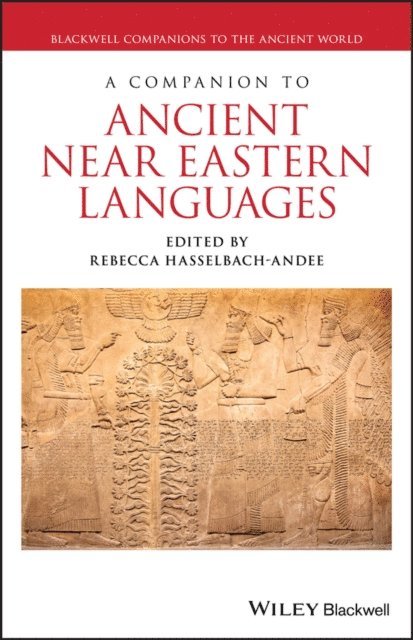
Covers the major languages, language families, and writing systems attested in the Ancient Near East Filled with enlightening chapters by noted experts in the field, this book introduces Ancient Near Eastern (ANE) languages and language families used during the time period of roughly 3200 BCE to the second century CE in the areas of Egypt, the Levant, eastern Anatolia, Mesopotamia, and Iran. In addition to providing grammatical sketches of the respective languages, the book focuses on socio-linguistic questions such as language contact, diglossia, the development of literary standard languages, and the development of diplomatic languages or “linguae francae.” It also addresses the interaction of Ancient Near Eastern languages with each other and their roles within the political and cultural systems of ANE societies.Presented in five parts, The Companion to Ancient Near Eastern Languages provides readers with in-depth chapter coverage of the writing systems of ANE, starting with their decipherment. It looks at the emergence of cuneiform writing; the development of Egyptian writing in the fourth and early third millennium BCI; and the emergence of alphabetic scripts. The book also covers many of the individual languages themselves, including Sumerian, Egyptian, Akkadian, Hittite, Pre- and Post-Exilic Hebrew, Phoenician, Ancient South Arabian, and more. Provides an overview of all major language families and writing systems used in the Ancient Near East during the time period from the beginning of writing (approximately 3200 BCE) to the second century CE (end of cuneiform writing)Addresses how the individual languages interacted with each other and how they functioned in the societies that used themWritten by leading experts on the languages and topicsThe Companion to Ancient Near Eastern Languages is an ideal book for undergraduate students and scholars interested in Ancient Near Eastern cultures and languages or certain aspects of these languages.
537 kr
Kommande
Covers the major languages, language families, and writing systems attested in the Ancient Near East Filled with enlightening chapters by noted experts in the field, this book introduces Ancient Near Eastern (ANE) languages and language families used during the time period of roughly 3200 BCE to the second century CE in the areas of Egypt, the Levant, eastern Anatolia, Mesopotamia, and Iran. In addition to providing grammatical sketches of the respective languages, the book focuses on socio-linguistic questions such as language contact, diglossia, the development of literary standard languages, and the development of diplomatic languages or “linguae francae.” It also addresses the interaction of Ancient Near Eastern languages with each other and their roles within the political and cultural systems of ANE societies.Presented in five parts, The Companion to Ancient Near Eastern Languages provides readers with in-depth chapter coverage of the writing systems of ANE, starting with their decipherment. It looks at the emergence of cuneiform writing; the development of Egyptian writing in the fourth and early third millennium BCI; and the emergence of alphabetic scripts. The book also covers many of the individual languages themselves, including Sumerian, Egyptian, Akkadian, Hittite, Pre- and Post-Exilic Hebrew, Phoenician, Ancient South Arabian, and more. Provides an overview of all major language families and writing systems used in the Ancient Near East during the time period from the beginning of writing (approximately 3200 BCE) to the second century CE (end of cuneiform writing)Addresses how the individual languages interacted with each other and how they functioned in the societies that used themWritten by leading experts on the languages and topicsThe Companion to Ancient Near Eastern Languages is an ideal book for undergraduate students and scholars interested in Ancient Near Eastern cultures and languages or certain aspects of these languages.
Del 10 - Languages of the Ancient Near East
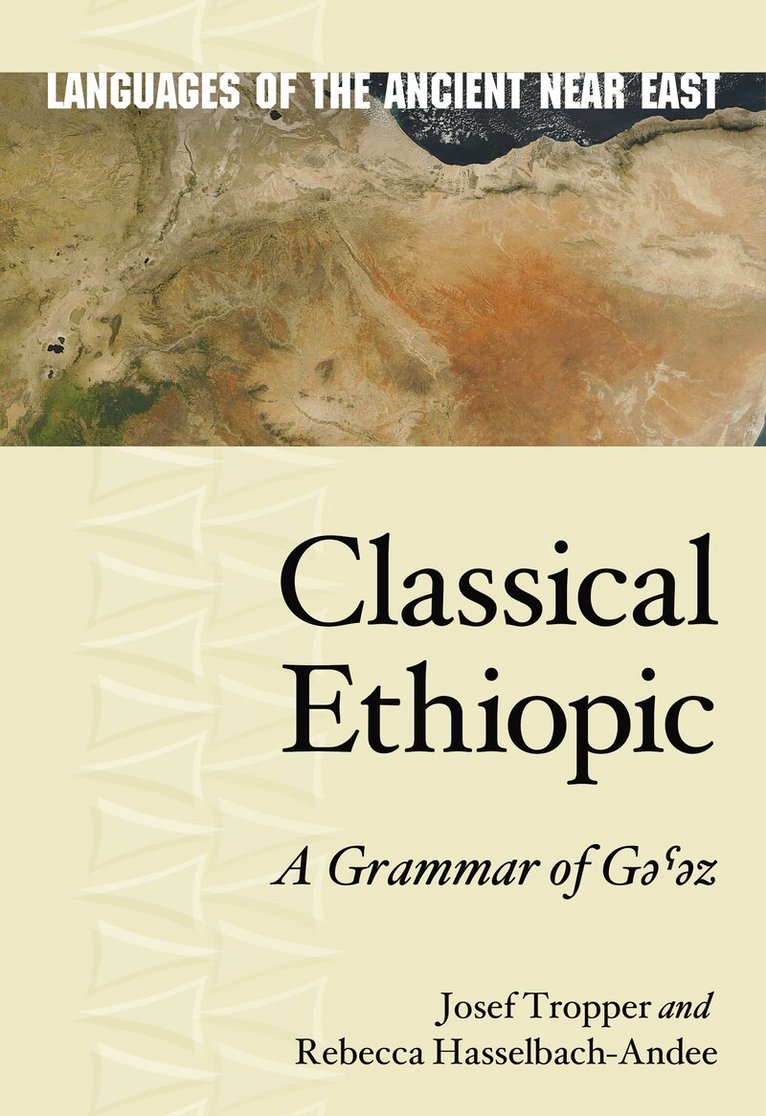
Classical Ethiopic
A Grammar of Gəˁəz
Inbunden, Engelska, 2021
692 kr
Skickas inom 7-10 vardagar
Upon its publication in 2002, Josef Tropper’s Altäthiopisch: Grammatik des Gəˁəz mit Übungstexten und Glossar was quickly recognized as the best modern grammar of Classical Ethiopic in any language. Now Eisenbrauns makes Tropper’s grammar available for the first time in English, in this revised and expanded edition by Josef Tropper and Rebecca Hasselbach-Andee.Gəˁəz literature is diverse and of major importance for the study of early Christianity, Judaism, and the history of eastern Africa. The language of this rich literature, however, has been difficult to access until now. Designed to help language learners acquire competency with the script from the start, Classical Ethiopic provides a comprehensive treatment of Gəˁəz grammar, with detailed chapters on the language’s writing system, phonology, morphology, morphosyntax, and syntax. Numerous example sentences illustrate the grammatical concepts discussed, and each example is presented in Ethiopic script, transliteration, and English translation. The grammar concludes with an appendix presenting sample texts to be used as exercises, an English-Gəˁəz glossary, and an updated bibliography that takes into account the developments that have occurred in the study of Gəˁəz in the nearly two decades since Tropper’s original publication.Appropriate for the classroom and for independent study, Classical Ethiopic is sure to become the standard reference in English for the study of the language.
Del 3 - Late Antique and Medieval Islamic Near East
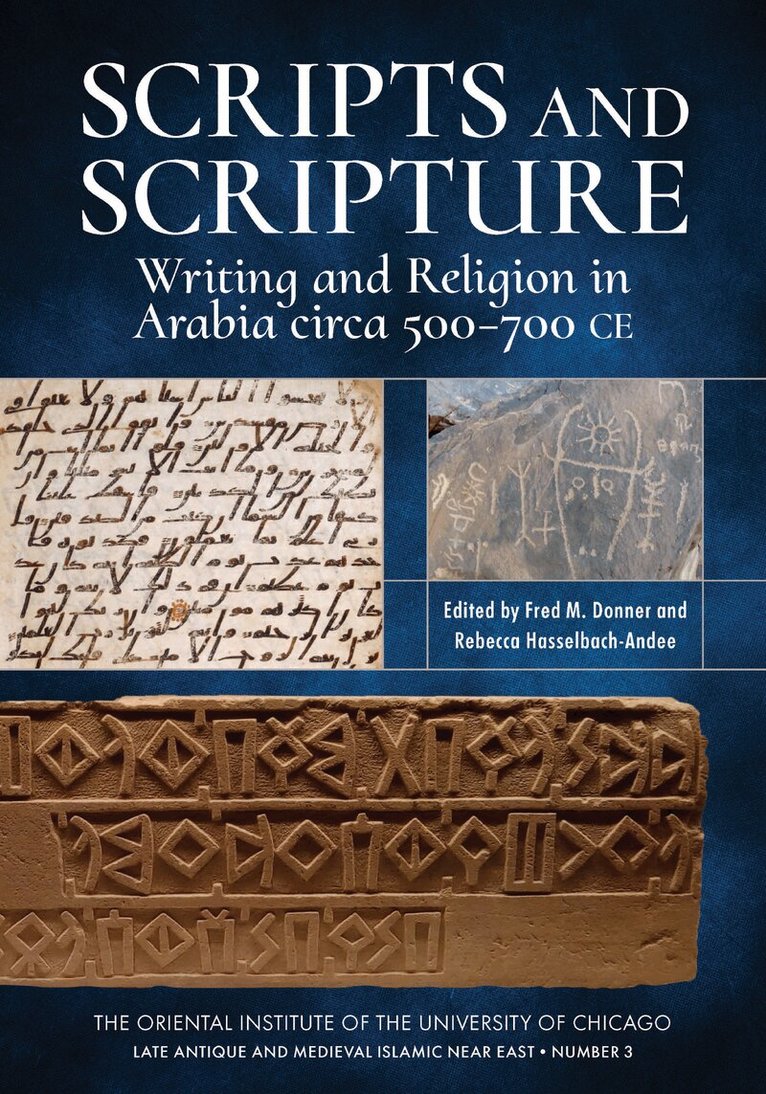
Scripts and Scripture
Writing and Religion in Arabia circa 500-700 CE
Häftad, Engelska, 2022
678 kr
Skickas inom 5-8 vardagar
How did Islam's sacred scripture, the Arabic Qur'an, emerge from western Arabia at a time when the region was religiously fragmented and lacked a clearly established tradition of writing to render the Arabic language? The studies in this volume, the proceedings of a scholarly conference, address different aspects of this question. They include discussions of the religious concepts found in Arabia in the centuries preceding the rise of Islam, which reflect the presence of polytheism and of several varieties of monotheism including Judaism and Christianity. Also discussed at length are the complexities surrounding the way languages of the Arabian Peninsula were written in the centuries before and after the rise of Islam-including Nabataean and various North Arabian dialects of Semitic-and the gradual emergence of the now-familiar Arabic script from the Nabataean script originally intended to render a dialect of Aramaic. The religious implications of inscriptions from the pre-Islamic and early Islamic centuries receive careful scrutiny. The early coalescence of the Qur'an, the kind of information it contains on Christianity and other religions that formed part of the environment in which it first appeared, the development of several key Qur'anic concepts, and the changing meaning of certain terms used in the Qur'an also form part of this rich volume.
Del 8 - Explorations in Ancient Near Eastern Civilizations
Bēl Lišāni
Current Research in Akkadian Linguistics
Inbunden, Engelska, 2021
1 165 kr
Skickas inom 7-10 vardagar
Akkadian, a Semitic language attested in writing from 2600 BCE until the first century CE, was the language of Mesopotamia for nearly three millennia. This volume examines the language from a comparative and historical linguistic perspective. Inspired by the work of renowned linguist John Huehnergard and featuring contributions from top scholars in the field, Bēl Lišāni showcases the latest research on Akkadian linguistics. Chapters focus on a wide range of topics, including lexicon, morphology, word order, syntax, verbal semantics, and subgrouping. Building upon Huehnergard’s pioneering studies focused on the identification of Proto-Akkadian features, the contributors explore linguistic innovations in the language from historical and comparative perspectives. In doing so, they open the way for further etymological, dialectical, and lexical research into Akkadian. An important update on and synthesis of the research in Akkadian linguistics, this volume will be welcomed by Semitists, Akkadian language specialists, and scholars and students interested in historical linguistics. In addition to the editors, the contributors to this volume include Paul-Alain Beaulieu, Øyvind Bjøru, Maksim Kalinin, N. J. C. Kouwenberg, Sergey Loesov, Jacob J. de Ridder, Ambjörn Sjörs, Michael P. Streck, and Juan-Pablo Vita.