Literary Classics - Böcker
Visar alla böcker i serien Literary Classics. Handla med fri frakt och snabb leverans.
7 produkter
7 produkter
177 kr
Skickas inom 5-8 vardagar
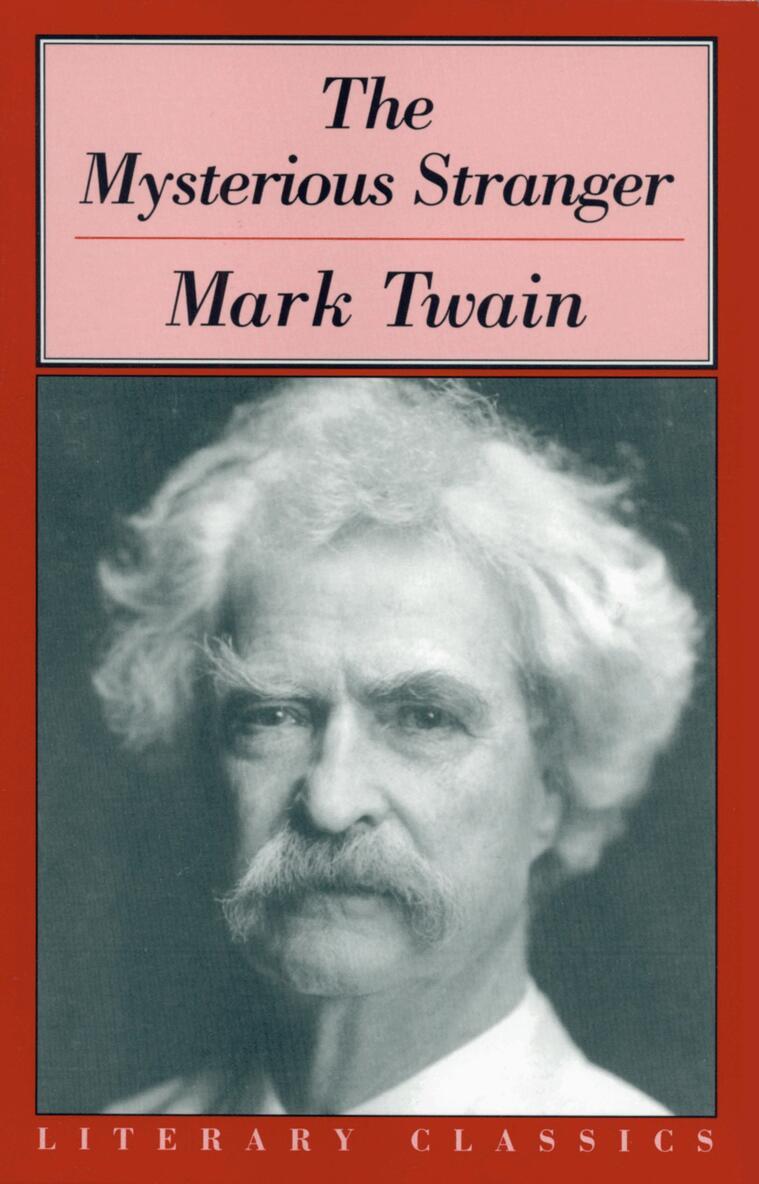
The Mysterious Stranger, published posthumously in 1916 and belonging to Twain's "dark" period, belies the popular image of the affable American humorist. At the time this work was written, Twain had suffered a series of painful physical, economic, and emotional losses.In this antireligious tale, he denies the existence of a benign Providence, a soul, an afterlife, and even reality itself. As the Stranger in the story asserts, "nothing exists; all is a dream."
231 kr
Skickas inom 5-8 vardagar
Esther (1884), the second of two novels by noted American historian Henry Adams (1838-1918), deals with a woman's inability to accept religious faith as men have formulated it. Esther, a young New York socialite and artist raised without religion, falls in love with Episcopal clergyman Stephen Hazard, but she cannot embrace his Christianity and remain true to herself.
231 kr
Skickas inom 5-8 vardagar
In this remarkable work, master story-teller Edgar Allan Poe (1809-1849) builds on known scientific truths to propound a universe governed by the immutable laws of attraction and repulsion, i.e., expansion and a return to unity. The irascible, vindictive God of the Old Testament and the Deists' Master Clockmaker are routed by Poe's pantheistic World Spirit who, through the force of expansion, is diffused throughout his creation. Moreover, we humans are all part of this universal spirit and each of us is his own god. Published after his death, as Poe desired, Eureka remains a startlingly different work from the author's more popular offerings.
231 kr
Skickas inom 5-8 vardagar
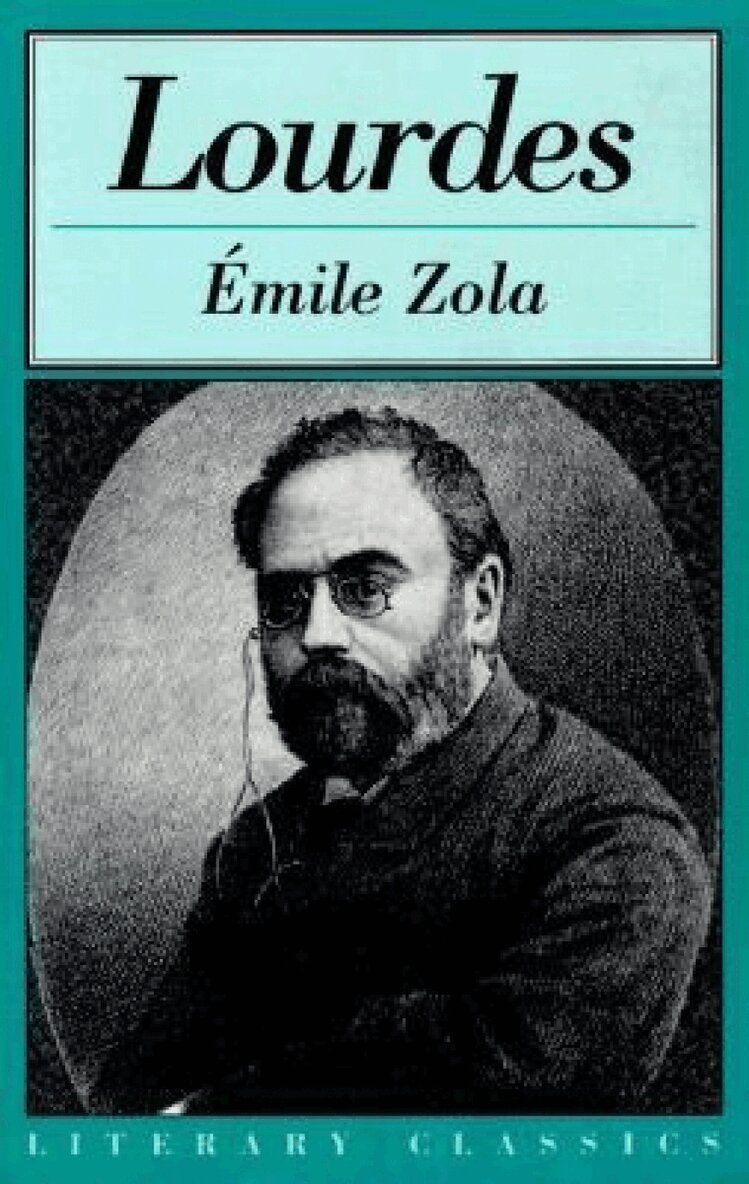
In this moving depiction of a pilgrimage to Lourdes, the master French realist has created a novel of vivid characters and subtle commentary on suffering and the belief in miracles as the last desperate refuge from pain. Based on his own trip to the fabled grotto, the novel follows a simple five-part structure corresponding to the five-day train trip from Paris to Lourdes and back. Zola's brilliant observational powers are at their best as he moves from character to character describing in great detail the physical effects of their illnesses, their hopes, beliefs, fears, and above all endurance. The great novelist himself makes a brief appearance in the story, disguised as a skeptical reporter whose probing questions embarrass a doctor in charge of verifying the alleged miracles. In the end, amidst the tumult of emotions whipped up by religious fervor a miracle of a sort does take place, a psychosomatic cure of a woman suffering from hysterical paralysis. To a few skeptical observers in the entourage the event is a predictable natural occurrence, but to the majority of simple believers it is proof of divine intervention. In our age of televangelists and faith healers, this story has lost none of its relevance.
266 kr
Skickas inom 5-8 vardagar
This is the only extant play by the great Irish novelist andis of interest both for its autobiographical content and for formal reasons. In the characters and their circumstances details of Joyce's life are evident. The main character, Richard Rowan, the moody, tormented writer who is at odds with both his wife and the parochial Irish society around him, is clearly a portrait of Joyce himself. The character of Rowan's wife, Bertha, is certainly influenced by Joyce's lover and later wife, Nora Barnacle, with whom he left Ireland and lived a seminomadic existence in Zurich, Rome, Trieste, and Paris. As in real life, the play depicts the couple with a young son and, like Joyce, Rowan has returned to Ireland because of his mother's illness and subsequent death.Though lesser-known, Exiles, written after Portrait of the Artist as a Young Man and while Joyce was working on Ulysses, provides interesting insights into the development of the creative gifts of a literary genius.
186 kr
Tillfälligt slut
This highly original and entertaining short novel (which has been in print continually since its original publication in 1884) tells the story of A. Square, an inhabitant of the two-dimensional world Flatland. After an overview of Flatland society in all its aspects, A. Square recounts how he was led on a series of visions and travels to Pointland, Lineland, and Spaceland by A. Sphere on the last day of Flatland's year 1999. Through his encounters with these other lands, A. Square realizes that there is indeed more to the universe than the world he lives in. A. Sphere opens A. Square's mind to new possibilities, illuminating the path to knowledge through careful observation and commonsense experimentation. But when A. Square can be contented no longer with what he has already seen, he dreams of visiting a land of four dimensions, the so-called Thoughtland. As in real life, such desires are met with sometimes-violent opposition from society's leaders in the name of maintaining the status quo.Victorian clergyman and Shakespearean scholar Edwin Abbott penned this mathematical allegory about the dawn of reason seemingly in response to the puritanical environment of his era. Touching on themes of humanity's insatiable quest for truth, authority's tendency to squash radical ideas born from this quest, and the necessity of curiosity, Flatland is an odd and charming little book whose impact far surpasses its concise prose.
201 kr
Tillfälligt slut
In this 1907 novel about the extravagant life of New York City's high society, the author of The Jungle, presents a richly detailed portrait of the wealthy elite of "The Metropolis."Allan Montague, a lawyer of thirty, moves to New York City from Mississippi, along with his mother and cousin Alice, to join his younger brother Oliver, who had taken up residence there several years before. The newcomers soon discover that Oliver has become a highly networked member of a fast-paced social circuit comprising some of the most powerful members of the business class. Oliver wastes no time in introducing Allan and Alice into this exclusive group in the hope that they will all prosper through their connections.Sinclair devotes much of the novel to depictions of the profligate and jaded party life of the very rich, who spend vast sums of money on entertainment and new toys to relieve their boredom. Expensive cars (still a novelty at this time), lavishly furnished limousines and private trains, sumptuous dinners attended by liveried servants, tailor-made clothing costing thousands of dollars are described with meticulous attention to the enormous cost of it all. Sinclair also spares no detail in describing the rampant alcoholism, marital affairs, malicious gossip, backstabbing, and shallow values of this set.When Allan agrees to represent a wealthy client in a suit against powerful insurance interests, he becomes caught in a web of influence and secret dealings that threaten his recently established social standing and the wellbeing of his whole family.This early 20th-century version of Lifestyles of the Rich and Famous with a cynical edge and a socialist reformer's perspective provides a fascinating glimpse into the elite social life of the very wealthy of New York before the Great Depression.