Maps of the Mind - Böcker
Visar alla böcker i serien Maps of the Mind. Handla med fri frakt och snabb leverans.
13 produkter
13 produkter
1 616 kr
Skickas inom 3-6 vardagar
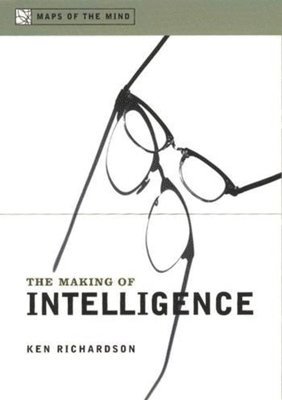
What do we mean when we describe a person as intelligent? The concept of intelligence wields a powerful influence on research dealing with the brain and on how individuals progress in society. Yet, remarkably, there is no scientific consensus about the meaning of intelligence. In The Making of Intelligence Ken Richardson looks at how intelligence has been characterized and measured in the past, explores current trends in our understanding and uses of the concept, and predicts what form these trends will take in the future. He argues that intelligence is not solely predetermined by such factors as genes and environment; it is also created by self-organizing interactions within evolved developmental systems. Considering the implications for society of this dynamic-systems approach, Richardson predicts that as our understanding of the relationship between the mind and the brain improves, the notion of intelligence as a single concept may disappear altogether.Richardson takes particularly sharp aim at IQ tests, exposing the reductionist, oversimplified, and contradictory notions of intelligence that they presuppose as well as the social repercussions of the widespread, unreflecting acceptance of the IQ model in public consciousness. From the writings of Charles Darwin and Herbert Spencer on evolution and adaptation to the reflections of Jean Piaget and Lev Vygotsky on logical reasoning; from the formulation of early IQ tests by Francis Binet and Henri Simon to their recent, provocative rebirth in the assertions of The Bell Curve by Charles Murray and Richard Herrnstein, The Making of Intelligence is a lucid, judicious, critical analysis of this controversial and important subject.
548 kr
Skickas inom 3-6 vardagar
What do we mean when we describe a person as intelligent? The concept of intelligence wields a powerful influence on research dealing with the brain and on how individuals progress in society. Yet, remarkably, there is no scientific consensus about the meaning of intelligence. In The Making of Intelligence Ken Richardson looks at how intelligence has been characterized and measured in the past, explores current trends in our understanding and uses of the concept, and predicts what form these trends will take in the future. He argues that intelligence is not solely predetermined by such factors as genes and environment; it is also created by self-organizing interactions within evolved developmental systems. Considering the implications for society of this dynamic-systems approach, Richardson predicts that as our understanding of the relationship between the mind and the brain improves, the notion of intelligence as a single concept may disappear altogether.Richardson takes particularly sharp aim at IQ tests, exposing the reductionist, oversimplified, and contradictory notions of intelligence that they presuppose as well as the social repercussions of the widespread, unreflecting acceptance of the IQ model in public consciousness. From the writings of Charles Darwin and Herbert Spencer on evolution and adaptation to the reflections of Jean Piaget and Lev Vygotsky on logical reasoning; from the formulation of early IQ tests by Francis Binet and Henri Simon to their recent, provocative rebirth in the assertions of The Bell Curve by Charles Murray and Richard Herrnstein, The Making of Intelligence is a lucid, judicious, critical analysis of this controversial and important subject.
1 739 kr
Skickas inom 3-6 vardagar
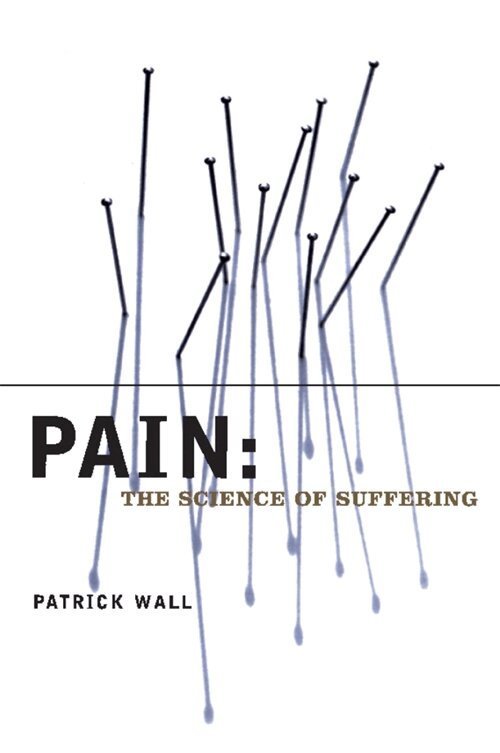
Pain is one of medicine's greatest mysteries. When farmer John Mitson caught his hand in a baler, he cut off his trapped hand and carried it to a neighbor. "Sheer survival and logic" was how he described it. "And strangely, I didn't feel any pain." How can this be? We're taught that pain is a warning message to be heeded at all costs, yet it can switch off in the most agonizing circumstances or switch on for no apparent reason. Many scientists, philosophers, and laypeople imagine pain to operate like a rigid, simple signaling system, as if a particular injury generates a fixed amount of pain that simply gets transmitted to the brain; yet this mechanistic model is woefully lacking in the face of the surprising facts about what people and animals do and experience when their bodies are damaged. Patrick Wall looks at these questions and sets his scientific account in a broad context, interweaving it with a wealth of fascinating and sometimes disturbing historical detail, such as famous characters who derived pleasure from pain, the unexpected reactions of injured people, the role of endorphins, and the power of placebo.He covers cures of pain, ranging from drugs and surgery, through relaxation techniques and exercise, to acupuncture, electrical nerve stimulation, and herbalism. Pain involves our state of mind, our social mores and beliefs, and our personal experiences and expectations. Stepping beyond the famous neurologic gate-control theory for which he is known, Wall shows that pain is a matter of behavior and its manifestation differs among individuals, situations, and cultures. "The way we deal with pain is an expression of individuality."
318 kr
Skickas inom 3-6 vardagar
Pain is one of medicine's greatest mysteries. When farmer John Mitson caught his hand in a baler, he cut off his trapped hand and carried it to a neighbor. "Sheer survival and logic" was how he described it. "And strangely, I didn't feel any pain." How can this be? We're taught that pain is a warning message to be heeded at all costs, yet it can switch off in the most agonizing circumstances or switch on for no apparent reason. Many scientists, philosophers, and laypeople imagine pain to operate like a rigid, simple signaling system, as if a particular injury generates a fixed amount of pain that simply gets transmitted to the brain; yet this mechanistic model is woefully lacking in the face of the surprising facts about what people and animals do and experience when their bodies are damaged. Patrick Wall looks at these questions and sets his scientific account in a broad context, interweaving it with a wealth of fascinating and sometimes disturbing historical detail, such as famous characters who derived pleasure from pain, the unexpected reactions of injured people, the role of endorphins, and the power of placebo.He covers cures of pain, ranging from drugs and surgery, through relaxation techniques and exercise, to acupuncture, electrical nerve stimulation, and herbalism. Pain involves our state of mind, our social mores and beliefs, and our personal experiences and expectations. Stepping beyond the famous neurologic gate-control theory for which he is known, Wall shows that pain is a matter of behavior and its manifestation differs among individuals, situations, and cultures. "The way we deal with pain is an expression of individuality."
621 kr
Skickas inom 3-6 vardagar
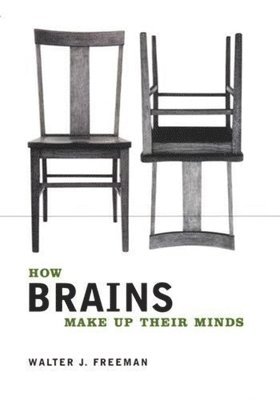
I think, therefore I am. The legendary pronouncement of philosopher Rene Descartes lingers as accepted wisdom in the Western world nearly four centuries after its author's death. But does thought really come first? Who actually runs the show: we, our thoughts, or the neurons firing within our brains? Walter J. Freeman explores how we control our behavior and make sense of the world around us. Avoiding determinism both in sociobiology, which proposes that persons' genes control their brains' functioning, and in neuroscience, which posits that their brains' disposition is molded by chemistry and environmental forces, Freeman charts a new course-one that gives individuals due credit and responsibility for their actions. Drawing upon his five decades of research in neuroscience, Freeman utilizes the latest advances in his field as well as perspectives from disciplines as diverse as mathematics, psychology, and philosophy to explicate how different human brains act in their chosen diverse ways.He clarifies the implications of brain imaging, by which neural activity can be observed during the course of normal movements, and shows how nonlinear dynamics reveals order within the fecund chaos of brain function.
519 kr
Skickas inom 3-6 vardagar
How much of sexual diversity is the result of nature versus nurture? Prevailing theories today lean heavily toward nature. Now a leading researcher in neuroscience and animal behavior shows how, in recent history, scientific claims about sex and gender differences have reflected the culture of the time. Although the conviction that genetics can explain everything is now widespread, the author demonstrates the interaction of culture and environment in the formation of behavioral traits and so provides an important corrective to popular notions of reductionism. Starting with a summary of sex and gender studies, Rogers explains the error of sex biasing, especially the once-assumed inferiority of women. She then addresses several modern studies and investigations, some of which assert that sex and gender differences are the product of genetic inheritance and hormones. Rogers uses laboratory evidence from studies of animals that help illustrate the biologically fluid properties of sex and gender. Sexing the Brain addresses a variety of topical questions: Are there sex differences in how we think and feel? Is language processed in different parts of the brain in men and women?Do social influences have a stronger influence on sexual behavior than sex hormone levels? Rogers concludes that "our biology does not bind us to remain the same...We have the ability to change, and the future of sex differences belongs to us."
1 890 kr
Skickas inom 3-6 vardagar
Igor Aleksander heads a major British team that has applied engineering principles to the understanding of the human brain and has built several pioneering machines, culminating in MAGNUS, which he calls a machine with imagination. When he asks it (in words) to produce an image of a banana that is blue with red spots, the image appears on the screen in seconds. The idea of such an apparently imaginative, even conscious machine seems heretical and its advocates are often accused of sensationalism, arrogance, or philosophical ignorance. Part of the problem, according to Aleksander, is that consciousness remains ill-defined. Interweaving anecdotes from his own life and research with imagined dialogues between historical figures-including Descartes, Locke, Hume, Kant, Wittgenstein, Francis Crick, and Steven Pinker-Aleksander leads readers toward an understanding of consciousness. He shows not only how the latest work with artificial neural systems suggests that an artificial form of consciousness is possible but also that its design would clarify many of the puzzles surrounding the murky concept of consciousness itself.The book also looks at the presentation of "self" in robots, the learning of language, and the nature of emotion, will, instinct, and feelings.
1 589 kr
Skickas inom 3-6 vardagar
Why do smokers claim that the first cigarette of the day is the best? What is the biological basis behind some heavy drinkers' belief that the "hair-of-the-dog" method alleviates the effects of a hangover? Why does marijuana seem to affect ones problem-solving capacity? Intoxicating Minds is, in the author's words, "a grand excavation of drug myth." Neither extolling nor condemning drug use, it is a story of scientific and artistic achievement, war and greed, empires and religions, and lessons for the future. Ciaran Regan looks at each class of drugs, describing the historical evolution of their use, explaining how they work within the brain's neurophysiology, and outlining the basic pharmacology of those substances. From a consideration of the effect of stimulants, such as caffeine and nicotine, and the reasons and consequences of their sudden popularity in the seventeenth century, the book moves to a discussion of more modern stimulants, such as cocaine and ecstasy. In addition, Regan explains how we process memory, the nature of thought disorders, and therapies for treating depression and schizophrenia.Regan then considers psychedelic drugs and their perceived mystical properties and traces the history of placebos to ancient civilizations. Finally, Intoxicating Minds considers the physical consequences of our co-evolution with drugs-how they have altered our very being-and offers a glimpse of the brave new world of drug therapies.
459 kr
Skickas inom 3-6 vardagar
Why do smokers claim that the first cigarette of the day is the best? What is the biological basis behind some heavy drinkers' belief that the "hair-of-the-dog" method alleviates the effects of a hangover? Why does marijuana seem to affect ones problem-solving capacity? Intoxicating Minds is, in the author's words, "a grand excavation of drug myth." Neither extolling nor condemning drug use, it is a story of scientific and artistic achievement, war and greed, empires and religions, and lessons for the future. Ciaran Regan looks at each class of drugs, describing the historical evolution of their use, explaining how they work within the brain's neurophysiology, and outlining the basic pharmacology of those substances. From a consideration of the effect of stimulants, such as caffeine and nicotine, and the reasons and consequences of their sudden popularity in the seventeenth century, the book moves to a discussion of more modern stimulants, such as cocaine and ecstasy. In addition, Regan explains how we process memory, the nature of thought disorders, and therapies for treating depression and schizophrenia.Regan then considers psychedelic drugs and their perceived mystical properties and traces the history of placebos to ancient civilizations. Finally, Intoxicating Minds considers the physical consequences of our co-evolution with drugs-how they have altered our very being-and offers a glimpse of the brave new world of drug therapies.
1 783 kr
Skickas inom 3-6 vardagar
Most of us remember where we were and what we were doing on September 11, 2001. Why do most experiences leave little trace while some-even terrible ordeals that people wish they could forget-leave memories that last a lifetime? That is the mystery at the heart of this book. Drawing on fascinating research and case studies, James McGaugh, a distinguished neuroscientist, reveals that the key to understanding how memories are created may well be understanding how they are lost. He shows that lasting memories are not stored instantly. Why the delay? The author explains how the slow consolidation of memory has important adaptive consequences. It allows physiological processes activated by experiences to regulate the strength of the memory of the experiences. Emotionally arousing experiences induce the release of stress hormones, which act on the brain to influence the consolidation of our memories of recent experience. These findings have important implications for the controversial issues of post-traumatic stress disorder and repressed memory syndrome.From the prescientific writings of William James to the animal studies of the memory-research pioneers Pavlov, Thorndike, and Tolman, to the latest research of psychologists and neurologists drawing on PET imaging studies of the brain and laboratory experiments involving a variety of drugs, this succinct book provides a wealth of information.
505 kr
Skickas inom 3-6 vardagar
Most of us remember where we were and what we were doing on September 11, 2001. Why do most experiences leave little trace while some-even terrible ordeals that people wish they could forget-leave memories that last a lifetime? That is the mystery at the heart of this book. Drawing on fascinating research and case studies, James McGaugh, a distinguished neuroscientist, reveals that the key to understanding how memories are created may well be understanding how they are lost. He shows that lasting memories are not stored instantly. Why the delay? The author explains how the slow consolidation of memory has important adaptive consequences. It allows physiological processes activated by experiences to regulate the strength of the memory of the experiences. Emotionally arousing experiences induce the release of stress hormones, which act on the brain to influence the consolidation of our memories of recent experience. These findings have important implications for the controversial issues of post-traumatic stress disorder and repressed memory syndrome.From the prescientific writings of William James to the animal studies of the memory-research pioneers Pavlov, Thorndike, and Tolman, to the latest research of psychologists and neurologists drawing on PET imaging studies of the brain and laboratory experiments involving a variety of drugs, this succinct book provides a wealth of information.
1 589 kr
Skickas inom 3-6 vardagar
Why do some people remain alert and vigorous at an age when others are declining mentally and physically? Does their apparent advantage have a biological basis, and, if so, could this success be transferred to others predisposed to age more quickly? If this is achievable, does brain aging then become the last obstacle to an extension of our useful life span? These are just some of the questions answered in this fascinating book by Lawrence Whalley, a researcher who specializes in the study of Alzheimer's disease. He relates that the brain may be able to compensate for its own aging since the loss of brain cells with age is not as extensive as once believed and that, if some surviving cells retain the capacity to replicate, there may be real prospects of reducing the worst effects of brain aging.In surveying the prospects of slowing or even preventing the worst effects of aging, Whalley looks at the development of the brain and how this is influenced by environmental factors such as diet and stress, the biological and psychological mechanisms of brain injury and disease, and the range of possible treatments and preventative measures, including gene therapy, silicon-neuron implants, virtual reality, and "intelligent environments." Throughout the book he relates the known facts about brain aging, as well as our many preconceptions. Reexamining older scientific studies, the author is able to show that though much of what we take for granted about the mental processes of the older person is not simple, we may indeed be able to alleviate the effects of mental deterioration--if not now, then in the future.
459 kr
Skickas inom 3-6 vardagar
Why do some people remain alert and vigorous at an age when others are declining mentally and physically? Does their apparent advantage have a biological basis, and, if so, could this success be transferred to others predisposed to age more quickly? If this is achievable, does brain aging then become the last obstacle to an extension of our useful life span? These are just some of the questions answered in this fascinating book by Lawrence Whalley, a researcher who specializes in the study of Alzheimer's disease. He relates that the brain may be able to compensate for its own aging since the loss of brain cells with age is not as extensive as once believed and that, if some surviving cells retain the capacity to replicate, there may be real prospects of reducing the worst effects of brain aging.In surveying the prospects of slowing or even preventing the worst effects of aging, Whalley looks at the development of the brain and how this is influenced by environmental factors such as diet and stress, the biological and psychological mechanisms of brain injury and disease, and the range of possible treatments and preventative measures, including gene therapy, silicon-neuron implants, virtual reality, and "intelligent environments." Throughout the book he relates the known facts about brain aging, as well as our many preconceptions. Reexamining older scientific studies, the author is able to show that though much of what we take for granted about the mental processes of the older person is not simple, we may indeed be able to alleviate the effects of mental deterioration--if not now, then in the future.