Patrick Wall – författare
Visar alla böcker från författaren Patrick Wall. Handla med fri frakt och snabb leverans.
8 produkter
8 produkter
223 kr
Skickas
Pain has many valuable functions. It can be a warning or force us to rest our bodies. Yet most ongoing chronic pain, such as unrelenting backache or headache, has no discernable cause and diminishes countless lives. Over the years a scientific revolution has taken place in chronic pain research and therapy. A major catalyst for this was the introduction of the ‘gate theory’ by Professor Ronald Melzack and Professor Patrick D. Wall, which argued that pain is a unified stream of experience generated by the brain, incorporating a whole host of psychological functions. Their now-classic book, with a new introduction taking in all the latest medical developments, examines every facet of pain: the psychological and clinical aspects, the physiological evidence, the major theories of pain and the developments in its control. The challenge in the twenty-first century is to look at how memories, personal and social expectations, genetics, gender, aging and stress patterns all play a role in pain, and how understanding this could lead to the relief of the suffering endured by millions.
1 697 kr
Skickas inom 3-6 vardagar
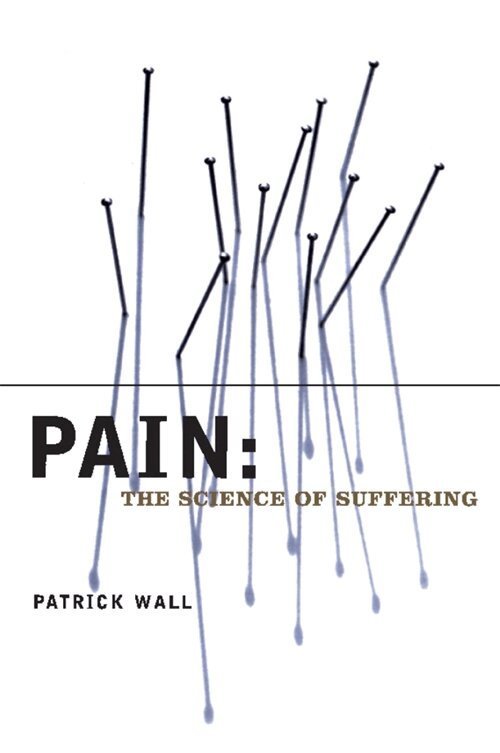
Pain is one of medicine's greatest mysteries. When farmer John Mitson caught his hand in a baler, he cut off his trapped hand and carried it to a neighbor. "Sheer survival and logic" was how he described it. "And strangely, I didn't feel any pain." How can this be? We're taught that pain is a warning message to be heeded at all costs, yet it can switch off in the most agonizing circumstances or switch on for no apparent reason. Many scientists, philosophers, and laypeople imagine pain to operate like a rigid, simple signaling system, as if a particular injury generates a fixed amount of pain that simply gets transmitted to the brain; yet this mechanistic model is woefully lacking in the face of the surprising facts about what people and animals do and experience when their bodies are damaged. Patrick Wall looks at these questions and sets his scientific account in a broad context, interweaving it with a wealth of fascinating and sometimes disturbing historical detail, such as famous characters who derived pleasure from pain, the unexpected reactions of injured people, the role of endorphins, and the power of placebo.He covers cures of pain, ranging from drugs and surgery, through relaxation techniques and exercise, to acupuncture, electrical nerve stimulation, and herbalism. Pain involves our state of mind, our social mores and beliefs, and our personal experiences and expectations. Stepping beyond the famous neurologic gate-control theory for which he is known, Wall shows that pain is a matter of behavior and its manifestation differs among individuals, situations, and cultures. "The way we deal with pain is an expression of individuality."
312 kr
Skickas inom 3-6 vardagar
Pain is one of medicine's greatest mysteries. When farmer John Mitson caught his hand in a baler, he cut off his trapped hand and carried it to a neighbor. "Sheer survival and logic" was how he described it. "And strangely, I didn't feel any pain." How can this be? We're taught that pain is a warning message to be heeded at all costs, yet it can switch off in the most agonizing circumstances or switch on for no apparent reason. Many scientists, philosophers, and laypeople imagine pain to operate like a rigid, simple signaling system, as if a particular injury generates a fixed amount of pain that simply gets transmitted to the brain; yet this mechanistic model is woefully lacking in the face of the surprising facts about what people and animals do and experience when their bodies are damaged. Patrick Wall looks at these questions and sets his scientific account in a broad context, interweaving it with a wealth of fascinating and sometimes disturbing historical detail, such as famous characters who derived pleasure from pain, the unexpected reactions of injured people, the role of endorphins, and the power of placebo.He covers cures of pain, ranging from drugs and surgery, through relaxation techniques and exercise, to acupuncture, electrical nerve stimulation, and herbalism. Pain involves our state of mind, our social mores and beliefs, and our personal experiences and expectations. Stepping beyond the famous neurologic gate-control theory for which he is known, Wall shows that pain is a matter of behavior and its manifestation differs among individuals, situations, and cultures. "The way we deal with pain is an expression of individuality."
1 324 kr
Skickas inom 3-6 vardagar
1 324 kr
Skickas inom 3-6 vardagar
1 324 kr
Skickas inom 3-6 vardagar
1 324 kr
Skickas inom 3-6 vardagar
1 324 kr
Skickas inom 3-6 vardagar