Middle East Urban Studies - Böcker
Visar alla böcker i serien Middle East Urban Studies. Handla med fri frakt och snabb leverans.
4 produkter
4 produkter
841 kr
Skickas inom 5-8 vardagar
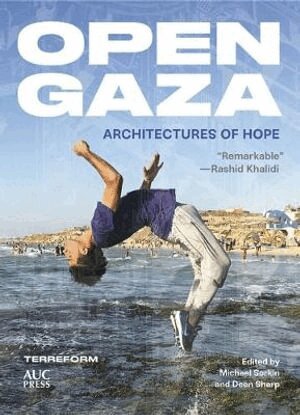
Cutting-edge analysis on how to improve life inside the Gaza Strip through architecture and design, illustrated in full-colorThe Gaza Strip is one of the most beleaguered environments on earth. Crammed into a space of 139 square miles (360 square kilometers), 1.8 million people live under an Israeli siege, enforcing conditions that continue to plummet to ever more unimaginable depths of degradation and despair. Gaza, however, is more than an endless encyclopedia of depressing statistics. It is also a place of fortitude, resistance, and imagination; a context in which inhabitants go to remarkable lengths to create the ordinary conditions of the everyday and to reject their exceptional status. Inspired by Gaza’s inhabitants, this book builds on the positive capabilities of Gazans. It brings together environmentalists, planners, activists, and scholars from Palestine and Israel, the US, the UK, India, and elsewhere to create hopeful interventions that imagine a better place for Gazans and Palestinians. Open Gaza engages the Gaza Strip within and beyond the logics of siege and warfare, it considers how life can be improved inside the limitations imposed by the Israeli blockade, and outside the idiocy of violence and warfare.Contributors AffiliationsSalem Al Qudwa, Harvard Divinity School and Harvard Kennedy School, Cambridge, USAHadeel Assali, Columbia University, USATareq Baconi, International Crisis Group, Brussels, BelgiumTeddy Cruz, University of California-San Diego, USAFonna Forman, University of California-San Diego, USAM. Christine Boyer, Princeton University, Princeton, USAAlberto Foyo, architect, New York, USANasser Golzari , Westminster University, London, UKYara Sharif, Westminster University, London, UKDenise Hoffman Brandt, City College of New York, USARomi Khosla, architect, New Delhi, IndiaCraig Konyk, Kean University, Union, NJ, USARafi Segal, Massachusetts Institute of Technology, Boston, USA Chris Mackey, Payette Architects, Boston, USAVyjayanthi V. Rao, Terreform, New York, USASara Roy, Harvard University, Cambridge, USAMahdi Sabbagh, architect, New York, USAMeghan McAllister, architect, San Francisco Bay Area, USADeen Sharp, London School of Economics, UKMalkit Shoshan, Harvard University, Cambridge, USAPietro Stefanini, University of Edinburgh, ScotlandMichael Sorkin (1948–2020) , City University of New York, USAHelga Tawil-Souri, New York University, USAOmar Yousef, Al-Quds University, Jerusalem Fadi Shayya, The University of Manchester, UK
557 kr
Skickas inom 5-8 vardagar
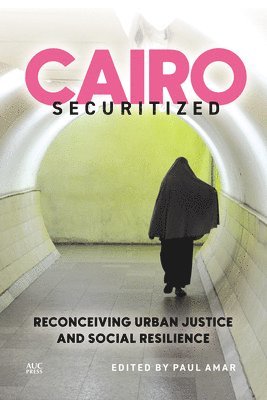
"A compendium of profound insights, garnered in all their granularity from varied aspects of Cairo's rich social life, which keeps the reader engrossed to the last page."—Contemporary SociologyA rich examination of the securitization of the everyday lives of the citizens of Cairo and how to build a more equitable urban orderUntil the year 2000, Cairo had been a model megacity, relatively crime free, safe, and public facing. It featured a thriving public culture and vibrant street life. In recent decades, however, the Egyptian state has accelerated a wholesale dismantlement of public education and public sector jobs and reversed the modest land reforms of the Nasser era. As a result, the vast majority of Cairo’s people have been forcibly deprived of their social rights, social goods, and educational capital.Eschewing the traditional focus on top-down regime and state security, the contributors to this volume, who represent a wide array of academics, activists, artists, and journalists, explore how repressive policies affect the everyday lives of citizens. They show the ways in which urban security crises are politically fashioned and do not emanate from the urban social fabric on their own: city crime, violence, and fear are created by specific means of extraction, production, and control.Another kind of city can live again. But how? By tackling a range of issues, including public health, transportation, labor safety, and housing and property distribution, Cairo Securitized unsettles simplistic binaries of thug and police, public versus private, and slum versus enclave, and proposes compelling new ways in which securitizing processes can be reversed, reengineered, and replaced with a participatory and equitable urban order.Contributors:Sara Soumaya Abed African Leadership Centre, Kings College London Zeinab Abul-Magd Oberlin College, USAMohamed Ahmed Political Scientist and historian, Cairo Egypt Rania Ahmed Independent Researcher, Cairo EgyptNicholas Simcik Arese University of Cambridge, UKAhmed Awadalla University of Strathclyde, Glasgow, UKAhmad Borham The American University in Cairo, Cairo EgyptMiguel A. Fuentes Carreño University of California, Santa Barbara, USARoberta Duffield Scholar on urbanism, public space, Cairo EgyptMomen El-Husseiny The American University in Cairo, Cairo EgyptMohamed Elmeshad SOAS, London UK Ifdal Elsaket Netherlands-Flemish Institute, Cairo Egypt Mohamed Elshahed Independent Writer and Curator, Mexico CityAmy Fallas University of California Santa Barbara, USATina Guirguis University of California, Santa Barbara, USAElena Habersky The American University in Cairo, Cairo EgyptHanan Hammad Texas Christian University, USAHatem Hassan Impact Justice, Pittsburgh, USAAmira Hetaba Federal Government of Lower Austria, AustriaDeena Khalil The American University in Cairo, Cairo EgyptOmnia Khalil City University of New York, USA Sabrina Lilleby University of Texas, Austin, USA Paul Miranda Nonviolent Peaceforce, South Mosul, IraqMostafa Mohie American University in Cairo, Cairo EgyptLaura Monfleur University François-Rabelais, Tours, FranceAya Nassar Royal Holloway, University of London, UKNora Noralla human rights researcher, Berlin, GermanyAly El Reggal Scuola Normale Superiore, Florence ItalyAfsaneh Rigot Harvard University, Cambridge USA Yahia Saleh Malmö University, SwedenBassem al-Samragy political analyst at the International Criminal Court, The Hague, The NetherlandsYahia Shawkat Technische Universität Berlin, Germany Maïa Sinno Géographie Cités Lab, CNRS / Sorbonne University, Paris FranceMark Westmoreland Leiden University, The Netherlands
1 052 kr
Skickas inom 5-8 vardagar
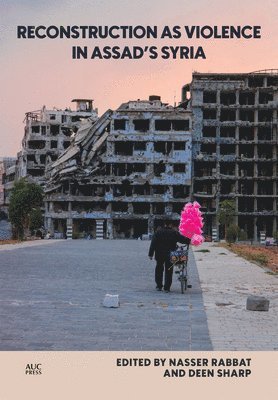
A sustained critique of postwar reconstruction in Syria as a politically neutral process In 2011, emboldened by the Arab Spring, the Syrians rose up against their government. The Syrian regime used violence to suppress the protests, so that what began as pro-democracy protests eventually morphed into a civil war with heavy outside intervention. Today, the Assad regime has fallen, but large parts of the country lie in ruins, millions of Syrians are displaced, and the economy is in freefall. Reconstruction as Violence delves into the complex interplay of post-conflict reconstruction in Syria, challenging the traditionally held dichotomy between the end of violence and the commencement of rebuilding.The contributors to this volume—architects, urbanists, geographers, and historians—employ critical concepts such as urbicide, domicide, and “civilian crisis architecture” to argue against the conventional theoretical frameworks that support a neat separation of phases. They illustrate how reconstruction often extends the dynamics of conflict into the urban and social realms, suggesting that the built environment becomes a battleground for further violence. They emphasize the importance of acknowledging the historical, economic, societal, legal, and bureaucratic contexts that shape reconstruction efforts, arguing for initiatives that prioritize equity, inclusivity, and community participation.Reconstruction as Violence starkly underscores the authors’ stance that to overlook any of these dimensions, or to disengage from the reconstruction process altogether, represents a political choice with potentially detrimental effects on Syria and beyond in the Arab world, where countries like Palestine, Yemen, Libya, Iraq, Lebanon, and Sudan are undergoing similar cycles of destruction and rebuilding. It calls for a reimagined approach to reconstruction, one that fosters peace, resilience, and social justice in post-conflict societies.Contributors:Sawsan Abou Zainedin, Madaniya, London, UKAmmar Azzouz, University of Oxford, UKValérie Clerc, Institut de Recherche pour le Développement, FranceEmma Katherine DiNapoli, human rights lawyer, London, UKOmar Ferwati, Goldsmiths, University of London, UKRim Lababidi, architect and independent scholar, Ohio, USAWendy Pullan, University of Cambridge, UKNasser Rabbat, Massachusetts Institute of Technology, Cambridge, MA, USAHashim Sarkis, Massachusetts Institute of Technology, Cambridge, MA, USADeen Sharp, London School of Economics, UKHeghnar Watenpaugh, University of California Davis, CA, USA
557 kr
Skickas inom 5-8 vardagar
"A compendium of profound insights, garnered in all their granularity from varied aspects of Cairo's rich social life, which keeps the reader engrossed to the last page."—Contemporary SociologyA rich examination of the securitization of the everyday lives of the citizens of Cairo and how to build a more equitable urban orderUntil the year 2000, Cairo had been a model megacity, relatively crime free, safe, and public facing. It featured a thriving public culture and vibrant street life. In recent decades, however, the Egyptian state has accelerated a wholesale dismantlement of public education and public sector jobs and reversed the modest land reforms of the Nasser era. As a result, the vast majority of Cairo’s people have been forcibly deprived of their social rights, social goods, and educational capital.Eschewing the traditional focus on top-down regime and state security, the contributors to this volume, who represent a wide array of academics, activists, artists, and journalists, explore how repressive policies affect the everyday lives of citizens. They show the ways in which urban security crises are politically fashioned and do not emanate from the urban social fabric on their own: city crime, violence, and fear are created by specific means of extraction, production, and control.Another kind of city can live again. But how? By tackling a range of issues, including public health, transportation, labor safety, and housing and property distribution, Cairo Securitized unsettles simplistic binaries of thug and police, public versus private, and slum versus enclave, and proposes compelling new ways in which securitizing processes can be reversed, reengineered, and replaced with a participatory and equitable urban order.Contributors:Sara Soumaya Abed African Leadership Centre, Kings College London Zeinab Abul-Magd Oberlin College, USAMohamed Ahmed Political Scientist and historian, Cairo Egypt Rania Ahmed Independent Researcher, Cairo EgyptNicholas Simcik Arese University of Cambridge, UKAhmed Awadalla University of Strathclyde, Glasgow, UKAhmad Borham The American University in Cairo, Cairo EgyptMiguel A. Fuentes Carreño University of California, Santa Barbara, USARoberta Duffield Scholar on urbanism, public space, Cairo EgyptMomen El-Husseiny The American University in Cairo, Cairo EgyptMohamed Elmeshad SOAS, London UK Ifdal Elsaket Netherlands-Flemish Institute, Cairo Egypt Mohamed Elshahed Independent Writer and Curator, Mexico CityAmy Fallas University of California Santa Barbara, USATina Guirguis University of California, Santa Barbara, USAElena Habersky The American University in Cairo, Cairo EgyptHanan Hammad Texas Christian University, USAHatem Hassan Impact Justice, Pittsburgh, USAAmira Hetaba Federal Government of Lower Austria, AustriaDeena Khalil The American University in Cairo, Cairo EgyptOmnia Khalil City University of New York, USA Sabrina Lilleby University of Texas, Austin, USA Paul Miranda Nonviolent Peaceforce, South Mosul, IraqMostafa Mohie American University in Cairo, Cairo EgyptLaura Monfleur University François-Rabelais, Tours, FranceAya Nassar Royal Holloway, University of London, UKNora Noralla human rights researcher, Berlin, GermanyAly El Reggal Scuola Normale Superiore, Florence ItalyAfsaneh Rigot Harvard University, Cambridge USA Yahia Saleh Malmö University, SwedenBassem al-Samragy political analyst at the International Criminal Court, The Hague, The NetherlandsYahia Shawkat Technische Universität Berlin, Germany Maïa Sinno Géographie Cités Lab, CNRS / Sorbonne University, Paris FranceMark Westmoreland Leiden University, The Netherlands