Midwestern History and Culture - Böcker
Visar alla böcker i serien Midwestern History and Culture. Handla med fri frakt och snabb leverans.
11 produkter
11 produkter
200 kr
Skickas inom 10-15 vardagar
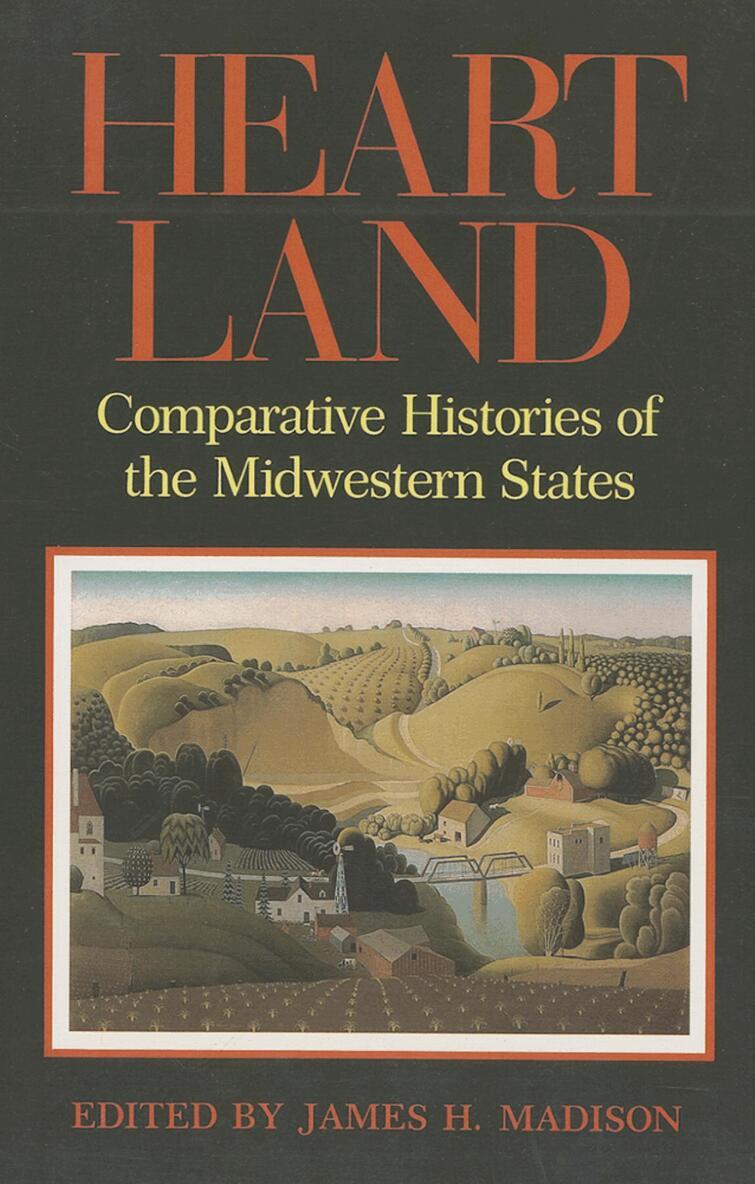
" . . . an impressive collection of essays . . . gives as clear a picture of the Midwest as a whole as one is likely to get." —Journal of American History" . . . excellent insight into how and why the midwest ticks so well in a unique beat of its own." —South Bend Tribune"[Madison] can take a bow for a job well done." —Indianapolis News"I found Heartland to be a treasure. Had I turned a dog-ear each time I read something worth remembering, the book would be in tatters. . . . a wonderful companion." —Myron A. Marty, St. Louis Post-Dispatch"An ambitious book, full of insight, which provides a useful first step in trying to understand that elusive entity—the Midwest." —Clifford E. Clark, Jr., Minnesota History" . . . strong and interestingly written . . . " —Indianapolis Star" . . . should be of interest to the serious reader of history who is curious about the Midwest, its origins, its development and its constituent states." —Northwest Ohio Quarterly" . . . these essays are the stuff of excellent and readable intellectual history . . . " —History" . . . a successful achievement. Heartland is an enjoyable book . . . " —Great Plains Quarterly"Because this book has the capacity to affect one's thinking, it deserves to be read. It may even persuade some readers to discard the term Middle West." —Richard S. Kirkendall, Gateway Heritage"Heartland is an excellent presentation, in summary, of the history and background of the 12 Midwestern states." —Journal of the WestTo the cultural czars of the two coasts, America's heartland is frequently depicted as an amorphous, undifferentiated mass of land and people. Twelve experts examine individual states of the Midwest, examining the origins and nature of the unique midwestern cultural phenomena: Illinois, Indiana, Iowa, Kansas, Michigan, Minnesota, Missouri, Nebraska, North Dakota, Ohio, South Dakota, and Wisconsin.
269 kr
Skickas inom 10-15 vardagar
"Recommended for all who want to learn about the origins of the contemporary urban crisis." —Library JournalTeaford writes a definitive history of the transformation of "America's heartland" into the "Rust Belt," chronicling the development of the cities of the industrial Midwest as they challenged the urban supremacy of the East, from their heyday to the trying times of the 1970s and '80s. The early part of this century brought wealth and promise to the heartland: automobile production made Detroit a boomtown, and automobile-related industries enriched communities; Frank Lloyd Wright and the Prairie School of architects asserted the Midwest's aesthetic independence; Sherwood Anderson and Carl Sandburg established Chicago as a literary mecca; Jane Addams made the Illinois metropolis an urban laboratory for experiments in social justice. Soon, however, emerging Sunbelt cities began to rob such cities as Cincinnati, Saint Louis, and Chicago of their distinction as boom areas, foreshadowing urban crisis.
248 kr
Skickas inom 10-15 vardagar
" . . . an excellent introduction to a complex subject. Anyone interested in the Midwest or in women's history will find it a valuable resource." —Agricultural History" . . . the volume as a whole invigorates the field of midwestern history." —Wisconsin Magazine of History" . . . examines four centuries of Midwestern women's history, including urban and rural, frontier settlers and American Indians, Mexican and European migrants. The book mixes telling anecdotes with scholarly research." —Indianapolis StarWriting about four centuries of midwestern women's history, including urban, rural, and frontier women, Native Americans, African Americans, Mexicanas, as well as European migrants, essayists discuss ways midwestern women's lives resemble those women of other regions and ways in which their lives are distinctive. By addressing a broad range of questions about the lives of midwestern women this volume encourages further research of this neglected but important group. The volume also includes a lengthy bibliography.
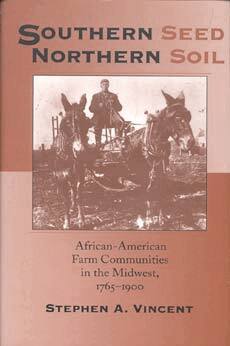
Southern Seed, Northern Soil
African-American Farm Communities in the Midwest, 1765-1900
Häftad, Engelska, 2002
241 kr
Skickas inom 10-15 vardagar
Southern Seed, Northern Soil captures the exceptional history of the Beech and Roberts settlements, two African-American and mixed-race farming communities on the Indiana frontier in the 1830s. Stephen Vincent analyzes the founders' backgrounds as a distinctive free people of color from the Old South. He traces the migration that culminated in the founding of the two communities. He follows the settlements' transformations through the pioneer and Civil War eras, and their gradual transition to commercial farming in the late 19th century. The Beech and Roberts story is at once part of and distinct from mainstream African-American history. Like other black Americans, the residents of these two communities had to struggle constantly to achieve freedom, autonomy, and economic well-being, yet they were able to defy the odds and thrive over several generations. Building on their advantages as late-18th-century landowners, they took root on the frontier and ultimately paved the way for their descendants' climb into the urban middle class.
283 kr
Skickas inom 10-15 vardagar
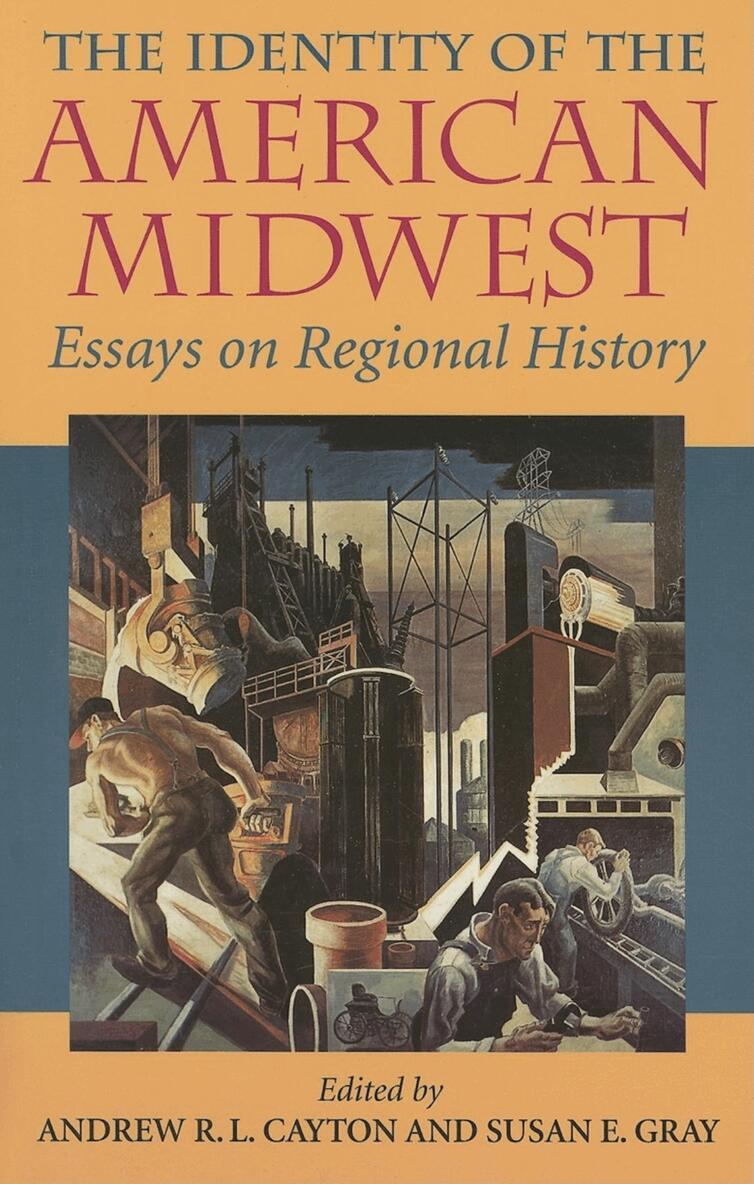
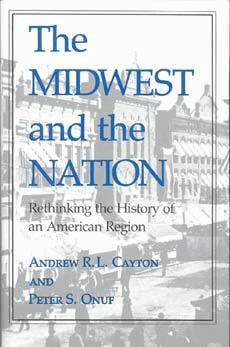
In a series of often highly personal essays, this book considers the question of regional identity as a useful way of thinking about the history of the American Midwest. The contributors begin with the assumption that Midwesterners have never been as consciously regional as their fellow Americans, east, south, and west. They note the particular absence of the Midwest from the recent revival of interest in American regionalism among both scholars and journalists. Drawing on personal experiences as well as a wide variety of scholarship, the authors consider what it means to be from the Midwest and why Midwesterners have traditionally been less assertive about their regional identity than other Americans.
448 kr
Skickas inom 10-15 vardagar
"Cayton and Onuf have tried to recapture a central place for region in our thinking while, at the same time, incorporating into their analysis the latest scholarship on gender, political behavior, etc. Theirs is a fine blending of the old and the new: old scholarship and new directions." —Malcolm J. Rohrbough"This is an ambitious work that . . . truly beongs on the 'must do' reading list of all midwestern and American historians." —American Historical Review" . . . an impressive interpretive work that will command the attention of regional historians and national scholars alike." —Illinois Historical Journal" . . . an excellent extended historiographic essay that seeks not only to locate the significance of the region created by the early land ordinance but also to raise issues for the historical examination of other regions of the country." —South Dakota History"What makes this book especially interesting and valuable is that it is informed by the post-modern scholar's view that knowledge can never be objective and eternally true; rather, it is subjective and socially constructed, shaped by the political, social, intellectual, and economic environments in which it is formed." —Western Illinois Regional Studies"The book's review of scholarship about the region is exhaustive, as well as brisk and lucid." —American Studies International" . . . a rigorous intellecutal analysis of the region's most important historiography." —Gateway Heritage" . . . an excellent book . . . " —The Annals of Iowa"What is impressive about this densely written work is the number of secondary works incorporated into the text and the importance of the authors' thesis of the considerable influence of happenings in the Midwest of the nineteenth century." —North Dakota History"There is . . . much to be praised in this book, and it will be frequently used and discussed by scholars of the early Midwest." —Journal of American History
345 kr
Skickas inom 10-15 vardagar
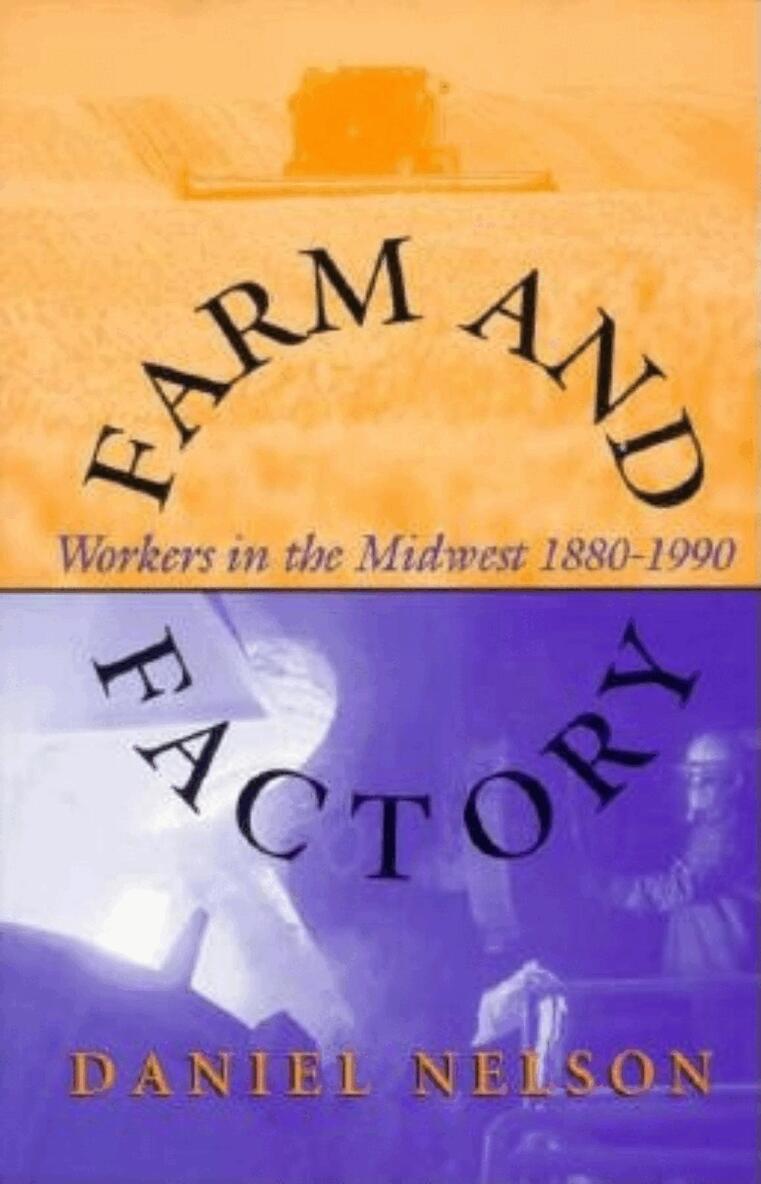
"Nelson . . . [is] one of the country's leading labor scholars. . . . [His] work provides an invaluable . . . guide to understanding a critical region . . . ." —Ohio History". . . I learned quite a lot from reading Farm and Factory, and this will certainly be the case for all who pick up this valuable and informative book." —Minnesota History". . . a valuable source for anyone concerned with regional and national tendencies in labor relations and ecomomic change over the last century." —American Political Science Review". . . a useful and well written synthesis of labor history in the Midwest in the period between 1880 and 1990." —Labor History". . . Nelson's work is most impressive in both its scope and depth. . . . a long-overdue study of the Midwest as a region distinct and important in the history of American labor." —Northwest Ohio Quarterly". . . a richly textured and much needed regional overview." —Journal of the West". . . a well written synthesis useful for classroom assignment in regional and social history. It is also a good starting point for a discussion of the future of the midwestern economy." —Wisconsin Magazine of History" . . . a work of superior scholarship [that] makes an original and important contribution to the field." —Nancy Gabin"A useful source for the demographic and economic dynamics of the Midwest and a good starting point for entering the voluminous secondary literature on the nation's heartland." —The Journal of American History". . . it provides an insightful, wide-ranging look at work and workers in the Midwest. It will certainly be a basic resource on regional history for years to come, as well as a book that adds to our broader understanding of the nation's labor and economic history." —Indiana Magazine of History"Solidly researched and eloquently written, Nelson's work will long occupy well-deserved status as a redefinition of traditional midwestern history." —Illinois Historical Journal"The great strength of Nelson's book lies in its up-to-date synthesis of various social history literatures . . . the study forms an exemplary American labor history." —Michigan Historical Review"The writing is a model of clarity and economy; the examples are well chosen and the sources are complete. Nelson has presented a blueprint for a new way to think about and present labor history." —Agricultural History"Farm and Factory deserves to take a place among the most respected books consulted by students of midwestern history" —The Annals of IowaDaniel Nelson illuminates the importance of the Midwest in U.S. labor history.
Emerging Midwest
Upland Southerners and the Political Culture of the Old Northwest, 1787–1861
Inbunden, Engelska, 1996
448 kr
Skickas inom 10-15 vardagar
". . . agile, ambitious, and complex . . ." —The Journal of Southern History"Etcheson adds a fresh dimension to the history of the Old Northwest by examining the way in which Upland Southerners' regional heritage affected the evolution of political culture in Ohio, Indiana, and Illinois." —Choice" . . . not only a political account, but also a cultural survey. The book is clearly written, free of jargon, and makes excellent use of both primary and secondary sources. . . . an outstanding interpretation of the motives and acts of a significant portion of the population of a significant portion of the country." —Lucy Jayne Kamau, H-Net H-WEST Digest"Impressively researched, intelligently organized, and clearly written. . . . [this volume] is the first in-depth study of political culture in the Old Northwest in the early nineteenth century, and it underlines the significance of persistent regional identities in the U.S." —Andrew R. L. Cayton"Well researched and is written in a clear, engaging stylean excellent study of the origins and infulence of regional identity. It should gain a wide readership among students of antebellum America." —The North Carolina Historical Review". . . an impressive and exhaustive job of research in primary materials, including letters, editorials, petitions, speeches, diaries, and memoirs. She pieces together these highly subjective accounts into an objective explanation of midwesterners' views." —Indiana Magazine of History"In this well-written and carefully researched volume, Nicole Etcheson develops the role of Upland Southerners in the Ohio valley as they helped forge the political culture and public stance of that part of the Old Northwest." —Michigan Historical Review". . . an outstanding contribution to our understanding of the political and cultural development of the the Old Northwest. This volume should be consulted by all who are interested in the region's history." —Wisconsin Magazine of History". . . a thought-provoking volume that should be read by all scholars who study the development of the Midwest." —Illinois Historical JournalThe process of defining the Midwest began when Northern and Southern migrants began to identify themselves as Westerners. Nicole Etcheson examines the tensions between a developing Midwestern identity and residual regional loyalties, a process which mirrored the nation-building and national disintegration in the years between the Revolution and the Civil War.
River of Enterprise
The Commercial Origins of Regional Identity in the Ohio Valley, 1790-1850
Inbunden, Engelska, 2002
310 kr
Skickas inom 10-15 vardagar
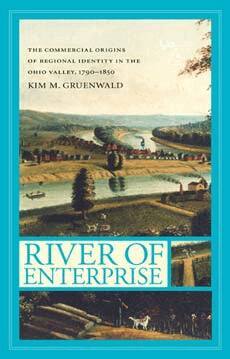
"Gruenwald's book will make the same contribution to historical knowledge of the Ohio Valley as Lewis Atherton's Frontier Merchant did for our understanding of the mercantile Midwest in the mid-nineteenth century. . . . a finely crafted narrative that lets the reader understand that the Ohio River always served more as an artery, that is, a river of commerce, than a dividing line or boundary." —R. Douglas Hurt, author of The Ohio FrontierRiver of Enterprise explores the role the Ohio played in the lives of three generations of settlers from the river's headwaters at Pittsburgh, Pennsylvania, to the falls at Louisville, Kentucky. Part One examines the strategies of colonists who coveted lands "Across the Mountains" as space to be conquered. Part Two traces the emergence of a new region in a valley transformed by commerce as the Ohio River became the artery of movement in "the Western Country." Part Three reveals how relations between neighbors across the river cooled as residents of "the Buckeye State" came to regard the river as the boundary between North and South. From 1790 to 1830, the Ohio River nurtured a regional identity as Americans strove to create an empire based on the ties of commerce in frontier Ohio and Kentucky, and the backcountry of Pennsylvania and Virginia. The book studies the local, regional, and national connections created by merchants by tracing the business world of the Woodbridge family of Marietta, Ohio. Only as regional commercial concerns gave way to statewide industrial concerns, and as artificial transportation networks such as canals and railroads supplanted the river, did those living to the north define the Ohio as a boundary.
From Prairie Farmer to Entrepreneur
The Transformation of Midwestern Agriculture
Inbunden, Engelska, 2005
702 kr
Skickas inom 10-15 vardagar
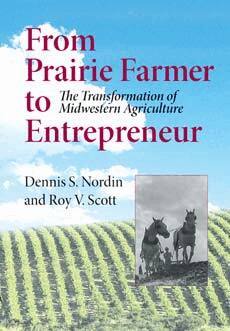
"Anyone who wants a thorough understanding of the history of the region must read this book." —R. Douglas Hurt, author of Problems of Plenty: The AmericanFarmer in the Twentieth CenturyThis meticulously researched book tells the story of Midwestern agriculture during a period of epochal change in farm technology, farm management, and farm life. The hard work, tight communities, and values that had characterized the family farm were replaced by large corporate enterprises with massive acreages, high-tech methods, and global outlooks. While many decry this change as loss, Nordin and Scott find a net gain. This is their richly detailed account of one of the great transformations in American life.
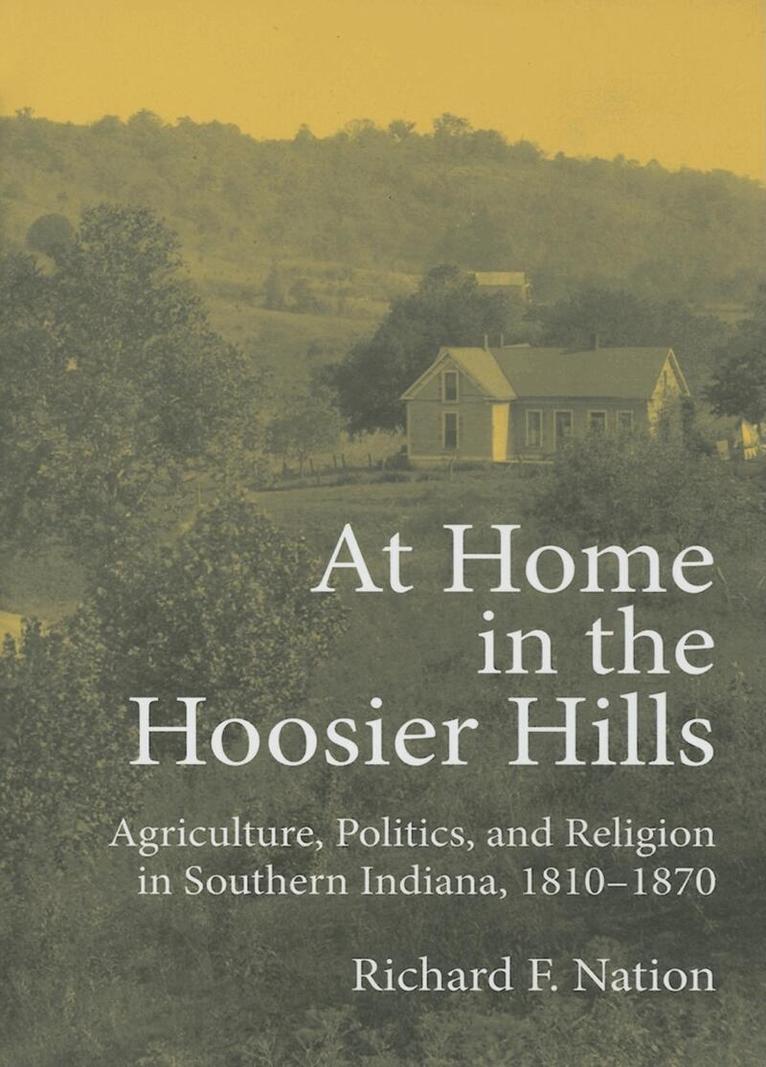
At Home in the Hoosier Hills
Agriculture, Politics, and Religion in Southern Indiana, 1810-1870
Inbunden, Engelska, 2005
393 kr
Skickas inom 10-15 vardagar
This book explores the lives and worldviews of Indiana's southern hill-country residents during much of the 19th century. Focusing on local institutions, political, economic, and religious, it gives voice to the plain farmers of the region and reveals the world as they saw it. For them, faith in local institutions reflected a distrust of distant markets and politicians. Localism saw its expression in the Democratic Party's anti-federalist strain, in economic practices such as "safety-first" farming which focused on taking care of the family first, and in non-perfectionist Christianity. Localism was both a means of resisting changes and the basis of a worldview that helped Hoosiers of the hill country negotiate these changes.