• Fri frakt över 249 kr
  • •
  • Snabba leveranser
  • •
  • Billiga böcker
Kundservice

Du är på sajten för privatpersoner.

Företag, bibliotek eller offentlig verksamhet?

Du handlar på classic.bokus.com, där alla dina funktioner finns intakta.
Till classic.bokus.com
Bokus logotyp. Gå till startsidan.
  • Erbjudanden
  • Nyheter
  • Student
  • Topplistor
  • Barn & ungdom
  • Bokus Play
  • E-böcker
  • Pocketböcker
  • Spel & pussel

10% rabatt på allt med kod: NYSTART10 →

Sidfot

Mina sidor

    Hjälp

    • Kundservice
    • Vanliga frågor och svar
    • Frakt och leverans
    • Retur vid ångerrätt
    • Reklamera vara
    • Betalning
    • Köpvillkor
    • Allmänna villkor
    • Information om webbplatsens tillgänglighet

    Om Bokus

    • Om oss
    • Pressrum
    • För studenter
    • För företag
    • För bibliotek och offentlig verksamhet
    • För leverantörer
    • Hållbarhet

    Populärt

    • Aktuella erbjudanden
    • Presentkort
    • Studentlitteratur
    • Nya böcker
    • Topplistor
    • Signerade böcker
    • Engelska böcker

    Inspiration

    • Boktips
    • BookTok
    • Populära bokserier
    • Barnbokskaraktärer
    • Populära författare
    Logotyp för Bokus
    Följ oss på Facebook (extern länk)Följ oss på Instagram (extern länk)Följ oss på YouTube (extern länk)Följ oss på TikTok (extern länk)
    bokus @ CookiesAnpassa cookiesIntegritetspolicyKöpvillkor
    Till Citymail hemsida (extern länk)Till Budbee hemsida (extern länk)Till Postnord hemsida (extern länk)Till Schenker hemsida (extern länk)Till Early Bird hemsida (extern länk)Till Walleys hemsida (extern länk)
    1. Historia och arkeologi
    2. Historia
    3. Amerikas historia

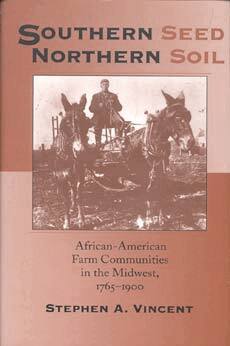
    Southern Seed, Northern Soil

    African-American Farm Communities in the Midwest, 1765-1900

    AvStephen A. Vincent

    Häftad, Engelska, 2002

    Del i serien Midwestern History and Culture

    251 kr

    Beställningsvara. Skickas inom 10-15 vardagar. Fri frakt över 249 kr.

    Beskrivning

    Southern Seed, Northern Soil captures the exceptional history of the Beech and Roberts settlements, two African-American and mixed-race farming communities on the Indiana frontier in the 1830s. Stephen Vincent analyzes the founders' backgrounds as a distinctive free people of color from the Old South. He traces the migration that culminated in the founding of the two communities. He follows the settlements' transformations through the pioneer and Civil War eras, and their gradual transition to commercial farming in the late 19th century. The Beech and Roberts story is at once part of and distinct from mainstream African-American history. Like other black Americans, the residents of these two communities had to struggle constantly to achieve freedom, autonomy, and economic well-being, yet they were able to defy the odds and thrive over several generations. Building on their advantages as late-18th-century landowners, they took root on the frontier and ultimately paved the way for their descendants' climb into the urban middle class.

    Produktinformation

    • Utgivningsdatum:2002-08-09
    • Mått:156 x 235 x 14 mm
    • Vikt:458 g
    • Format:Häftad
    • Språk:Engelska
    • Serie:Midwestern History and Culture
    • Antal sidor:272
    • Förlag:Indiana University Press
    • ISBN:9780253213310

    Utforska kategorier

    • Amerikas historia inom Historia och arkeologi
    • Sociala grupper och identitet inom Samhälle och politik
    • Etnicitet inom Samhälle och politik

    Mer om författaren

    Stephen A. Vincent is Associate Professor of History at the University of Wisconsin-Whitewater.

    Recensioner i media

    "Vincent's book reflects a trend in US studies—plowing new interpretive ground—to ensure more inclusive ethnic and gender histories, with traditional interpretations revised. Vincent (Univ. of Wisconsin—Whitewater) reveals how African American families moved from Virginia and North Carolina to create mixed race communities (Beech and Roberts) and homesteads in frontier Indiana in the 1830s. In the South before migrating, these settlers were freed people and had been for successive generations. Land in Indiana provided them greater freedom, which few other 19th-century African Americans experienced. As they built community, they made deliberate efforts to marry others, with common heritages. . . Many avoided darker-skinned African Americans with slave heritages [for] they often perceived themselves as a distinct if not unique African-descended people. Although now in decline, these communities and farms share a heritage that passed from one generation to another, and that heritage remains vibrant through family gatherings and annual reunions. For contrast, readers might peruse Joe William Trotter Jr.'s River Jordan: African American Urban Life in the Ohio Valley (CH, Jul'98). Southern Seed is for those with interests in ethnic, sociocultural, family, or economic history. Maps; photographs; appendix; notes. All levels."—P. D. Travis, Texas Woman's University, Choice, September 2000"Vincent's book reflects a trend in US studies—'plowing' new interpretive ground—to ensure more inclusive ethnic and gender histories, with traditional interpretations revised.September 2000"—Choice

    Innehållsförteckning

    • AcknowledgmentsIntroduction1.Southern Origins, ca. 1760-18302.Migration to the Frontier, ca. 1820-18403.Pioneer Life, ca. 1830-18504.From Frontier to Mature Farm Settlements, 1850-18705.Settlements in Decline, 1870-1900ConclusionAppendix: The Southern Origins of 1840 Beech and Roberts Household HeadsNotesIndex