New Cultural History of Music – serie
Visar alla böcker i serien New Cultural History of Music. Handla med fri frakt och snabb leverans.
13 produkter
13 produkter
876 kr
Skickas inom 5-8 vardagar
Between 1780 and 1850, the growing prominence of female singers in Britain's professional and amateur spheres opened a fraught discourse about women's engagement with musical culture. Protestant evangelical gender ideology framed the powerful, well-trained, and expressive female voice as a sign of inner moral corruption, while more restrained and delicate vocal styles were seen as indicative of the performer's virtuous femininity. Yet far from everyone was of this persuasion, and those from alternative class and religious milieux responded in more affirmative ways to the sound of professional female voices. The meanings listeners ascribed to women's voices reflect crucial developments in the musical world of the period, such as the popularity of particular genres with audiences of certain social backgrounds, and the reasons underpinning the development of prevalent types of nineteenth-century professional female vocality.Sounding Feminine traces the development of attitudes towards the female voice that have decisively shaped modern British society and culture. Arguing for the importance of the aural dimension of the past, author David Kennerley draws from a variety of fields-including sound studies, sensory histories, and gender theory-to examine how audiences heard different kinds of femininities in the voices of British female singers. Sounding Feminine explores the intense divisions over the "correct" use of the female voice, and the intricate links between gender, nationality, class, and religion in ascribing status, purpose, and morality to female singing. Through this lens, Kennerley also explores the formation of British middle-class identities and the cultural impact of the evangelical revival-deepening our understanding of this period of transformational change in British culture.
426 kr
Skickas inom 5-8 vardagar
Music, Piety, and Propaganda: The Soundscapes of Counter-Reformation Bavaria explores the nature of sound as a powerful yet ambivalent force in the religious struggles that permeated Germany during the Counter-Reformation. Author Alexander J. Fisher goes beyond a musicological treatment of composers, styles, and genres to examine how music, and more broadly sound itself, shaped the aural landscape of Bavaria as the duchy emerged as a militant Catholic bulwark. Fisher focuses particularly on the ways in which sound--including bell-ringing, gunfire, and popular song, as well as cultivated polyphony--not only was deployed by Catholic secular and clerical elites to shape the religious identities of Bavarian subjects, but also carried the potential to challenge and undermine confessional boundaries. Surviving literature, archival documents, and music illustrate the ways in which Bavarian authorities and their allies in the Catholic clergy and orders deployed sound to underline crucial theological differences with their Protestant antagonists, notably the cults of the Virgin Mary, the Eucharist, and the saints. Official and popular rituals like divine worship, processions, and pilgrimages all featured distinctive sounds and music that shaped and reflected an emerging Catholic identity. Although officials imposed a severe regime of religious surveillance, the Catholic state's dominance of the soundscape was hardly assured. Fisher traces archival sources that show the resilience of Protestant vernacular song in Bavaria, the dissemination and performance of forbidden, anti-Catholic songs, the presence of Lutheran chorales in nominally Catholic church services into the late 16th century, and the persistence of popular "noise" more generally. Music, Piety, and Propaganda thus reveals historical, theological, and cultural issues of the period through the piercing dimension of its sounds, bringing into focus the import of sound as a strategic cultural tool with significant impact on the flow of history.
What the Ballad Knows
The Ballad Genre, Memory Culture, and German Nationalism
Inbunden, Engelska, 2022
1 040 kr
Skickas inom 5-8 vardagar
Over the course of the 19th century, ballads proliferated in German-speaking Europe in a truly remarkable range of contexts. Audiences were of course likely encounter balladry in the volumes of Goethe and Schiller, in various anthologies or illustrated editions. But they were just as likely to come across objects billed as ballads in recitation evenings by popular actors, in song-settings by Schubert and Loewe, in piano pieces by Chopin, in the opera house and the concert hall, in mass-produced drawings, paintings and even chinaware. Ballads were poems one could use - schoolteachers used them to train their students' memory (or punish them), women composers used them to assert their place in the musical canon, actors used them to bolster their income, mothers used them to put their children to sleep. Ballads intersected with gender and class, promising to democratize art, while in fact helping make distinctions. In What the Ballad Knows: The Ballad Genre, Memory Culture and German Nationalism, Adrian Daub tells the story of this itinerant genre across media, periods, regions and social strata and shows that, even though it was often positioned as an authentic product of "German spirit," the ballad frequently unsettled and subverted the national project. The popular imagination rooted these poems in pre-modern oral culture, among bards and peasants in the everyday life of common folk. But in fact nineteenth-century ballads were in the end all about modernity – modern modes of association, of attention, of dissemination.
537 kr
Skickas inom 5-8 vardagar
The Enlightenment saw a critical engagement with the ancient idea that music carries certain powers - it heals and pacifies, civilizes and educates. Yet this interest in musical utility seems to conflict with larger notions of aesthetic autonomy that emerged at the same time. In Enlightenment Orpheus, Vanessa Agnew examines this apparent conflict, and provocatively questions the notion of an aesthetic-philosophical break between the eighteenth and nineteenth centuries. Agnew persuasively connects the English traveler and music scholar Charles Burney with the ancient myth of Orpheus. She uses Burney as a guide through wide-ranging discussions of eighteenth-century musical travel, views on music's curative powers, interest in non-European music, and concerns about cultural identity. Arguing that what people said about music was central to some of the great Enlightenment debates surrounding such issues as human agency, cultural difference, and national identity, Agnew adds a new dimension to postcolonial studies, which has typically emphasized the literary and visual at the expense of the aural. She also demonstrates that these discussions must be viewed in context at the era's broad and well-entrenched transnational network, and emphasizes the importance of travel literature in generating knowledge at the time. A new and radically interdisciplinary approach to the question of the power of music - its aesthetic and historical interpretations and political uses - Enlightenment Orpheus will appeal to students and scholars in historical musicology, ethnomusicology, German studies, eighteenth-century history, and comparative studies.
509 kr
Skickas inom 5-8 vardagar
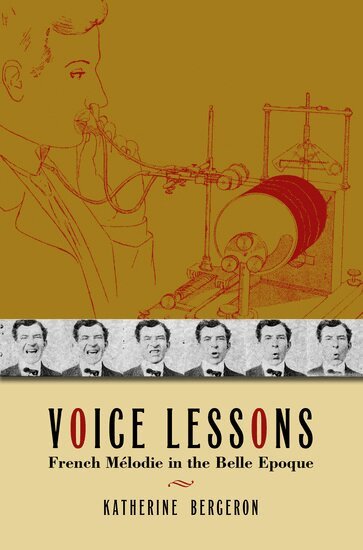
Language, education, science, and song come together in surprising ways in Katherine Bergeron's new history of music in the Belle Epoque. Voice Lessons examines the modern musical art known as la mélodie française and its rise to prominence in the years around 1900-a period when France was pouring resources into national literacy and French scholars were beginning to grasp the nuances of the spoken tongue. Bergeron explores the relationship between the free, secular, and compulsory school system of the Third Republic, and the experimental sciences of language that grew alongside it, to observe the ways in which both science and school redefined the verbal arts in France at century's end. The music of Fauré, Debussy, and Ravel; the writings of Mallarmé, Rimbaud, and Verlaine; the performances of Maggie Teyte, Reynaldo Hahn, and Sarah Bernhardt; the linguistic studies of Paul Passy and Abbé Rousselot: all these sources offer evidence of the new ideas of expression that proliferated during one of the most idealistic moments in French musical history, when poets, composers, actors, singers, and scientists all learned to imagine-and to speak-their language in new ways. Through close readings of songs, poems, sound recordings, and other historical records, Voice Lessons narrates the development of a rare musical art, seeking to explain why this art emerged, why it mattered, and why it eventually disappeared.
831 kr
Skickas inom 5-8 vardagar
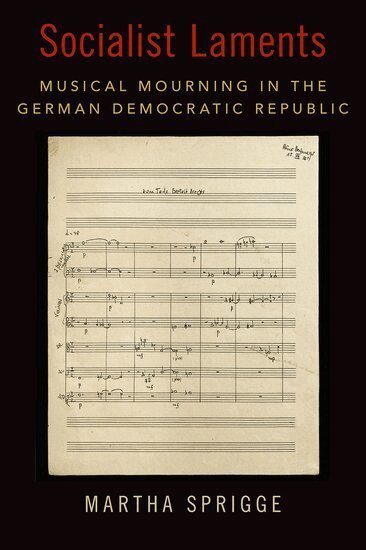
Antifascist and socialist monuments pervaded the landscape of the former German Democratic Republic (1949-89), presenting a distorted vision of the national past. Official commemorative culture in East Germany celebrated a selective set of political heroes, seeming to leave no public space for mourning those who were excluded from the country's founding myths. Socialist Laments: Musical Mourning in the German Democratic Republic examines the role of music in this nation's memorial culture, demonstrating how music facilitated the expressions of loss within spaces of commemoration for East German citizens. Music performed during state-sponsored memorial rituals no doubt bolstered official narratives of the German past. But it simultaneously provided an outlet for mourning in highly politicized environment. The book presents both a history and theory of musical mourning in East Germany. Using a site-specific approach to analysis, author Martha Sprigge demonstrates how the multiple semantic networks opened up by these musical works facilitated many memorial associations without necessitating the overt articulation of a mourned subject. Throughout the country's forty-year existence, music offered East German citizens an audible outlet for working through traumatic losses-both collective and individual-that was distinct from other artistic expressive possibilities. The book reveals the ways that East Germany's extensive commemorative repertoire helped composers, performers, and audiences navigate between the inevitable need to mourn on the one hand, and the seeming impossibilities of mourning on the other.
1 717 kr
Skickas inom 7-10 vardagar
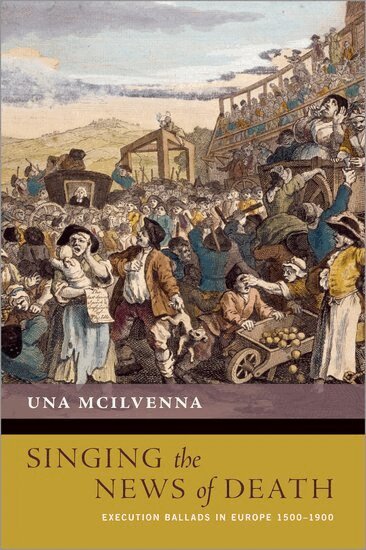
Across Europe, from the dawn of print until the early twentieth century, the news of crime and criminals' public executions was printed in song form on cheap broadsides and pamphlets to be sold in streets and marketplaces by ballad-singers. Singing the News of Death: Execution Ballads in Europe 1500-1900 looks at how and why song was employed across Europe for centuries as a vehicle for broadcasting news about crime and executions, exploring how this performative medium could frame and mediate the message of punishment and repentance. Examining ballads in English, French, Dutch, German, and Italian across four centuries, author Una McIlvenna offers the first multilingual and longue durée study of the complex and fascinating phenomenon of popular songs about brutal public death.Ballads were frequently written in the first-person voice, and often purported to be the last words, confession or 'dying speech' of the condemned criminal, yet were ironically on sale the day of the execution itself. Musical notation was generally not required as ballads were set to well-known tunes. Execution ballads were therefore a medium accessible to all, regardless of literacy, social class, age, gender or location. A genre that retained extraordinary continuities in form and content across time, space, and language, the execution ballad grew in popularity in the nineteenth century, and only began to fade as executions themselves were removed from the public eye. With an accompanying database of recordings, Singing the News of Death brings these centuries-old songs of death back to life.
901 kr
Skickas inom 5-8 vardagar
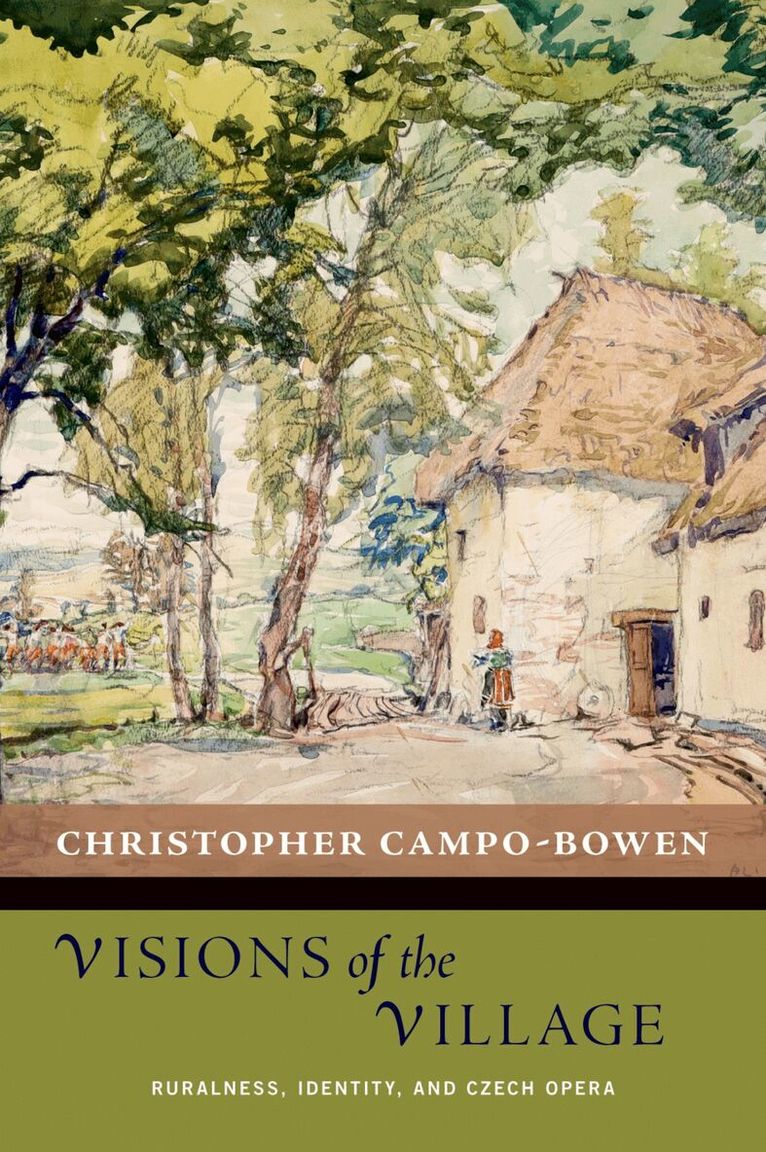
Visions of the Village offers a nuanced account of the cultural history, political salience, and social resonances of Czech village operas, especially those by composers Bed%rich Smetana, Antonín Dvo%rák, and Leoš Janáček. By examining music-critical writings, institutional and government records, letters, and other archival sources, Christopher Campo-Bowen examines how musical representations of the idealized village acquired and provided meaning for Czech audiences, serving as the basis for understandings of a wide range of sociocultural and political issues, including gender, class, nationalism, imperialism, ethnicity, and race. This book explores how operas like Smetana's The Bartered Bride, Dvo%rák's The Devil and Kate, and Janáček's Jenůfa served as focal points for the articulation of an essentialist sense of Czech identity. In addition to composers and their operas, Campo-Bowen investigates the output of critics, administrators, and other urban intellectuals like Otakar Hostinský, František Adolf %Subert, and Zdeněk Nejedlý to understand the impact of village operas on public discourse. Through this in-depth analysis, this book uncovers how music functions at the nexus of the desire for politically resonant ethnoracial identities and the representation of ruralness, from the nineteenth century to the present.
1 277 kr
Kommande
In 1868 Japan opened its borders to the outside world and began a rapid modernization process which included importing European musical instruments, compositional practices, and repertoire. The operas and prose of Richard Wagner trickled into Japan during this time and, as in other parts of the world, agents in Japan manipulated the composer's prose and musical works to suit ideologies ranging from the fascist to the frivolous. Through the lens of global history, Japanese cultural studies, and musicology, this book presents a new way of understanding Wagnerism as it filtered through modern Japanese culture. Wagnerism is entangled in modernity, and in Japan these entanglements surfaced not only on the operatic stage, but also in sheet music, film, and popular literature. Author Brooke McCorkle Okazaki documents Wagner's opera premieres and utilizes mass media--such as film, magazines, and comics--to explore the interplay of modernity and Wagnerism in Japan. Okazaki first situates the discussion in the context of global historical methodologies, demonstrating how the story of Wagner's reception in Japan models a non-Eurocentric approach to one of musicology's most canonical composers. She then presents a series of case studies that consider how Wagnerism shaped individuals and institutions in Japan beginning from the late nineteenth century and to the present.
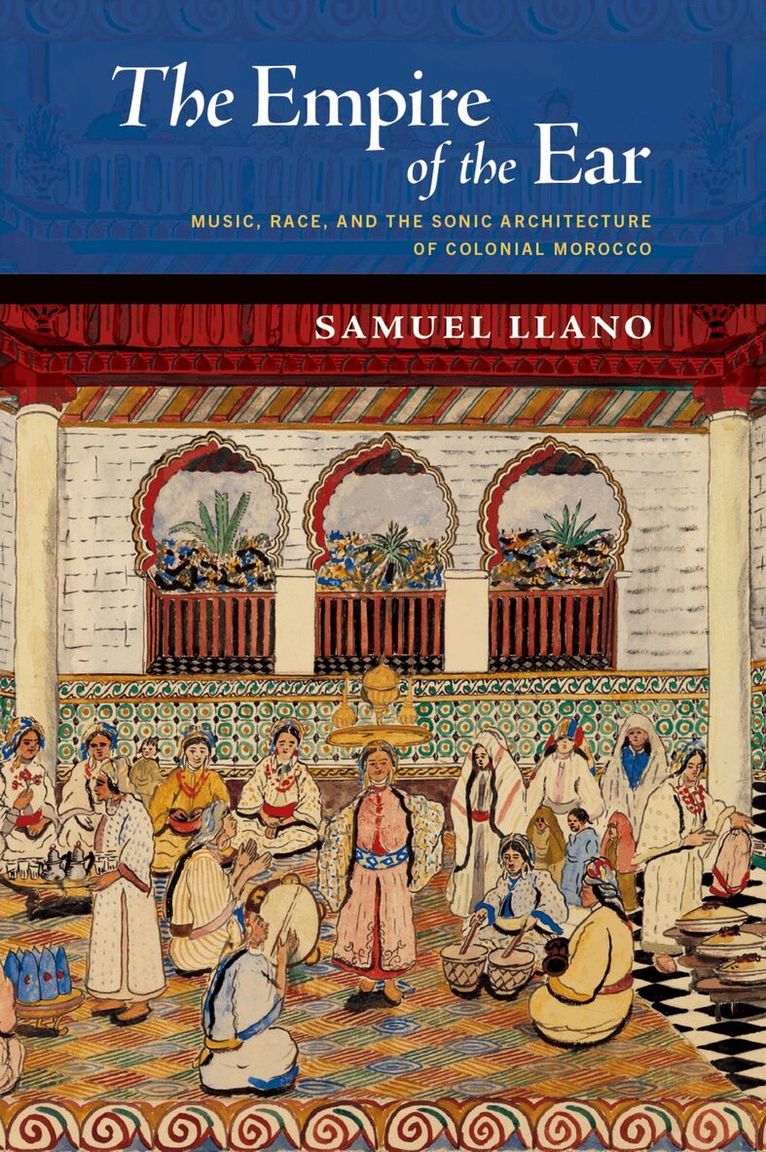
The Empire of the Ear
Music, Race, and the Sonic Architecture of Colonial Morocco
Inbunden, Engelska, 2026
956 kr
Kommande
This is an open access title available under the terms of a CC BY-NC-ND 4.0 International licence. It is free to read at Oxford Scholarship Online and offered as a free PDF download from OUP and selected open access locations.Any study of colonial Morocco (1912-56) presents unique and compelling challenges due to the simultaneous presence in its territory of two foreign powers, France and Spain. The colonialist rivalry between these two countries formed dynamic and changing narratives of Morocco's musical cultures. Through their accounts of Morocco's musical activity and sound practices, French and Spanish musicologists gave shape to models of social organization that they wished to implant in Morocco at the expense of the local populations. But music was also an important instrument of resistance even if opposition to colonial rule meant adopting and subverting the discursive tropes and rhetorical strategies first formulated in the work of European scholars.In The Empire of the Ear: Music, Race, and the Sonic Architecture of Colonial Morocco, author Samuel Llano demonstrates that auditory culture, music, and musicology played a key role in negotiating the cultural struggles of colonialism in Morocco by helping to redraw society's ethnic and racial boundaries. Music was deeply involved in shaping a colonial rivalry between France and Spain, with both powers fighting to lead the discovery and promotion of Morocco's music, particularly the Andalusi and Amazigh repertoires. Llano further illuminates the ways in which France and Spain used music to promote markedly distinct and competing racial agendas in order to categorize and control Moroccan populations and their cultural practices. At the same time, he delves deeply into the significant roles that Moroccan and Maghrebi musicians and scholars played in fostering performance criteria and producing scholarship that challenged deep-seated European views, acting as a form of anti-colonial resistance. As he explores music's dual role as an instrument of power and resistance, Llano demonstrates that the impact of colonial rivalry on music scholarship and performance was more complex than the coloniser/colonised binary suggests. Finally, he analyzes how collaborations between Maghrebi and European scholars and musicians in transcription and performance obscured the lines between oppression and contestation, pushing resistance into a liminal space. In exploring these cultural tensions, The Empire of the Ear argues that race was the primary principle governing the performance and study of Morocco's music repertoires and the shaping of forms of identification among rural and urban populations.
1 270 kr
Skickas inom 3-6 vardagar
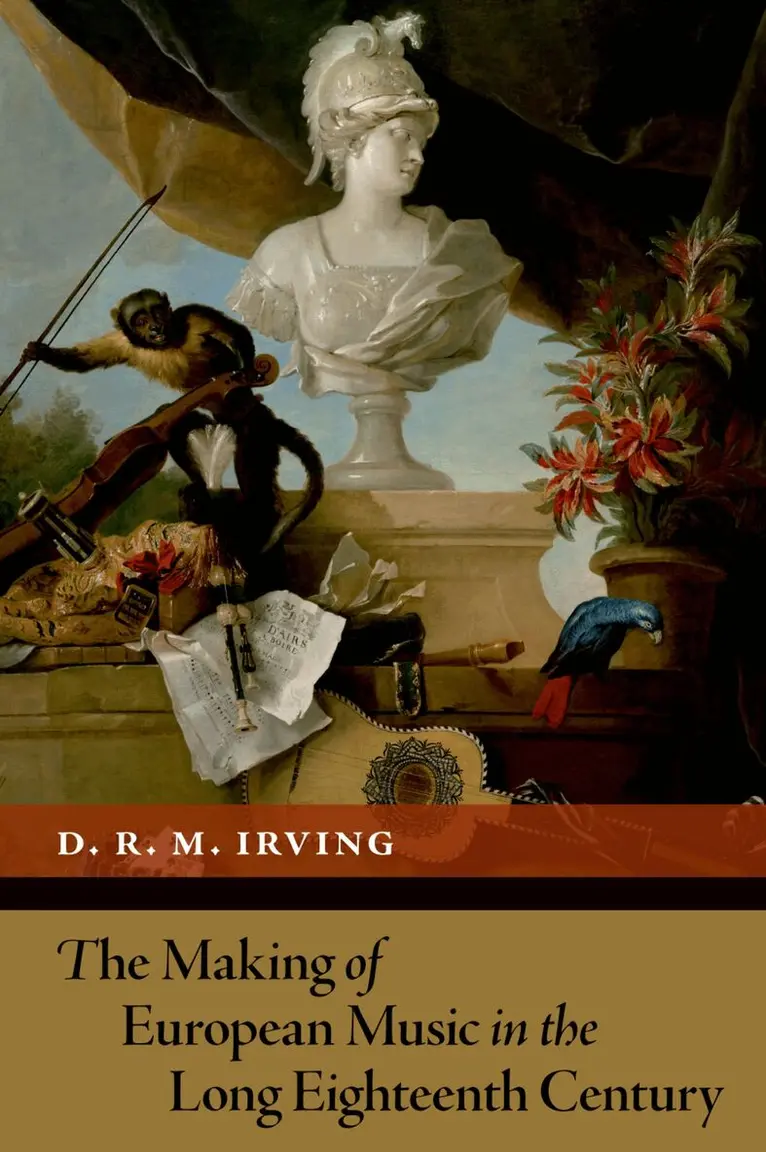
Musical representations of Europe in myth and allegory are well known, but when and under what circumstances did the words "European" and "music" become linked together? What did the resulting term mean in music before 1800 and how did it evolve into the label "Western music," which features so prominently in pedagogical and scholarly discourses?In The Making of European Music in the Long Eighteenth Century, author D. R. M. Irving traces the emergence of such large-scale categories in Western European thought. Beginning in the 1670s, Jesuit missionaries in China began to refer to "European music," and for the next hundred years the term appeared almost exclusively in comparison with musics from other parts of the world. It entered common use from the 1770s, and in the 1830s became synonymous with a new concept of "Western music." Western European writers also associated these terms with notions of "progress" and "perfection." Meanwhile, changing ideas about "modern" Europe's cultural relationship with classical antiquity, together with theories that systematically and condescendingly racialized people from other continents, influenced the ways that these scholars imagined and interpreted musical pasts around the globe.Irving weaves his analyses throughout the book's historical examinations, suggesting that "European music" originates from self-fashioning in contexts of intercultural comparison outside the continent, rather than from the resolution of national aesthetic differences within it. He shows that "Western music" as understood today arose in line with the growth of Orientalism and increasing awareness of musics of "the East." All such reductive terms often imply homogeneity and essentialism, and Irving asks what a reassessment of their beginnings might mean for music history.Taken as a whole, the book shows how a renewed critique of primary sources can help dismantle historiographical constructs that arose within narratives of musical pasts involving Europe.
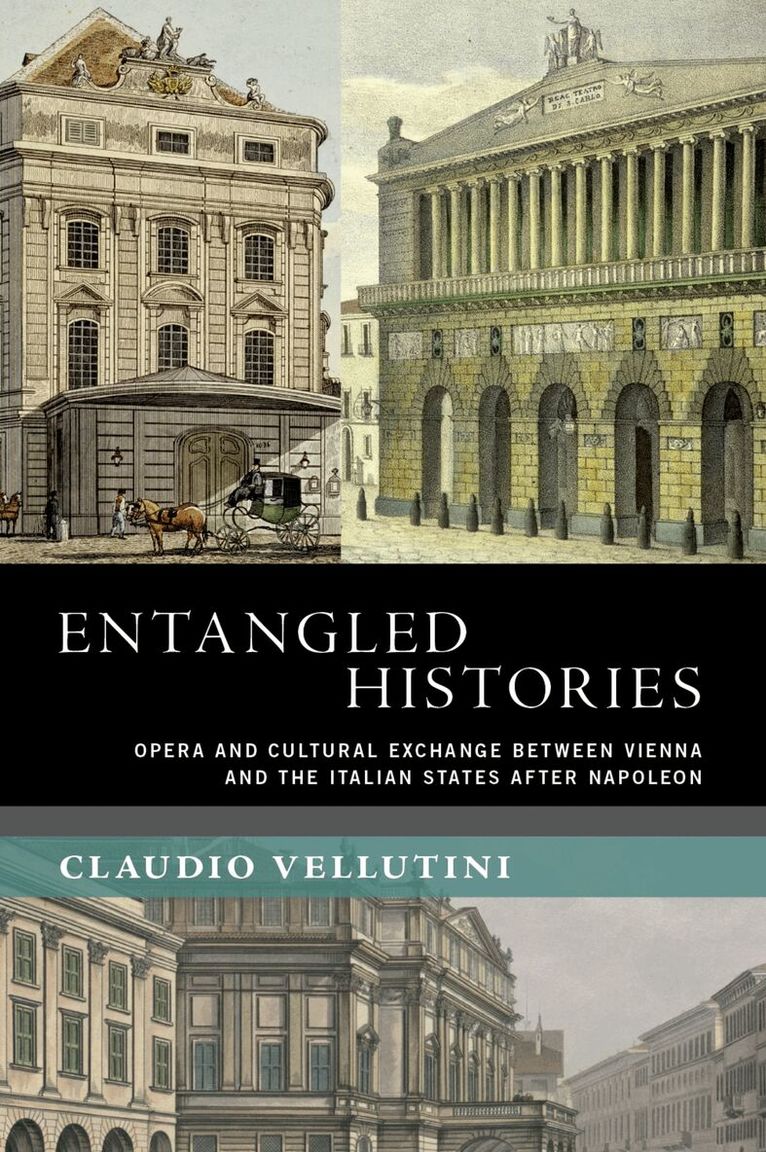
Entangled Histories
Opera and Cultural Exchange between Vienna and the Italian States after Napoleon
Inbunden, Engelska, 2025
1 208 kr
Skickas inom 5-8 vardagar
Through a wealth of archival documents and printed materials, Entangled Histories shows how, over the first half of the nineteenth century, opera helped redefine questions of collective identity in the Austrian empire, serving as a testing ground for, among others, theories of language and education, notions of fatherland and citizenship, artistic expressions of cultural hybridity, new forms of managing economic and cultural capital, and practices of collective memory. By emphasizing the entanglements between opera's aesthetics, its social function, and the ideology underpinning its system of production in different institutional and urban contexts, this book places opera at the intersection of a broad set of political and cultural relationships that for several decades connected Vienna and prominent Italian operatic centers, contributing to a transnational historiography of the art form in the nineteenth century. It also argues that new modes of production and dissemination of opera between Vienna and the Italian states contributed to official cultural policies promoting a supranational identity of the Austrian empire-one that acknowledged, but ultimately transcended cultural differences. As the state emerged victoriously yet completely transformed from over two decades of wars against revolutionary and Napoleonic France, opera-with its long tradition of impresarios, composers, librettists, and performers on the move-became a key tool for bringing some of the different cultural traditions of the Austrian empire into a fruitful mutual dialogue.
319 kr
Skickas inom 5-8 vardagar
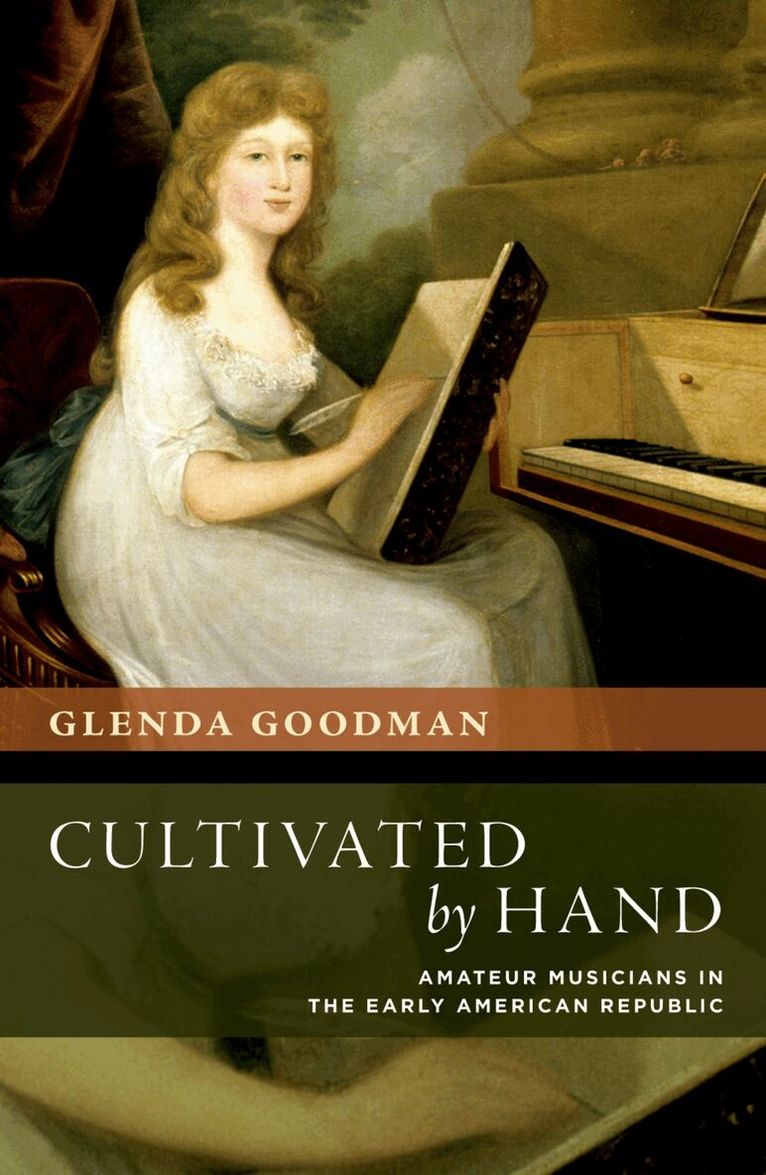
Scattered in archives and historical societies across the United States are hundreds of volumes of manuscript music, copied by hand by eighteenth-century amateurs. Often overlooked, amateur music making played a key role in the construction of gender, class, race, and nation in the post-revolution years of the United States. These early Americans, seeking ways to present themselves as genteel, erudite, and pious, saw copying music by hand and performing it in intimate social groups as a way to make themselves—and their new nation—appear culturally sophisticated. Following a select group of amateur musicians, Cultivated by Hand makes the case that amateur music making was both consequential to American culture of the eighteenth century and aligned with other forms of self-fashioning. This interdisciplinary study explores the social and material practices of amateur music making, analyzing the materiality of manuscripts, tracing the lives of individual musicians, and uncovering their musical tastes and sensibilities. Author Glenda Goodman explores highly personal yet often denigrated experiences of musically "accomplished" female amateurs in particular, who grappled with finding a meaningful place in their lives for music. Revealing the presence of these unacknowledged subjects in music history, Cultivated by Hand reclaims the importance of such work and presents a class of musicians whose labors should be taken into account.