Adrian Daub – författare
229 kr
Skickas inom 3-6 vardagar
181 kr
Skickas
408 kr
Skickas inom 5-8 vardagar
238 kr
Läs direkt efter köp
236 kr
Läs direkt efter köp
1 080 kr
Skickas inom 5-8 vardagar
408 kr
Skickas inom 5-8 vardagar
446 kr
Läs direkt efter köp
442 kr
Läs direkt efter köp
1 062 kr
Läs direkt efter köp
Das Rheingold, Die Walküre, and Siegfried. Parsifal. Tristan und Isolde. Both revered and reviled, Richard Wagner conceived some of the nineteenth century’s most influential operas—and created some of the most indelible characters ever to grace the stage. But over the course of his polarizing career, Wagner also composed volumes of essays and pamphlets, some on topics seemingly quite distant from the opera house. His influential concept of Gesamtkunstwerk—the “total work of art”—famously and controversially offered a way to unify the different media of an opera into a coherent whole. Less well known, however, are Wagner’s strange theories on sexuality—like his ideas about erotic acoustics and the metaphysics of sexual difference.
Drawing on the discourses of psychoanalysis, evolutionary biology, and other emerging fields of study that informed Wagner’s thinking, Adrian Daub traces the dual influence of Gesamtkunstwerk and eroticism from their classic expressions in Tristan und Isolde into the work of the generation of composers that followed, including Zemlinsky, d’Albert, Schreker, and Strauss. For decades after Wagner’s death, Daub writes, these composers continued to grapple with his ideas and with his overwhelming legacy, trying in vain to write their way out from Tristan’s shadow.
471 kr
Skickas inom 5-8 vardagar
1 000 kr
Läs direkt efter köp
“What a strange invention marriage is!” wrote Kierkegaard. “Is it the expression of that inexplicable erotic sentiment, that concordant elective affinity of souls, or is it a duty or a partnership . . . or is it a little of all that?”
Like Kierkegaard a few decades later, many of Germany’s most influential thinkers at the turn of the eighteenth century wondered about the nature of marriage but rejected the easy answers provided by biology and theology. In Uncivil Unions, Adrian Daub presents a truly interdisciplinary look at the story of a generation of philosophers, poets, and intellectuals who turned away from theology, reason, common sense, and empirical observation to provide a purely metaphysical justification of marriage.
Through close readings of philosophers like Fichte and Schlegel, and novelists like Sophie Mereau and Jean Paul, Daub charts the development of this new concept of marriage with an insightful blend of philosophy, cultural studies, and theory. The author delves deeply into the lives and work of the romantic and idealist poets and thinkers whose beliefs about marriage continue to shape ideas about gender, marriage, and sex to the present day.
1 095 kr
Skickas inom 5-8 vardagar
301 kr
Skickas inom 5-8 vardagar
565 kr
Läs direkt efter köp
164 kr
Läs direkt efter köp
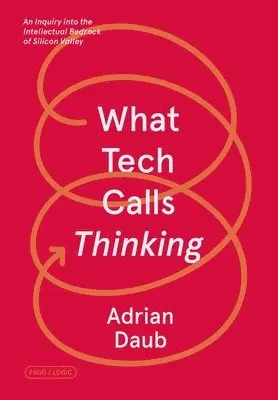
A New York Times Book Review Editors'' Choice"In Daub’s hands the founding concepts of Silicon Valley don’t make money; they fall apart." --The New York Times Book Review From FSGO x Logic: a Stanford professor''s spirited dismantling of Silicon Valley''s intellectual originsAdrian Daub’s What Tech Calls Thinking is a lively dismantling of the ideas that form the intellectual bedrock of Silicon Valley. Equally important to Silicon Valley’s world-altering innovation are the language and ideas it uses to explain and justify itself. And often, those fancy new ideas are simply old motifs playing dress-up in a hoodie. From the myth of dropping out to the war cry of “disruption,” Daub locates the Valley’s supposedly original, radical thinking in the ideas of Heidegger and Ayn Rand, the New Age Esalen Foundation in Big Sur, and American traditions from the tent revival to predestination. Written with verve and imagination, What Tech Calls Thinking is an intellectual refutation of Silicon Valley''s ethos, pulling back the curtain on the self-aggrandizing myths the Valley tells about itself.FSG Originals × Logic dissects the way technology functions in everyday lives. The titans of Silicon Valley, for all their utopian imaginings, never really had our best interests at heart: recent threats to democracy, truth, privacy, and safety, as a result of tech’s reckless pursuit of progress, have shown as much. We present an alternate story, one that delights in capturing technology in all its contradictions and innovation, across borders and socioeconomic divisions, from history through the future, beyond platitudes and PR hype, and past doom and gloom. Our collaboration features four brief but provocative forays into the tech industry’s many worlds, and aspires to incite fresh conversations about technology focused on nuanced and accessible explorations of the emerging tools that reorganize and redefine life today.
Doctor Faustus Dossier
Arnold Schoenberg, Thomas Mann, and Their Contemporaries, 1930-1951
1 150 kr
Skickas inom 5-8 vardagar
Doctor Faustus Dossier
Arnold Schoenberg, Thomas Mann, and Their Contemporaries, 1930-1951
441 kr
Skickas inom 5-8 vardagar
161 kr
Kommande
Goethe Yearbook 21
980 kr
Skickas inom 5-8 vardagar
Goethe Yearbook 22
980 kr
Skickas inom 5-8 vardagar
Goethe Yearbook 23
980 kr
Skickas inom 5-8 vardagar
Goethe Yearbook 24
980 kr
Skickas inom 5-8 vardagar
Goethe Yearbook 25
980 kr
Skickas inom 5-8 vardagar
215 kr
Kommande
Was das Valley denken nennt
208 kr
Skickas inom 3-6 vardagar
Cancel Culture Transfer
230 kr
Skickas inom 3-6 vardagar
Was das Valley herrschen nennt
208 kr
Skickas inom 3-6 vardagar
146 kr
Skickas inom 3-6 vardagar
693 kr
Tillfälligt slut