New Topics in Applied Philosophy - Böcker
Visar alla böcker i serien New Topics in Applied Philosophy. Handla med fri frakt och snabb leverans.
14 produkter
14 produkter
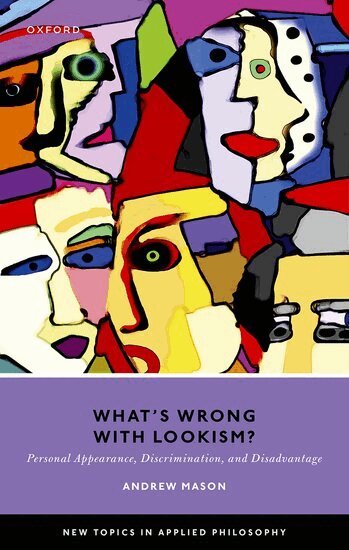
What's Wrong with Lookism?
Personal Appearance, Discrimination, and Disadvantage
Inbunden, Engelska, 2023
861 kr
Skickas inom 5-8 vardagar
People are treated differently as a result of their looks. But when is appearance discrimination, or "lookism" as it is often called, morally objectionable? This issue is important for at least two reasons. First, the benefits that flow to people who are regarded as visually attractive are sizeable and are enjoyed in a number of contexts, including employment, personal relationships, education, politics, and the criminal justice system. Second, appearance discrimination is of moral interest not only in its own right, but also in terms of its connection to other forms of discrimination. Appearance norms, that is, norms concerning how we should look, often place greater burdens on disadvantaged groups. As a result, discrimination on the basis of appearance, when it rewards people who conform to these norms, may involve, or interact with, the effects of, wrongful discrimination on the basis of features other than appearance, in a way that aggravates existing injustices.What's Wrong with Lookism? examines the morality of appearance discrimination in three contexts: employment decisions; the choice of friends or romantic partners; and the everyday practice of judging and commenting upon people's looks. Andrew Mason develops a pluralist theory of what makes discrimination wrong that identifies three wrong-making features, namely, disrespect, deliberative unfairness, and contributing to unjust consequences, and demonstrates how the presence of one or more of these features in each of these contexts problematises the lookism that takes place in it.
1 091 kr
Skickas inom 5-8 vardagar
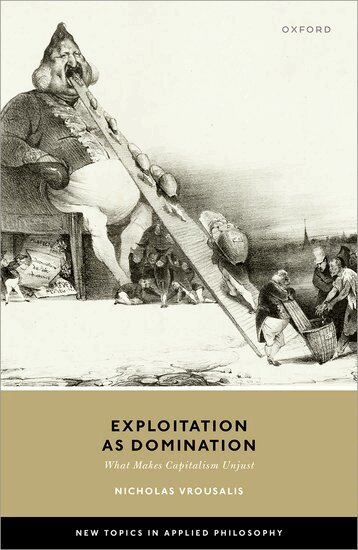
This is an open access title available under the terms of a CC BY-NC-ND 4.0 International license. It is offered as a free PDF download from OUP and selected open access locations.Exploitation is a globally pervasive phenomenon. Slavery, serfdom, and the patriarchy are part of its lineage. Temporary and sex workers, commercial surrogacy, precarious labour contracts, sweatshops, and markets in blood, vaccines or human organs, are some contemporary manifestations of exploitation. What makes these exploitative transactions unjust? And is capitalism inherently exploitative? This book offers answers to these two questions. Nicholas Vrousalis argues that exploitation is a form of domination, self-enrichment through the domination of others. On the domination view, exploitation complaints are not, fundamentally, about harm, coercion or unfairness. Rather, they are about who serves whom and why. Exploitation, in a word, is a dividend of servitude: the dividend the powerful extract from the servitude of the vulnerable. Vrousalis claims that this servitude is inherent to capitalist relations between consenting adults whereby capital is monetary control over the labour capacity of others. It follows that capitalism, the mode of production where capital predominates, is an inherently unjust social structure.
1 105 kr
Skickas inom 5-8 vardagar
It is widely accepted that we each possess a right against interference with our bodies. In this book, Thomas Douglas argues that we also possess an analogous right against interference with our minds. He defends the existence of this right—both by appealing to intuitions regarding cases and by invoking the notion of self-ownership—and he describes its content and contours. In Douglas' view, the right against mental interference protects us against actions that significantly alter our mental states and operate via processes that are insensitive to the reasons that bear on the mental alteration. The interventions that most obviously infringe the right are 'nonconsensual neurointerventions'—interventions that alter a person's mental states by physically modulating their brain states, and are performed without the target's consent. But Douglas argues that some psychological forms of influence can infringe the right too. Examples include the use of subliminal imagery and conditioning-based interventions, such as the use of loot boxes in computer games. This book contributes both to the increasingly vigorous debate over 'neurorights' and to the wider discussion of the ethics of mental and behavioural influence. Such discussion has traditionally treated manipulation, coercion and persuasion as the most important categories of influence; this volume introduces mental interference as a further category warranting attention.An open access title available under the terms of a CC BY-NC-ND 4.0 licence.
1 105 kr
Kommande
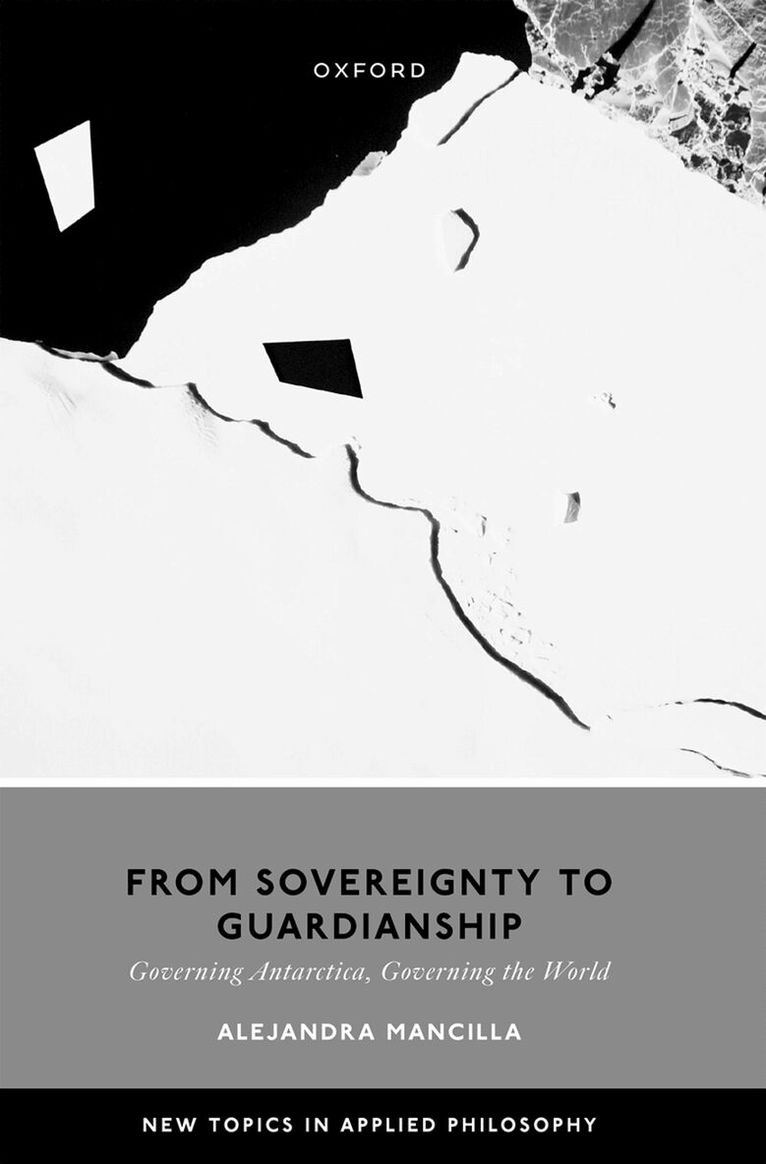
An open access title available under the terms of a CC BY-NC-ND 4.0 International licenceAntarctica is the coldest, windiest, driest, and highest continent in the world, so it is no wonder that it has been painted as exceptional in geographic and climatic terms. But not only that: Antarctica is also seen as exceptional politically. Since the Antarctic Treaty came into force in 1961, it has been under the Joint Guardianship of a group of states that have kept peace and privileged science as the main activity on the continent, with a focus on the protection rather than the exploitation of nature.For natural scientists, Antarctica is seen as the largest open-air laboratory in the world. In From Sovereignty to Guardianship, Alejandra Mancilla proposes that Antarctica should also be seen as a laboratory for territorial governance, providing inspiration in places where both the regime of Permanent Sovereignty over Natural Resources of individual states and the international regime of Common Heritage of Mankind have proven insufficient and inadequate. At the same time, she shows that Antarctic governance has important limits that can be surmounted to be made less state-centric and less anthropocentric, embracing the fact that protecting Antarctica requires acting beyond Antarctica, and vice versa. Given the global environmental challenges that we face, and the growing challenges to international law and cooperation, this book argues that environmental governance around the world can--and should--benefit from the creative and often unexpectedly fruitful political imagination of Antarctica.
1 240 kr
Skickas inom 5-8 vardagar
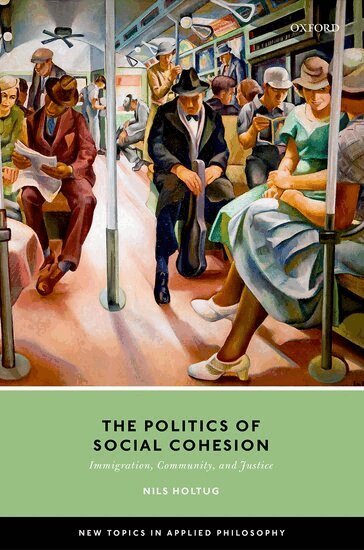
Immigration is a divisive policy issue in modern liberal democracies. A common worry is that immigration poses a threat to social cohesion, and so to the social unity that underpins cooperation, stable democratic institutions, and a robust welfare state. At the heart of this worry is the suggestion that social cohesion requires a shared identity at the societal level. In The Politics of Social Cohesion, Nils Holtug gives a careful assessment of the impact of immigration on social cohesion and egalitarian redistribution. First, he critically scrutinizes an influential argument, according to which immigration leads to ethnic diversity, which again tends to undermine trust and solidarity and so the social basis for redistribution. According to this argument, immigration should be severely restricted. And second, he considers the suggestion that, in response to worries about immigration, states should promote a shared identity to foster social cohesion in the citizenry. Holtug argues that the effects of immigration on social cohesion do not need to compromise social justice, and that core principles of liberty and equality not only form the normative basis for just policies of immigration and integration but, as a matter of empirical fact, are also the values that, if shared, are most likely to produce the social cohesion among community members that provides the social basis for implementing justice.
366 kr
Skickas inom 7-10 vardagar
Daniel Halliday examines the moral grounding of the right to bequeath or transfer wealth. He engages with contemporary concerns about wealth inequality, class hierarchy, and taxation, while also drawing on the history of the egalitarian, utilitarian, and liberal traditions in political philosophy. He presents an egalitarian case for restricting inherited wealth, arguing that unrestricted inheritance is unjust to the extent that it enables and enhances the intergenerational replication of inequality. Here, inequality is understood in a group-based sense: the unjust effects of inheritance are principally in its tendency to concentrate certain opportunities into certain groups. This results in what Halliday describes as 'economic segregation'. He defends a specific proposal about how to tax inherited wealth: roughly, inheritance should be taxed more heavily when it comes from old money. He rebuts some sceptical arguments against inheritance taxes, and makes suggestions about how tax schemes should be designed.
1 240 kr
Skickas inom 5-8 vardagar
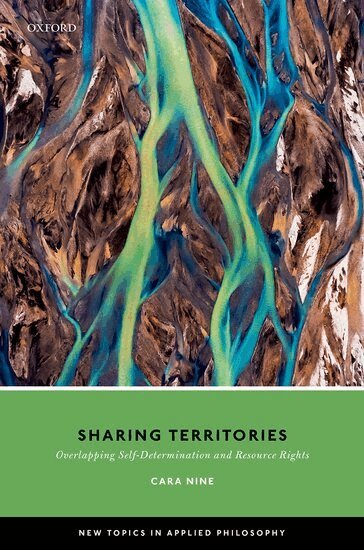
In Sharing Territories, Cara Nine defends a river model of territorial rights. On a river model, groups are assumed to be interdependent and overlapping. If we imagine human settlements and territorial rights as established in river catchment areas-not on lands with walls and borders-the primary features of group life are not independence and distinctness. Drawing on natural law philosophy, Nine's theory argues for the establishment of foundational territories around geographical areas like rivers. Usually lower-scale political entities, foundational territories overlap with and serve as the grounding blocks of larger territorial units. Examples of foundational territories include not only river catchment areas but also urban areas, drawn around individuals who hold obligations to collectively manage their surroundings. Foundational territorial authorities manage spatially integrated areas where agents are interconnected by dense and scaffolded physical circumstances. In these areas, individuals cannot fulfil their natural obligations to each other without the help of collective rules. As foundational territories overlap the territories of other political units, Nine frames a theory of nested and shared territorial rights, and argues for insightful changes to the allocation of resource rights between political groups and individuals.
642 kr
Skickas inom 5-8 vardagar
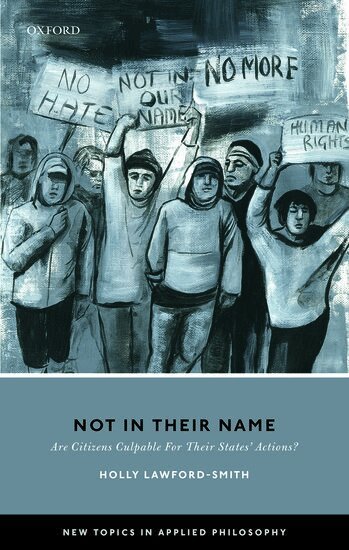
There are many actions that we attribute, at least colloquially, to states. Given their size and influence, states are able to inflict harm far beyond the reach of a single individual. But there is a great deal of unclarity about exactly who is implicated in that kind of harm, and how we should think about responsibility for it. It is a commonplace assumption that democratic publics both authorize and have control over what their states do; that their states act in their name and on their behalf. In Not In Their Name, Holly Lawford-Smith approaches these questions from the perspective of social ontology, asking whether the state is a collective agent, and whether ordinary citizens are members of that agent. If it is, and they are, there's a clear case for democratic collective culpability. She explores alternative conceptions of the state and of membership in the state; alternative conceptions of collective agency applied to the state; the normative implications of membership in the state; and both culpability (from the inside) and responsibility (from the outside) for what the state does. Ultimately, Lawford-Smith argues for the exculpation of ordinary citizens and the inculpation of those working in public services.
Spying Through a Glass Darkly
The Ethics of Espionage and Counter-Intelligence
Inbunden, Engelska, 2022
478 kr
Skickas inom 5-8 vardagar
Cécile Fabre draws back the curtain on the ethics of espionage and counterintelligence.Espionage and counter-intelligence activities, both real and imagined, weave a complex and alluring story. Yet there is hardly any serious philosophical work on the subject. Cécile Fabre presents a systematic account of the ethics of espionage and counterintelligence. She argues that such operations, in the context of war and foreign policy, are morally justified as a means, but only as a means, to protect oneself and third parties from ongoing violations of fundamental rights. In doing so, she addresses a range of ethical questions: are intelligence officers morally permitted to bribe, deceive, blackmail, and manipulate as a way to uncover state secrets? Is cyberespionage morally permissible? Are governments morally permitted to resort to the mass surveillance of their and foreign populations as a means to unearth possible threats against national security? Can treason ever be morally permissible? Can it ever be legitimate to resort to economic espionage in the name of national security? The book offers answers to those questions through a blend of philosophical arguments and historical examples.
373 kr
Skickas inom 5-8 vardagar
Daniel Halliday examines the moral grounding of the right to bequeath or transfer wealth. He engages with contemporary concerns about wealth inequality, class hierarchy, and taxation, while also drawing on the history of the egalitarian, utilitarian, and liberal traditions in political philosophy. He presents an egalitarian case for restricting inherited wealth, arguing that unrestricted inheritance is unjust to the extent that it enables and enhances the intergenerational replication of inequality. Here, inequality is understood in a group-based sense: the unjust effects of inheritance are principally in its tendency to concentrate certain opportunities into certain groups. This results in what Halliday describes as 'economic segregation'. He defends a specific proposal about how to tax inherited wealth: roughly, inheritance should be taxed more heavily when it comes from old money. He rebuts some sceptical arguments against inheritance taxes, and makes suggestions about how tax schemes should be designed.
1 051 kr
Skickas inom 5-8 vardagar
Independence for Children presents an alternative conception of parenting to those that have dominated our thinking about children and the family to date. It offers an elaboration and defence of anti-perfectionist parenting. The central argument of this book is that, as they develop, children become entitled to adopt and pursue their own conceptions of religion and human well-being. As young children, they are entitled to an upbringing that is informed by ideals and reasons they can later accept in the light of the religious or ethical values they go on to hold as adults. In short, parents and others owe children an upbringing from which they are not alienated later in life. Parental anti-perfectionism suggests that parents should introduce their children to the various and sometimes competing views concerning our place in the universe and human flourishing and raise them to be respectful of the diversity of lifestyles within society. But Matthew Clayton argues that parents have no right to steer their children towards particular religious doctrines or conceptions of human flourishing, and that religious schools ought to be phased out. This book addresses several questions in the philosophy of upbringing, such as how we ought to understand the interests of children, the moral claims of parents, and what constitutes a valuable family life. Clayton finishes by briefly exploring the implications of anti-perfectionist morality for how parents ought to approach issues concerning work, consumption, gender, and food.
1 037 kr
Skickas inom 5-8 vardagar
Disability through the Lens of Justice offers a contextual framework for considering the limitations that disability places on individuals. Specifically, those that prevent individuals from having control in certain domains of their life, by restricting the availability of acceptable options or the ability to choose between them. Begon argues that our theory of justice should be concerned with the lives individuals can lead, and not with whether their bodies and minds function typically. The problem that disability raises is not the mere fact of difference, but the ways in which that difference is accommodated (or not) and the limitations it may cause. In Disability Through the Lens of Justice, Begon offers a new framework to the disability and justice model. She argues that achieving justice does not require 'normalisation', or the elimination of difference, but through implementating a model which enables all individuals to control their lives as they choose.
346 kr
Skickas inom 5-8 vardagar
In Sharing Territories, Cara Nine defends a river model of territorial rights. On a river model, groups are assumed to be interdependent and overlapping. If we imagine human settlements and territorial rights as established in river catchment areas-not on lands with walls and borders-the primary features of group life are not independence and distinctness. Drawing on natural law philosophy, Nine's theory argues for the establishment of foundational territories around geographical areas like rivers. Usually lower-scale political entities, foundational territories overlap with and serve as the grounding blocks of larger territorial units. Examples of foundational territories include not only river catchment areas but also urban areas, drawn around individuals who hold obligations to collectively manage their surroundings. Foundational territorial authorities manage spatially integrated areas where agents are interconnected by dense and scaffolded physical circumstances. In these areas, individuals cannot fulfil their natural obligations to each other without the help of collective rules. As foundational territories overlap the territories of other political units, Nine frames a theory of nested and shared territorial rights, and argues for insightful changes to the allocation of resource rights between political groups and individuals.
1 678 kr
Skickas inom 3-6 vardagar
Gaslighting, flattery, misdirection, nagging, emotional blackmail, charm offensives, playing on emotions. These are all examples of ordinary manipulation. Such manipulation is common in everyday life, which is unfortunate, since manipulation seems like a bad thing. Manipulation: Its Nature, Mechanisms, and Moral Status answers three questions about manipulation: what is it, how does it work, and why is it bad? Addressing the first question requires us to find something that all forms of manipulation have in common, but which is not shared by other forms of influence. Robert Noggle argues that the common feature of all forms of ordinary manipulation is that they are mistake-inducing. This idea is the basis for the Mistake Account of manipulation, which defines manipulation as a kind of influence that operates by introducing a mistake into the mental states or processes of the person being influenced. To explain how manipulation works, this book explores the psychological levers that manipulators use to get us to make the mistakes that will get us to do what they want. These include various cognitive and decision-making biases, our tendency to choose the lesser good over the greater good when the lesser good is immediately available, and the simple fact that human reason is an imperfect thing. To explain why manipulation seems like a bad thing, Noggle first argues that, while manipulation is always presumptively immoral, it can be justified in extreme situations. He then shows that manipulation's presumptive immorality derives from the fact that it involves getting someone to make a mistake, and making a mistake is a bad thing. However, the most morally egregious instances of manipulation also have bad effects on well-being and autonomy. This book concludes by applying the Mistake Account to various influences, including priming, conditioning, nudges, advertising, sales, and online influences.