• Fri frakt över 249 kr
  • •
  • Snabba leveranser
  • •
  • Billiga böcker
Kundservice

Du är på sajten för privatpersoner.

Företag, bibliotek eller offentlig verksamhet?

Du handlar på classic.bokus.com, där alla dina funktioner finns intakta.
Till classic.bokus.com
Bokus logotyp. Gå till startsidan.
  • Erbjudanden
  • Student
  • Topplistor
  • Barn & ungdom
  • Bokus Play
  • E-böcker
  • Ljudböcker
  • Pocketböcker
  • Spel & pussel

10% rabatt på allt med kod NYSTART10 →

Sidfot

Mina sidor

    Hjälp

    • Kundservice
    • Vanliga frågor och svar
    • Frakt och leverans
    • Retur vid ångerrätt
    • Reklamera vara
    • Betalning
    • Köpvillkor
    • Allmänna villkor
    • Information om webbplatsens tillgänglighet

    Om Bokus

    • Om oss
    • Pressrum
    • För studenter
    • För företag
    • För bibliotek och offentlig verksamhet
    • För leverantörer
    • Hållbarhet

    Populärt

    • Aktuella erbjudanden
    • Presentkort
    • Studentlitteratur
    • Nya böcker
    • Topplistor
    • Signerade böcker
    • Engelska böcker

    Inspiration

    • Boktips
    • BookTok
    • Populära bokserier
    • Barnbokskaraktärer
    • Populära författare
    Logotyp för Bokus
    Följ oss på Facebook (extern länk)Följ oss på Instagram (extern länk)Följ oss på YouTube (extern länk)Följ oss på TikTok (extern länk)
    bokus @ CookiesAnpassa cookiesIntegritetspolicyKöpvillkor
    Till Citymail hemsida (extern länk)Till Budbee hemsida (extern länk)Till Postnord hemsida (extern länk)Till Schenker hemsida (extern länk)Till Early Bird hemsida (extern länk)Till Walleys hemsida (extern länk)
    1. Samhälle och politik
    2. Politik och statsskick
    3. Politiskt förtryck

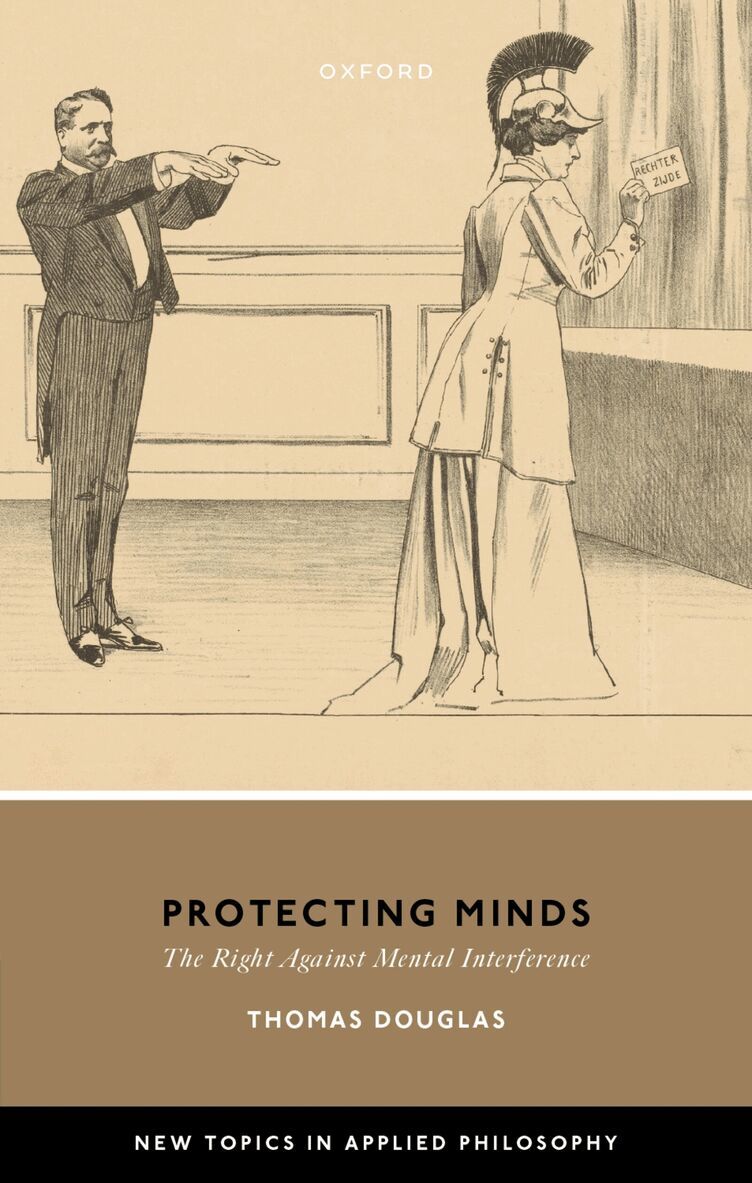
    Protecting Minds

    The Right Against Mental Interference

    AvThomas Douglas

    Inbunden, Engelska, 2026

    Del i serien New Topics in Applied Philosophy

    1 125 kr

    Beställningsvara. Skickas inom 5-8 vardagar. Fri frakt över 249 kr.

    Beskrivning

    It is widely accepted that we each possess a right against interference with our bodies. In this book, Thomas Douglas argues that we also possess an analogous right against interference with our minds. He defends the existence of this right—both by appealing to intuitions regarding cases and by invoking the notion of self-ownership—and he describes its content and contours. In Douglas' view, the right against mental interference protects us against actions that significantly alter our mental states and operate via processes that are insensitive to the reasons that bear on the mental alteration. The interventions that most obviously infringe the right are 'nonconsensual neurointerventions'—interventions that alter a person's mental states by physically modulating their brain states, and are performed without the target's consent. But Douglas argues that some psychological forms of influence can infringe the right too. Examples include the use of subliminal imagery and conditioning-based interventions, such as the use of loot boxes in computer games. This book contributes both to the increasingly vigorous debate over 'neurorights' and to the wider discussion of the ethics of mental and behavioural influence. Such discussion has traditionally treated manipulation, coercion and persuasion as the most important categories of influence; this volume introduces mental interference as a further category warranting attention.An open access title available under the terms of a CC BY-NC-ND 4.0 licence.

    Produktinformation

    • Utgivningsdatum:2026-02-19
    • Mått:145 x 222 x 15 mm
    • Vikt:358 g
    • Format:Inbunden
    • Språk:Engelska
    • Serie:New Topics in Applied Philosophy
    • Antal sidor:192
    • Förlag:OUP OXFORD
    • ISBN:9780192883254

    Utforska kategorier

    • Politiskt förtryck inom Samhälle och politik
    • Filosofiska discipliner inom Filosofi och religion

    Mer om författaren

    Thomas Doulas is Professor of Applied Philosophy and Director of Research at the Uehiro Oxford Institute, University of Oxford. He trained in clinical medicine (Otago) and philosophy (Oxford) and works chiefly in philosophical bioethics and neuroethics. His research has focussed especially on the ethics of using medical and neuroscientific technologies for non-therapeutic purposes, such as cognitive and moral enhancement, crime prevention, and infectious disease control. He is the author of over 130 academic articles or chapters and has led two major externally funded research projects: 'Neurointerventions in Crime Prevention: An Ethical Analysis' (Wellcome Trust, 2013-2019) and 'Protecting Minds: The Right to Mental Integrity and the Ethics of Arational Influence' (European Research Council, 2020-2025).

    Innehållsförteckning

    • 1: Motivating the Project : The Case for Examining the Right Against Mental Interference 2: A Working Account of the Right Against Bodily Interference 3: A Working Account of the Right Against Mental Interference 4: An Intuitive, Abductive Defence of the Right Against Mental Interference 5: From Self-Ownership to the Right Against Mental Interference 6: The Scope of the Right Against Mental Interference 7: Implications of the Right Against Mental Interference 8: Against the Right Against Mental Interference 9: Concluding Thoughts