Notre Dame Studies in Medical Ethics and Bioethics - Böcker
Visar alla böcker i serien Notre Dame Studies in Medical Ethics and Bioethics. Handla med fri frakt och snabb leverans.
15 produkter
15 produkter
435 kr
Skickas inom 10-15 vardagar
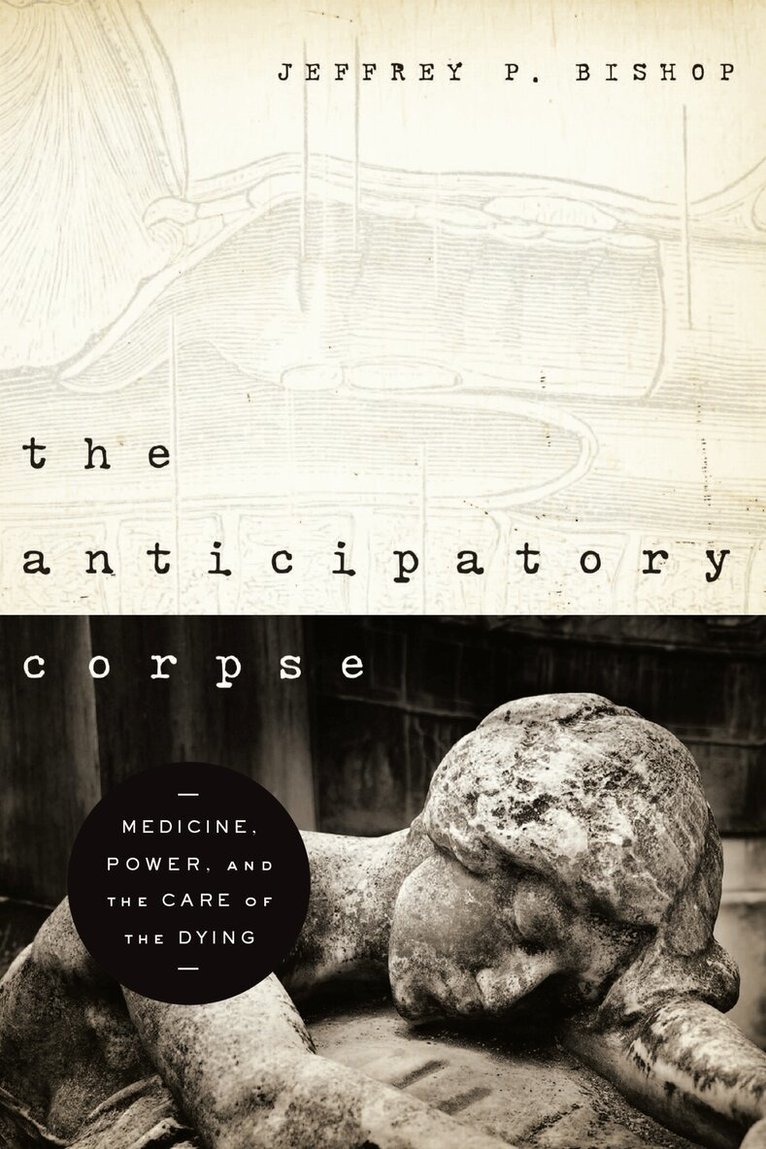
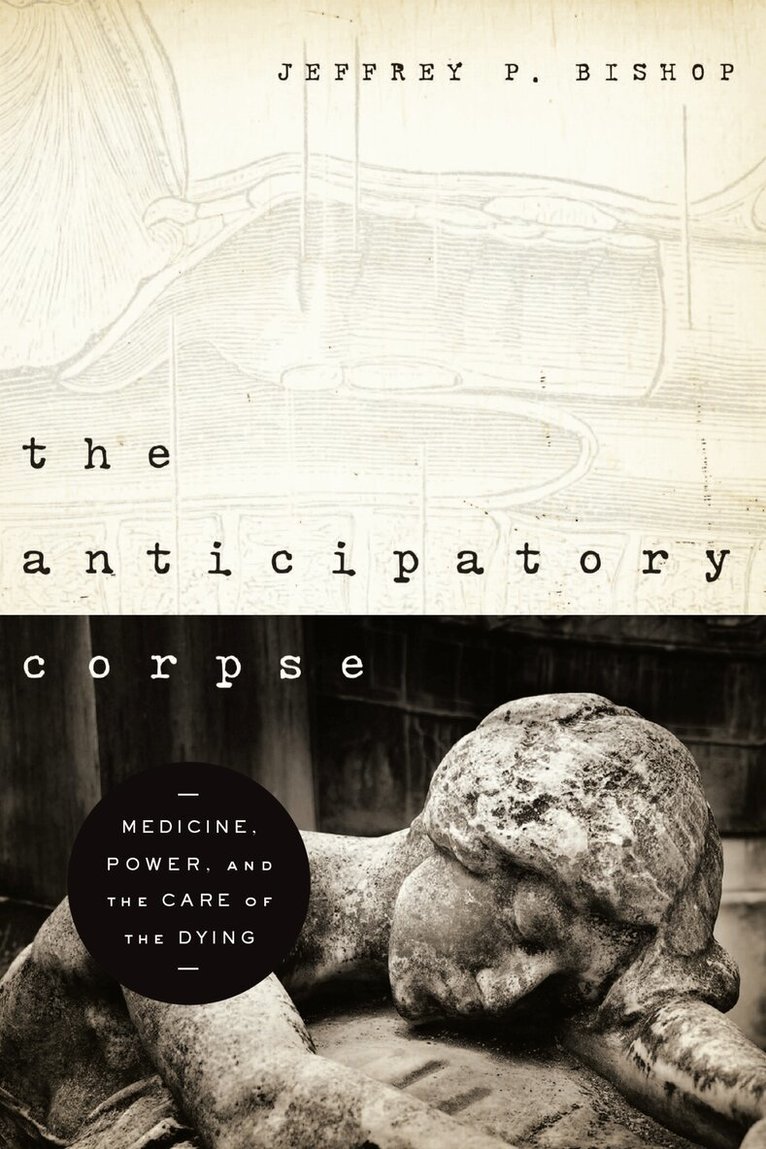
In this original and compelling book, Jeffrey P. Bishop, a philosopher, ethicist, and physician, argues that something has gone sadly amiss in the care of the dying by contemporary medicine and in our social and political views of death, as shaped by our scientific successes and ongoing debates about euthanasia and the "right to die"—or to live. The Anticipatory Corpse: Medicine, Power, and the Care of the Dying, informed by Foucault's genealogy of medicine and power as well as by a thorough grasp of current medical practices and medical ethics, argues that a view of people as machines in motion—people as, in effect, temporarily animated corpses with interchangeable parts—has become epistemologically normative for medicine. The dead body is subtly anticipated in our practices of exercising control over the suffering person, whether through technological mastery in the intensive care unit or through the impersonal, quasi-scientific assessments of psychological and spiritual "medicine." The result is a kind of nihilistic attitude toward the dying, and troubling contradictions and absurdities in our practices. Wide-ranging in its examples, from organ donation rules in the United States, to ICU medicine, to "spiritual surveys," to presidential bioethics commissions attempting to define death, and to high-profile cases such as Terri Schiavo's, The Anticipatory Corpse explores the historical, political, and philosophical underpinnings of our care of the dying and, finally, the possibilities of change. This book is a ground-breaking work in bioethics. It will provoke thought and argument for all those engaged in medicine, philosophy, theology, and health policy.
Defense of Dignity
Creating Life, Destroying Life, and Protecting the Rights of Conscience
Häftad, Engelska, 2013
314 kr
Skickas inom 10-15 vardagar
Questions about the dignity of the human person give rise to many of the most central and hotly disputed topics in bioethics. In A Defense of Dignity: Creating Life, Destroying Life, and Protecting the Rights of Conscience, Christopher Kaczor investigates whether each human being has intrinsic dignity and whether the very concept of "dignity" has a useful place in contemporary ethical debates. Kaczor explores a broad range of issues addressed in contemporary bioethics, including whether there is a duty of "procreative beneficence," the ethics of ectopic pregnancy, and the possibility of "rescuing" human embryos with human wombs or artificial wombs. A Defense of Dignity also treats issues relevant to the end of life, including physician-assisted suicide, provision of food and water to patients in a persistent vegetative state, and how to proceed with organ donation following death. Finally, what are the duties and prerogatives of health care professionals who refuse in conscience to take part in activities that they regard as degrading to human dignity? Should they be forced to do what they consider to be violations of the patient's well being, or does patient autonomy always trump the conscience of a health care professional? Grounded in the Catholic intellectual and moral tradition, A Defense of Dignity argues that all human beings from the beginning to the end of their lives should be treated with respect and considers how this belief should be applied in controversial cases.
475 kr
Skickas inom 10-15 vardagar
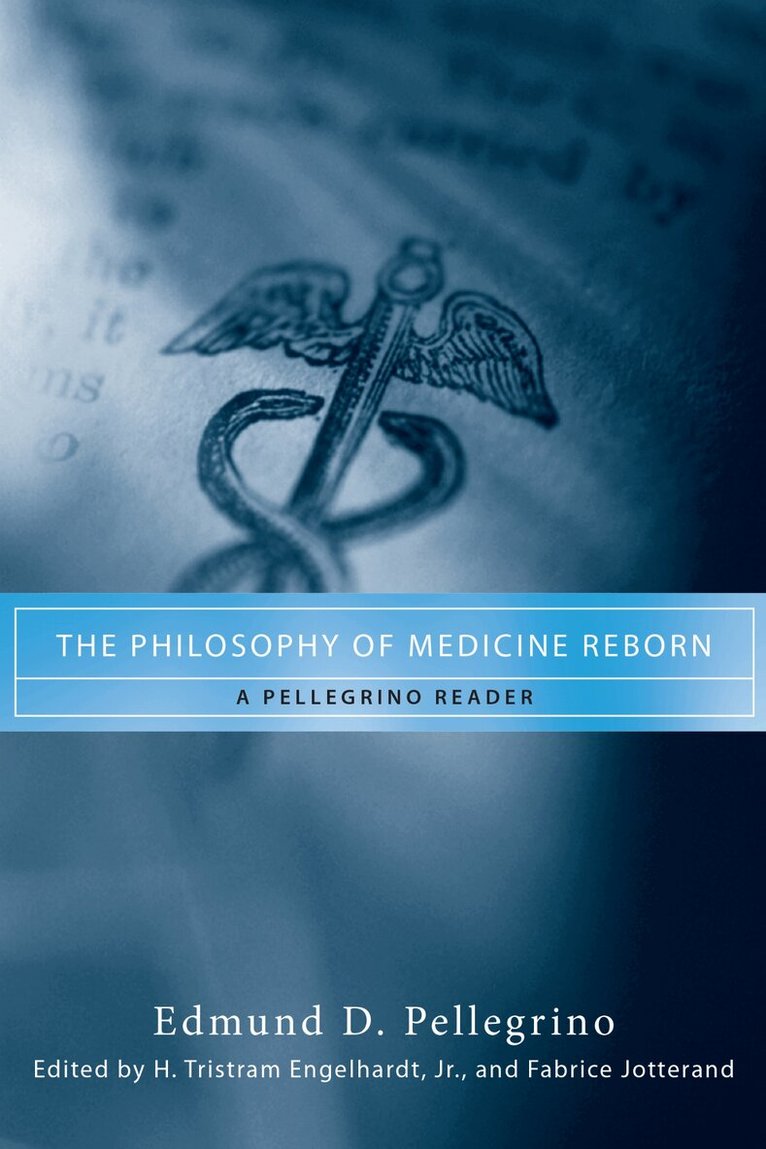
Edmund D. Pellegrino has played a central role in shaping the fields of bioethics and the philosophy of medicine. His writings encompass original explorations of the healing relationship, the need to place humanism in the medical curriculum, the nature of the patient's good, and the importance of a virtue-based normative ethics for health care.In this anthology, H. Tristram Engelhardt, Jr., and Fabrice Jotterand have created a rich presentation of Pellegrino's thought and its development. Pellegrino's work has been dedicated to showing that bioethics must be understood in the context of medical humanities, and that medical humanities, in turn, must be understood in the context of the philosophy of medicine. Arguing that bioethics should not be restricted to topics such as abortion, third-party-assisted reproduction, physician-assisted suicide, or cloning, Pellegrino has instead stressed that such issues are shaped by foundational views regarding the nature of the physician-patient relationship and the goals of medicine, which are the proper focus of the philosophy of medicine.This volume includes a preface ("Apologia") by Dr. Pellegrino and a comprehensive Introduction by the editors. Of interest to medical ethicists as well as students, scholars, and physicians, The Philosophy of Medicine Reborn offers fascinating insights into the emergence of a field and the work of one of its pioneers.
434 kr
Skickas inom 10-15 vardagar
This collection of essays, commissioned by the President's Council on Bioethics, explores a fundamental concept crucial to today's discourse in law and ethics in general and in bioethics in particular. Since its formation in 2001, the council has frequently used the term "human dignity" in its discussions and reports. In this volume scholars from the fields of philosophy, medicine and medical ethics, law, political science, and public policy address the issue of what the concept of "human dignity" entails and its proper role in bioethical controversies. Human Dignity and Bioethics is an attempt to clarify a controversial concept, one that is a critical component in the decisions of policymakers. Contributors: Adam Schulman, F. Daniel Davis, Daniel C. Dennett, Robert P. Kraynak, Alfonso Gómez-Lobo, Patricia S. Churchland, Gilbert Meilaender, Holmes Rolston III, Charles Rubin, Nick Bostrom, Richard John Neuhaus, Peter Augustine Lawler, Diana Schaub, Leon R. Kass, Susan M. Shell, Martha Nussbaum, David Gelernter, Patrick Lee, Robert P. George, Paul Weithman, Daniel P. Sulmasy, O.F.M., Rebecca Dresser, and Edmund D. Pellegrino.
488 kr
Skickas inom 10-15 vardagar
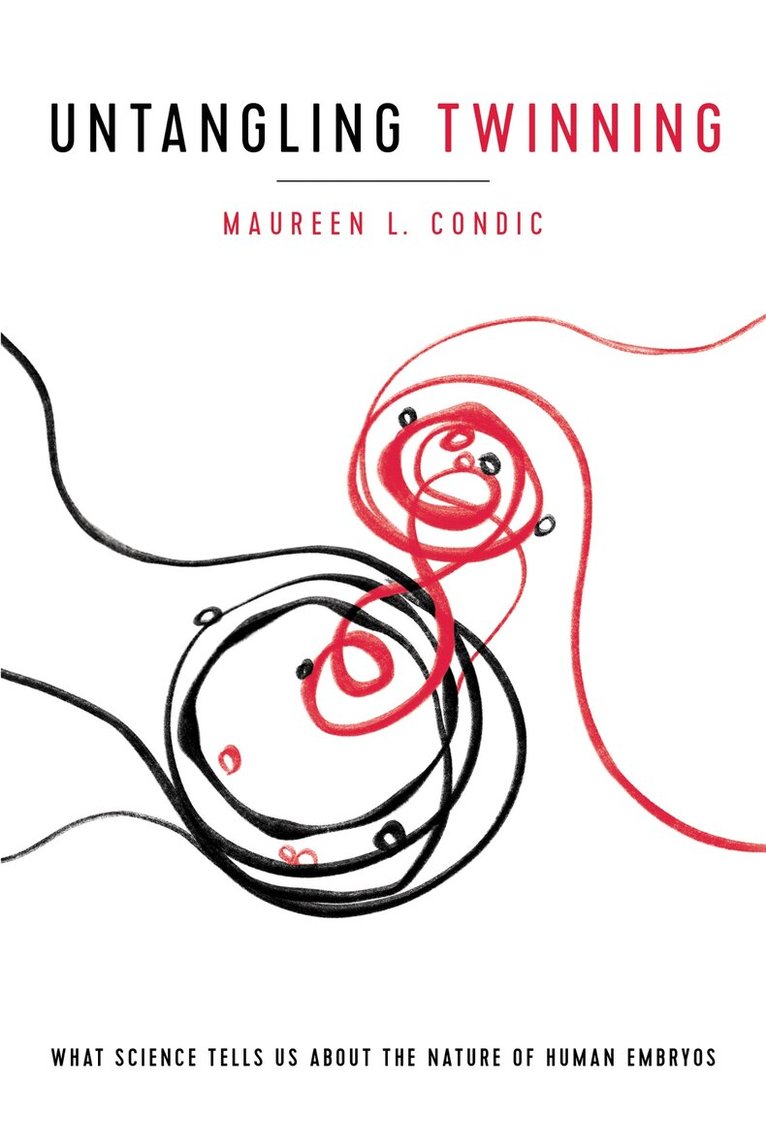
Scientists and philosophers have long struggled to answer the questions of when human life begins and when human life has inherent value. The phenomenon of identical (monozygotic) twinning presents a significant challenge to the view that human life and human personhood begin at conception. The fact that a single embryo can split to generate two (or more) genetically identical embryos seems to defy the notion that prior to splitting an embryo can be a single human individual. In Untangling Twinning, Maureen Condic looks at the questions raised by human twinning based on a unique synthesis of molecular developmental biology and Aristotelian philosophy. She begins with a brief historical analysis of the current scientific perspective on the embryo and proceeds to address the major philosophic and scientific concerns regarding human twinning and embryo fusion: Is the embryo one human or two (or even more)? Does the original embryo die, and if not, which of the twins is the original? Who are the parents of the twins? What do twins, chimeras, cloning, and asexual reproduction in humans mean? And what does the science of human embryology say about human ensoulment, human individuality, and human value? Condic's original approach makes a unique contribution to the discussion of human value and human individuality, and offers a clear, evidence-based resolution to questions raised by human twinning. The book is written for students and scholars of bioethics, scientists, theologians, and attorneys who are involved in questions surrounding the human embryo.
1 078 kr
Skickas inom 5-8 vardagar
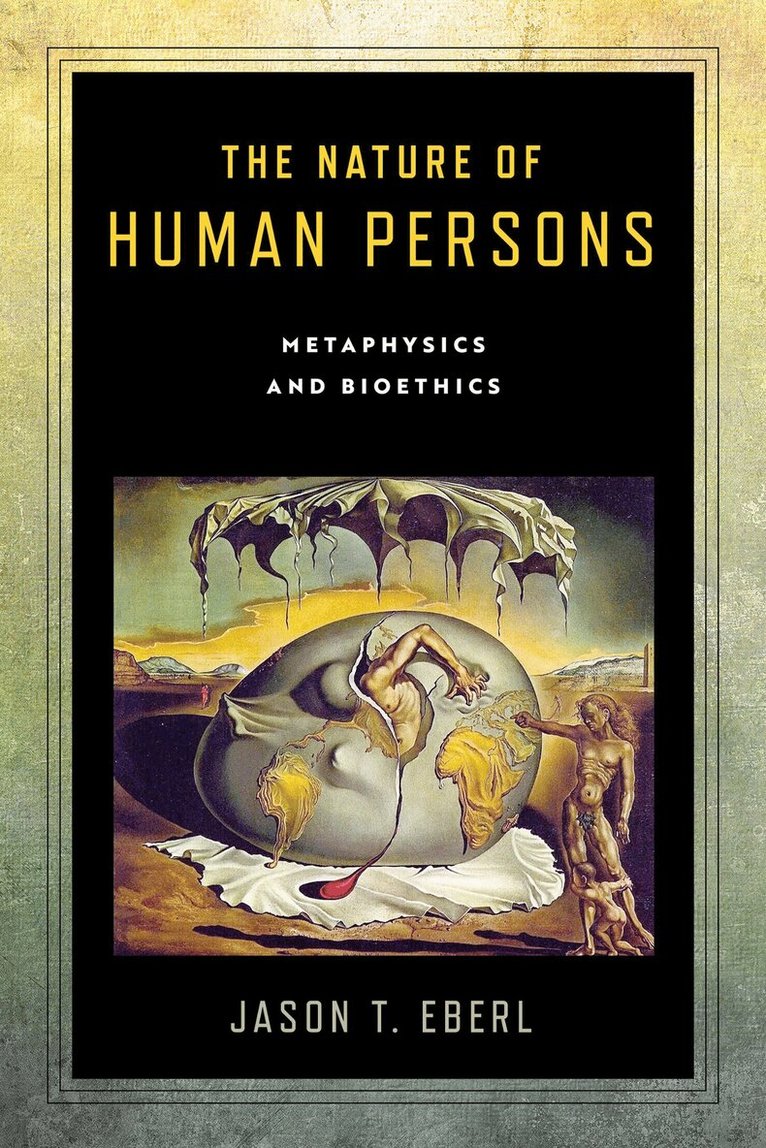
For a human being to exist, does it require an immaterial mind, a physical body, a functioning brain, a soul?Is there a shared nature common to all human beings? What essential qualities might define this nature? These questions are among the most widely discussed topics in the history of philosophy and remain subjects of perennial interest and controversy. The Nature of Human Persons offers a metaphysical investigation of the composition of the human essence.Jason Eberl also considers the criterion of identity for a developing human being—that is, what is required for a human being to continue existing as a person despite undergoing physical and psychological changes over time? Eberl places Thomas Aquinas's account of human nature into direct comparison with several prominent contemporary theories: substance dualism, emergentism, animalism, constitutionalism, four-dimensionalism, and embodied mind theory. These theories inform conclusions regarding when human beings first come into existence (at conception, during gestation, or after birth), how we ought to define death for human beings, and whether (and if so how) human beings may survive death. Ultimately, The Nature of Human Persons argues that the Thomistic account of human nature addresses the matters of human nature and survival more holistically than other theories and offers a cohesive portrait of one's continued existence from conception through life to death and beyond.
475 kr
Skickas inom 10-15 vardagar
For a human being to exist, does it require an immaterial mind, a physical body, a functioning brain, a soul?Is there a shared nature common to all human beings? What essential qualities might define this nature? These questions are among the most widely discussed topics in the history of philosophy and remain subjects of perennial interest and controversy. The Nature of Human Persons offers a metaphysical investigation of the composition of the human essence.Jason Eberl also considers the criterion of identity for a developing human being—that is, what is required for a human being to continue existing as a person despite undergoing physical and psychological changes over time? Eberl places Thomas Aquinas's account of human nature into direct comparison with several prominent contemporary theories: substance dualism, emergentism, animalism, constitutionalism, four-dimensionalism, and embodied mind theory. These theories inform conclusions regarding when human beings first come into existence (at conception, during gestation, or after birth), how we ought to define death for human beings, and whether (and if so how) human beings may survive death. Ultimately, The Nature of Human Persons argues that the Thomistic account of human nature addresses the matters of human nature and survival more holistically than other theories and offers a cohesive portrait of one's continued existence from conception through life to death and beyond.
1 077 kr
Skickas inom 10-15 vardagar
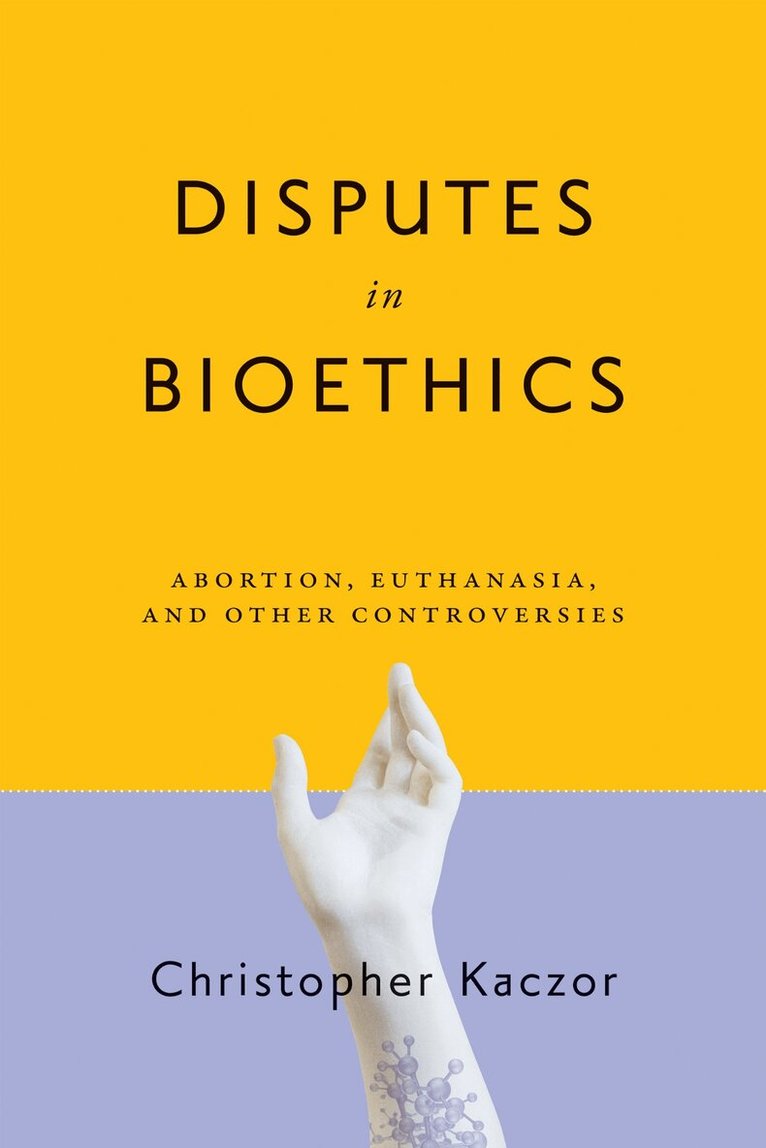
Disputes in Bioethics tackles some of the most debated questions in contemporary scholarship about the beginning and end of life. This collection of essays takes up questions about the dawn of human life, including: Should we make children with three (or more) parents? Is it better never to have been born? and Why should the baby live? This volume also asks about the dusk of human life: Is "death with dignity" a dangerous euphemism? Should euthanasia be permitted for children? Does assisted suicide harm those who do not choose to die? Still other questions are asked concerning recent views that health care professionals should not have a right to conscientiously object to legal and accepted medical practices. Finally, the book addresses questions about separating conjoined twins as well as the issue of whether the species of an individual makes a difference for the individual's moral status.Christopher Kaczor critiques some of the most recent and influential positions in bioethics, while eschewing both consequentialism and principalism. Rooted in the Catholic principle that faith and reason are harmonious, this book shows how Catholic bioethical teaching is rationally defensible in terms that people of good will, secular or religious, can accept. Proceeding from a natural law perspective, Kaczor defends the inherent dignity of all human beings and argues that they merit the protection of their basic human goods because of that inherent dignity. Philosophers interested in applied ethics, as well as students and professors of law, will profit from reading Disputes in Bioethics. The book aims to be both philosophically sophisticated and accessible for students and experienced researchers alike.
314 kr
Skickas inom 10-15 vardagar
Disputes in Bioethics tackles some of the most debated questions in contemporary scholarship about the beginning and end of life. This collection of essays takes up questions about the dawn of human life, including: Should we make children with three (or more) parents? Is it better never to have been born? and Why should the baby live? This volume also asks about the dusk of human life: Is "death with dignity" a dangerous euphemism? Should euthanasia be permitted for children? Does assisted suicide harm those who do not choose to die? Still other questions are asked concerning recent views that health care professionals should not have a right to conscientiously object to legal and accepted medical practices. Finally, the book addresses questions about separating conjoined twins as well as the issue of whether the species of an individual makes a difference for the individual's moral status.Christopher Kaczor critiques some of the most recent and influential positions in bioethics, while eschewing both consequentialism and principalism. Rooted in the Catholic principle that faith and reason are harmonious, this book shows how Catholic bioethical teaching is rationally defensible in terms that people of good will, secular or religious, can accept. Proceeding from a natural law perspective, Kaczor defends the inherent dignity of all human beings and argues that they merit the protection of their basic human goods because of that inherent dignity. Philosophers interested in applied ethics, as well as students and professors of law, will profit from reading Disputes in Bioethics. The book aims to be both philosophically sophisticated and accessible for students and experienced researchers alike.
1 611 kr
Skickas inom 10-15 vardagar
Edmund D. Pellegrino has played a central role in shaping the fields of bioethics and the philosophy of medicine. His writings encompass original explorations of the healing relationship, the need to place humanism in the medical curriculum, the nature of the patient's good, and the importance of a virtue-based normative ethics for health care.In this anthology, H. Tristram Engelhardt, Jr., and Fabrice Jotterand have created a rich presentation of Pellegrino's thought and its development. Pellegrino's work has been dedicated to showing that bioethics must be understood in the context of medical humanities, and that medical humanities, in turn, must be understood in the context of the philosophy of medicine. Arguing that bioethics should not be restricted to topics such as abortion, third-party-assisted reproduction, physician-assisted suicide, or cloning, Pellegrino has instead stressed that such issues are shaped by foundational views regarding the nature of the physician-patient relationship and the goals of medicine, which are the proper focus of the philosophy of medicine.This volume includes a preface ("Apologia") by Dr. Pellegrino and a comprehensive Introduction by the editors. Of interest to medical ethicists as well as students, scholars, and physicians, The Philosophy of Medicine Reborn offers fascinating insights into the emergence of a field and the work of one of its pioneers.
1 077 kr
Skickas inom 10-15 vardagar
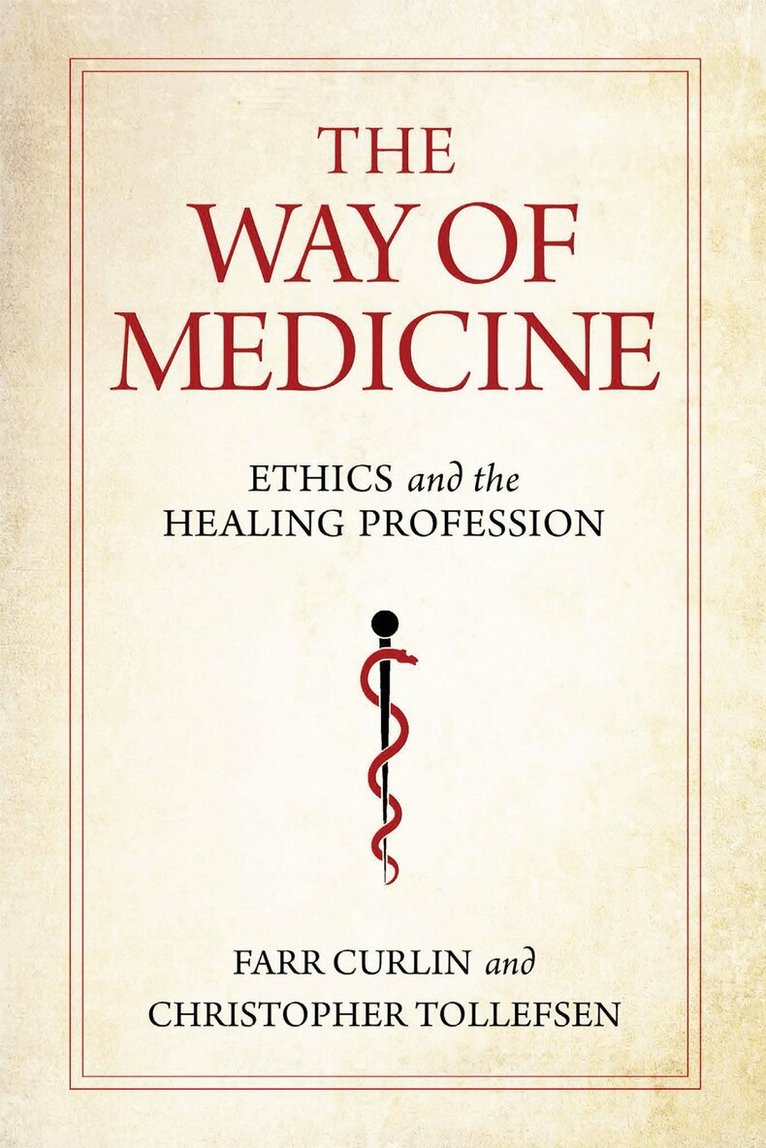
Today's medicine is spiritually deflated and morally adrift; this book explains why and offers an ethical framework to renew and guide practitioners in fulfilling their profession to heal.What is medicine and what is it for? What does it mean to be a good doctor? Answers to these questions are essential both to the practice of medicine and to understanding the moral norms that shape that practice. The Way of Medicine articulates and defends an account of medicine and medical ethics meant to challenge the reigning provider of services model, in which clinicians eschew any claim to know what is good for a patient and instead offer an array of "health care services" for the sake of the patient's subjective well-being. Against this trend, Farr Curlin and Christopher Tollefsen call for practitioners to recover what they call the Way of Medicine, which offers physicians both a path out of the provider of services model and also the moral resources necessary to resist the various political, institutional, and cultural forces that constantly push practitioners and patients into thinking of their relationship in terms of economic exchange.Curlin and Tollefsen offer an accessible account of the ancient ethical tradition from which contemporary medicine and bioethics has departed. Their investigation, drawing on the scholarship of Leon Kass, Alasdair MacIntyre, and John Finnis, leads them to explore the nature of medicine as a practice, health as the end of medicine, the doctor-patient relationship, the rule of double effect in medical practice, and a number of clinical ethical issues from the beginning of life to its end. In the final chapter, the authors take up debates about conscience in medicine, arguing that rather than pretending to not know what is good for patients, physicians should contend conscientiously for the patient's health and, in so doing, contend conscientiously for good medicine. The Way of Medicine is an intellectually serious yet accessible exploration of medical practice written for medical students, health care professionals, and students and scholars of bioethics and medical ethics.
314 kr
Skickas inom 10-15 vardagar
Today's medicine is spiritually deflated and morally adrift; this book explains why and offers an ethical framework to renew and guide practitioners in fulfilling their profession to heal.What is medicine and what is it for? What does it mean to be a good doctor? Answers to these questions are essential both to the practice of medicine and to understanding the moral norms that shape that practice. The Way of Medicine articulates and defends an account of medicine and medical ethics meant to challenge the reigning provider of services model, in which clinicians eschew any claim to know what is good for a patient and instead offer an array of "health care services" for the sake of the patient's subjective well-being. Against this trend, Farr Curlin and Christopher Tollefsen call for practitioners to recover what they call the Way of Medicine, which offers physicians both a path out of the provider of services model and also the moral resources necessary to resist the various political, institutional, and cultural forces that constantly push practitioners and patients into thinking of their relationship in terms of economic exchange.Curlin and Tollefsen offer an accessible account of the ancient ethical tradition from which contemporary medicine and bioethics has departed. Their investigation, drawing on the scholarship of Leon Kass, Alasdair MacIntyre, and John Finnis, leads them to explore the nature of medicine as a practice, health as the end of medicine, the doctor-patient relationship, the rule of double effect in medical practice, and a number of clinical ethical issues from the beginning of life to its end. In the final chapter, the authors take up debates about conscience in medicine, arguing that rather than pretending to not know what is good for patients, physicians should contend conscientiously for the patient's health and, in so doing, contend conscientiously for good medicine. The Way of Medicine is an intellectually serious yet accessible exploration of medical practice written for medical students, health care professionals, and students and scholars of bioethics and medical ethics.
1 611 kr
Skickas inom 10-15 vardagar
In this original and compelling book, Jeffrey P. Bishop, a philosopher, ethicist, and physician, argues that something has gone sadly amiss in the care of the dying by contemporary medicine and in our social and political views of death, as shaped by our scientific successes and ongoing debates about euthanasia and the "right to die"—or to live. The Anticipatory Corpse: Medicine, Power, and the Care of the Dying, informed by Foucault's genealogy of medicine and power as well as by a thorough grasp of current medical practices and medical ethics, argues that a view of people as machines in motion—people as, in effect, temporarily animated corpses with interchangeable parts—has become epistemologically normative for medicine. The dead body is subtly anticipated in our practices of exercising control over the suffering person, whether through technological mastery in the intensive care unit or through the impersonal, quasi-scientific assessments of psychological and spiritual "medicine." The result is a kind of nihilistic attitude toward the dying, and troubling contradictions and absurdities in our practices. Wide-ranging in its examples, from organ donation rules in the United States, to ICU medicine, to "spiritual surveys," to presidential bioethics commissions attempting to define death, and to high-profile cases such as Terri Schiavo's, The Anticipatory Corpse explores the historical, political, and philosophical underpinnings of our care of the dying and, finally, the possibilities of change. This book is a ground-breaking work in bioethics. It will provoke thought and argument for all those engaged in medicine, philosophy, theology, and health policy.
595 kr
Skickas inom 10-15 vardagar
Bioethics after God explores the relationship between morality and medicine in a society that has denied the existence of God.Medicine and bioethics are going through profound changes in the Western world. Practices that prior generations would have recognized as morally impermissible, such as abortion, eugenics, and euthanasia, are becoming central components of modern health care. Bioethics after God argues that in the process of rejecting its Christian roots, the Western world has upended traditional understandings of truth that are central to both scientific and moral judgment. The effect is felt throughout medicine as health care professionals increasingly work without the context and guidance provided by traditional Christian ethics.Cherry uses the conceptual framework of "weak bioethics"—bioethics solely informed by the stark limits of secular morality—to delve into shifting concepts of health and disease, the active embrace of ethically fraught practices, and technological developments such as brain transplantation and humanoid robots designed for sexual activity. The implications of a bioethics after God are wide-ranging and profound, and Cherry challenges us to consider the repercussions of pushing forward in medicine without the support of a solid ethical foundation.
503 kr
Skickas inom 10-15 vardagar
Paul Scherz explores the ethical challenges raised by precision medicine and its focus on medical risk as opposed to current disease.Genetic technologies and artificial intelligence are rapidly changing the landscape of medical practice and patient care. In the emerging field of precision medicine, a patient's risk factors—especially genetic risk factors—are incorporated into an all-encompassing plan to prevent future disease. But identifying at-risk individuals through technologies such as wearable devices and direct-to-consumer genetic sequencing can undermine the overall experience of health. The potential for overdiagnosis and overtreatment grows as patients are prescribed medications and receive prophylactic surgeries that carry inherent risks. Also, as the medical industry shifts its attention from individuals to trends in the general population, the one-to-one practitioner-patient relationship becomes strained.Using the lens of virtue ethics and theological bioethics, The Ethics of Precision Medicine offers suggestions for better implementing precision medicine to treat those currently suffering from or at high risk of disease, while also recognizing that effectively preventing disease depends, ultimately, on addressing the social determinants of health. The book provides a new perspective on the problems of contemporary healthcare, proposing practical steps that individuals and institutions can take to ensure that the advanced technologies of precision medicine can be used to promote human flourishing.