Oil Spill Prevention and Response and Deepwater Horizon – Serie
Visar alla böcker i serien Oil Spill Prevention and Response and Deepwater Horizon. Handla med fri frakt och snabb leverans.
14 produkter
14 produkter
1 157 kr
Tillfälligt slut
Since the early 1970s, experts have recognized that petroleum pollutants were being discharged in marine waters worldwide, from oil spills, vessel operations, and land-based sources. Public attention to oil spills has forced improvements. Still, a considerable amount of oil is discharged yearly into sensitive coastal environments. Oil in the Sea provides the best available estimate of oil pollutant discharge into marine waters, including an evaluation of the methods for assessing petroleum load and a discussion about the concerns these loads represent. Featuring close-up looks at the Exxon Valdez spill and other notable events, the book identifies important research questions and makes recommendations for better analysis ofa "and more effective measures againsta "pollutant discharge. The book discusses: * Inputa "where the discharges come from, including the role of two-stroke engines used on recreational craft. * Behavior or fatea "how oil is affected by processes such as evaporation as it moves through the marine environment. * Effectsa "what we know about the effects of petroleum hydrocarbons on marine organisms and ecosystems.Providing a needed update on a problem of international importance, this book will be of interest to energy policy makers, industry officials and managers, engineers and researchers, and advocates for the marine environment.
704 kr
Tillfälligt slut
Approximately 3 million gallons of oil or refined petroleum products are spilled into U.S. waters every year. Oil dispersants (chemical agents such as surfactants, solvents, and other compounds) are used to reduce the effect of oil spills by changing the chemical and physical properties of the oil. By enhancing the amount of oil that physically mixes into the water, dispersants can reduce the potential that a surface slick will contaminate shoreline habitats. Although called for in the Oil Pollution Act of 1990 as a tool for minimizing the impact of oil spills, the use of chemical dispersants has long been controversial. This book reviews the adequacy of existing information and ongoing research regarding the effectiveness of dispersants as an oil spill response technique, as well as the effect of dispersed oil on marine and coastal ecosystems. Oil Spill Dispersants also includes recommended steps for policy makers faced with making hard choices regarding the use of dispersants as part of spill contingency planning efforts or during actual spills.
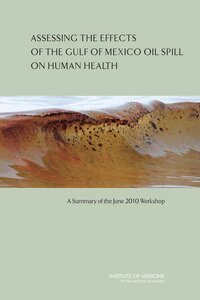
Assessing the Effects of the Gulf of Mexico Oil Spill on Human Health
A Summary of the June 2010 Workshop
Häftad, Engelska, 2010
546 kr
Tillfälligt slut
From the origin of the leak, to the amount of oil released into the environment, to the spill's duration, the 2010 Gulf of Mexico oil spill poses unique challenges to human health. The risks associated with extensive, prolonged use of dispersants, with oil fumes, and with particulate matter from controlled burns are also uncertain. There have been concerns about the extent to which hazards, such as physical and chemical exposures and social and economic disruptions, will impact the overall health of people who live and work near the area of the oil spill. Although studies of previous oil spills provide some basis for identifying and mitigating the human health effects of these exposures, the existing data are insufficient to fully understand and predict the overall impact of hazards from the Deepwater Horizon oil spill on the health of workers, volunteers, residents, visitors, and special populations. Assessing the Effects of the Gulf of Mexico Oil Spill on Human Health identifies populations at increased risks for adverse health effects and explores effective communication strategies to convey health information to these at-risk populations.The book also discusses the need for appropriate surveillance systems to monitor the spill's potential short- and long-term health effects on affected communities and individuals. Assessing the Effects of the Gulf of Mexico Oil Spill on Human Health is a useful resource that can help policy makers, public health officials, academics, community advocates, scientists, and members of the public collaborate to create a monitoring and surveillance system that results in "actionable" information and that identifies emerging health risks in specific populations.
Review of the Proposal for the Gulf Long-Term Follow-Up Study
Highlights from the September 2010 Workshop: Workshop Report
Häftad, Engelska, 2010
251 kr
Tillfälligt slut
The Gulf of Mexico oil spill is unprecedented not only in its size but also in the use of chemical dispersants and controlled burns to remove the oil. The National Institute of Environmental Health Sciences (NIEHS) is designing a study to investigate the health effects on clean-up workers. The IOM held a workshop to review and comment on NIEHS'o;s study protocol.
Research Priorities for Assessing Health Effects from the Gulf of Mexico Oil Spill
A Letter Report
Häftad, Engelska, 2010
187 kr
Tillfälligt slut
It is as yet uncertain how the Gulf of Mexico oil spill will affect the health of clean-up workers and volunteers, residents, and visitors in the Gulf. The IOM recommends that the U.S. Department of Health and Human Services focus on researching psychological and behavioral health, exposure information to oil and dispersants, seafood safety, communication methods for health studies, and methods for conducting research in order to better understand and mitigate the effects on human health for this oil spill and for future disasters.
Approaches for Ecosystem Services Valuation for the Gulf of Mexico After the Deepwater Horizon Oil Spill
Interim Report
Häftad, Engelska, 2012
565 kr
Tillfälligt slut
On April 20, 2010, the Deepwater Horizon platform drilling the Macondo well in Mississippi Canyon Block 252 (DWH) exploded, killing 11 workers and injuring another 17. The DWH oil spill resulted in nearly 5 million barrels (approximately 200 million gallons) of crude oil spilling into the Gulf of Mexico (GoM). The full impacts of the spill on the GoM and the people who live and work there are unknown but expected to be considerable, and will be expressed over years to decades. In the short term, up to 80,000 square miles of the U.S. Exclusive Economic Zone (EEZ) were closed to fishing, resulting in loss of food, jobs and recreation. The DWH oil spill immediately triggered a process under the U.S. Oil Pollution Act of 1990 (OPA) to determine the extent and severity of the "injury" (defined as an observable or measurable adverse change in a natural resource or impairment of a natural resource service) to the public trust, known as the Natural Resources Damage Assessment (NRDA).The assessment, undertaken by the trustees (designated technical experts who act on behalf of the public and who are tasked with assessing the nature and extent of site-related contamination and impacts), requires: (1) quantifying the extent of damage; (2) developing, implementing, and monitoring restoration plans; and (3) seeking compensation for the costs of assessment and restoration from those deemed responsible for the injury. This interim report provides options for expanding the current effort to include the analysis of ecosystem services to help address the unprecedented scale of this spill in U.S. waters and the challenges it presents to those charged with undertaking the damage assessment.
Macondo Well Deepwater Horizon Blowout
Lessons for Improving Offshore Drilling Safety
Häftad, Engelska, 2012
553 kr
Tillfälligt slut
The blowout of the Macondo well on April 20, 2010, led to enormous consequences for the individuals involved in the drilling operations, and for their families. Eleven workers on the Deepwater Horizon drilling rig lost their lives and 16 others were seriously injured. There were also enormous consequences for the companies involved in the drilling operations, to the Gulf of Mexico environment, and to the economy of the region and beyond. The flow continued for nearly 3 months before the well could be completely killed, during which time, nearly 5 million barrels of oil spilled into the gulf. Macondo Well-Deepwater Horizon Blowout examines the causes of the blowout and provides a series of recommendations, for both the oil and gas industry and government regulators, intended to reduce the likelihood and impact of any future losses of well control during offshore drilling.According to this report, companies involved in offshore drilling should take a "system safety" approach to anticipating and managing possible dangers at every level of operation -- from ensuring the integrity of wells to designing blowout preventers that function under all foreseeable conditions-- in order to reduce the risk of another accident as catastrophic as the Deepwater Horizon explosion and oil spill. In addition, an enhanced regulatory approach should combine strong industry safety goals with mandatory oversight at critical points during drilling operations. Macondo Well-Deepwater Horizon Blowout discusses ultimate responsibility and accountability for well integrity and safety of offshore equipment, formal system safety education and training of personnel engaged in offshore drilling, and guidelines that should be established so that well designs incorporate protection against the various credible risks associated with the drilling and abandonment process.This book will be of interest to professionals in the oil and gas industry, government decision makers, environmental advocacy groups, and others who seek an understanding of the processes involved in order to ensure safety in undertakings of this nature.
Ecosystem Services Approach to Assessing the Impacts of the Deepwater Horizon Oil Spill in the Gulf of Mexico
Häftad, Engelska, 2013
693 kr
Tillfälligt slut
As the Gulf of Mexico recovers from the Deepwater Horizon oil spill, natural resource managers face the challenge of understanding the impacts of the spill and setting priorities for restoration work. The full value of losses resulting from the spill cannot be captured, however, without consideration of changes in ecosystem services--the benefits delivered to society through natural processes. An Ecosystem Services Approach to Assessing the Impacts of the Deepwater Horizon Oil Spill in the Gulf of Mexico discusses the benefits and challenges associated with using an ecosystem services approach to damage assessment, describing potential impacts of response technologies, exploring the role of resilience, and offering suggestions for areas of future research. This report illustrates how this approach might be applied to coastal wetlands, fisheries, marine mammals, and the deep sea -- each of which provide key ecosystem services in the Gulf -- and identifies substantial differences among these case studies.The report also discusses the suite of technologies used in the spill response, including burning, skimming, and chemical dispersants, and their possible long-term impacts on ecosystem services.
232 kr
Tillfälligt slut
In 2010 the Deepwater Horizon explosion and fire in the Gulf of Mexico caused the largest offshore oil spill in U.S. history, resulting in significant impacts on the region\'s environment and residents. Legal settlements with the companies held responsible led the federal government to ask the National Academy of Sciences to form and administer a 30-year program to enhance oil system safety, human health, and environmental resources in the Gulf of Mexico and other U.S. continental shelf areas where offshore oil and gas exploration and production occur or are under consideration. The new Gulf Research Program will receive $500 million to support activities using three broad approaches: research and development, education and training, and environmental monitoring. The Gulf Research Program: A Strategic Vision establishes the Program\'s foundation and introduces its mission, goals, and objectives. It describes some initial activities and sets out the Program\'s vision for contributing lasting benefit to the Gulf region and the nation. The Program is an extraordinary opportunity to foster science on a regional scale and over the long term.The document will be of interest to scientists, health professionals, engineers, and educators who wish to learn about, collaborate with, and submit proposals to the Program, and to all those who share the goal of enhancing resilience in areas where offshore energy production, vibrant communities, and dynamic ecosystems coexist.
Opportunities for the Gulf Research Program: Middle-Skilled Workforce Needs
Summary of a Workshop
Häftad, Engelska, 2014
332 kr
Tillfälligt slut
During the period 1990 to 2010, U.S. job growth occurred primarily in the high-skilled and low-skilled sectors. Yet, one-third of projected job growth for the period 2010-2020 will require middle-skilled workers -- who will earn strong middle-class wages and salaries -- important to both the production and consumption components of our economy. These jobs typically require significant training, often requiring more than a high school diploma but less than a baccalaureate degree. In the Gulf of Mexico, middle skilled workers play key roles in maintaining oil system safety, completing the numerous environmental restoration projects needed along the Gulf coast, and as workers in an integrated and resilient public health system. Educational pathways that lead to middle skilled jobs in these areas include: apprenticeship programs offered by schools, unions, and employers; high school career and technical education programs; community college courses, certificates, and associate degrees; and employer provided training. Opportunities for the Gulf Research Program: Middle-Skilled Workforce Needs is the summary of a workshop held on June 9-10, 2014 in Tampa, Florida.This workshop convened 40 thought leaders from the Gulf region's education, employer, and policymaking communities to facilitate a discussion of the current state of education and training pathways for preparing the region\'s middle-skilled workforce in both the short- and long-term and to identify perceived needs and potential opportunities that might be addressed by the GRP. Workshop participants discussed a variety of opportunities around building capacity in the region's middle-skilled workforce, including the need for competency-based education and training approaches and stronger partnerships among the region's employers and institutions of higher education.
Opportunities for the Gulf Research Program: Monitoring Ecosystem Restoration and Deep Water Environments
Summary of a Workshop
Häftad, Engelska, 2015
460 kr
Tillfälligt slut
Environmental monitoring in the Gulf of Mexico poses extensive challenges and significant opportunities. Multiple jurisdictions manage this biogeographically and culturally diverse region, whose monitoring programs tend to be project-specific by design and funding. As a result, these programs form more of a monitoring patchwork then a network. At the same time, the Gulf monitoring community faces a unique opportunity to organize and think differently about monitoring - including how best to allocate and manage the resources for this large marine ecosystem and its communities - as a result of the infusion of resources for environmental restoration and related activities after the Deepwater Horizon oil spill. Opportunities for the Gulf Research Program: Monitoring Ecosystem Restoration and Deep Water Environments summarizes a Gulf Research Program workshop held on September 3-4, 2014 in New Orleans, Louisiana.The workshop gathered about 40 participants from the energy industry, state and federal government, academia, and nongovernmental organizations to examine two broad issues that were seen as time-sensitive opportunities in light of significant investments in the Gulf for restoration and accelerating development of energy resources in the deep Gulf: monitoring ecosystem restoration and deep water environments. As participants explored potential opportunities for the Program to consider, they noted the essential role that communication and outreach play in successful monitoring, and the importance of applying an ecosystem service approach to monitoring, forging partnerships among stakeholders, and supporting efforts to organize and manage monitoring data.
Opportunities for the Gulf Research Program
Community Resilience and Health: Summary of a Workshop
Häftad, Engelska, 2015
565 kr
Tillfälligt slut
There are many connections between human communities and their surrounding environments that influence community resilience and health in the Gulf of Mexico. The impacts of the Deepwater Horizon oil spill on Gulf communities and ecosystems - coupled with the region's preexisting health challenges and environmental stressors - illustrate the need to better understand these connections. In the future, natural and man-made disasters, climate change impacts, and other environmental stressors will present complex challenges to the physical, mental, and social well-being of communities in the Gulf. Understanding the interrelationships among health, ecological, and economic impacts of disasters and other environmental stressors will be crucial to addressing these challenges. Opportunities for the Gulf Research Program: Community Resilience and Health summarizes a Gulf Research Program workshop held on September 22-23, 2014, in New Orleans, Louisiana. The workshop examined opportunities to improve the health, well-being, and resilience of communities in the Gulf region through discussions with about 50 participants with diverse expertise and experience.These discussions identified perceived needs, challenges, and opportunities that align with the Gulf Research Program's mission and goals - particularly its goal to improve understanding of the connections between human health and the environment to support the development of health and resilient Gulf communities. This workshop is expected to lead to the development of additional Program activities and opportunities for the research community.
High-Performance Bolting Technology for Offshore Oil and Natural Gas Operations
Häftad, Engelska, 2018
762 kr
Tillfälligt slut
Commercially significant amounts of crude oil and natural gas lie under the continental shelf of the United States. Advances in locating deposits, and improvements in drilling and recovery technology, have made it technically and economically feasible to extract these resources under harsh conditions. But extracting these offshore petroleum resources involves the possibility, however remote, of oil spills, with resulting damage to the ocean and the coastline ecosystems and risks to life and limb of those performing the extraction. The environmental consequences of an oil spill can be more severe underwater than on land because sea currents can quickly disperse the oil over a large area and, thus, cleanup can be problematic. Bolted connections are an integral feature of deep-water well operations. High-Performance Bolting Technology for Offshore Oil and Natural Gas Operations summarizes strategies for improving the reliability of fasteners used in offshore oil exploration equipment, as well as best practices from other industrial sectors. It focuses on critical bolting—bolts, studs, nuts, and fasteners used on critical connections.
878 kr
Tillfälligt slut
Whether the result of an oil well blowout, vessel collision or grounding, leaking pipeline, or other incident at sea, each marine oil spill will present unique circumstances and challenges. The oil type and properties, location, time of year, duration of spill, water depth, environmental conditions, affected biomes, potential human community impact, and available resources may vary significantly. Also, each spill may be governed by policy guidelines, such as those set forth in the National Response Plan, Regional Response Plans, or Area Contingency Plans. To respond effectively to the specific conditions presented during an oil spill, spill responders have used a variety of response options—including mechanical recovery of oil using skimmers and booms, in situ burning of oil, monitored natural attenuation of oil, and dispersion of oil by chemical dispersants. Because each response method has advantages and disadvantages, it is important to understand specific scenarios where a net benefit may be achieved by using a particular tool or combination of tools. This report builds on two previous National Research Council reports on dispersant use to provide a current understanding of the state of science and to inform future marine oil spill response operations. The response to the 2010 Deepwater Horizon spill included an unprecedented use of dispersants via both surface application and subsea injection. The magnitude of the spill stimulated interest and funding for research on oil spill response, and dispersant use in particular. This study assesses the effects and efficacy of dispersants as an oil spill response tool and evaluates trade-offs associated with dispersant use.