Transportation Research Board – författare
Visar alla böcker från författaren Transportation Research Board. Handla med fri frakt och snabb leverans.
40 produkter
40 produkter
Häftad, Engelska, 2022
2 308 kr
Skickas
Transportation engineers have used editions of the Highway Capacity Manual (HCM) in their analyses for decades. The HCM is the fundamental reference for concepts, performance measures, and analysis techniques for evaluating the multimodal operation of streets, highways, freeways, and off-street paths. This 3-volume 7th Edition contains new information, including new planning-level methods for connected and automated vehicles; a completely revised procedure for analyzing two-lane highways; a new procedure for evaluating systems of freeways and arterials with queue spillback; and updated methodologies for pedestrian operations at uncontrolled and signalized crossings.
Häftad, Engelska, 2005
637 kr
Skickas
The FreedomCAR and Fuel Partnership is a collaborative effort among the Department of Energy (DOE), the U.S. Council for Automotive Research (USCAR), and five major energy companies to manage research that will enable the vision of "a clean and sustainable transportation energy future." It envisions a transition from more efficient internal combustion engines (ICEs), to advanced ICE hybrid electric vehicles, to enabling a private-sector decision by 2015 on hydrogen-fueled vehicle development. This report, which builds on an earlier NRC report, The Hydrogen Economy: Opportunities, Costs, Barriers, and R&D Needs, presents an evaluation of the Partnershipa (TM)s research efforts on hydrogen-fueled transportation systems, and provides findings and recommendations about technical directions, strategies, funding, and management.
Häftad, Engelska, 2011
349 kr
Skickas inom 3-6 vardagar
The potential for fatigue to negatively affect human performance is well established. Concern about this potential in the aviation context extends back decades, with both airlines and pilots agreeing that fatigue is a safety concern. A more recent consideration is whether and how pilot commuting, conducted in a pilot's off-duty time, may affect fatigue. The National Academy of Sciences was asked to review available information related to the prevalence and characteristics of pilot commuting; sleep, fatigue, and circadian rhythms; airline and regulatory oversight policies; and pilot and airline practices. This interim report summarizes the committee's review to date of the available information. The final report will present a final review, along with the committee's conclusions and recommendations based on the information available during its deliberations.
Häftad, Engelska, 2015
522 kr
Skickas
In the past few years, interest in plug-in electric vehicles (PEVs) has grown. Advances in battery and other technologies, new federal standards for carbon-dioxide emissions and fuel economy, state zero-emission-vehicle requirements, and the current administration's goal of putting millions of alternative-fuel vehicles on the road have all highlighted PEVs as a transportation alternative. Consumers are also beginning to recognize the advantages of PEVs over conventional vehicles, such as lower operating costs, smoother operation, and better acceleration; the ability to fuel up at home; and zero tailpipe emissions when the vehicle operates solely on its battery. There are, however, barriers to PEV deployment, including the vehicle cost, the short all-electric driving range, the long battery charging time, uncertainties about battery life, the few choices of vehicle models, and the need for a charging infrastructure to support PEVs. What should industry do to improve the performance of PEVs and make them more attractive to consumers?At the request of Congress, Overcoming Barriers to Deployment of Plug-in Electric Vehicles identifies barriers to the introduction of electric vehicles and recommends ways to mitigate these barriers. This report examines the characteristics and capabilities of electric vehicle technologies, such as cost, performance, range, safety, and durability, and assesses how these factors might create barriers to widespread deployment. Overcoming Barriers to Deployment of Plug-in Electric Vehicles provides an overview of the current status of PEVs and makes recommendations to spur the industry and increase the attractiveness of this promising technology for consumers. Through consideration of consumer behaviors, tax incentives, business models, incentive programs, and infrastructure needs, this book studies the state of the industry and makes recommendations to further its development and acceptance.
Häftad, Engelska, 2020
1 105 kr
Skickas
Medium- and heavy-duty trucks, motor coaches, and transit buses - collectively, "medium- and heavy-duty vehicles", or MHDVs - are used in every sector of the economy. The fuel consumption and greenhouse gas emissions of MHDVs have become a focus of legislative and regulatory action in the past few years. This study is a follow-on to the National Research Council's 2010 report, Technologies and Approaches to Reducing the Fuel Consumption of Medium-and Heavy-Duty Vehicles. That report provided a series of findings and recommendations on the development of regulations for reducing fuel consumption of MHDVs.On September 15, 2011, NHTSA and EPA finalized joint Phase I rules to establish a comprehensive Heavy-Duty National Program to reduce greenhouse gas emissions and fuel consumption for on-road medium- and heavy-duty vehicles. As NHTSA and EPA began working on a second round of standards, the National Academies issued another report, Reducing the Fuel Consumption and Greenhouse Gas Emissions of Medium- and Heavy-Duty Vehicles, Phase Two: First Report, providing recommendations for the Phase II standards. This third and final report focuses on a possible third phase of regulations to be promulgated by these agencies in the next decade.
Häftad, Engelska, 1988
169 kr
Tillfälligt slut
TRB Special Report 217: New Organizational Responses to the Changing Transit Environment assesses the effectiveness of transit organizational structures now being used and those developed in recent years, and identifies further organization changes appropriate to the new conditions and pressures transit faces.
Inbunden, Engelska, 1999
1 530 kr
Tillfälligt slut
America's cities have symbolized the nation's prosperity, dynamism, and innovation. Even with the trend toward suburbanization, many central cities attract substantial new investment and employment. Within this profile of health, however, many urban areas are beset by problems of economic disparity, physical deterioration, and social distress. This volume addresses the condition of the city from the perspective of the larger metropolitan region. It offers important, thought-provoking perspectives on the structure of metropolitan-level decisionmaking, the disadvantages faced by cities and city residents, and expanding economic opportunity to all residents in a metropolitan area. The book provides data, real-world examples, and analyses in key areas: * Distribution of metropolitan populations and what this means for city dwellers, suburbanites, whites, and minorities. * How quality of life depends on the spatial structure of a community and how problems are based on inequalities in spatial opportunity--with a focus on the relationship between taxes and services. * The role of the central city today, the rationale for revitalizing central cities, and city-suburban interdependence.The book includes papers that provide in-depth examinations of zoning policy in relation to patterns of suburban development; regionalism in transportation and air quality; the geography of economic and social opportunity; social stratification in metropolitan areas; and fiscal and service disparities within metropolitan areas.
Häftad, Engelska, 1999
1 061 kr
Tillfälligt slut
The surface transportation system is vital to our nation's economy, defense, and quality of life. Because threats against the system have hitherto been perceived as minor, little attention has been paid to its security. But the world is changing, as highlighted by dramatic incidents such as the terrorist chemical attack on the Tokyo subway in 1995. As a consequence, security concerns are now attracting more attention--appropriately so, for the threat is real, and responding to it is hard. Although the surface transportation system is remarkably resilient, it is also open and decentralized, making a security response challenging. Research and development can contribute to that response in important ways. Some important themes emerge from analysis of this strategy. First, a dual-use approach, in which security objectives are furthered at the same time as other transportation goals, can encourage the implementation of security technologies and processes. Second, modeling could be used more to develop a better understanding of the scope of the security problem.Third, DOT can play an important role in developing and disseminating information about best practices that use existing technologies and processes, including low-technology alternatives. Finally, security should be considered as part of a broader picture, not a wholly new and different problem but one that is similar and closely connected to the transportation community's previous experience in responding to accidents, natural disasters, and hazardous materials.
Häftad, Engelska, 2000
1 530 kr
Tillfälligt slut
The Mobile Source Emissions Factor (MOBILE) model is a computer model developed by the U.S. Environmental Protection Agency (EPA) for estimating emissions from on-road motor vehicles. MOBILE is used in air-quality planning and regulation for estimating emissions of carbon monoxide (CO), volatile organic compounds (VOCs), and nitrogen oxides (NOx) and for predicting the effects of emissions-reduction programs.1 Because of its important role in air-quality management, the accuracy of MOBILE is critical. Possible consequences of inaccurately characterizing motor-vehicle emissions include the implementation of insufficient controls that endanger the environment and public health or the implementation of ineffective policies that impose excessive control costs. Billions of dollars per year in transportation funding are linked to air-quality attainment plans, which rely on estimates of mobile-source emissions. Transportation infrastructure decisions are also affected by emissions estimates from MOBILE. In response to a request from Congress, the National Research Council established the Committee to Review EPA's Mobile Source Emissions Factor (MOBILE) Model in October 1998.The committee was charged to evaluate MOBILE and to develop recommendations for improving the model.
Häftad, Engelska, 2000
1 290 kr
Tillfälligt slut
Review of the Research Program of the Partnership for a New Generation of Vehicles reviews the Partnership for a New Generation of Vehicles (PNGV). The PNGV program is a cooperative research and development (R&D) program between the federal government and the United States Council for Automotive Research (USCAR). A major objective of the PNGV program is to develop technologies for a new generation of vehicles with fuel economies up to three times (80 miles per gallon [mpg]) those of comparable 1994 family sedans. At the same time, these vehicles must be comparable in terms of performance, size, utility, and cost of ownership and operation and must meet or exceed federal safety and emissions requirements. The intent of the PNGV program is to develop concept vehicles by 2000 and production prototype vehicles by 2004. This report examines the overall adequacy and balance of the PNGV research program to meet the program goals and requirements (i.e., technical objectives, schedules, and rates of progress).The report also discusses ongoing research on fuels, propulsion engines, and emission controls to meet emission requirements and reviews the USCAR partners' progress on PNGV concept vehicles for 2000.
Häftad, Engelska, 2001
614 kr
Tillfälligt slut
In 1988, the U.S. Army Corps of Engineers began an investigation of the benefits and costs of extending several locks on the lower portion of the Upper Mississippi River-Illinois Waterway (UMR-IWW) in order to relieve increasing waterway congestion, particularly for grain moving to New Orleans for export. With passage of the Flood Control Act of 1936, Congress required that the Corps conduct a benefit-cost analysis as part of its water resources project planning; Congress will fund water resources projects only if a project's benefits exceed its costs. As economic analysis generally, and benefit-cost analysis in particular, has become more sophisticated, and as environmental and social considerations and analysis have become more important, Corps planning studies have grown in size and complexity. The difficulty in commensurating market and nonmarket costs and benefits also presents the Corps with a significant challenge. The Corps' analysis of the UMR-IWW has extended over a decade, has cost roughly $50 million, and has involved consultations with other federal agencies, state conservation agencies, and local citizens.The analysis has included many consultants and has produced dozens of reports. In February 2000, the U.S. Department of Defense (DOD) requested that the National Academies review the Corps' final feasibility report. After discussions and negotiations with DOD, in April 2000 the National Academies launched this review and appointed an expert committee to carry it out.
Häftad, Engelska, 2001
694 kr
Tillfälligt slut
Emissions inspection and maintenance (I/M) programs subject vehicles to periodic inspections of their emission control systems. Despite widespread use of these programs in air-quality management, policy makers and the public have found a number of problems associated with them. Prominent among these issues is the perception that emissions benefits and other impacts of I/M programs have not been evaluated adequately. Evaluating Vehicle Emissions Inspection and Maintenance Programs assesses the effectiveness of these programs for reducing mobile source emissions. In this report, the committee evaluates the differences in the characteristics of motor vehicle emissions in areas with and without I/M programs, identifies criteria and methodologies for their evaluation, and recommends improvements to the programs. Most useful of all, this book will help summarize the observed benefits of these programs and how they can be redirected in the future to increase their effectiveness.
762 kr
Tillfälligt slut
Since CAFE standards were established 25 years ago, there have been significant changes in motor vehicle technology, globalization of the industry, production capacity and other factors. This volume evaluates the implications of these changes as well as changes anticipated in the future.
Häftad, Engelska, 2001
603 kr
Tillfälligt slut
This is the most recent report of the National Research Councila (TM)s Standing Committee to Review the Research Program of the Partnership for a New Generation of Vehicles (PNGV), which has conducted annual reviews of the PNGV program since it was established in late 1993. The PNGV is a cooperative R&D program between the federal government and the United States Council for Automotive Research (USCAR, whose members are DaimlerChrysler, Ford Motor Company, and General Motors) to develop technologies for a new generation of automobiles with up to three times the fuel economy of a 1993 midsize automobile. The reports review major technology development areas (four-stroke direct-injection engines, fuel cells, energy storage, electronic/electrical systems, and structural materials); the overall adequacy of R&D efforts; the systems analysis effort and how it guides decisions on R&D; the progress toward long-range component and system-level cost and performance goals; and efforts in vehicle emissions and advanced materials research and how results target goals. Unlike previous reports, the Seventh Report comments on the goals of the program, since the automotive market and U.S. emission standards have changed significantly since the program was initiated.
Häftad, Engelska, 1991
522 kr
Tillfälligt slut
Noteworthy progress has been made recently toward understanding and quantifying the smoke toxicity factors involved in fire hazard assessment. Such progress has led to increased attention to the significance of fire growth parameters for toxic hazard. Methodology has been proposed to use fire test data, including information on the toxic potency of smoke in engineering calculations for the assessment of overall fire hazard. Confidence in the methodology may evolve from comparison with full-scale fire tests as well as from human fire fatality experience. This report addresses fire modeling, fire testing, smoke toxicity testing, fire hazard assessment, and fire risk assessment. In the assessment of potential toxic hazards in the event of fires in mass transit vehicles, the report concludes that selection of candidate materials should be based on analyses using both toxicological and engineering considerations.
Inbunden, Engelska, 2003
1 083 kr
Tillfälligt slut
Since the early 1970s, experts have recognized that petroleum pollutants were being discharged in marine waters worldwide, from oil spills, vessel operations, and land-based sources. Public attention to oil spills has forced improvements. Still, a considerable amount of oil is discharged yearly into sensitive coastal environments. Oil in the Sea provides the best available estimate of oil pollutant discharge into marine waters, including an evaluation of the methods for assessing petroleum load and a discussion about the concerns these loads represent. Featuring close-up looks at the Exxon Valdez spill and other notable events, the book identifies important research questions and makes recommendations for better analysis ofa "and more effective measures againsta "pollutant discharge. The book discusses: * Inputa "where the discharges come from, including the role of two-stroke engines used on recreational craft. * Behavior or fatea "how oil is affected by processes such as evaporation as it moves through the marine environment. * Effectsa "what we know about the effects of petroleum hydrocarbons on marine organisms and ecosystems.Providing a needed update on a problem of international importance, this book will be of interest to energy policy makers, industry officials and managers, engineers and researchers, and advocates for the marine environment.
Häftad, Engelska, 2002
660 kr
Tillfälligt slut
Carbon monoxide (CO) is a toxic air pollutant produced largely from vehicle emissions. Breathing CO at high concentrations leads to reduced oxygen transport by hemoglobin, which has health effects that include impaired reaction timing, headaches, lightheadedness, nausea, vomiting, weakness, clouding of consciousness, coma, and, at high enough concentrations and long enough exposure, death. In recognition of those health effects, the U.S. Environmental Protection Agency (EPA), as directed by the Clean Air Act, established the health-based National Ambient Air Quality Standards (NAAQS) for CO in 1971. Most areas that were previously designated as "nonattainment" areas have come into compliance with the NAAQS for CO, but some locations still have difficulty in attaining the CO standards. Those locations tend to have topographical or meteorological characteristics that exacerbate pollution. In view of the challenges posed for some areas to attain compliance with the NAAQS for CO, congress asked the National Research Council to investigate the problem of CO in areas with meteorological and topographical problems. This interim report deals specifically with Fairbanks, Alaska.Fairbanks was chosen as a case study because its meteorological and topographical characteristics make it susceptible to severe winter inversions that trap CO and other pollutants at ground level.
Häftad, Engelska, 2003
656 kr
Tillfälligt slut
Boston's Central Artery/Tunnel Project, a 7.8 mile system of bridges and underground highways and ramps, is the most expensive public works project ever undertaken in the United States. The original cost estimate of $2.6 billion has already been exceeded by $12 billion, and the project will not be completed until 2005, seven years late. The Massachusetts Turnpike Authority (MTA), the public steward of the project, requested that the National Research Council carry out an independent assessment of the project's management and contract administration practices, with a focus on the present situation and measures that should be taken to bring the project to a successful conclusion. This report presents the committee's findings and recommendations pertaining to cost, scheduling, and transitioning from the current organization dominated by consultants to an operations organization composed largely of full-time MTA staff.The report recommends that MTA establish an external, independent, peer-review program to address technical and management issues until the transition to operations and maintenance is complete; begin a media campaign now to teach drivers how to use the new system safely; and develop, immediately implement, and maintain a comprehensive security program.
Häftad, Engelska, 2003
854 kr
Tillfälligt slut
The regulation of carbon monoxide has been one of the great success stories in air pollution control. While more than 90 percent of the locations with carbon monoxide monitors were in violation in 1971, today the number of monitors showing violations has fallen to only a few, on a small number of days and mainly in areas with unique meteorological and topographical conditions.
Häftad, Engelska, 2003
477 kr
Tillfälligt slut
As recently as the summer of 2001, many travelers were dreading air transportation because of extensive delays associated with undercapacity of the system. That all changed on 9/11, and demand for air transportation has not yet returned to peak levels. Most U.S. airlines continue to struggle for survival, and some have filed for bankruptcy. The situation makes it difficult to argue that strong action is urgently needed to avert a crisis of undercapacity in the air transportation system. This report assesses the visions and goals for U.S. civil aviation and technology goals for the year 2050.
Häftad, Engelska, 2004
477 kr
Tillfälligt slut
The U.S. Army Corps of Engineers has a long history of managing navigation, floods, and other water-related issues on the Upper Mississippi and Illinois Rivers. A recent chapter in that history is the problem of waterway congestion at several locks on the lower portion of the Upper Mississippi River. The Corps has studied this problem and its possible solutions since the late 1980s, producing a draft feasibility study in 2000 and an interim report on a restructured feasibility study in 2002. A committee was convened to review and provide advice on the most recent phase of the Corps' analytical efforts.
Häftad, Engelska, 2004
615 kr
Tillfälligt slut
Weather has broad and significant effects on the roadway environment. Snow, rain, fog, ice, freezing rain, and other weather conditions can impair the ability of drivers to operate their vehicles safely, significantly reduce roadway capacity, and dramatically increase travel times. Multiple roadway activities, from roadway maintenance and construction to shipping, transit, and police operations, are directly affected by inclement weather. Some road weather information is available to users currently, however a disconnect remains between current research and operations, and additional research could yield important safety and economic improvements for roadway users. Meteorology, roadway technology, and vehicle systems have evolved to the point where users could be provided with better road weather information through modern information technologies. The combination of these technologies has the potential to significantly increase the efficiency of roadway operations, road capacity, and road safety. Where the Weather Meets the Road provides a roadmap for moving these concepts to reality.
Häftad, Engelska, 2004
477 kr
Tillfälligt slut
For the past few years, the Corps has been working on what is known as the Restructured Upper Mississippi River-Illinois Waterway Feasibility Study, the heart of which is a multibillion-dollar proposal to double the length of up to a dozen locks on the river. The Research Council first reviewed the feasibility study in 2001 during controversies over the accuracy of models being used by the Corps to justify lock expansion based on increased demand for barge transportation. More than 100 million tons of cargo--half of it grain destined for international markets, the other half goods such as construction materials, coal, and chemicals--are shipped along the navigation system each year. The locks, which along with dams allow barges to traverse uneven river depths, were originally designed for "tows" of barges up to 600 feet long, but the length of a typical tow has increased, forcing the Corps to look for ways to relieve congestion. The book finds the U.S. Army Corps of Engineers has made good progress in broadening its proposed plan for navigation improvements on the Upper Mississippi River-Illinois Waterway system to give greater consideration to ecological restoration.However, the plan still does not provide sufficient economic justification for expanding locks on the rivers because of flaws in the models the Corps used to predict demand for barge transportation. Little attention is paid to inexpensive, nonstructural navigation improvements that could help better manage existing levels of barge traffic. The revised plan has been usefully expanded to include many creative and potentially useful ecosystem restoration measures. These measures, however, should be more firmly grounded in river science principles and more broadly consider ways the river's ecology might affect or be affected by navigation, recreation and other uses.
Häftad, Engelska, 2005
477 kr
Tillfälligt slut
The U.S. Army Corps of Engineers recently completed its feasibility study for the Upper Mississippi River-Ilinois Waterway, which was one of the agency's longest and most complicated studies in its history. The first two reports from this WSTB committee reviewed analytical aspects of the Corps feasibility study. Water Resources Planning for the Upper Mississippi River and Illinois Waterway considers the broader issue of managing the multiple resources of the Upper Mississippi River and Illinois Waterway, especially with regard to several, recently-issued NRC reports on Corps of Engineers planning procedures. The report finds that a key issue regarding planning decisions on these river systems is the ambiguity related to several different pieces of legislation and acts that govern river management, and thus recommends that the administration and Congress clarify the federal intent for managing this river and waterway system. The report recommends an independent, retrospective reivew of the experience with a federal inter-agency Principals Group, which was convened to provide guidance to the Corps study.It is also recommended that the Corps strive to incorporate flexible, adaptive management principles through its entire water planning program, including operations of the lock and dam system.
Inbunden, Engelska, 2006
683 kr
Tillfälligt slut
This new report from the National Research Councila (TM)s Nuclear and Radiation Studies Board (NRSB) and the Transportation Research Board reviews the risks and technical and societal concerns for the transport of spent nuclear fuel and high-level radioactive waste in the United States. Shipments are expected to increase as the U.S. Department of Energy opens a repository for spent fuel and high-level waste at Yucca Mountain, and the commercial nuclear industry considers constructing a facility in Utah for temporary storage of spent fuel from some of its nuclear waste plants. The report concludes that there are no fundamental technical barriers to the safe transport of spent nuclear fuel and high-level radioactive and the radiological risks of transport are well understood and generally low. However, there are a number of challenges that must be addressed before large-quantity shipping programs can be implemented successfully. Among these are managing "social" risks. The report does not provide an examination of the security of shipments against malevolent acts but recommends that such an examination be carried out.
Häftad, Engelska, 2005
935 kr
Tillfälligt slut
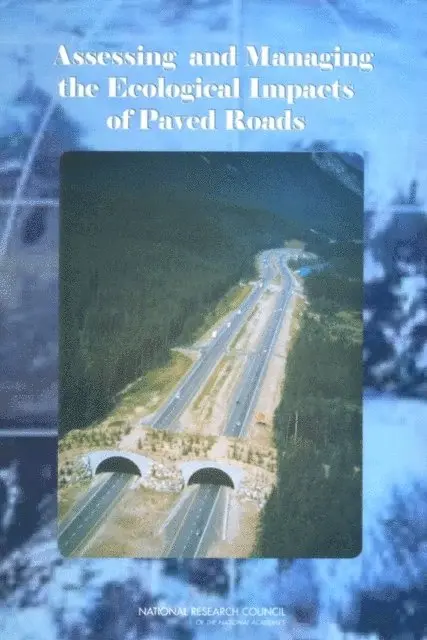
All phases of road developmenta "from construction and use by vehicles to maintenancea "affect physical and chemical soil conditions, water flow, and air and water quality, as well as plants and animals. Roads and traffic can alter wildlife habitat, cause vehicle-related mortality, impede animal migration, and disperse nonnative pest species of plants and animals. Integrating environmental considerations into all phases of transportation is an important, evolving process. The increasing awareness of environmental issues has made road development more complex and controversial. Over the past two decades, the Federal Highway Administration and state transportation agencies have increasingly recognized the importance of the effects of transportation on the natural environment. This report provides guidance on ways to reconcile the different goals of road development and environmental conservation. It identifies the ecological effects of roads that can be evaluated in the planning, design, construction, and maintenance of roads and offers several recommendations to help better understand and manage ecological impacts of paved roads.
Häftad, Engelska, 2007
477 kr
Tillfälligt slut
From a public health perspective, motor vehicle crashes are among the most serious problems facing teenagers. Even after more than six months of being licensed to drive alone, teens are two to three times more likely to be in a fatal crash than are the more experienced drivers. Crash rates are significantly higher for male drivers, and young people in the United States are at greater risk of dying or being injured in an automobile than their peers around the world. In fact, in 2003 motor vehicle crashes was the leading cause of death for youth ages 16-20 in the United States. Understanding how and why teen motor vehicle crashes happen is key to developing countermeasures to reduce their number. Applying this understanding to the development of prevention strategies holds significant promise for improving safety but many of these efforts are thwarted by a lack of evidence as to which prevention strategies are most effective. Preventing Teen Motor Crashes presents data from a multidisciplinary group that shared information on emerging technology for studying, monitoring, and controlling driving behavior.The book provides an overview of the factual information that was presented, as well as the insights that emerged about the role researchers can play in reducing and preventing teen motor crashes.
Häftad, Engelska, 2010
845 kr
Tillfälligt slut
Technologies and Approaches to Reducing the Fuel Consumption of Medium- and Heavy-Duty Vehicles evaluates various technologies and methods that could improve the fuel economy of medium- and heavy-duty vehicles, such as tractor-trailers, transit buses, and work trucks. The book also recommends approaches that federal agencies could use to regulate these vehicles' fuel consumption. Currently there are no fuel consumption standards for such vehicles, which account for about 26 percent of the transportation fuel used in the U.S. The miles-per-gallon measure used to regulate the fuel economy of passenger cars. is not appropriate for medium- and heavy-duty vehicles, which are designed above all to carry loads efficiently. Instead, any regulation of medium- and heavy-duty vehicles should use a metric that reflects the efficiency with which a vehicle moves goods or passengers, such as gallons per ton-mile, a unit that reflects the amount of fuel a vehicle would use to carry a ton of goods one mile. This is called load-specific fuel consumption (LSFC). The book estimates the improvements that various technologies could achieve over the next decade in seven vehicle types.For example, using advanced diesel engines in tractor-trailers could lower their fuel consumption by up to 20 percent by 2020, and improved aerodynamics could yield an 11 percent reduction. Hybrid powertrains could lower the fuel consumption of vehicles that stop frequently, such as garbage trucks and transit buses, by as much 35 percent in the same time frame.
Häftad, Engelska, 2010
477 kr
Tillfälligt slut
Advancing the state of aviation safety is a central mission of the National Aeronautics and Space Administration (NASA). Congress requested this review of NASA's aviation safety-related research programs, seeking an assessment of whether the programs have well-defined, prioritized, and appropriate research objectives; whether resources have been allocated appropriately among these objectives; whether the programs are well coordinated with the safety research programs of the Federal Aviation Administration; and whether suitable mechanisms are in place for transitioning the research results into operational technologies and procedures and certification activities in a timely manner. Advancing Aeronautical Safety contains findings and recommendations with respect to each of the main aspects of the review sought by Congress. These findings indicate that NASA's aeronautics research enterprise has made, and continues to make, valuable contributions to aviation system safety but it is falling short and needs improvement in some key respects.
Häftad, Engelska, 2013
316 kr
Tillfälligt slut
The electric vehicle offers many promises-increasing U.S. energy security by reducing petroleum dependence, contributing to climate-change initiatives by decreasing greenhouse gas (GHG) emissions, stimulating long-term economic growth through the development of new technologies and industries, and improving public health by improving local air quality. There are, however, substantial technical, social, and economic barriers to widespread adoption of electric vehicles, including vehicle cost, small driving range, long charging times, and the need for a charging infrastructure. In addition, people are unfamiliar with electric vehicles, are uncertain about their costs and benefits, and have diverse needs that current electric vehicles might not meet. Although a person might derive some personal benefits from ownership, the costs of achieving the social benefits, such as reduced GHG emissions, are borne largely by the people who purchase the vehicles.Given the recognized barriers to electric-vehicle adoption, Congress asked the Department of Energy (DOE) to commission a study by the National Academies to address market barriers that are slowing the purchase of electric vehicles and hindering the deployment of supporting infrastructure. As a result of the request, the National Research Council (NRC)-a part of the National Academies-appointed the Committee on Overcoming Barriers to Electric-Vehicle Deployment. This committee documented their findings in two reports-a short interim report focused on near-term options, and a final comprehensive report. Overcoming Barriers to Electric-Vehicle Deployment fulfills the request for the short interim report that addresses specifically the following issues: infrastructure needs for electric vehicles, barriers to deploying the infrastructure, and possible roles of the federal government in overcoming the barriers. This report also includes an initial discussion of the pros and cons of the possible roles. This interim report does not address the committee's full statement of task and does not offer any recommendations because the committee is still in its early stages of data-gathering.The committee will continue to gather and review information and conduct analyses through late spring 2014 and will issue its final report in late summer 2014. Overcoming Barriers to Electric-Vehicle Deployment focuses on the light-duty vehicle sector in the United States and restricts its discussion of electric vehicles to plug-in electric vehicles (PEVs), which include battery electric vehicles (BEVs) and plug-in hybrid electric vehicles (PHEVs). The common feature of these vehicles is that their batteries are charged by being plugged into the electric grid. BEVs differ from PHEVs because they operate solely on electricity stored in a battery (that is, there is no other power source); PHEVs have internal combustion engines that can supplement the electric power train. Although this report considers PEVs generally, the committee recognizes that there are fundamental differences between PHEVs and BEVs.