Board on Energy and Environmental Systems – författare
660 kr
Skickas
477 kr
Skickas
362 kr
Läs direkt efter köp
There has been a substantial resurgence of interest in nuclear power in the United States over the past few years. One consequence has been a rapid growth in the research budget of DOE''s Office of Nuclear Energy (NE). In light of this growth, the Office of Management and Budget included within the FY2006 budget request a study by the National Academy of Sciences to review the NE research programs and recommend priorities among those programs. The programs to be evaluated were: Nuclear Power 2010 (NP 2010), Generation IV (GEN IV), the Nuclear Hydrogen Initiative (NHI), the Global Nuclear Energy Partnership (GNEP)/Advanced Fuel Cycle Initiative (AFCI), and the Idaho National Laboratory (INL) facilities. This book presents a description and analysis of each program along with specific findings and recommendations. It also provides an assessment of program priorities and oversight.
740 kr
Skickas inom 3-6 vardagar
520 kr
Läs direkt efter köp
The FreedomCAR and Fuel Partnership is a collaborative effort among the Department of Energy (DOE), the U.S. Council for Automotive Research (USCAR), and five major energy companies to manage research that will enable the vision of a clean and sustainable transportation energy future. It envisions a transition from more efficient internal combustion engines (ICEs), to advanced ICE hybrid electric vehicles, and to enabling a private-sector decision by 2015 on hydrogen-fueled vehicle development. At the request of DOE, the NRC has undertaken an effort to provide biennial reviews of the progress of the research program. Phase I of that review was described in a book issued in 2005. This second book presents an assessment of the progress in the research program management areas as well as the responses of program management to recommendations provided in the Phase I report. Covered in this second book are major crosscutting issues; vehicle subsystems; hydrogen production, delivery, and dispensing; and an overall assessment of the program.
505 kr
Läs direkt efter köp
However, to achieve wide hydrogen vehicle penetration, further technological advances are required for commercial viability, and vehicle manufacturer and hydrogen supplier activities must be coordinated. In particular, costs must be reduced, new automotive manufacturing technologies commercialized, and adequate supplies of hydrogen produced and made available to motorists. These efforts will require considerable resources, especially federal and private sector funding.
This book estimates the resources that will be needed to bring HFCVs to the point of competitive self-sustainability in the marketplace. It also estimates the impact on oil consumption and carbon dioxide emissions as HFCVs become a large fraction of the light-duty vehicle fleet.
426 kr
Läs direkt efter köp
Review of the 21st Century Truck Partnership critically examines and comments on the overall adequacy and balance of the 21CTP. The book reviews how well the program has accomplished its goals, evaluates progress in the program, and makes recommendations to improve the likelihood of the Partnership meeting its goals.
Key recommendations of the book include that the 21CTP should be continued, but the future program should be revised and better balanced. A clearer goal setting strategy should be developed, and the goals should be clearly stated in measurable engineering terms and reviewed periodically so as to be based on the available funds.
741 kr
Skickas
537 kr
Läs direkt efter köp
There is a growing sense of national urgency about the role of energy in long-term U.S. economic vitality, national security, and climate change. This urgency is the consequence of many factors, including the rising global demand for energy; the need for long-term security of energy supplies, especially oil; growing global concerns about carbon dioxide emissions; and many other factors affected to a great degree by government policies both here and abroad.On March 13, 2008, the National Academies brought together many of the most knowledgeable and influential people working on energy issues today to discuss how we can meet the need for energy without irreparably damaging Earth''s environment or compromising U.S. economic and national security-a complex problem that will require technological and social changes that have few parallels in human history. The National Academies Summit on America''s Energy Future: Summary of a Meeting chronicles that 2-day summit and serves as a current and far-reaching foundation for examining energy policy. The summit is part of the ongoing project ''America''s Energy Future: Technology Opportunities, Risks, and Tradeoffs,'' which will produce a series of reports providing authoritative estimates and analysis of the current and future supply of and demand for energy; new and existing technologies to meet those demands; their associated impacts; and their projected costs. The National Academies Summit on America''s Energy Future: Summary of a Meeting is an essential base for anyone with an interest in strategic, tactical, and policy issues. Federal and state policy makers will find this book invaluable, as will industry leaders, investors, and others willing to convert concern into action to solve the energy problem.
278 kr
Läs direkt efter köp
Many economic models exist to estimate the cost and effectiveness of different policies for reducing greenhouse gas (GHG) emissions. Some approaches incorporate rich technological detail, others emphasize the aggregate behavior of the economy and energy system, and some focus on impacts for specific sectors. Understandably, different approaches may be better positioned to provide particular types of information and may yield differing results, at times rendering decisions on future climate change emissions and research and development (R&D) policy difficult. Reliable estimates of the costs and benefits to the U.S. economy for various emissions reduction and adaptation strategies are critical to federal climate change R&D portfolio planning and investment decisions. At the request of the U.S. Department of Energy (DOE), the National Academies organized a workshop to consider these issues.
The workshop, summarized in this volume, comprised three dimensions: policy, analysis, and economics. Discussions along these dimensions were meant to lead to constructive identification of gaps and opportunities. The workshop focused on (1) policymakers'' informational needs; (2) models and other analytic approaches to meet these needs; (3) important economic considerations, including equity and discounting; and (4) opportunities to enhance analytical capabilities and better inform policy.
698 kr
Läs direkt efter köp
However, to achieve wide hydrogen vehicle penetration, further technological advances are required for commercial viability, and vehicle manufacturer and hydrogen supplier activities must be coordinated. In particular, costs must be reduced, new automotive manufacturing technologies commercialized, and adequate supplies of hydrogen produced and made available to motorists. These efforts will require considerable resources, especially federal and private sector funding.
This book estimates the resources that will be needed to bring HFCVs to the point of competitive self-sustainability in the marketplace. It also estimates the impact on oil consumption and carbon dioxide emissions as HFCVs become a large fraction of the light-duty vehicle fleet.
390 kr
Läs direkt efter köp
Many economic models exist to estimate the cost and effectiveness of different policies for reducing greenhouse gas (GHG) emissions. Some approaches incorporate rich technological detail, others emphasize the aggregate behavior of the economy and energy system, and some focus on impacts for specific sectors. Understandably, different approaches may be better positioned to provide particular types of information and may yield differing results, at times rendering decisions on future climate change emissions and research and development (R&D) policy difficult. Reliable estimates of the costs and benefits to the U.S. economy for various emissions reduction and adaptation strategies are critical to federal climate change R&D portfolio planning and investment decisions. At the request of the U.S. Department of Energy (DOE), the National Academies organized a workshop to consider these issues.
The workshop, summarized in this volume, comprised three dimensions: policy, analysis, and economics. Discussions along these dimensions were meant to lead to constructive identification of gaps and opportunities. The workshop focused on (1) policymakers'' informational needs; (2) models and other analytic approaches to meet these needs; (3) important economic considerations, including equity and discounting; and (4) opportunities to enhance analytical capabilities and better inform policy.
606 kr
Läs direkt efter köp
385 kr
Läs direkt efter köp
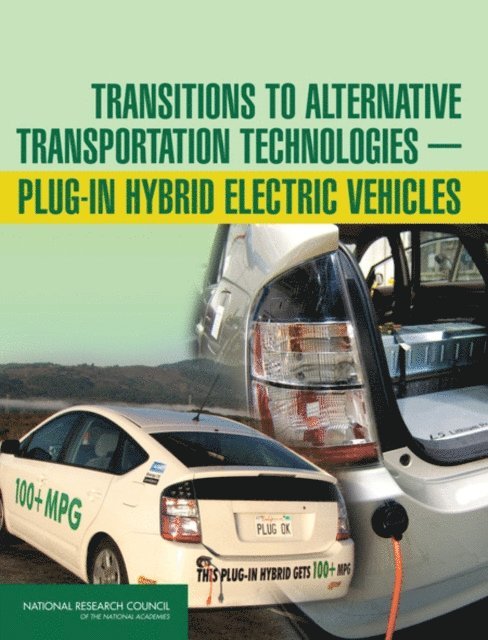
The nation has compelling reasons to reduce its consumption of oil and emissions of carbon dioxide. Plug-in hybrid electric vehicles (PHEVs) promise to contribute to both goals by allowing some miles to be driven on electricity drawn from the grid, with an internal combustion engine that kicks in when the batteries are discharged. However, while battery technology has made great strides in recent years, batteries are still very expensive.
Transitions to Alternative Transportation Technologies—Plug-in Hybrid Electric Vehicles builds on a 2008 National Research Council report on hydrogen fuel cell vehicles. The present volume reviews the current and projected technology status of PHEVs; considers the factors that will affect how rapidly PHEVs could enter the marketplace, including the interface with the electric transmission and distribution system; determines a maximum practical penetration rate for PHEVs consistent with the time frame and factors considered in the 2008 Hydrogen report; and incorporates PHEVs into the models used in the hydrogen study to estimate the costs and impacts on petroleum consumption and carbon dioxide emissions.
667 kr
Läs direkt efter köp
Technologies and Approaches to Reducing the Fuel Consumption of Medium- and Heavy-Duty Vehicles evaluates various technologies and methods that could improve the fuel economy of medium- and heavy-duty vehicles, such as tractor-trailers, transit buses, and work trucks. The book also recommends approaches that federal agencies could use to regulate these vehicles'' fuel consumption. Currently there are no fuel consumption standards for such vehicles, which account for about 26 percent of the transportation fuel used in the U.S. The miles-per-gallon measure used to regulate the fuel economy of passenger cars. is not appropriate for medium- and heavy-duty vehicles, which are designed above all to carry loads efficiently. Instead, any regulation of medium- and heavy-duty vehicles should use a metric that reflects the efficiency with which a vehicle moves goods or passengers, such as gallons per ton-mile, a unit that reflects the amount of fuel a vehicle would use to carry a ton of goods one mile. This is called load-specific fuel consumption (LSFC). The book estimates the improvements that various technologies could achieve over the next decade in seven vehicle types. For example, using advanced diesel engines in tractor-trailers could lower their fuel consumption by up to 20 percent by 2020, and improved aerodynamics could yield an 11 percent reduction. Hybrid powertrains could lower the fuel consumption of vehicles that stop frequently, such as garbage trucks and transit buses, by as much 35 percent in the same time frame.
552 kr
Läs direkt efter köp
The nation has compelling reasons to reduce its consumption of oil and emissions of carbon dioxide. Plug-in hybrid electric vehicles (PHEVs) promise to contribute to both goals by allowing some miles to be driven on electricity drawn from the grid, with an internal combustion engine that kicks in when the batteries are discharged. However, while battery technology has made great strides in recent years, batteries are still very expensive.
Transitions to Alternative Transportation Technologies—Plug-in Hybrid Electric Vehicles builds on a 2008 National Research Council report on hydrogen fuel cell vehicles. The present volume reviews the current and projected technology status of PHEVs; considers the factors that will affect how rapidly PHEVs could enter the marketplace, including the interface with the electric transmission and distribution system; determines a maximum practical penetration rate for PHEVs consistent with the time frame and factors considered in the 2008 Hydrogen report; and incorporates PHEVs into the models used in the hydrogen study to estimate the costs and impacts on petroleum consumption and carbon dioxide emissions.
841 kr
Läs direkt efter köp
797 kr
Läs direkt efter köp
Various combinations of commercially available technologies could greatly reduce fuel consumption in passenger cars, sport-utility vehicles, minivans, and other light-duty vehicles without compromising vehicle performance or safety. Assessment of Technologies for Improving Light Duty Vehicle Fuel Economy estimates the potential fuel savings and costs to consumers of available technology combinations for three types of engines: spark-ignition gasoline, compression-ignition diesel, and hybrid. According to its estimates, adopting the full combination of improved technologies in medium and large cars and pickup trucks with spark-ignition engines could reduce fuel consumption by 29 percent at an additional cost of $2,200 to the consumer. Replacing spark-ignition engines with diesel engines and components would yield fuel savings of about 37 percent at an added cost of approximately $5,900 per vehicle, and replacing spark-ignition engines with hybrid engines and components would reduce fuel consumption by 43 percent at an increase of $6,000 per vehicle. The book focuses on fuel consumption—the amount of fuel consumed in a given driving distance—because energy savings are directly related to the amount of fuel used. In contrast, fuel economy measures how far a vehicle will travel with a gallon of fuel. Because fuel consumption data indicate money saved on fuel purchases and reductions in carbon dioxide emissions, the book finds that vehicle stickers should provide consumers with fuel consumption data in addition to fuel economy information.
644 kr
Läs direkt efter köp
The public-private partnership to develop vehicles that require less petroleum-based fuel and emit fewer greenhouse gases should continue to include fuel cells and other hydrogen technologies in its research and development portfolio. The third volume in the FreedomCAR series states that, although the partnership''s recent shift of focus toward technologies that could be ready for use in the nearer term—such as advanced combustion engines and plug-in electric vehicles—is warranted, R&D on hydrogen and fuel cells is also needed given the high costs and challenges that many of the technologies must overcome before widespread use. The FreedomCAR (Cooperative Automotive Research) and Fuel Partnership is a research collaboration among the U.S. Department of Energy, the United States Council for Automotive Research - whose members are the Detroit automakers—five major energy companies, and two electric utility companies. The partnership seeks to advance the technologies essential for components and infrastructure for a full range of affordable, clean, energy efficient cars and light trucks. Until recently, the program primarily focused on developing technologies that would allow U.S. automakers to make production and marketing decisions by 2015 on hydrogen fuel cell-powered vehicles. These vehicles have the potential to be much more energy-efficient than conventional gasoline-powered vehicles, produce no harmful tailpipe emissions, and significantly reduce petroleum use. In 2009, the partnership changed direction and stepped up efforts to advance, in the shorter term, technologies for reducing petroleum use in combustion engines, including those using biofuels, as well as batteries that could be used in plug-in hybrid-electric or all electric vehicles.
952 kr
Läs direkt efter köp
Technologies and Approaches to Reducing the Fuel Consumption of Medium- and Heavy-Duty Vehicles evaluates various technologies and methods that could improve the fuel economy of medium- and heavy-duty vehicles, such as tractor-trailers, transit buses, and work trucks. The book also recommends approaches that federal agencies could use to regulate these vehicles'' fuel consumption. Currently there are no fuel consumption standards for such vehicles, which account for about 26 percent of the transportation fuel used in the U.S. The miles-per-gallon measure used to regulate the fuel economy of passenger cars. is not appropriate for medium- and heavy-duty vehicles, which are designed above all to carry loads efficiently. Instead, any regulation of medium- and heavy-duty vehicles should use a metric that reflects the efficiency with which a vehicle moves goods or passengers, such as gallons per ton-mile, a unit that reflects the amount of fuel a vehicle would use to carry a ton of goods one mile. This is called load-specific fuel consumption (LSFC). The book estimates the improvements that various technologies could achieve over the next decade in seven vehicle types. For example, using advanced diesel engines in tractor-trailers could lower their fuel consumption by up to 20 percent by 2020, and improved aerodynamics could yield an 11 percent reduction. Hybrid powertrains could lower the fuel consumption of vehicles that stop frequently, such as garbage trucks and transit buses, by as much 35 percent in the same time frame.
673 kr
Läs direkt efter köp
404 kr
Läs direkt efter köp
The National Research Council''s (NRC''s) Committee on Novel Approaches to the Management of Greenhouse Gases from Energy Systems held a workshop at the Arnold and Mabel Beckman Center in Irvine, California, on February 12-14, 2003, to identify promising lines of research that could lead to currently unforeseen breakthroughs in the management of carbon from energy systems. The information identified by participants in the workshop will be used by the U.S. Department of Energy''s (DOE''s) Office of Fossil Energy (FE) to award grants for new research in carbon management. During the workshop, invited participants from a variety of disciplines contributed their expertise and creativity to addressing the problem of carbon management. The ideas developed during the workshop were synthesized into this report by the committee, which oversaw the organization and execution of the workshop. However, this workshop summary does not contain any committee conclusions or recommendations, but simply reports on research areas that were identified as promising during the workshop discussions. The purpose of the workshop, as noted, was to identify novel approaches to the management of carbon from energy systems. The workshop is part of a project conducted by the NRC for DOE''s Office of Fossil Energy (DOE/FE). DOE/FE will consider the workshop report as it develops a solicitation to be issued in spring 2003. The solicitation will call for research proposals on enabling science and technology research on novel approaches for the management of carbon from energy systems. Chapters 2 through 6 of this report summarize the most promising new ideas on carbon management identified by each of the four subgroups at the workshop. In the respective chapters, the ideas are described, their significance is explained, and research opportunities are listed. Each chapter includes a statement of the scientific and engineering challenges related to its topic. Chapter 6 includes crosscutting issues not specific to one of the four subgroups. The chapters themselves do not include detailed analysis regarding feasibility, energy and mass balance, and so forth, as the workshop''s time and scope did not permit this; it is assumed such analyses will be carried out in the research proposals that DOE funds.
554 kr
Läs direkt efter köp
The Vision 21 Program is a relatively new research and development (R&D) program. It is funded through the U.S. Department of Energy''s (DOE''s) Office of Fossil Energy and its National Energy Technology Laboratory (NETL). The Vision 21 Program Plan anticipates that Vision 21 facilities will be able to convert fossil fuels (e.g., coal, natural gas, and petroleum coke) into electricity, process heat, fuels, and/or chemicals cost effectively, with very high efficiency and very low emissions, including of the greenhouse gas carbon dioxide (CO2). The goals of Vision 21 are extremely challenging and ambitious. As noted in the Vision 21 Technology Roadmap, if the program meets its goals, Vision 21 plants would essentially eliminate many of the environmental concerns traditionally associated with the conversion of fossil fuels into electricity and transportation fuels or chemicals (NETL, 2001). Given the importance of fossil fuels, and especially coal, to the economies of the United States and other countries and the need to utilize fossil fuels in an efficient and environmentally acceptable manner, the development of the technologies in the Vision 21 Program is a high priority.
This report contains the results of the second National Research Council (NRC) review of the Vision 21 R&D Program.
974 kr
Läs direkt efter köp
The U.S. Nuclear Regulatory Commission (USNRC) and its predecessor, the U.S. Atomic Energy Commission (AEC), have attempted since the 1970s to give greater uniformity to the policy and regulatory framework that addresses the disposition of slightly radioactive solid material. The issue remains unresolved and controversial. The USNRC has tried to issue policy statements and standards for the release of slightly radioactive solid material from regulatory control, while such material has been released and continues to be released under existing practices. In 1980 the USNRC proposed regulatory changes to deregulate contaminated metal alloys but withdrew them in 1986 and began work with the Environmental Protection Agency (EPA) to develop more broadly applicable federal guidance. In 1990 the USNRC issued a more sweeping policy, as directed by the Low Level Radioactive Waste Policy Amendments Act of 1985 (LLWPAA), declaring materials with low concentrations of radioactivity contamination "below regulatory concern" (BRC) and hence deregulated. Congress intervened to set aside the BRC policy in the Energy Policy Act of 1992, after the USNRC''s own suspension of the policy. Subsequent attempts by USNRC staff to build consensus among stakeholder groups as a basis for future policy articulations were met by boycotts of stakeholder meetings, both in the immediate aftermath of the BRC policy and again in 1999 during public hearings on a new examination of the disposition of such materials. The only USNRC standard addressing the disposition of slightly radioactive solid material is a guidance document published in June 1974 by the AEC, whose regulatory authority over civilian nuclear facilities the USNRC assumed upon its creation a few months later in January 1975.
In August 2000, with another examination of this issue under way, the USNRC requested that the National Research Council form a committee to provide advice in a written report. The National Research Council established the Committee on Alternatives for Controlling the Release of Solid Materials from Nuclear Regulatory Commission-Licensed Facilities to address this task. The committee''s task involved evaluating and providing recommendations on the history of the technical bases and policies and precedents for managing slightly radioactive solid material from USNRC-licensed facilities; the sufficiency of technical bases needed to establish standards for release of solid materials from regulatory control ("clearance standards") and the adequacy of measurement technologies; the concerns of stakeholders and how the USNRC should incorporate them; and the efforts of international organizations on clearance standards. The committee was also asked to examine the current system for release of slightly radioactive solid material from regulatory control, to recommend whether the USNRC should continue to use this system and to recommend changes if appropriate. The committee''s fact-finding process included two site visits to waste brokering facilities and nearly 40 invited presentations from the USNRC, the U.S. Department of Energy (DOE), and EPA staff; stakeholder organizations; nuclear industry organizations; and other interested parties.
In conducting its study, the committee first examined the current system of standards, guidance, and practices used by the USNRC and agreement states to determine whether to release slightly radioactive solid material from further regulatory control under the Atomic Energy Act. The committee found that the current, workable system allows licensees to release material according to pre-established criteria but contains inconsistencies such that nuclear reactor licensees can release materials only if there is no detectable radioactivity (above background levels), whereas materials licensees can do so if small detectable levels are found. The committee evaluated technical analyses of the estimated doses of the final disposition of slightly radioactive solid materials. These analyses were conducted by federal agencies and international organizations, including the International Atomic Energy Agency (IAEA), the European Commission, and other groups. The Disposition Dilemma:Controlling the Release of Solid Materials from Nuclear Regulatory Commission-Licensed Facilities explains the committee''s findings and recommendations.
605 kr
Läs direkt efter köp
This is the most recent report of the National Research Council''s Standing Committee to Review the Research Program of the Partnership for a New Generation of Vehicles (PNGV), which has conducted annual reviews of the PNGV program since it was established in late 1993.
The PNGV is a cooperative R&D program between the federal government and the United States Council for Automotive Research (USCAR, whose members are DaimlerChrysler, Ford Motor Company, and General Motors) to develop technologies for a new generation of automobiles with up to three times the fuel economy of a 1993 midsize automobile. The reports review major technology development areas (four-stroke direct-injection engines, fuel cells, energy storage, electronic/electrical systems, and structural materials); the overall adequacy of R&D efforts; the systems analysis effort and how it guides decisions on R&D; the progress toward long-range component and system-level cost and performance goals; and efforts in vehicle emissions and advanced materials research and how results target goals.
Unlike previous reports, the Seventh Report comments on the goals of the program, since the automotive market and U.S. emission standards have changed significantly since the program was initiated.
831 kr
Läs direkt efter köp
849 kr
Läs direkt efter köp
In legislation appropriating funds for DOE''s fiscal year (FY) 2000 energy R&D budget, the House Interior Appropriations Subcommittee directed an evaluation of the benefits that have accrued to the nation from the R&D conducted since 1978 in DOE''s energy efficiency and fossil energy programs. In response to the congressional charge, the National Research Council formed the Committee on Benefits of DOE R&D on Energy Efficiency and Fossil Energy.
From its inception, DOE''s energy R&D program has been the subject of many outside evaluations. The present evaluation asks whether the benefits of the program have justified the considerable expenditure of public funds since DOE''s formation in 1977, and, unlike earlier evaluations, it takes a comprehensive look at the actual outcomes of DOE''s research over two decades.
668 kr
Läs direkt efter köp
Vision 21 reviews the goals of the Department of Energy''s (DOE) Vision 21 Program (DOE''s vision for the future of coal-based power generation) and to recommend systems and approaches for moving from concept to reality. Vision 21 is an ambitious, forward-looking program for improving technologies and reducing the environmental impacts of using fossil fuels (petroleum, natural gas, and coal) to produce electricity, process heat, transportation fuels, and chemicals.
649 kr
Läs direkt efter köp
Renewable Power Pathways is the result of a study by the National Research Council (NRC) Committee for the Programmatic Review of the Office of Power Technologies (OPT) review of the U.S. Department of Energy''s (DOE) Office of Power Technologies and its research and development (R&D) programs. The OPT, which is part of the Office of Energy Efficiency and Renewable Energy, conducts R&D programs for the production of electricity from renewable energy sources. Some of these programs are focused on photovoltaic, wind, solar, thermal, geothermal, biopower, and hydroelectric energy technologies; others are focused on energy storage, electric transmission (including superconductivity), and hydrogen technologies. A recent modest initiative is focused on distributed power-generation technologies. This report reviews the activities of each of OPT''s programs and makes recommendations for OPT as a whole and major recommendations for individual OPT programs.
1 039 kr
Läs direkt efter köp
The U.S. Department of Energy (DOE) was given a mandate in the 1992 Energy Policy Act (EPACT) to pursue strategies in coal technology that promote a more competitive economy, a cleaner environment, and increased energy security.
Coal evaluates DOE''s performance and recommends priorities in updating its coal program and responding to EPACT.
This volume provides a picture of likely future coal use and associated technology requirements through the year 2040. Based on near-, mid-, and long-term scenarios, the committee presents a framework for DOE to use in identifying R&D strategies and in making detailed assessments of specific programs.
Coal offers an overview of coal-related programs and recent budget trends and explores principal issues in future U.S. and foreign coal use.
The volume evaluates DOE Fossil Energy R&D programs in such key areas as electric power generation and conversion of coal to clean fuels.
Coal will be important to energy policymakers, executives in the power industry and related trade associations, environmental organizations, and researchers.