Committee on Assessment of Resource Needs for Fuel Cell and Hydrogen Technologies – författare
487 kr
Läs direkt efter köp
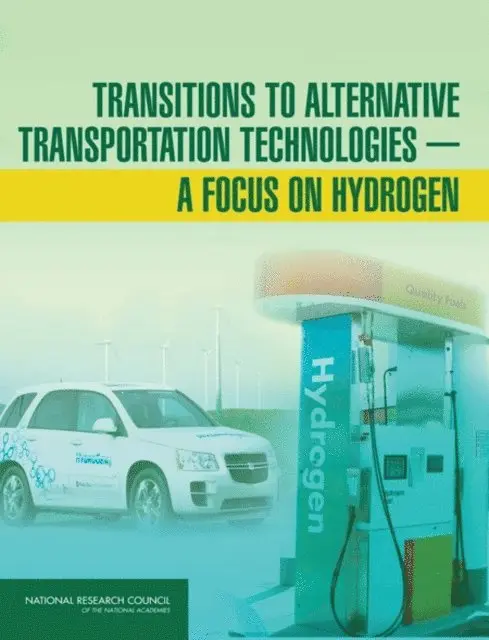
However, to achieve wide hydrogen vehicle penetration, further technological advances are required for commercial viability, and vehicle manufacturer and hydrogen supplier activities must be coordinated. In particular, costs must be reduced, new automotive manufacturing technologies commercialized, and adequate supplies of hydrogen produced and made available to motorists. These efforts will require considerable resources, especially federal and private sector funding.
This book estimates the resources that will be needed to bring HFCVs to the point of competitive self-sustainability in the marketplace. It also estimates the impact on oil consumption and carbon dioxide emissions as HFCVs become a large fraction of the light-duty vehicle fleet.
698 kr
Läs direkt efter köp
However, to achieve wide hydrogen vehicle penetration, further technological advances are required for commercial viability, and vehicle manufacturer and hydrogen supplier activities must be coordinated. In particular, costs must be reduced, new automotive manufacturing technologies commercialized, and adequate supplies of hydrogen produced and made available to motorists. These efforts will require considerable resources, especially federal and private sector funding.
This book estimates the resources that will be needed to bring HFCVs to the point of competitive self-sustainability in the marketplace. It also estimates the impact on oil consumption and carbon dioxide emissions as HFCVs become a large fraction of the light-duty vehicle fleet.
385 kr
Läs direkt efter köp
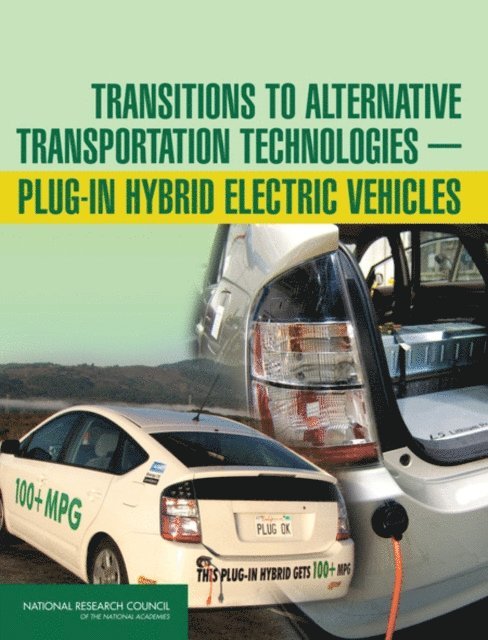
The nation has compelling reasons to reduce its consumption of oil and emissions of carbon dioxide. Plug-in hybrid electric vehicles (PHEVs) promise to contribute to both goals by allowing some miles to be driven on electricity drawn from the grid, with an internal combustion engine that kicks in when the batteries are discharged. However, while battery technology has made great strides in recent years, batteries are still very expensive.
Transitions to Alternative Transportation Technologies—Plug-in Hybrid Electric Vehicles builds on a 2008 National Research Council report on hydrogen fuel cell vehicles. The present volume reviews the current and projected technology status of PHEVs; considers the factors that will affect how rapidly PHEVs could enter the marketplace, including the interface with the electric transmission and distribution system; determines a maximum practical penetration rate for PHEVs consistent with the time frame and factors considered in the 2008 Hydrogen report; and incorporates PHEVs into the models used in the hydrogen study to estimate the costs and impacts on petroleum consumption and carbon dioxide emissions.
552 kr
Läs direkt efter köp
The nation has compelling reasons to reduce its consumption of oil and emissions of carbon dioxide. Plug-in hybrid electric vehicles (PHEVs) promise to contribute to both goals by allowing some miles to be driven on electricity drawn from the grid, with an internal combustion engine that kicks in when the batteries are discharged. However, while battery technology has made great strides in recent years, batteries are still very expensive.
Transitions to Alternative Transportation Technologies—Plug-in Hybrid Electric Vehicles builds on a 2008 National Research Council report on hydrogen fuel cell vehicles. The present volume reviews the current and projected technology status of PHEVs; considers the factors that will affect how rapidly PHEVs could enter the marketplace, including the interface with the electric transmission and distribution system; determines a maximum practical penetration rate for PHEVs consistent with the time frame and factors considered in the 2008 Hydrogen report; and incorporates PHEVs into the models used in the hydrogen study to estimate the costs and impacts on petroleum consumption and carbon dioxide emissions.
683 kr
Tillfälligt slut
597 kr
Tillfälligt slut