Polar Research Board – författare
Visar alla böcker från författaren Polar Research Board. Handla med fri frakt och snabb leverans.
39 produkter
39 produkter
Häftad, Engelska, 1996
1 622 kr
Skickas
The Bering Sea, which lies between the United States and Russia, is one of the most productive ecosystems in the world and has prolific fishing grounds. Yet there have been significant unexplained population fluctuations in marine mammals and birds in the region. The book examines the Bering Sea ecosystem's dynamics and the relationship between man and the ecosystem, in order to identify potential reasons for the population fluctuations as well as identify ways the Sea's living resources can be better managed by government.
Häftad, Engelska, 2003
723 kr
Skickas
As a result of the 1989 Exxon Valdez Oil Spill in Prince William Sound, Congress passed the Oil Pollution Act of 1990 (OPA 90), and within that legislation, the Oil Spill Recovery Institute (OSRI) was born. This report assesses the strength and weaknesses of this research program, with emphasis on whether the activities supported to date address the OSRI mission, whether the processes used are sound, and whether the research and technology development projects are of high quality
Häftad, Engelska, 2006
751 kr
Skickas
Observable changes with regional and global implications, such as warming temperatures and reduced sea ice, are taking place across the Arctic. However, the record of Arctic observations suffers from incomplete geographic coverage and limited duration, and measurements are not well coordinated. This makes it difficult to comprehensively describe current conditions in the Arctic, let alone understand the changes that are underway or their connections to the rest of the Earth system. The U.S. National Science Foundation asked for guidance to help design a pan-arctic observing network. This book outlines the potential scope, composition, and implementation strategy for an arctic observing network. Such an integrated, complete, and multidisciplinary environmental observing network will improve society's understanding of and ability to respond to ongoing systemic changes in the Arctic and its capability to anticipate, predict, and respond to future change both in the Arctic and around the globe. The network would build on and enhance existing national and international efforts and deliver easily accessible, complete, reliable, timely, long-term, pan-arctic observations.Because many potential components of the network already exist or are being planned, and because of the surge of activity during the International Polar Year, there is an immediate opportunity for major progress.
Inbunden, Engelska, 2008
683 kr
Skickas
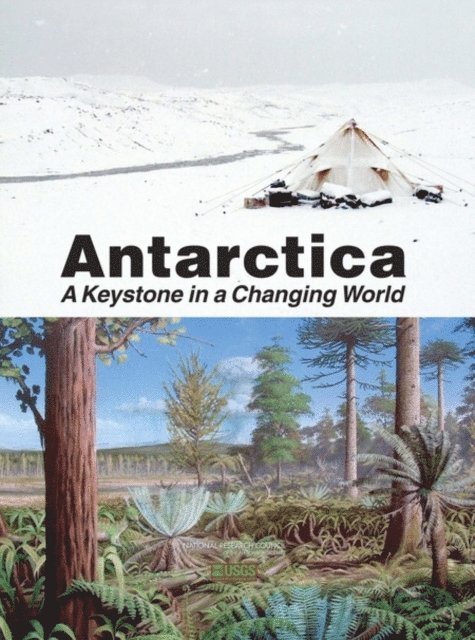
Antarctica is the center from which all surrounding continental bodies separated millions of years ago. Antarctica: A Keystone in a Changing World, reinforces the importance of continual changes in the country's history and the impact of these changes on global systems. The book also places emphasis on deciphering the climate records in ice cores, geologic cores, rock outcrops and those inferred from climate models. New technologies for the coming decades of geoscience data collection are also highlighted. Antarctica: A Keystone in a Changing World is a collection of papers that were presented by keynote speakers at the 10th International Symposium on Antarctic Earth Sciences. It is of interest to policy makers, researchers and scientific institutions.
Häftad, Engelska, 2009
272 kr
Skickas inom 3-6 vardagar
During the 1990s, a government program brought together environmental scientists and members of the intelligence community to consider how classified assets and data could be applied to further the understanding of environmental change. As part of the Medea program, collection of overhead classified imagery of sea ice at four sites around the Arctic basin was initiated in 1999, and two additional sites were added in 2005. Collection of images during the summer months at these six locations has continued until the present day. Several hundred unclassified images with a nominal resolution of 1 meter have been derived from the classified images collected at the 6 Arctic sites. To assist in the process of making the unclassified derived imagery more widely useful, the National Research Council reviewed the derived images and considered their potential uses for scientific research. In this book, we explore the importance of sea ice in the Arctic and illustrate the types of information--often unique in its detail--that the derived images could contribute to the scientific discussion.
Häftad, Engelska, 2011
193 kr
Skickas inom 3-6 vardagar
The polar regions are experiencing rapid changes in climate. These changes are causing observable ecological impacts of various types and degrees of severity at all ecosystem levels, including society. Even larger changes and more significant impacts are anticipated. As species respond to changing environments over time, their interactions with the physical world and other organisms can also change. This chain of interactions can trigger cascades of impacts throughout entire ecosystems. Evaluating the interrelated physical, chemical, biological, and societal components of polar ecosystems is essential to understanding their vulnerability and resilience to climate forcing. The Polar Research Board (PRB) organized a workshop to address these issues. Experts gathered from a variety of disciplines with knowledge of both the Arctic and Antarctic regions. Participants were challenged to consider what is currently known about climate change and polar ecosystems and to identify the next big questions in the field. A set of interdisciplinary "frontier questions" emerged from the workshop discussions as important topics to be addressed in the coming decades.To begin to address these questions, workshop participants discussed the need for holistic, interdisciplinary systems approach to understanding polar ecosystem responses to climate change. As an outcome of the workshop, participants brainstormed methods and technologies that are crucial to advance the understanding of polar ecosystems and to promote the next generation of polar research. These include new and emerging technologies, sustained long-term observations, data synthesis and management, and data dissemination and outreach.
Häftad, Engelska, 1991
1 267 kr
Tillfälligt slut
Many nations conduct research and engage in other scientific activities on our frozen continent--Antarctica. Each year the U.S. National Committee for the Scientific Committee on Antarctic Research (SCAR) compiles a book that includes these nations' reports of scientific pursuits undertaken by their citizens in Antarctica during the previous austral summer and of planned activities for the next season. This book details the activities that occurred in 1990 and is of particular value to policymakers and scientists throughout the world who are planning Antarctic programs.
Häftad, Engelska, 1993
1 278 kr
Tillfälligt slut
With the negotiation of the International Protocol on Environmental Protection in 1991, those nations conducting scientific research programs in Antarctica face new challenges for stewardship of the southern continent and protection of its environment. Science and Stewardship in the Antarctic examines how the implementation of the 1991 agreement in the United States can be done in such a way to ensure the compatibility of scientific and environmental protection goals in this global laboratory. The book also addresses the potential for the new requirements both to benefit and harm research activities in Antarctica.
Häftad, Engelska, 1996
1 316 kr
Tillfälligt slut
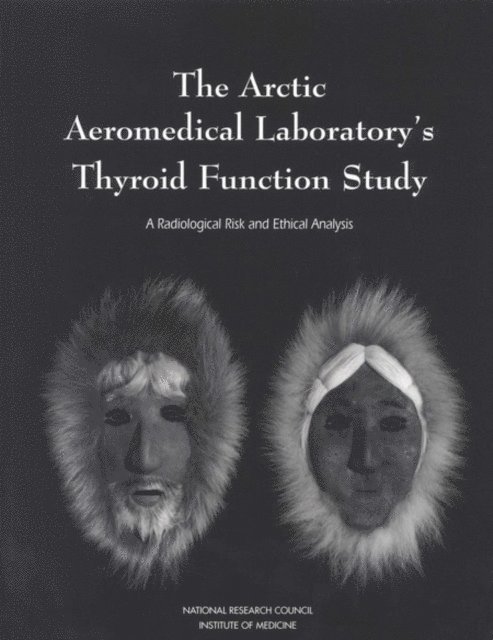
During the 1950s, with the Cold War looming, military planners sought to know more about how to keep fighting forces fit and capable in the harsh Alaskan environment. In 1956 and 1957, the U.S. Air Force's former Arctic Aeromedical Laboratory conducted a study of the role of the thyroid in human acclimatization to cold. To measure thyroid function under various conditions, the researchers administered a radioactive medical trace, Iodine-131, to Alaska Natives and white military personnel; based on the study results, the researchers determined that the thyroid did not play a significant role in human acclimatization to cold. When this study of thyroid function was revisited at a 1993 conference on the Cold War legacy in the Arctic, serious questions were raised about the appropriateness of the activity--whether it posed risks to the people involved and whether the research had been conducted within the bounds of accepted guidelines for research using human participants. In particular, there was concern over the relatively large proportion of Alaska Natives used as subjects and whether they understood the nature of the study.This book evaluates the research in detail, looking at both the possible health effects of Iodine-131 administration in humans and the ethics of human subjects research. This book presents conclusions and recommendations and is a significant addition to the nation's current reevaluation of human radiation experiments conducted during the Cold War.
Häftad, Engelska, 1997
1 405 kr
Tillfälligt slut
Häftad, Engelska, 1999
1 461 kr
Tillfälligt slut
This book reviews the performance and effectiveness of the Community Development Quotas (CDQ) programs that were formed as a result of the Sustainable Fisheries Act of 1996. The CDQ program is a method of allocating access to fisheries to eligible communities with the intent of promoting local social and economic conditions through participation in fishing-related activities. The book looks at those Alaskan fisheries that have experience with CDQs, such as halibut, pollock, sablefish, and crab, and comments on the extent to which the programs have met their objectives--helping communities develop ongoing commercial fishing and processing activities, creating employment opportunities, and providing capital for investment in fishing, processing, and support projects such as infrastructure. It also considers how CDQ-type programs might apply in the Western Pacific.
Häftad, Engelska, 1998
1 139 kr
Tillfälligt slut
Inbunden, Engelska, 2002
706 kr
Tillfälligt slut
The climate record for the past 100,000 years clearly indicates that the climate system has undergone periodic--and often extreme--shifts, sometimes in as little as a decade or less. The causes of abrupt climate changes have not been clearly established, but the triggering of events is likely to be the result of multiple natural processes. Abrupt climate changes of the magnitude seen in the past would have far-reaching implications for human society and ecosystems, including major impacts on energy consumption and water supply demands. Could such a change happen again? Are human activities exacerbating the likelihood of abrupt climate change? What are the potential societal consequences of such a change? Abrupt Climate Change: Inevitable Surprises looks at the current scientific evidence and theoretical understanding to describe what is currently known about abrupt climate change, including patterns and magnitudes, mechanisms, and probability of occurrence. It identifies critical knowledge gaps concerning the potential for future abrupt changes, including those aspects of change most important to society and economies, and outlines a research strategy to close those gaps.Based on the best and most current research available, this book surveys the history of climate change and makes a series of specific recommendations for the future.
Häftad, Engelska, 2002
573 kr
Tillfälligt slut
This report provides guidance to the Gulf Ecosystem Monitoring (GEM) program to help ensure that it is based on a a science plan that is robust, far-reaching, and scientifically sound. The report commends the Trustee Council for its foresight in setting aside funds to create a trust fund to provide long-term research support; it notes that the GEM program offers an unparalleled opportunity to increase understanding of how large marine ecosystems function and change over time. The report outlines elements of a sound long-term science plan, including conceptual foundation, scope and geographic focus, organizational structure, community involvement, data and information management, and synthesis, modeling, and evaluation.
Häftad, Engelska, 2003
877 kr
Tillfälligt slut
For an unknown reason, the Steller sea lion population in Alaska has declined by 80% over the past three decades. In 2001, the National Research Council began a study to assess the many hypotheses proposed to explain the sea lion decline including insufficient food due to fishing or the late 1970s climate/regime shift, a disease epidemic, pollution, illegal shooting, subsistence harvest, and predation by killer whales or sharks. The report's analysis indicates that the population decline cannot be explained only by a decreased availability of food; hence other factors, such as predation and illegal shooting, deserve further study. The report recommends a management strategy that could help determine the impact of fisheries on sea lion survival -- establishing open and closed fishing areas around sea lion rookeries. This strategy would allow researchers to study sea lions in relatively controlled, contrasting environments. Experimental area closures will help fill some short-term data gaps, but long-term monitoring will be required to understand why sea lions are at a fraction of their former abundance.
Häftad, Engelska, 2003
683 kr
Tillfälligt slut
As we enter the twenty-first century, the polar biological sciences stand well poised to address numerous important issues, many of which were unrecognized as little as 10 years ago. From the effects of global warming on polar organisms to the potential for life in subglacial Lake Vostok, the opportunities to advance our understanding of polar ecosystems are unprecedented. The era of a /genome-enableda biology is upon us, and new technologies will allow us to examine polar biological questions of unprecedented scope and to do so with extraordinary depth and precision. Frontiers in Polar Biology in the Genomic Revolution highlights research areas in polar biology that can benefit from genomic technologies and assesses the impediments to the conduct of polar genomic research. It also emphasizes the importance of ancillary technologies to the successful application of genomic technologies to polar studies. It recommends the development of a new initiative in polar genome sciences that emphasizes collaborative multidisciplinary research to facilitate genome analyses of polar organisms and coordinate research efforts.
1 038 kr
Tillfälligt slut
Identifies accumulated environmental, social and economic effects of oil and gas leasing, exploration, and production on Alaska's North Slope. This book also makes recommendations for further environmental research related to environmental effects.
Häftad, Engelska, 2004
637 kr
Tillfälligt slut
The North Pacific Research Board (NPRB) was established in 1997 as custodian to a pool of funds intended for the study of the North Pacific Ocean, Bering Sea, and Arctic Ocean. The success of the NRPB is the development of a high quality, long-range science plan that provides a better understanding of ecosystems and their fisheries in the region. This report provides a framework to help the NPRB identify appropriate science themes and mechanisms for administering and distributing the funds. It contains extensive input from residents of Alaskan communities, to help scientists understand and address issues of importance to the local communities. The book makes specific recommendations on long-term research priorities, the NPRB management structure and the development of future programs.
Häftad, Engelska, 2005
477 kr
Tillfälligt slut
The International Polar Year (IPY) 2007-2008 will be an internationally coordinated campaign of polar observations, research, and analysis that will further our understanding of physical and social processes in the polar regions, examine their globally-connected role in the climate system, and establish research infrastructure for the future. Within this context, the IPY will galvanize new and innovative observations and research while at the same time building on and enhancing existing relevant initiatives. It also will serve as a mechanism to attract and develop a new generation of scientists and engineers with the versatility to tackle complex global issues. In 2004, the National Academies' Polar Research Board organized a workshop to explore the challenges associated with these initiatives. Planning for the International Polar Year 2007-2008 summarizes the presentations and discussions from this workshop.
Häftad, Engelska, 2005
408 kr
Tillfälligt slut
The North Pacific Research Board (NPRB) was established by Congress in 1997 to recommend marine research activities to the Secretary of Commerce on or relating to the fisheries or marine ecosystem in the North Pacific Ocean, Bering Sea, Arctic Ocean, and related bodies of water. NPRB called on the National Academies to develop a comprehensive long range science plan pertaining to its research activities. This assistance has been provided in two phases. In phase one, beginning in early 2003, a National Academies committee worked to understand the purpose of the NPRB, gather information to help identify research needs, and provide advice on the components of a sound science plan. The committee's assessment is contained in a report released in early 2004, Elements of a Science Plan for the North Pacific Research Board. With this guidance as a tool, the NPRB staff, Science Panel, and Advisory Panel worked together to write a draft science plan to steer the program in the coming decade. During the second phase, the same committee reviewed the NPRB's draft science plan and provided final feedback to the NPRB.It is a focused review, generally following the organization of the NPRB document. This report is intended primarily as a direct communication from the committee to those planning the NPRB's programs, to help them improve the science plan and ensure successful implementation.
Review of the Draft Research and Restoration Plan for Arctic-Yukon-Kuskokwim (Western Alaska) Salmon
Häftad, Engelska, 2006
481 kr
Tillfälligt slut
Declines in the abundance of salmon in the Arctic-Yukon-Kuskokwim (AYK) region of western Alaska in the late 1990s and early 2000s created hardships for the people and communities who depend on this resource. Based on recommendations from a 2004 National Academies report, the AYK Sustainable Salmon Initiative (SSI) developed a research and restoration plan to help understand the reasons for this decline and to help support sustainable management in the region. This report reviews the draft plan, recommending some clarification, shortening, and other improvements, with a better focus on the relationship between the underlying intellectual model and the research questions, and a clearer discussion of local and traditional knowledge and capacity building.
Häftad, Engelska, 2003
1 312 kr
Tillfälligt slut
This book identifies accumulated environmental, social and economic effects of oil and gas leasing, exploration, and production on Alaska's North Slope. Economic benefits to the region have been accompanied by effects of the roads, infrastructure and activies of oil and gas production on the terrain, plants, animals and peoples of the North Slope. While attempts by the oil industry and regulatory agencies have reduced many of the environmental effects, they have not been eliminated. The book makes recommendations for further environmental research related to environmental effects.
Häftad, Engelska, 2007
683 kr
Tillfälligt slut
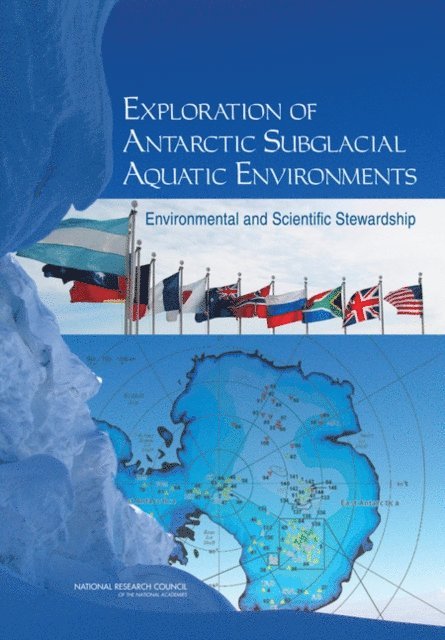
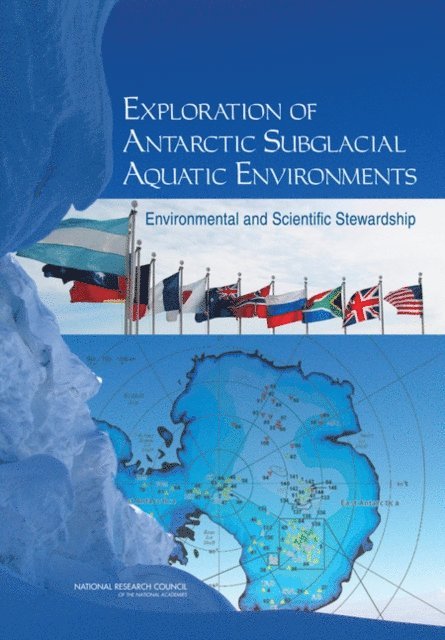
Antarctica is renowned for its extreme cold; yet surprisingly, radar measurements have revealed a vast network of lakes, rivers, and streams several kilometers beneath the Antarctic ice sheet. Sealed from Earth's atmosphere for millions of years, they may provide vital information about microbial evolution, the past climate of the Antarctic, and the formation of ice sheets, among other things. The next stage of exploration requires direct sampling of these aquatic systems. However, if sampling is not done cautiously, the environmental integrity and scientific value of these environments could be compromised. At the request of the National Science Foundation, this National Research Council assesses what is needed to responsibly explore subglacial lakes. Exploration of Antarctic Subglacial Aquatic Environments concludes that it is time for research on subglacial lakes to begin, and this research should be guided by internationally agreed upon protocols. The book suggests an initial protocol, which includes full characterization of the lakes by remote sensing, and minimum standards for biological and other types of contamination.
Häftad, Engelska, 1986
2 400 kr
Tillfälligt slut
The international agreements covering Antarctica are models of cooperation and joined purpose. Convening at the Beardmore South Field Camp, near the Transantarctic Mountains, the Polar Research Board studied the Antarctic Treaty System and its implications for improved relationships between countries. This study examines the structure, meaning, and international repercussions of the Antarctic Treaty, focusing on the ways it benefits both the scientific and political communities. Chapters cover the history, science, environment, resources, and international status of Antarctica.
Häftad, Engelska, 2011
442 kr
Tillfälligt slut
Antarctica and the surrounding Southern Ocean remains one of the world's last frontiers. Covering nearly 14 million km^2 (an area approximately 1.4 times the size of the United States), Antarctica is the coldest, driest, highest, and windiest continent on Earth. While it is challenging to live and work in this extreme environment, this region offers many opportunities for scientific research. Ever since the first humans set foot on Antarctica a little more than a century ago, the discoveries made there have advanced our scientific knowledge of the region, the world, and the Universe--but there is still much more to learn. However, conducting scientific research in the harsh environmental conditions of Antarctica is profoundly challenging. Substantial resources are needed to establish and maintain the infrastructure needed to provide heat, light, transportation, and drinking water, while at the same time minimizing pollution of the environment and ensuring the safety of researchers. Future Science Opportunities in Antarctica and the Southern Ocean suggests actions for the United States to achieve success for the next generation of Antarctic and Southern Ocean science.The report highlights important areas of research by encapsulating each into a single, overarching question. The questions fall into two broad themes: (1) those related to global change, and (2) those related to fundamental discoveries. In addition, the report identified key science questions that will drive research in Antarctica and the Southern Ocean in coming decades, and highlighted opportunities to be leveraged to sustain and improve the U.S. research efforts in the region.
Häftad, Engelska, 2012
481 kr
Tillfälligt slut
International Polar Year 2007-2008 (IPY) was an intense, coordinated field campaign of observations, research, and analysis. It was the largest, most comprehensive campaign ever mounted to explore Earth's polar domains. Legacies and Lessons of the International Polar Year 2007-2008 summarizes how IPY engaged the public to communicate the relevance of polar research to the entire planet, strengthened connections with the Indigenous people of the Arctic, and established new observational networks. Legacies and Lessons of the International Polar Year 2007-2008 also addresses the objectives articulated for IPY in the 2004 National Research Council report, A Vision for International Polar Year (NRC, 2004).These objectives include: suggestions for scientific communities and agencies to use the IPY to initiate a sustained effort aimed at assessing large-scale environmental change and variability in the polar regions, the need to explore new scientific frontiers from the molecular to the planetary scale, investment in critical infrastructure and technology to guarantee that IPY 2007-2008 leaves enduring benefits for the nation and for the residents of northern regions, as well as increase public understanding of the importance of polar regions in the global system. Legacies and Lessons of the International Polar Year 2007-2008 explains how activities at both poles led to scientific discoveries that provided a step change in scientific understanding and helped translate scientific knowledge into policy-relevant information. At a time when the polar regions are undergoing a transformation from an icy wilderness to a new zone for human affairs, these insights could not be more timely or more relevant.From outreach activities that engaged the general public to projects that brought researchers from multiple disciplines and several nations together, the legacies of IPY extend far beyond the scientific results achieved, and valuable lessons learned from the process will guide future endeavors of similar magnitude.
Häftad, Engelska, 2012
354 kr
Tillfälligt slut
Recent well documented reductions in the thickness and extent of Arctic sea ice cover, which can be linked to the warming climate, are affecting the global climate system and are also affecting the global economic system as marine access to the Arctic region and natural resource development increase. Satellite data show that during each of the past six summers, sea ice cover has shrunk to its smallest in three decades. The composition of the ice is also changing, now containing a higher fraction of thin first-year ice instead of thicker multi-year ice. Understanding and projecting future sea ice conditions is important to a growing number of stakeholders, including local populations, natural resource industries, fishing communities, commercial shippers, marine tourism operators, national security organizations, regulatory agencies, and the scientific research community. However, gaps in understanding the interactions between Arctic sea ice, oceans, and the atmosphere, along with an increasing rate of change in the nature and quantity of sea ice, is hampering accurate predictions.Although modeling has steadily improved, projections by every major modeling group failed to predict the record breaking drop in summer sea ice extent in September 2012. Establishing sustained communication between the user, modeling, and observation communities could help reveal gaps in understanding, help balance the needs and expectations of different stakeholders, and ensure that resources are allocated to address the most pressing sea ice data needs. Seasonal-to-Decadal Predictions of Arctic Sea Ice: Challenges and Strategies explores these topics.
Häftad, Engelska, 2022
423 kr
Tillfälligt slut
The Antarctic's unique environment and position on the globe make it a prime location to gain insights into how Earth and the universe operate. This report assesses National Science Foundation (NSF) progress in addressing three priority research areas identified in a 2015 National Academies report: (1) understanding the linkages between ice sheets and sea-level rise, including both a focus on current rates of ice sheet change and studies of past major ice sheet retreat episodes; (2) understanding biological adaptations to the extreme and changing Antarctic environment; and (3) establishing a next-generation cosmic microwave background (CMB) program, partly located in Antarctica, to study the origins of the universe.NSF has made important progress understanding the impacts of current ice sheet change, particularly through studies focused on the ice sheet and ocean interactions driving ongoing ice mass loss at the Thwaites Glacier and Amundsen Sea region in West Antarctica. Less progress has been made on studies of past major ice sheet retreat episodes. Progress is also strong on CMB research to understand the origins of the universe. Progress has lagged on understanding biological adaptations, in part because of limited community organization and collaboration toward the priority. To accelerate progress during the second half of the initiative, NSF could issue specific calls for proposals, develop strategies to foster collaborations and partnerships, and commission a transparent review of logistical capacity to help illuminate strategies and priorities for addressing resource constraints. Such efforts would also help optimize science and proposal development in an environment of inherently constrained logistics.
Häftad, Engelska, 2021
354 kr
Tillfälligt slut
Sediments, ice, corals, and trees are just some of the natural storehouses of information that help tell the complicated history of Earth's climate. Paleoclimate researchers use these "proxies," in combination with numerical models, to gain understanding of the magnitudes, rates, and drivers of past climate variability with the goal of informing understanding of current and future change in Earth's climate system. The Paleo Perspectives on Climate Change (P2C2) program of the National Science Foundation (NSF) has advanced paleoclimate research through proxy development, data-model comparisons, and synthesis work, and has facilitated interdisciplinary collaboration that has contributed to the growth of the field. This new publication highlights discussions at a June 2021 workshop that focused on identifying potential future paleoclimate research directions to further advance understanding of past climate and better inform the public and decision makers about the expected future.
Häftad, Engelska, 2014
511 kr
Tillfälligt slut
U.S. Arctic waters north of the Bering Strait and west of the Canadian border encompass a vast area that is usually ice covered for much of the year, but is increasingly experiencing longer periods and larger areas of open water due to climate change. Sparsely inhabited with a wide variety of ecosystems found nowhere else, this region is vulnerable to damage from human activities. As oil and gas, shipping, and tourism activities increase, the possibilities of an oil spill also increase. How can we best prepare to respond to such an event in this challenging environment? Responding to Oil Spills in the U.S. Arctic Marine Environment reviews the current state of the science regarding oil spill response and environmental assessment in the Arctic region north of the Bering Strait, with emphasis on the potential impacts in U.S. waters. This report describes the unique ecosystems and environment of the Arctic and makes recommendations to provide an effective response effort in these challenging conditions. According to Responding to Oil Spills in the U.S.Arctic Marine Environment, a full range of proven oil spill response technologies is needed in order to minimize the impacts on people and sensitive ecosystems. This report identifies key oil spill research priorities, critical data and monitoring needs, mitigation strategies, and important operational and logistical issues. The Arctic acts as an integrating, regulating, and mediating component of the physical, atmospheric and cryospheric systems that govern life on Earth. Not only does the Arctic serve as regulator of many of the Earth's large-scale systems and processes, but it is also an area where choices made have substantial impact on life and choices everywhere on planet Earth. This report's recommendations will assist environmentalists, industry, state and local policymakers, and anyone interested in the future of this special region to preserve and protect it from damaging oil spills.