Aeronautics and Space Engineering Board – författare
648 kr
Skickas
451 kr
Skickas inom 3-6 vardagar
261 kr
Läs direkt efter köp
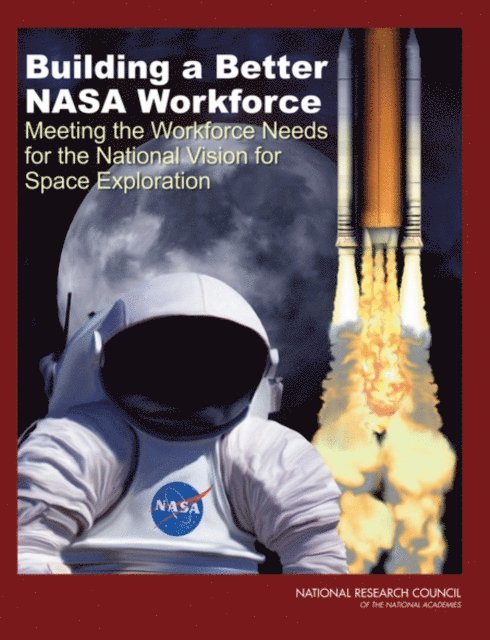
The Vision for Space Exploration (VSE) announced by President George W. Bush in 2004 sets NASA and the nation on a bold path to return to the Moon and one day put a human on Mars. The long-term endeavor represented by the VSE is, however, subject to the constraints imposed by annual funding. Given that the VSE may take tens of years to implement, a significant issue is whether NASA and the United States will have the workforce needed to achieve that vision. The issues range from short-term concerns about the current workforce''s skills for overseeing the development of new spacecraft and launch vehicles for the VSE to long-term issues regarding the training, recruiting, and retaining of scientists and engineers in-house as well as in industry and academia.
Asked to explore science and technology (S&T) workforce needs to achieve the nation''s long-term space exploration, the Committee on Meeting the Workforce Needs for the National Vision for Space Exploration concluded that in the short term, NASA does not possess the requisite in-house personnel with the experience in human spaceflight systems development needed to implement the VSE. But the committee acknowledges that NASA is cognizant of this fact and has taken steps to correct it, primarily by seeking to recruit highly skilled personnel from outside NASA, including persons from industry and retirees.
For the long term, NASA has to ask if it is attracting and developing the talent it will need to execute a mission to return to the Moon, and the agency must identify what it needs to do to attract and develop a world-class workforce to explore other worlds. A major challenge for NASA is reorienting its human spaceflight workforce from the operation of current vehicles to the development of new vehicles at least throughout the next decade, as well as starting operations with new rockets and new spacecraft.
The committee emphasizes further that when evaluating its future workforce requirements, NASA has to consider not only programs for students, but also training opportunities for its current employees. NASA''s training programs at the agency''s various field centers, which are focused on NASA''s civil service talent, require support to prevent the agency''s internal skill base from withering. Furthermore, NASA faces the risk that, if it fails to nurture its own internal workforce, skilled personnel will be attracted to other government agencies and industry. Building a Better NASA Workforce: Meeting the Workforce Needs for the National Vision for Space Exploration explains the findings and recommendations of the committee.
557 kr
Skickas
349 kr
Läs direkt efter köp
614 kr
Skickas
414 kr
Läs direkt efter köp
671 kr
Skickas
463 kr
Läs direkt efter köp
In January 2004 NASA was given a new policy direction known as the Vision for Space Exploration. That plan, now renamed the United States Space Exploration Policy, called for sending human and robotic missions to the Moon, Mars, and beyond. In 2005 NASA outlined how to conduct the first steps in implementing this policy and began the development of a new human-carrying spacecraft known as Orion, the lunar lander known as Altair, and the launch vehicles Ares I and Ares V.Collectively, these are called the Constellation System. In November 2007 NASA asked the National Research Council (NRC) to evaluate the potential for new science opportunities enabled by the Constellation System of rockets and spacecraft.The NRC committee evaluated a total of 17 mission concepts for future space science missions. Of those, the committee determined that 12 would benefit from the Constellation System and five would not. This book presents the committee''s findings and recommendations, including cost estimates, a review of the technical feasibility of each mission, and identification of the missions most deserving of future study.
398 kr
Läs direkt efter köp
268 kr
Läs direkt efter köp
187 kr
Läs direkt efter köp
187 kr
Läs direkt efter köp
The U.S. aviation industry, airline passengers, aircraft pilots, airports, and airline companies are all facing challenges. The air transportation system is experiencing unprecedented and increasing levels of use. The federal government understands the critical need to update the U.S. air transportation system, and plans to implement the Next Generation Air Transportation System (NextGen) by 2025. This system is an example of active networking technology that updates itself with real-time shared information and tailors itself to the individual needs of all U.S. aircraft, stressing adaptability by enabling aircraft to immediately adjust to ever-changing factors.
On April 1-2, 2008, a workshop was held at the National Academies to gather reactions to the research and development aspects of the Joint Planning and Development Office''s baseline Integrated Work Plan (IWP), which is designed to increase the efficiency of airport and air space use in the United States. This book provides a summary of the workshop, which included presentations on the following topics:
Airport operations and support; Environmental management; Air navigation operations, Air navigation support, and flight operation support; Positioning, navigation, and timing services and surveillance; Weather information services; Safety management; Net-centric infrastructure services and operations; and Layered adaptive security.463 kr
Läs direkt efter köp
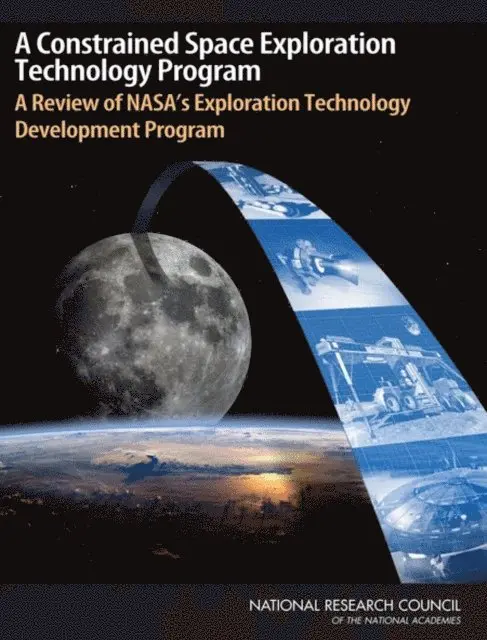
In January 2004, President George W. Bush announced the Vision for Space Exploration (VSE), which instructed NASA to "Extend human presence across the solar system, starting with a human return to the Moon by the year 2020, in preparation for human exploration of Mars and other destinations," among other objectives. As acknowledged in the VSE, significant technology development will be necessary to accomplish the goals it articulates. NASA''s Exploration Technology Development Program (ETDP) is designed to support, develop, and ultimately provide the necessary technologies to meet the goals of the VSE. This book, a review of the ETDP, is broadly supportive of the intent and goals of the VSE, and finds the ETDP is making progress towards the stated goals of technology development. However, the ETDP is operating within significant constraints which limit its ability to successfully accomplish those goals-the still dynamic nature of the Constellation Program requirements, the constraints imposed by a limited budget, the aggressive time scale of early technology deliverables, and the desire to fully employ the NASA workforce.
268 kr
Läs direkt efter köp
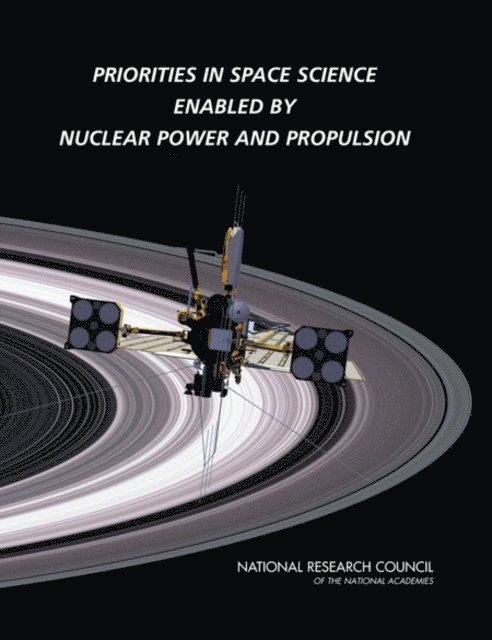
Spacecraft require electrical energy. This energy must be available in the outer reaches of the solar system where sunlight is very faint. It must be available through lunar nights that last for 14 days, through long periods of dark and cold at the higher latitudes on Mars, and in high-radiation fields such as those around Jupiter. Radioisotope power systems (RPSs) are the only available power source that can operate unconstrained in these environments for the long periods of time needed to accomplish many missions, and plutonium-238 (238Pu) is the only practical isotope for fueling them.
Plutonium-238 does not occur in nature. The committee does not believe that there is any additional 238Pu (or any operational 238Pu production facilities) available anywhere in the world.The total amount of 238Pu available for NASA is fixed, and essentially all of it is already dedicated to support several pending missions—the Mars Science Laboratory, Discovery 12, the Outer Planets Flagship 1 (OPF 1), and (perhaps) a small number of additional missions with a very small demand for 238Pu. If the status quo persists, the United States will not be able to provide RPSs for any subsequent missions.

495 kr
Läs direkt efter köp
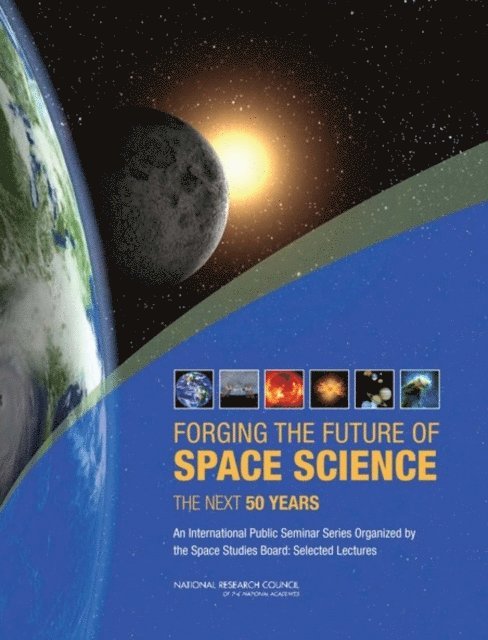
From September 2007 to June 2008 the Space Studies Board conducted an international public seminar series, with each monthly talk highlighting a different topic in space and Earth science. The principal lectures from the series are compiled in Forging the Future of Space Science. The topics of these events covered the full spectrum of space and Earth science research, from global climate change, to the cosmic origins of life, to the exploration of the Moon and Mars, to the scientific research required to support human spaceflight. The prevailing messages throughout the seminar series as demonstrated by the lectures in this book are how much we have accomplished over the past 50 years, how profound are our discoveries, how much contributions from the space program affect our daily lives, and yet how much remains to be done. The age of discovery in space and Earth science is just beginning. Opportunities abound that will forever alter our destiny.
268 kr
Läs direkt efter köp
Numerous countries and regions now have very active space programs, and the number is increasing. These maturing capabilities around the world create a plethora of potential partners for cooperative space endeavors, while at the same time heightening competitiveness in the international space arena. This book summarizes a public workshop held in November 2008 for the purpose of reviewing past and present cooperation, coordination, and competition mechanisms for space and Earth science research and space exploration; identifying significant lessons learned; and discussing how those lessons could best be applied in the future, particularly in the areas of cooperation and collaboration. Presentations and initial discussion focused on past and present experiences in international cooperation and competition to identify "lessons learned." Those lessons learned were then used as the starting point for subsequent discussions on the most effective ways for structuring future cooperation or coordination in space and Earth science research and space exploration. The goal of the workshop was not to develop a specific model for future cooperation or coordination, but rather to explore the advantages and disadvantages of various approaches and stimulate further deliberation on this important topic.
579 kr
Skickas inom 3-6 vardagar
357 kr
Läs direkt efter köp
As civil space policies and programs have evolved, the geopolitical environment has changed dramatically. Although the U.S. space program was originally driven in large part by competition with the Soviet Union, the nation now finds itself in a post-Cold War world in which many nations have established, or are aspiring to develop, independent space capabilities. Furthermore discoveries from developments in the first 50 years of the space age have led to an explosion of scientific and engineering knowledge and practical applications of space technology. The private sector has also been developing, fielding, and expanding the commercial use of space-based technology and systems. Recognizing the new national and international context for space activities, America''s Future in Space is meant to advise the nation on key goals and critical issues in 21st century U.S. civil space policy.

268 kr
Läs direkt efter köp
The NASA Institute for Advanced Concepts (NIAC) was formed in 1998 to provide an independent source of advanced aeronautical and space concepts that could dramatically impact how NASA develops and conducts its missions. Until the program''s termination in August 2007, NIAC provided an independent open forum, a high-level point of entry to NASA for an external community of innovators, and an external capability for analysis and definition of advanced aeronautics and space concepts to complement the advanced concept activities conducted within NASA. Throughout its 9-year existence, NIAC inspired an atmosphere for innovation that stretched the imagination and encouraged creativity. As requested by Congress, this volume reviews the effectiveness of NIAC and makes recommendations concerning the importance of such a program to NASA and to the nation as a whole, including the proper role of NASA and the federal government in fostering scientific innovation and creativity and in developing advanced concepts for future systems. Key findings and recommendations include that in order to achieve its mission, NASA must have, and is currently lacking, a mechanism to investigate visionary, far-reaching advanced concepts. Therefore, a NIAC-like entity should be reestablished to fill this gap.
390 kr
Läs direkt efter köp
Numerous countries and regions now have very active space programs, and the number is increasing. These maturing capabilities around the world create a plethora of potential partners for cooperative space endeavors, while at the same time heightening competitiveness in the international space arena. This book summarizes a public workshop held in November 2008 for the purpose of reviewing past and present cooperation, coordination, and competition mechanisms for space and Earth science research and space exploration; identifying significant lessons learned; and discussing how those lessons could best be applied in the future, particularly in the areas of cooperation and collaboration. Presentations and initial discussion focused on past and present experiences in international cooperation and competition to identify "lessons learned." Those lessons learned were then used as the starting point for subsequent discussions on the most effective ways for structuring future cooperation or coordination in space and Earth science research and space exploration. The goal of the workshop was not to develop a specific model for future cooperation or coordination, but rather to explore the advantages and disadvantages of various approaches and stimulate further deliberation on this important topic.
390 kr
Läs direkt efter köp
Spacecraft require electrical energy. This energy must be available in the outer reaches of the solar system where sunlight is very faint. It must be available through lunar nights that last for 14 days, through long periods of dark and cold at the higher latitudes on Mars, and in high-radiation fields such as those around Jupiter. Radioisotope power systems (RPSs) are the only available power source that can operate unconstrained in these environments for the long periods of time needed to accomplish many missions, and plutonium-238 (238Pu) is the only practical isotope for fueling them.
Plutonium-238 does not occur in nature. The committee does not believe that there is any additional 238Pu (or any operational 238Pu production facilities) available anywhere in the world.The total amount of 238Pu available for NASA is fixed, and essentially all of it is already dedicated to support several pending missions—the Mars Science Laboratory, Discovery 12, the Outer Planets Flagship 1 (OPF 1), and (perhaps) a small number of additional missions with a very small demand for 238Pu. If the status quo persists, the United States will not be able to provide RPSs for any subsequent missions.
268 kr
Läs direkt efter köp
The United States is currently the only country with an active, government-sponsored effort to detect and track potentially hazardous near-Earth objects (NEOs). Congress has mandated that NASA detect and track 90 percent of NEOs that are 1 kilometer in diameter or larger. These objects represent a great potential hazard to life on Earth and could cause global destruction. NASA is close to accomplishing this goal. Congress has more recently mandated that by 2020 NASA should detect and track 90 percent of NEOs that are 140 meters in diameter or larger, a category of objects that is generally recognized to represent a very significant threat to life on Earth if they strike in or near urban areas. Achieving this goal may require the building of one or more additional observatories, possibly including a space-based observatory.Congress directed NASA to ask the National Research Council to review NASA''s near-Earth object programs. This interim report addresses some of the issues associated with the survey and detection of NEOs. The final report will contain findings and recommendations for survey and detection, characterization, and mitigation of near-Earth objects based on an integrated assessment of the problem.
519 kr
Läs direkt efter köp
As civil space policies and programs have evolved, the geopolitical environment has changed dramatically. Although the U.S. space program was originally driven in large part by competition with the Soviet Union, the nation now finds itself in a post-Cold War world in which many nations have established, or are aspiring to develop, independent space capabilities. Furthermore discoveries from developments in the first 50 years of the space age have led to an explosion of scientific and engineering knowledge and practical applications of space technology. The private sector has also been developing, fielding, and expanding the commercial use of space-based technology and systems. Recognizing the new national and international context for space activities, America''s Future in Space is meant to advise the nation on key goals and critical issues in 21st century U.S. civil space policy.
677 kr
Skickas
485 kr
Läs direkt efter köp
The National Research Council of the National Academies was requested by the National Aeronautics and Space Administration (NASA) to perform an independent assessment of NASA''s National Aviation Operations Monitoring Service (NAOMS) project, which was a survey administered to pilots from April 2001 through December 2004. The NRC reviewed various aspects of the NAOMS project, including the survey methodology, and conducted a limited analysis of the publicly available survey data. An Assessment of NASA''s National Aviation Operations Monitoring Service presents the resulting analyses and findings.
390 kr
Läs direkt efter köp
The NASA Institute for Advanced Concepts (NIAC) was formed in 1998 to provide an independent source of advanced aeronautical and space concepts that could dramatically impact how NASA develops and conducts its missions. Until the program''s termination in August 2007, NIAC provided an independent open forum, a high-level point of entry to NASA for an external community of innovators, and an external capability for analysis and definition of advanced aeronautics and space concepts to complement the advanced concept activities conducted within NASA. Throughout its 9-year existence, NIAC inspired an atmosphere for innovation that stretched the imagination and encouraged creativity. As requested by Congress, this volume reviews the effectiveness of NIAC and makes recommendations concerning the importance of such a program to NASA and to the nation as a whole, including the proper role of NASA and the federal government in fostering scientific innovation and creativity and in developing advanced concepts for future systems. Key findings and recommendations include that in order to achieve its mission, NASA must have, and is currently lacking, a mechanism to investigate visionary, far-reaching advanced concepts. Therefore, a NIAC-like entity should be reestablished to fill this gap.
685 kr
Läs direkt efter köp
The National Research Council of the National Academies was requested by the National Aeronautics and Space Administration (NASA) to perform an independent assessment of NASA''s National Aviation Operations Monitoring Service (NAOMS) project, which was a survey administered to pilots from April 2001 through December 2004. The NRC reviewed various aspects of the NAOMS project, including the survey methodology, and conducted a limited analysis of the publicly available survey data. An Assessment of NASA''s National Aviation Operations Monitoring Service presents the resulting analyses and findings.
390 kr
Läs direkt efter köp
The United States is currently the only country with an active, government-sponsored effort to detect and track potentially hazardous near-Earth objects (NEOs). Congress has mandated that NASA detect and track 90 percent of NEOs that are 1 kilometer in diameter or larger. These objects represent a great potential hazard to life on Earth and could cause global destruction. NASA is close to accomplishing this goal. Congress has more recently mandated that by 2020 NASA should detect and track 90 percent of NEOs that are 140 meters in diameter or larger, a category of objects that is generally recognized to represent a very significant threat to life on Earth if they strike in or near urban areas. Achieving this goal may require the building of one or more additional observatories, possibly including a space-based observatory.Congress directed NASA to ask the National Research Council to review NASA''s near-Earth object programs. This interim report addresses some of the issues associated with the survey and detection of NEOs. The final report will contain findings and recommendations for survey and detection, characterization, and mitigation of near-Earth objects based on an integrated assessment of the problem.
455 kr
Läs direkt efter köp
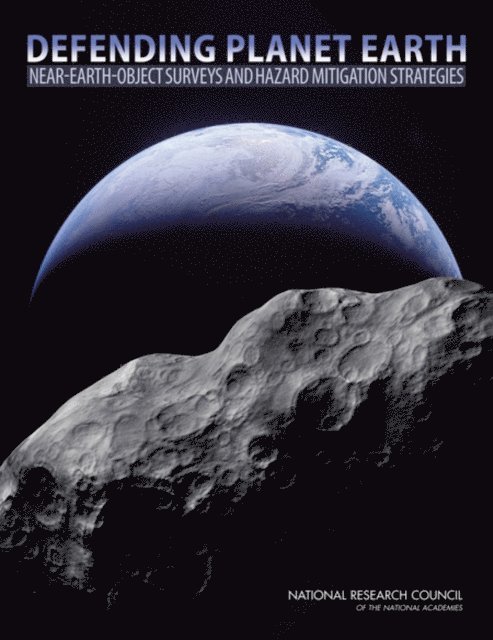
The United States spends approximately $4 million each year searching for near-Earth objects (NEOs). The objective is to detect those that may collide with Earth. The majority of this funding supports the operation of several observatories that scan the sky searching for NEOs. This, however, is insufficient in detecting the majority of NEOs that may present a tangible threat to humanity. A significantly smaller amount of funding supports ways to protect the Earth from such a potential collision or "mitigation." In 2005, a Congressional mandate called for NASA to detect 90 percent of NEOs with diameters of 140 meters of greater by 2020. Defending Planet Earth: Near-Earth Object Surveys and Hazard Mitigation Strategies identifies the need for detection of objects as small as 30 to 50 meters as these can be highly destructive. The book explores four main types of mitigation including civil defense, "slow push" or "pull" methods, kinetic impactors and nuclear explosions. It also asserts that responding effectively to hazards posed by NEOs requires national and international cooperation. Defending Planet Earth: Near-Earth Object Surveys and Hazard Mitigation Strategies is a useful guide for scientists, astronomers, policy makers and engineers.