Committee to Review Near-Earth Object Surveys and Hazard Mitigation Strategies – författare
278 kr
Läs direkt efter köp
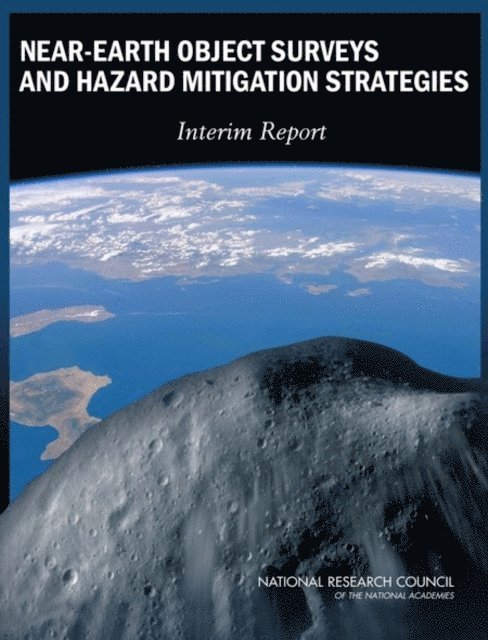
The United States is currently the only country with an active, government-sponsored effort to detect and track potentially hazardous near-Earth objects (NEOs). Congress has mandated that NASA detect and track 90 percent of NEOs that are 1 kilometer in diameter or larger. These objects represent a great potential hazard to life on Earth and could cause global destruction. NASA is close to accomplishing this goal. Congress has more recently mandated that by 2020 NASA should detect and track 90 percent of NEOs that are 140 meters in diameter or larger, a category of objects that is generally recognized to represent a very significant threat to life on Earth if they strike in or near urban areas. Achieving this goal may require the building of one or more additional observatories, possibly including a space-based observatory.Congress directed NASA to ask the National Research Council to review NASA''s near-Earth object programs. This interim report addresses some of the issues associated with the survey and detection of NEOs. The final report will contain findings and recommendations for survey and detection, characterization, and mitigation of near-Earth objects based on an integrated assessment of the problem.
404 kr
Läs direkt efter köp
The United States is currently the only country with an active, government-sponsored effort to detect and track potentially hazardous near-Earth objects (NEOs). Congress has mandated that NASA detect and track 90 percent of NEOs that are 1 kilometer in diameter or larger. These objects represent a great potential hazard to life on Earth and could cause global destruction. NASA is close to accomplishing this goal. Congress has more recently mandated that by 2020 NASA should detect and track 90 percent of NEOs that are 140 meters in diameter or larger, a category of objects that is generally recognized to represent a very significant threat to life on Earth if they strike in or near urban areas. Achieving this goal may require the building of one or more additional observatories, possibly including a space-based observatory.Congress directed NASA to ask the National Research Council to review NASA''s near-Earth object programs. This interim report addresses some of the issues associated with the survey and detection of NEOs. The final report will contain findings and recommendations for survey and detection, characterization, and mitigation of near-Earth objects based on an integrated assessment of the problem.
471 kr
Läs direkt efter köp
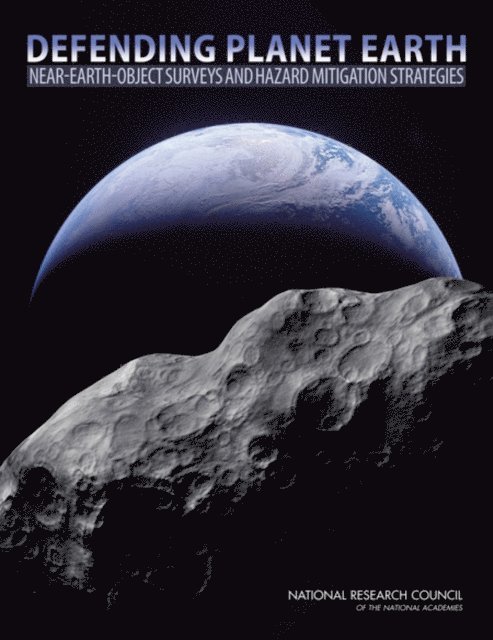
The United States spends approximately $4 million each year searching for near-Earth objects (NEOs). The objective is to detect those that may collide with Earth. The majority of this funding supports the operation of several observatories that scan the sky searching for NEOs. This, however, is insufficient in detecting the majority of NEOs that may present a tangible threat to humanity. A significantly smaller amount of funding supports ways to protect the Earth from such a potential collision or "mitigation." In 2005, a Congressional mandate called for NASA to detect 90 percent of NEOs with diameters of 140 meters of greater by 2020. Defending Planet Earth: Near-Earth Object Surveys and Hazard Mitigation Strategies identifies the need for detection of objects as small as 30 to 50 meters as these can be highly destructive. The book explores four main types of mitigation including civil defense, "slow push" or "pull" methods, kinetic impactors and nuclear explosions. It also asserts that responding effectively to hazards posed by NEOs requires national and international cooperation. Defending Planet Earth: Near-Earth Object Surveys and Hazard Mitigation Strategies is a useful guide for scientists, astronomers, policy makers and engineers.
673 kr
Läs direkt efter köp
The United States spends approximately $4 million each year searching for near-Earth objects (NEOs). The objective is to detect those that may collide with Earth. The majority of this funding supports the operation of several observatories that scan the sky searching for NEOs. This, however, is insufficient in detecting the majority of NEOs that may present a tangible threat to humanity. A significantly smaller amount of funding supports ways to protect the Earth from such a potential collision or "mitigation." In 2005, a Congressional mandate called for NASA to detect 90 percent of NEOs with diameters of 140 meters of greater by 2020. Defending Planet Earth: Near-Earth Object Surveys and Hazard Mitigation Strategies identifies the need for detection of objects as small as 30 to 50 meters as these can be highly destructive. The book explores four main types of mitigation including civil defense, "slow push" or "pull" methods, kinetic impactors and nuclear explosions. It also asserts that responding effectively to hazards posed by NEOs requires national and international cooperation. Defending Planet Earth: Near-Earth Object Surveys and Hazard Mitigation Strategies is a useful guide for scientists, astronomers, policy makers and engineers.
351 kr
Tillfälligt slut
684 kr
Tillfälligt slut