Oxford Amnesty Lectures - Böcker
Visar alla böcker i serien Oxford Amnesty Lectures. Handla med fri frakt och snabb leverans.
12 produkter
12 produkter
433 kr
Skickas inom 5-8 vardagar
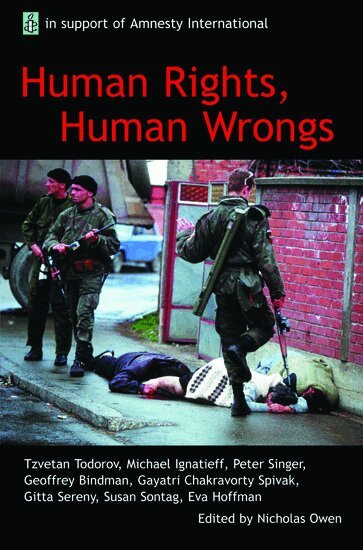
This edited collection, based on the 2001 Oxford Amnesty Lectures, focuses on human rights abuses and the way in which these are interpreted. The contributors are Tzvetan Todorov, Michael Ignatieff, Gayatri Spivak, Peter Singer, Gitta Sereny, Geoffrey Bindman, Susan Sontag, and Eva Hoffman, with commentaries on their essays from Niall Fergusson, Timothy Garton Ash, Hermione Lee, and others. The issues explored in the talks include the right of the international community to military intervention in human rights abuses, the ethical and legal difficulties in bringing rights abusers to justice, the human tendency towards racist attitudes, the impact of postcolonialism, and the way in which human evil is represented in photography. A main theme throughout explores the implications of constructing crude dichotomies of heroes and villains, whose motivations are often left unexplored. The aim is to do justice to the moral complexity of the situations into which those caught up in violent or destabilizing events are placed, while retaining a commitment to action as well as understanding in support of human rights.
382 kr
Skickas inom 5-8 vardagar
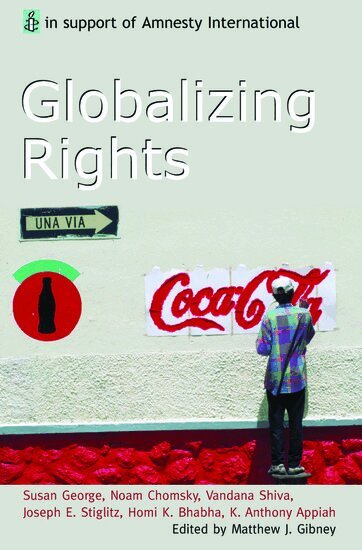
This book, based on the prestigious Oxford Amnesty Lecture series, investigates the relationship between globalization and human rights. The contributors come to the subject from a wide range of disciplines and perspectives, and include Noam Chomsky, Kwame Anthony Appiah, Homi Bhaba, Susan George, and Joseph Stiglitz, with introductions and commentaries by Richard Rorty, Alan Ryan, Charles Taylor and others. Their forthright and provocative essays challenge the view that the development of global markets and global investment, together with the widespread circulation of information on which this depends, make human rights abuses less likely.
564 kr
Skickas inom 5-8 vardagar
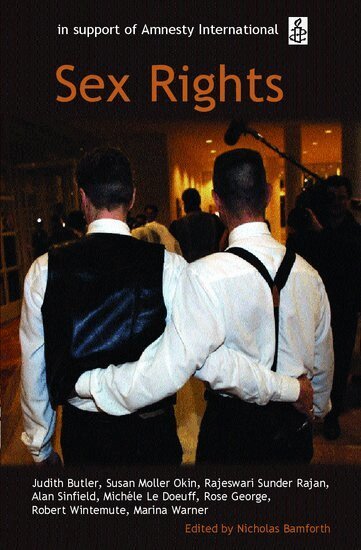
Discrimination due to gender and sexual orientation tends nowadays to be prohibited under international human rights instruments, as well as under the national laws of many countries that express their commitment to defending human rights. Nonetheless, as the work of Amnesty International has shown, violence against women (whatever their sexual orientation), gay men, trans-gendered and transsexual persons remains an appallingly constant phenomenon, both in countries that have an official commitment to fighting these forms of discrimination and in those that do not. Violence is inflicted by private actors as well as - in many countries - by state officials, and is often justified by reference to local customs and moral values. These essays, based on the 2002 Oxford Amnesty Lectures, seek to explore some of the inter-connections between human rights, gender, and sexuality. Many difficult questions are considered. How do we understand and categorize human rights abuses related to a person's sex or sexual orientation, for example? Are these distinctive types of abuse, or are they both examples of the social enforcement of 'traditional' gender roles? Does their inclusion within the remit of human rights abuses require us to refine what we mean by human rights? What weight, if any, should be given to demands made in the name of particular religious and cultural traditions which seek to restrict the rights of women and sexual minority groups? What role does the law have to play in combating these types of discrimination? And how far have we come, and how far have we left to go, in the quest for a world in which discrimination based on sex and sexual orientation is a thing of the past? The essays in this collection - written by internationally distinguished authors from a wide variety of disciplines - are united in their belief that it is a serious human rights violation unjustly to penalize people because of their sex or sexual orientation. However, they adopt a wide variety of approaches to their subject-matter, and tackle the questions raised in very different ways. In consequence, they make important contributions to academic and practical debates about human rights, gender and sexuality.The Oxford Amnesty Lectures is an internationally renowned lecture series that seeks to promote discussion about human rights, whether in theory or in practice.
450 kr
Skickas inom 5-8 vardagar
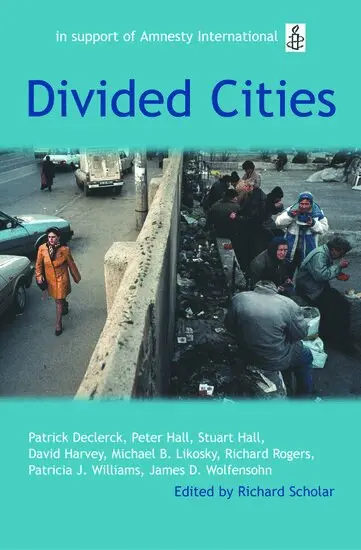
Cities, at their best, are cradles of diversity, opportunity, and citizenship. Why, then, do so many cities today seem scarred by divisions separating the powerful and privileged from the victims of deprivation and injustice? What is it like to live on the wrong side of the divide in Paris, London, New York, Sao Paolo, and other cities all over the world?In this book, based on the internationally renowned Oxford Amnesty Lectures, eight leading urban thinkers argue about why divisions arise in cities and about what could and should be done to bring those divisions to an end. The book features essays by Patrick Declerck, Stuart Hall, David Harvey, Richard Rogers, Patricia Williams, and James Wolfensohn, with commentaries from Peter Hall, Michael Likosky, and others. The many contemporary issues that the book addresses include the impact of globalization and migration on the urban environment, the consequences of the 'war on terror' for those living in cities, the new development paradigm being adopted by international institutions in the developing world, the need for a genuine urban renaissance in Britain and elsewhere, and the suffering of the homeless.These controversial and sometimes conflicting essays, linked by Richard Scholar's incisive introduction, aim to encourage and inform debate about the challenges to human rights in our increasingly urban world.
633 kr
Skickas inom 5-8 vardagar
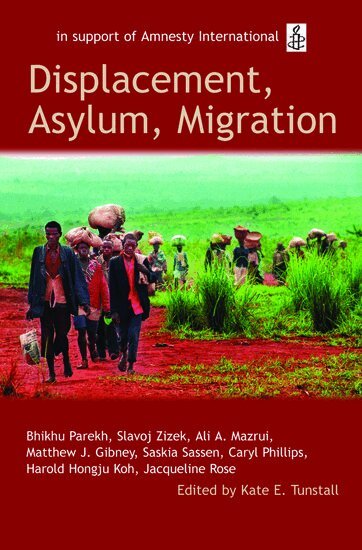
There are few issues more urgently in need of intelligent analysis both in the UK and elsewhere than those relating to displacement, asylum, and migration. In this volume, based on the 2004 Oxford Amnesty Lectures, major figures in philosophy, political science, law, psychoanalysis, sociology, and literature address the challenges that displacement, asylum, and migration pose to our notions of human rights. Each lecture is accompanied by a critical response from another leading thinker in the field.The volume contains lectures by Slavoj Zizek, Bhikhu Parekh, Ali A.Mazrui, Matthew J. Gibney, Saskia Sassen, Harold Hongju Koh, Caryl Phillips, and Jacqueline Rose, with critical responses from Michael Ignatieff, Seyla Benhabib, Iftikhar Malik, Melissa Lane, Christian Joppke, Rey Koslowski, Elleke Boehmer, and Ali Abunimah.This is the twelfth volume of Oxford Amnesty Lectures to be published since 1992.'All good citizens should probably want to buy them . . . simply because they are published in support of such a good cause. It turns out, though, that no self-sacrifice is involved. [These] are immensely rich, challenging, stimulating volumes . . . The contributors' lists are star-studded . . . and each book has a clear, coherent, overarching theme, despite the extreme diversity of the individual lectures' (The Independent, April 10, 2003).
804 kr
Skickas inom 7-10 vardagar
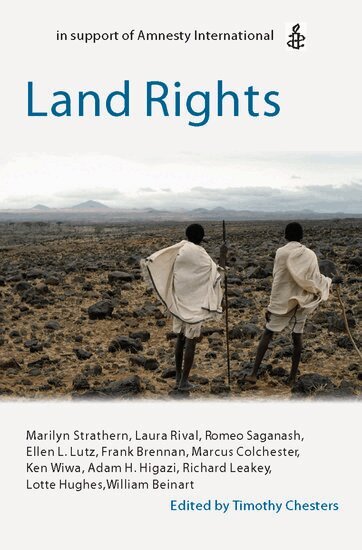
Indigenous peoples and governments, industrialists and ecologists all use - or have at some stage to confront - the language of land rights. That language raises as many questions as it answers. Rights of the land or rights to the land? Rights of the individual or rights of the community? Even accepting that such rights exist, how to arbitrate between competing claims to land? Spanning as they do a wide range of intellectual territory, and their spheres of interest or activity ranging geographically from the Niger Delta to Papua New Guinea, from Quebec to the Eastern Cape, the contributors to this volume move across a range of different, and at times contradictory, approaches to land rights. Marilyn Strathern explores the divergent anthropologies of land, specifically regarding the equation of land and property. Cree lawyer and spokesman Romeo Saganash and Frank Brennan, an Australian lawyer and priest, explore the legal framework for land claims. The UN's International Decade of the Rights of Indigenous People recently ended in the failure of negotiating govemnents to accommodate, within international law, a 'collective' right to land. It is only by acknowledging this collective right to self-determination, both argue, that governments can come to terms with their indigenous populations and their own colonial past. Against the pleas of Brennan and Saganash, the Kenyan Richard Leakey, whose own history and politics is indissociable from that past, questions the whole notion of 'indigeneity'. The campaigner Ken Wiwa speaks too of the difficulties of redressing historical injusticeis, especially in a region - the Niger Delta - where the indigenous Ogoni have no written record of their losses. Finally William Beinart, a historian and advisor to the South African government, outlines some of the practical difficulties of land reform in that country.
1 068 kr
Skickas inom 5-8 vardagar
The term ‘War on Terror’ (WOT) covers a mass of interlinked topics. Here an outstanding group of authors and academics dissect them from ethical, political, legal, economic and historical perspectives.Drawn from the world-famous Oxford Amnesty Lectures, the essays are substantial contributions to their fields and of abiding relevance. Here it is argued that members of active terrorist groups should be pre-emptively executed; that there is no provision for WOT in international law; that WOT is not cost-efficient; that war and terrorism can no longer be distinguished; and that the term ‘terrorist’ has been captured by a specific political constituency. The arguments of the celebrated contributors, from Ahdaf Soueif to Joanna Bourke, are confirmed or contradicted by their respondents, resulting in broad, scholarly coverage of the issues. The book concludes with a fatwa against terrorism.‘WOT’ lies at the heart of current debate about immigration, multiculturalism and foreign policy. It is one of the determining debates in the politics of today. This volume will be of interest to students of politics, law and religion and to anyone concerned with current affairs. It covers the politics of the Middle East and the Iraq War, human rights in Islam and the West and the ethics of intervention. This is a powerful contribution to an urgent debate.
354 kr
Skickas inom 5-8 vardagar
The term ‘War on Terror’ (WOT) covers a mass of interlinked topics. Here an outstanding group of authors and academics dissect them from ethical, political, legal, economic and historical perspectives.Drawn from the world-famous Oxford Amnesty Lectures, the essays are substantial contributions to their fields and of abiding relevance. Here it is argued that members of active terrorist groups should be pre-emptively executed; that there is no provision for WOT in international law; that WOT is not cost-efficient; that war and terrorism can no longer be distinguished; and that the term ‘terrorist’ has been captured by a specific political constituency. The arguments of the celebrated contributors, from Ahdaf Soueif to Joanna Bourke, are confirmed or contradicted by their respondents, resulting in broad, scholarly coverage of the issues. The book concludes with a fatwa against terrorism.‘WOT’ lies at the heart of current debate about immigration, multiculturalism and foreign policy. It is one of the determining debates in the politics of today. This volume will be of interest to students of politics, law and religion and to anyone concerned with current affairs. It covers the politics of the Middle East and the Iraq War, human rights in Islam and the West and the ethics of intervention. This is a powerful contribution to an urgent debate.
1 068 kr
Skickas inom 5-8 vardagar
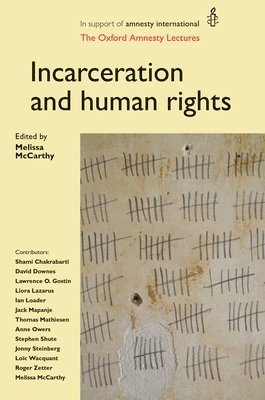
A collection of essays and responses from diverse contributors united in original examination of the intersection between incarceration and human rights. What do human rights concerns dictate about the practices that we tolerate in places of incarceration? And conversely, what can prisons, their hard facts and the ideas underpinning them, tell us about human rights?The book offers a diversity of voices: from the inside view of Her Majesty’s Inspector of Prisons to the words of a poet and former political prisoner; from an international policy overview of abuses of the mentally ill to a socio-economic reading of race and class in prisons. This range of approaches offers a uniquely rounded view of the topic, while each contributor’s eminence in their field gives great depth of expertise.
421 kr
Skickas inom 5-8 vardagar
A collection of essays and responses from diverse contributors united in original examination of the intersection between incarceration and human rights. What do human rights concerns dictate about the practices that we tolerate in places of incarceration? And conversely, what can prisons, their hard facts and the ideas underpinning them, tell us about human rights?The book offers a diversity of voices: from the inside view of Her Majesty’s Inspector of Prisons to the words of a poet and former political prisoner; from an international policy overview of abuses of the mentally ill to a socio-economic reading of race and class in prisons. This range of approaches offers a uniquely rounded view of the topic, while each contributor’s eminence in their field gives great depth of expertise.
1 167 kr
Skickas inom 5-8 vardagar
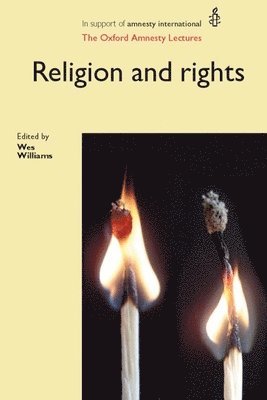
Rights were once thought to derive from the God-given nature of man. But today human rights and religion are sometimes in conflict. The universal claims made for rights can put them at odds with the revealed truths from which religions derive their authority. Many people’s sense of human worth and dignity nevertheless depends on recognising the divine in each of us. Where rights and revelation diverge, how can the differences be negotiated? How should we measure individual claims to freedom against the demands of religious traditions? In this volume, eminent theologians and anthropologists set out the terms of religion’s holds on its own truths, while historians, philosophers, and activists set out their vision for a society in which the competing truths must be accommodated not peacefully but without violence. Their respondents join the debate with fierce conviction, indicating their doubts and concerns in relation to the often compatible but sometimes competing claims of religion and rights.
278 kr
Skickas inom 11-20 vardagar
Rights were once thought to derive from the God-given nature of man. But today human rights and religion are sometimes in conflict. The universal claims made for rights can put them at odds with the revealed truths from which religions derive their authority. Many people’s sense of human worth and dignity nevertheless depends on recognising the divine in each of us. Where rights and revelation diverge, how can the differences be negotiated? How should we measure individual claims to freedom against the demands of religious traditions? In this volume, eminent theologians and anthropologists set out the terms of religion’s holds on its own truths, while historians, philosophers, and activists set out their vision for a society in which the competing truths must be accommodated not peacefully but without violence. Their respondents join the debate with fierce conviction, indicating their doubts and concerns in relation to the often compatible but sometimes competing claims of religion and rights.