OXFORD STUDIES SOCIOLINGUISTICS SERIES - Böcker
Visar alla böcker i serien OXFORD STUDIES SOCIOLINGUISTICS SERIES. Handla med fri frakt och snabb leverans.
9 produkter
9 produkter
419 kr
Skickas inom 5-8 vardagar
Illicit digital activity is a substantial and growing problem. Extremists' use of social media over the past decade or so has raised increasing concern among governments and media corporations alike. In Digital Grooming Nuria Lorenzo-Dus analyzes manipulation practices in digital spaces that are situated at, or beyond, the boundaries of law. Lorenzo-Dus identifies and examines in detail the online discourse of adults luring children for sexual abuse and exploitation (digital sexual grooming); extreme ideology groups aligning others to their views (digital ideological grooming); and drug dealers soliciting business in crypto markets (digital commercial grooming). With sophisticated style and stance analyses of large and varied datasets, the book reveals that digital sexual, ideological, and commercial grooming practices have much in common. Three stances--expertise, openness, and avidity--scaffold this manipulative work, which constructs groomers and their targets as sharing a homogenous identity.By shedding new light on grooming practices, this book provides a key resource for discourse analysis, forensic linguistics, communication, and media studies, as well as for practitioners aiming to counter online grooming through policy changes, detection software, and prevention-focused training to promote digital civility and safety.
1 375 kr
Skickas inom 5-8 vardagar
Illicit digital activity is a substantial and growing problem. Extremists' use of social media over the past decade or so has raised increasing concern among governments and media corporations alike. In Digital Grooming Nuria Lorenzo-Dus analyzes manipulation practices in digital spaces that are situated at, or beyond, the boundaries of law. Lorenzo-Dus identifies and examines in detail the online discourse of adults luring children for sexual abuse and exploitation (digital sexual grooming); extreme ideology groups aligning others to their views (digital ideological grooming); and drug dealers soliciting business in crypto markets (digital commercial grooming). With sophisticated style and stance analyses of large and varied datasets, the book reveals that digital sexual, ideological, and commercial grooming practices have much in common. Three stances--expertise, openness, and avidity--scaffold this manipulative work, which constructs groomers and their targets as sharing a homogenous identity.By shedding new light on grooming practices, this book provides a key resource for discourse analysis, forensic linguistics, communication, and media studies, as well as for practitioners aiming to counter online grooming through policy changes, detection software, and prevention-focused training to promote digital civility and safety.
1 438 kr
Skickas inom 7-10 vardagar
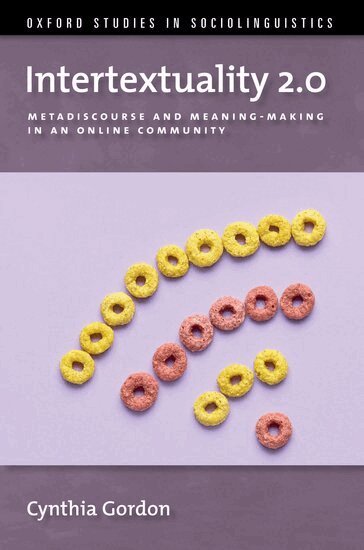
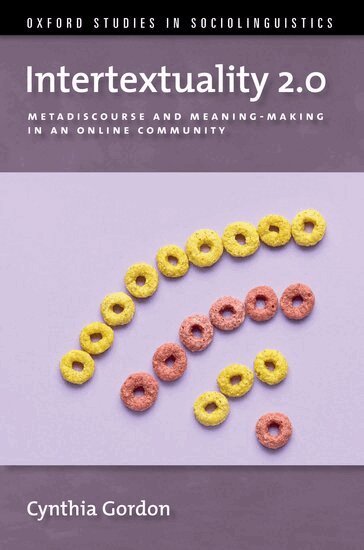
"Intertextuality" is the overarching idea that all texts and conversations are linked to other texts and conversations, and that people create and infer meanings in discourse through making and interpreting these links. Intertextuality is fundamentally connected to metadiscourse; when a person draws on or references one text or conversation in another (intertextuality), they necessarily communicate something about that text or conversation (metadiscourse). While scholars have long recognized the interrelatedness of these two theoretical concepts, existing studies have tended to focus on one or the other, leaving underexplored the specific ways in which these phenomena are intertwined at the micro-interactional level, especially online, and for what purposes.This interactional sociolinguistic study contributes to filling this gap by demonstrating how specific intertextual linking strategies, both linguistic (e.g., word repetition, deictic pronouns) and multimodal (e.g., emojis, symbols, and GIFs), are mobilized by posters participating in online weight loss discussion boards. These strategies serve as a resource to accomplish the metadiscursive activities, targeted at various levels of discourse, through which participants construct shared understandings, negotiate the group's interactional norms, and facilitate engagement in the group's primary shared activity: exchanging information about, and providing support for, weight loss, healthful eating, and related issues. By rigorously applying the perspective of metadiscourse in a study of intertextuality, Intertextuality 2.0 offers important new insights into why intertextuality occurs and what it accomplishes: it helps people manage the challenges of communication.
419 kr
Skickas inom 5-8 vardagar
"Intertextuality" is the overarching idea that all texts and conversations are linked to other texts and conversations, and that people create and infer meanings in discourse through making and interpreting these links. Intertextuality is fundamentally connected to metadiscourse; when a person draws on or references one text or conversation in another (intertextuality), they necessarily communicate something about that text or conversation (metadiscourse). While scholars have long recognized the interrelatedness of these two theoretical concepts, existing studies have tended to focus on one or the other, leaving underexplored the specific ways in which these phenomena are intertwined at the micro-interactional level, especially online, and for what purposes.This interactional sociolinguistic study contributes to filling this gap by demonstrating how specific intertextual linking strategies, both linguistic (e.g., word repetition, deictic pronouns) and multimodal (e.g., emojis, symbols, and GIFs), are mobilized by posters participating in online weight loss discussion boards. These strategies serve as a resource to accomplish the metadiscursive activities, targeted at various levels of discourse, through which participants construct shared understandings, negotiate the group's interactional norms, and facilitate engagement in the group's primary shared activity: exchanging information about, and providing support for, weight loss, healthful eating, and related issues. By rigorously applying the perspective of metadiscourse in a study of intertextuality, Intertextuality 2.0 offers important new insights into why intertextuality occurs and what it accomplishes: it helps people manage the challenges of communication.
1 473 kr
Skickas inom 5-8 vardagar
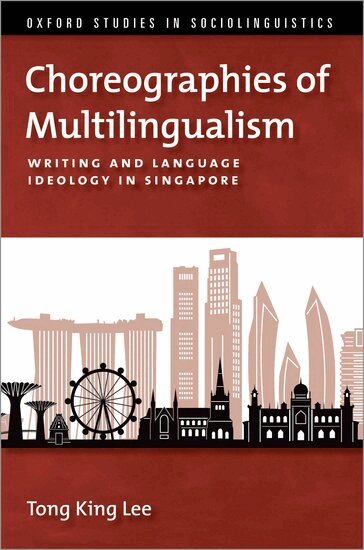
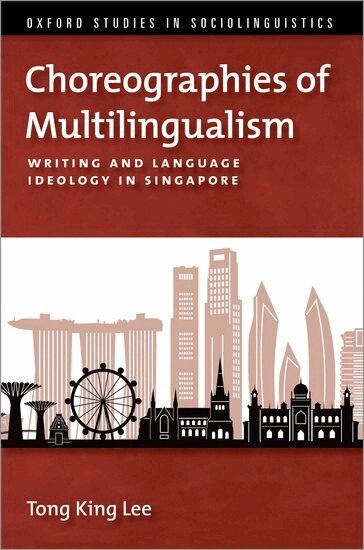
Singapore boasts a complex mix of languages and is therefore a rich site for the study of multilingualism and multilingual society. In particular, writing is a key medium in the production of the nation's multilingual order - one that is often used to organize language relations for public consumption.In Choreographies of Multilingualism, Tong King Lee examines the linguistic landscape of written language in Singapore - from street signage and advertisements, to institutional anthologies and text-based memorabilia, to language primers and social media-based poetry - to reveal the underpinning language ideologies and how those ideologies figure in political tensions. The book analyzes the competing official and grassroots narratives around multilingualism and takes a nuanced approach to discuss the marginalization, celebration, or appropriation of Singlish. Bringing together theoretical perspectives from sociolinguistics, multimodal semiotics, translation, and cultural studies, Lee demonstrates that multilingualism in Singapore is an emergent and evolving construct through which identities and ideologies are negotiated and articulated. Broad-ranging and cross-disciplinary, this book offers a significant contribution to our understanding of language in Singapore, and more broadly to our understanding of multilingualism and the sociolinguistics of writing.
489 kr
Skickas inom 5-8 vardagar
Singapore boasts a complex mix of languages and is therefore a rich site for the study of multilingualism and multilingual society. In particular, writing is a key medium in the production of the nation's multilingual order - one that is often used to organize language relations for public consumption.In Choreographies of Multilingualism, Tong King Lee examines the linguistic landscape of written language in Singapore - from street signage and advertisements, to institutional anthologies and text-based memorabilia, to language primers and social media-based poetry - to reveal the underpinning language ideologies and how those ideologies figure in political tensions. The book analyzes the competing official and grassroots narratives around multilingualism and takes a nuanced approach to discuss the marginalization, celebration, or appropriation of Singlish. Bringing together theoretical perspectives from sociolinguistics, multimodal semiotics, translation, and cultural studies, Lee demonstrates that multilingualism in Singapore is an emergent and evolving construct through which identities and ideologies are negotiated and articulated. Broad-ranging and cross-disciplinary, this book offers a significant contribution to our understanding of language in Singapore, and more broadly to our understanding of multilingualism and the sociolinguistics of writing.
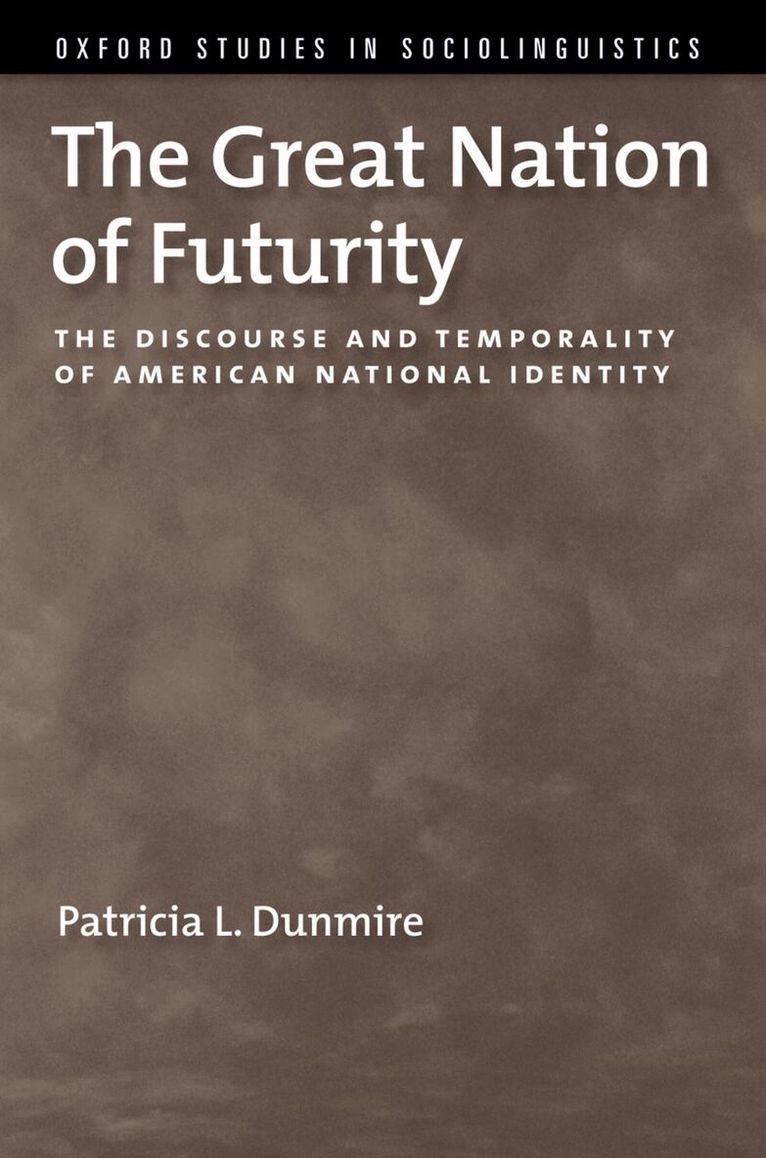
The Great Nation of Futurity
The Discourse and Temporality of American National Identity
Inbunden, Engelska, 2023
803 kr
Skickas inom 5-8 vardagar
The Great Nation of Futurity is situated within the discourse and ideology of American exceptionalism which has undergirded the nation's identity throughout its history. It draws out the temporal dimension of the exceptionalist ideology, namely the construal of America as the "great nation of futurity," and examines how this identity manifests linguistically and functions rhetorically in Cold War foreign policy discourse. Working within a critical discourse analytic framework, Patricia L. Dunmire examines the space-times construed within foreign policy discourse and demonstrates that these consistently position the United States in a privileged position vis-à-vis the future. This positioning, in turn, sanction a foreign policy approach focused on global future design.
956 kr
Skickas inom 5-8 vardagar
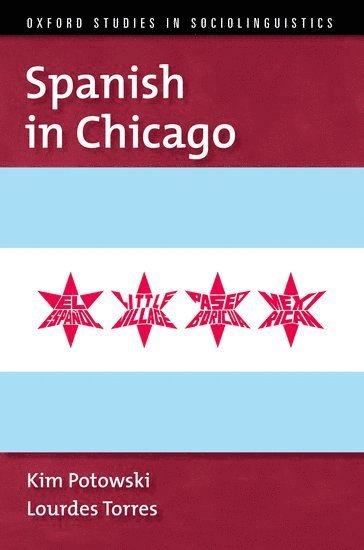
Spanish in Chicago is the first book-length study of Spanish in Chicago, where populations originating in both Mexico and Puerto Rico have lived in contact for generations and Latinos now comprise nearly a third of the population. Identifying Chicago as a rich site for examining language and dialect contact at both community and family levels, Kim Potowski and Lourdes Torres describe the spoken Spanish of Chicago, analyzing patterns of language change and identity constructions and establishing their likely causes.Drawing on interviews with 124 individuals across three generations of Mexican, Puerto Rican, and MexiRican Chicagoans, Potowski and Torres trace the effects of language and dialect contact through close sociolinguistic analysis of lexicon, discourse markers, codeswitching, the subjunctive, and phonology. Their analysis uniquely examines these features across three generations of speakers and two different regional origins within the same corpus. By including MexiRicans as a category, the book not only assesses the dynamics of linguistic convergence, dialect leveling, accommodation, and language loss, but also the concept of intrafamiliar dialect contact pioneered by Potowski. Contextualizing these language changes within the history of Latino communities in Chicago, Spanish in Chicago provides a nuanced picture of a minority language in a major US city and a vital contribution to sociolinguistics and Latino studies.
391 kr
Skickas inom 5-8 vardagar
Spanish in Chicago is the first book-length study of Spanish in Chicago, where populations originating in both Mexico and Puerto Rico have lived in contact for generations and Latinos now comprise nearly a third of the population. Identifying Chicago as a rich site for examining language and dialect contact at both community and family levels, Kim Potowski and Lourdes Torres describe the spoken Spanish of Chicago, analyzing patterns of language change and identity constructions and establishing their likely causes.Drawing on interviews with 124 individuals across three generations of Mexican, Puerto Rican, and MexiRican Chicagoans, Potowski and Torres trace the effects of language and dialect contact through close sociolinguistic analysis of lexicon, discourse markers, codeswitching, the subjunctive, and phonology. Their analysis uniquely examines these features across three generations of speakers and two different regional origins within the same corpus. By including MexiRicans as a category, the book not only assesses the dynamics of linguistic convergence, dialect leveling, accommodation, and language loss, but also the concept of intrafamiliar dialect contact pioneered by Potowski. Contextualizing these language changes within the history of Latino communities in Chicago, Spanish in Chicago provides a nuanced picture of a minority language in a major US city and a vital contribution to sociolinguistics and Latino studies.