pocket GIANTS - Böcker
Visar alla böcker i serien pocket GIANTS. Handla med fri frakt och snabb leverans.
20 produkter
20 produkter
98 kr
Tillfälligt slut
Wellington is a giant because he was one of the greatest military commanders in British history, an important figure in the emergence of Britain as a great imperial power, a man who dominated British society and politics for 35 years. He was the only one of Napoleon’s contemporaries who can be mentioned in the same breath as a general - a master of logistics, politics and coalition warfare as well as strategy, operations and tactics. The book’s focus is on Wellington’s military career, and it looks at all of these aspects, placing them in the context of the military and political developments of the time. It explores Wellington’s personality – a key to understanding his success - and briefly examines his post-Waterloo career as a politician. It concludes that Wellington was not only a military genius, but an icon whose fame endures to our own time.
85 kr
Tillfälligt slut
The Diary of Anne Frank is one of the most famous – and bestselling – books of all time. Yet the girl who wrote it remains an enigma. The real Anne Frank has been lost, hidden behind the phenomenon that her posthumously published Diary produced. This concise biography will rediscover Anne Frank: telling her story from the beginning to the tragic end. It will place her life within the wider context of the Holocaust itself, and also explore her afterlife: seeking to explain why her Diary still speaks to us today.
83 kr
Tillfälligt slut
In 218, Hannibal Barca, desperate to avenge the defeat of Carthage in the First Punic War, launched an ambitious ground invasion of Italy. With just a small force, he crossed the Alps – a feat reckoned to be impossible – and pitted his polyglot army against Rome’s elite citizen infantry. At Cannae, in 216, Hannibal destroyed an 80,000-strong Roman force in one afternoon, delivering a blow unequalled in Roman history for half a millennium to come. The Romans had no answer to Hannibal until the young Scipio volunteered to take over Rome’s armies in Spain, which were close to defeat, and left leaderless by the death of Scipio’s own father and uncle. In the decade which followed, Scipio turned Rome’s desperate fortunes into a stunning victory over Carthage. The portrait of Hannibal and Scipio takes the reader through one of the greatest military campaigns in history, driven by two remarkable and fascinating men.
98 kr
Tillfälligt slut
Why is Henry Ford a giant? Because he put the world on wheels. Henry Ford did not invent the motor car, nor for all the claims did he invent the assembly line or mass production. But more than anyone before or since he is remembered as the man who almost singlehandedly took an expensive contraption of doubtful utility and recast it as a machine which in a real and profound sense changed the world forever. In an industry with many giants –André Citroen, Louis Renault and Giovanni Agnelli of Fiat – Henry Ford stands tallest as the greatest ever motor mogul. A Michigan farmer’s son who became a dollar billionaire, a ruthlessly single-minded autocrat who became a folk hero, a pacifist who went on to inspire Adolf Hitler - he was a boss who paid his workers twice as much as his competitors yet waged an unrelenting war on unions and badly abused the power he had worked so hard to attain. David Long has been an author and journalist for thirty years, and has regularly appeared in The Times, Sunday Times and many magazines, here and abroad. He is a celebrated author of over twenty titles and has ghostwritten many more.
98 kr
Tillfälligt slut
‘Colin Bundy has given us an incredible insight into the person of Mandela. What a man and what a gift Madiba was to the world.’ - Desmond TutuNelson Mandela’s place in history is secure: he was one of the best known prisoners in the world even before his election as the first president of post-apartheid South Africa; secondly, he became a global icon, an elder statesman, with a degree of moral authority matched by very few. Coming to terms with a dizzying sequence of roles, this biography explores Mandela’s various identities – dashing young urbanite, charismatic nationalist politician, underground military commander and Black Pimpernel, tried, convicted, and a political prisoner for 27 years; on his release president of a democratic South Africa – and assesses these independently of his iconic, nigh-mythic status. This book revisits the well-known contours of Mandela’s career, but resists hagiography: it outlines what he achieved, but also identifies aspects of his personality and politics that are far less familiar.
88 kr
Skickas
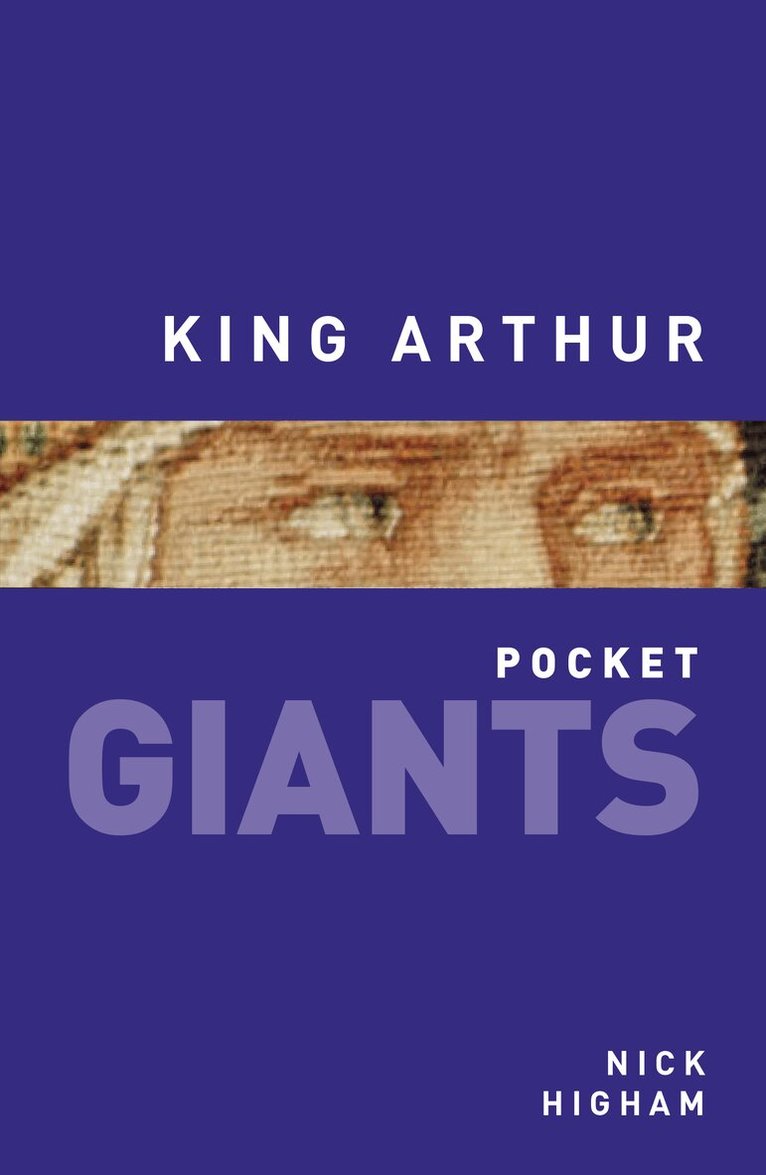
Why is King Arthur a giant? Because his story has had such strong influences on our understanding of the history of Europe and the English-speaking world. Because the debate about Arthur as a historical figure has been central to understanding the fall of Roman Britain and the formation of England for much of the last 1,300 years. Because Arthur is one of the best-known kings in world history, whose reign was viewed as a golden age, an epoch in which to centre tales of right and wrong, of faith and faithlessness, and of courage and falseness, the moral and spiritual values of which continue to resonate today not least among those who dismiss Arthur as a late literary construct. Because an understanding of Arthur and all the different things he has meant to scores of generations up to the present is fundamental to our understanding of our own past, our understanding of ourselves and the ways in which we can benefit from history.
88 kr
Skickas
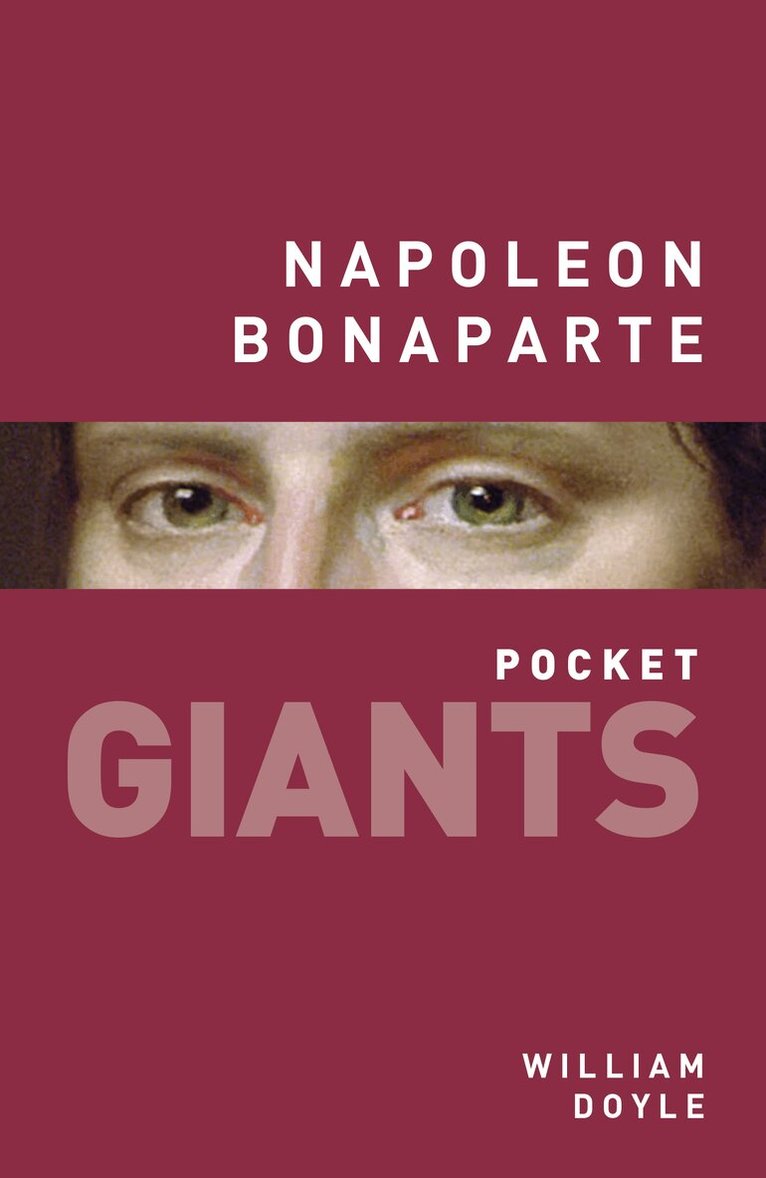
In the space of less than twenty years, Napoleon turned Europe upside down. Rising from obscure origins to supreme power by a mixture of luck, audacity and military genius, he was able to harness the energies released by the French Revolution to resolve the internal problems which it had created, before turning his restless ambition to remodeling the political structure of the whole continent in a series of brilliant military victories. He was never able to finally subdue all his foreign enemies, and in the end they came together to bring him down; but by then it was impossible to restore what he had destroyed, or, in France, to destroy much of what he had created. The memory of his epic exploits, carefully refashioned during his last years in exile, haunted Europe for over a century, while the more distant effects of his career changed the whole destiny of the Americas and of the world.
88 kr
Skickas inom 11-20 vardagar
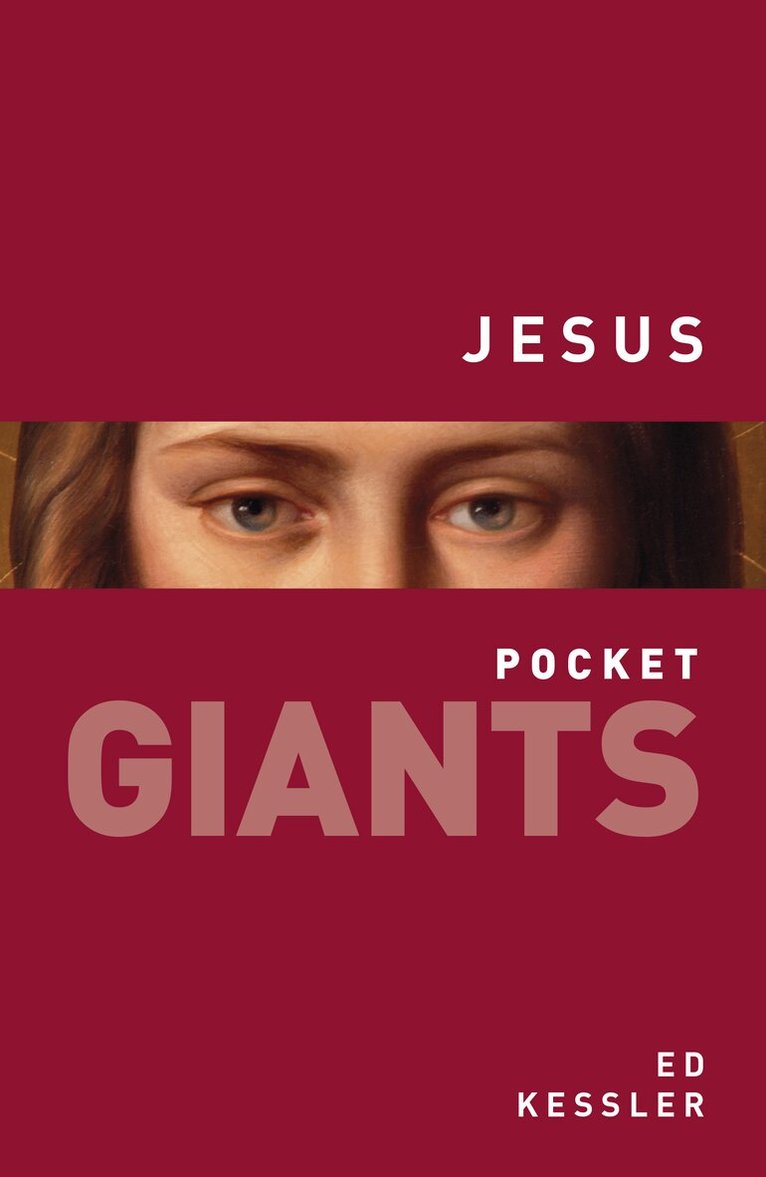
Why is Jesus a giant? Because he was the founder of Christianity, the largest religion in the world with 2 billion adherents; because Christianity is one of the five great religions of the world, with followers in every country on the planet and a history stretching back two thousand years; because there remains great interest in the teaching of Jesus, his personality and his life. The origins of a great religion which has filled so immense a place in the history of the world must surely be of interest to everyone.
88 kr
Skickas
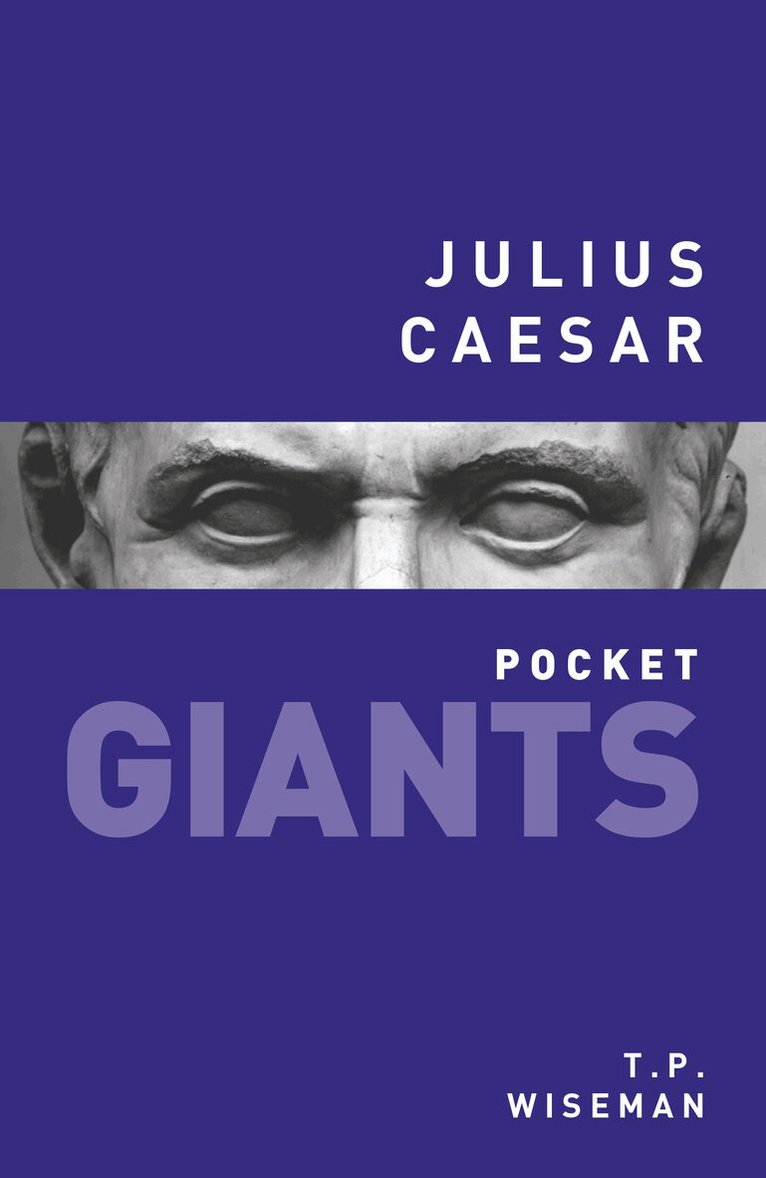
Why is Caesar a giant? Because he effectively created the Roman Empire, and thus made possible the European civilization that grew out of it. As the People's champion against a corrupt and murderous oligarchy, he began transformation of the Roman republic into a quasi-monarchy and a military and fiscal system that for four centuries provided western Europe, north Africa and the Middle East with security, prosperity and relative peace. His conquest of Gaul and his successors' conquests of Germany, the Balkans and Britain created both the conditions for 'western culture' and many of the historic cities in which it has flourished.
154 kr
Skickas inom 7-10 vardagar
‘Alfred is one of the most remarkable rulers of any time or place. This clear, readable and insightful book shows why.’ - Michael WoodWhy is Alfred the Great? A simple answer is that he has been seen as a man who saved England, invented English identity and pioneered English as a written language. He is the first Englishman for whom a biography survives so that we know more about Alfred and his ideals than we do for most people who lived over a thousand years ago.A slightly longer answer would say that things are a bit more complicated, and that one reason Alfred seems to be so ‘great’ was that he made sure we were told that he was. To get the measure of Alfred we need to look at what he actually managed to achieve. Can we resurrect the ‘real’ King Alfred? There may be limits, but even if we have to part company with some of the Victorian adulation, we are still left with a pretty impressive and surprising person.
98 kr
Tillfälligt slut
Isaac Newton had an extraordinary idea. He believed the physical universe and everything in it could be described in exact detail using mathematical relationships. He formulated a law of gravity that explained why objects fall downwards, how the moon causes the tides, and why planets and comets orbit the sun.While Newton’s work has been added to over the years, his basic approach remains at the heart of the scientific worldview. Yet Newton’s own had little in common with that of a modern scientist. He believed the universe was created to a precise and rational design – a design that was fully understood by the earliest people. Over time this knowledge was lost, and Newton considered it his life’s work to rediscover it, whether through applied mathematics or a painstaking study of the Bible and other ancient texts. In chasing his impossible goal, Newton managed to contribute more to our understanding of the universe than anyone else in history.
95 kr
Tillfälligt slut
John Lennon is a giant of popular music and culture. As one-quarter of the Beatles, he was in the vanguard of music, art, fashion and popular culture during the sixties. His music, humour and outspoken calls for peace inspired a generation. He stands as an iconic figure for those who lived through the sixties and seventies, as well as for those who grew up long after his untimely death in 1980. Above all, Lennon was one of the twentieth century’s greatest and most important songwriters. Songs he wrote with Paul McCartney, such as ‘She Loves You’ and ‘A Day in the Life’, define an era. Others he wrote alone, such as ‘God’, ‘Help!’ and ‘Revolution’, betray an often complex, contradictory and troubled character. Lennon was never one to hide his love away, nor his anger, nor his convictions. In 2000 his anthem ‘Imagine’ was voted the song of the millennium.
88 kr
Skickas
Why is Nelson a hero? Because he was a captain before he was 21, a man who shaped the course of history from the decks of his ships, hailed as a saviour of the nation, a hero killed in action at the moment of his greatest victory at the Battle of Trafalgar and immortalized ever since. What lies beneath the romantic legend of Horatio Nelson? What did he do before he became famous? Why did he fall from grace twice? Did he really put a telescope to his blind eye? Why did Victory’s signal lieutenant change his ‘England expects . . . .’ signal at Trafalgar? What made his leadership special? This book traces Nelson’s spectacular and often controversial career from a Norfolk parson’s son who entered the Royal Navy at the age of twelve, through his youth as a difficult and ambitious naval subordinate, his rise to admiral and celebrity, his fighting career and his outstanding victories at the battles of the Nile, Copenhagen and ultimately Trafalgar.
85 kr
Tillfälligt slut
Why is Constantine a giant? Because he gave Christians freedom of religion. Yet also because he radically and thoroughly changed our society, in particular church-state relations, thereby creating the opportunity for the Christian community to experience exponential growth. Because his changes in government, law, religion and art and architecture are so enormous we still see the consequences of his decisions to this very day. Because Constantinian history is relevant to everyone.
85 kr
Tillfälligt slut
Everyone has heard of Albert Einstein and everyone knows that he was a genius. Yet only a few people understand his work. In fact, he was just one of many brilliant scientists grappling with the deepest problems of theoretical physics during the first half of the twentieth century. He may not have been the most important or influential of them – the point is arguable – but there is no doubt he was the most revolutionary. Almost single-handed, he transformed the way the world thinks about light, matter, space and time.In the sixty years since his death Einstein has become a legend. The profound obscurity of his theories has contributed to this, as has his archetypal “mad scientist” appearance. His philosophical and political utterances – both real and imagined – are regularly used to clinch arguments online or in the pub. So how can a modern reader separate myth from reality? This short book attempts to do just that!
101 kr
Skickas inom 7-10 vardagar
On Sunday 5 October 2014, the 75,000 strong crowd at Old Trafford for Manchester United’s game against Everton joined in with an extended version of a chant which echoed around the stadium. ‘We all live in a Georgie Best world,’ it went. Eleven years after his death, forty years after he walked out of the club for the last time as a player, Best remains a Giant – extraordinary given that his star shone for such a brief time. He was at the top of the game for no more than half a dozen years. How did he do it?
90 kr
Tillfälligt slut
Giuseppe Verdi (1813–1901) was the Shakespeare of opera, the composer of Rigoletto, Il Trovatore, La Traviata, Aida and Otello. The Chorus of Hebrew slaves from Nabucco (1842) is regarded in Italy as virtually an alternative national anthem – and the great tragedian rounded off his career fifty years later with a rousing comedy, Falstaff.When Verdi was born, much of northern Italy was under Napoleonic rule, and Verdi grew up dreaming of a time when the peninsula might be governed by Italians. When this was achieved, in 1861, he became a deputy in the first all-Italian parliament.While in his 20s, Verdi lost his two children and then his wife (many Verdi operas feature poignant parent-child relationships). Later, he retired, with his second wife, to his beloved farmlands, refusing for long stretches to return to composition. Verdi died in January 1901, universally mourned as the supreme embodiment of the nation he had helped create.
88 kr
Skickas inom 11-20 vardagar
The world was stunned when little-known Karol Wojtyła became the first non-Italian pope for 450 years. As Pope John Paul II, he continued to surprise, directly confronting Communist regimes, flying hundreds of thousands of miles to meet the faithful, and building bridges with other faiths. John Paul II became a bête noire in the eyes of liberals for his staunch refusal to accept contraception or the ordination of women. But for others he was a Churchillian figure who took on the forces of godlessness and moral relativism. He gained a stature that left secular statesmen in his shadow. Love him or loathe him, few could deny that he was a man of rare courage. He survived two assassination attempts, fought off cancer and waged a very public battle with Parkinson’s disease. Seven years after his death he continues to exert a hold over the Church and to inspire an almost cult-like devotion.
95 kr
Tillfälligt slut
From disastrous beginnings after he took the throne of Scotland, having murdered a powerful rival, Robert I became a military leader of consummate genius. Throwing away the rulebook of medieval warfare, which favoured the mounted knight, he remodelled the Scottish army as a disciplined, audacious band of brothers capable of surprising castles, raiding and extracting blackmail as far south as Yorkshire and even defeating a mighty English army in pitched battle. Ruthless, charismatic, indomitable and lucky, the ‘Bruce’ is a towering example of an underdog capable of turning disadvantage into advantage and winning the day through talent and sheer determination. The English turned the lessons they learnt from him to good effect in their Hundred Years war against France.
87 kr
Tillfälligt slut
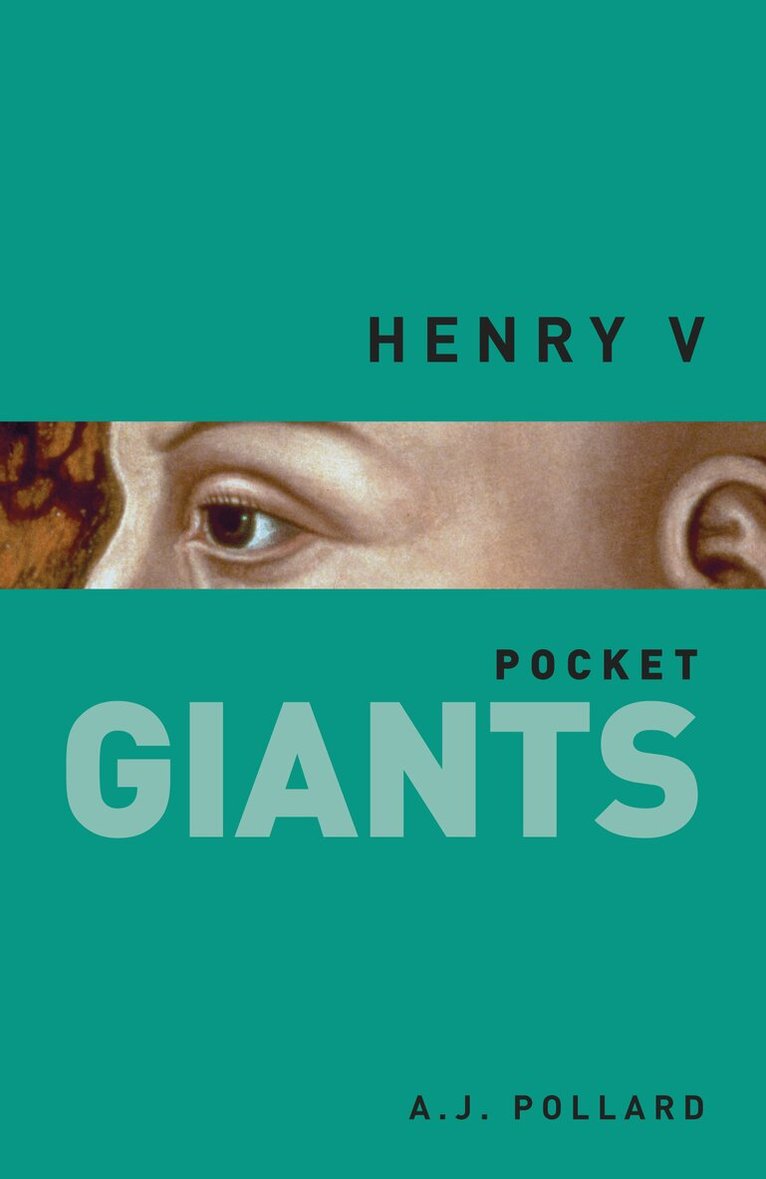
Henry V is the best-known military hero in English history: better known than Marlborough or Wellington, or his grandfather, Edward III. He enjoyed more success against the French than any of them, coming tantalisingly close to conquering that vast country and imposing an English dynasty; this in a reign of just nine years, in only seven of which he was at war. Even before he died the heroic myth, later enshrined by Shakespeare, was being created. His victories have become the touchstone of English nationalism, English militarism and English imperialism. For good or ill, Henry V now signifies the one-time ‘Greatness of England’. He was a military genius, yet his megalomania was not always in the best interests of his own kingdom, let alone the people of France who suffered at his hands. Behind the carefully constructed nationalist myth was a cold, calculating, ruthless ruler who, before his early death, revealed ominous tyrannical tendencies.