Provocations - Böcker
Visar alla böcker i serien Provocations. Handla med fri frakt och snabb leverans.
20 produkter
20 produkter
262 kr
Skickas inom 10-15 vardagar
Pushing back against the contemporary myth that freedom from oppression is freedom of choice, Frank Ruda resuscitates a fundamental lesson from the history of philosophical rationalism: a proper concept of freedom can arise only from a defense of absolute necessity, utter determinism, and predestination.Abolishing Freedom demonstrates how the greatest philosophers of the rationalist tradition and even their theological predecessors-Luther, Descartes, Kant, Hegel, Freud-defended not only freedom but also predestination and divine providence. By systematically investigating this mostly overlooked and seemingly paradoxical fact, Ruda demonstrates how real freedom conceptually presupposes the assumption that the worst has always already happened; in short, fatalism. In this brisk and witty interrogation of freedom, Ruda argues that only rationalist fatalism can cure the contemporary sickness whose paradoxical name today is freedom.
262 kr
Skickas inom 10-15 vardagar
Declarations of Dependence rethinks the historical relationship between money and aesthetics in an effort to make critical theory newly answerable to politics. Scott Ferguson regrounds critical theory in the alternative conception of money articulated by the contemporary heterodox school of political economy known as Modern Monetary Theory. Applying the insights of this theory, Ferguson contends that money, rather than representing a private, finite, and alienating technology, is instead a public and fundamentally unlimited medium that harbors still-unrealized powers for inclusion, cultivation, and care.Ferguson calls Modern Monetary Theory’s capacious ontology of money the “unheard-of center” of modern life. Here he installs this unheard-of center at the heart of critique to inaugurate a new critical theory that aims to actualize money’s curative potential in a sensuous here-and-now. Declarations of Dependence reimagines the relation between money and aesthetics in a manner that points beyond neoliberal privation and violence and, by doing so, lends critical theory fresh relevance and force.
301 kr
Skickas inom 10-15 vardagar
Contra Instrumentalism questions the long-accepted notion that translation reproduces or transfers an invariant contained in or caused by the source text. This “instrumental” model of translation has dominated translation theory and commentary for more than two millennia, and its influence can be seen today in elite and popular cultures, in academic institutions and in publishing, in scholarly monographs and in literary journalism, in the most rarefied theoretical discourses and in the most commonly used clichÉs.Contra Instrumentalism aims to end the dominance of instrumentalism by showing how it grossly oversimplifies translation practice and fosters an illusion of immediate access to source texts. Lawrence Venuti asserts that all translation is an interpretive act that necessarily entails ethical responsibilities and political commitments. Venuti argues that a hermeneutic model offers a more comprehensive and incisive understanding of translation that enables an appreciation of not only the creative and scholarly aspects of what a translator does but also the crucial role translation plays in the cultural and social institutions that shape human life.
I'm not Like Everybody Else
Biopolitics, Neoliberalism, and American Popular Music
Häftad, Engelska, 2018
269 kr
Skickas inom 10-15 vardagar
Despite the presence of the Flaming Lips in a commercial for a copier and Iggy Pop’s music in luxury cruise advertisements, Jeffrey T. Nealon argues that popular music has not exactly been co-opted in the American capitalist present. Contemporary neoliberal capitalism has, in fact, found a central organizing use for the values of twentieth-century popular music: being authentic, being your own person, and being free. In short, not being like everybody else.Through a consideration of the shift in dominant modes of power in the American twentieth and twenty-first centuries, from what Michel Foucault calls a dominant “disciplinary” mode of power to a “biopolitical” mode, Nealon argues that the modes of musical “resistance” need to be completely rethought and that a commitment to musical authenticity or meaning-saying “no” to the mainstream-is no longer primarily where we might look for music to function against the grain.Rather, it is in the technological revolutions that allow biopolitical subjects to deploy music within an everyday set of practices (MP3 listening on smartphones and iPods, streaming and downloading on the internet, the background music that plays nearly everywhere) that one might find a kind of ambient or ubiquitous answer to the “attention capitalism” that has come to organize neoliberalism in the American present. In short, Nealon stages the final confrontation between “keepin’ it real” and “sellin’ out.”
254 kr
Skickas inom 10-15 vardagar
Dirty Knowledge explores the failure of traditional conceptions of academic freedom in the age of neoliberalism. While examining and rejecting the increasing tendency to view academic freedom as a form of free speech, Julia Schleck highlights the problem of basing academic freedom on employment protections like tenure at a time when such protections are being actively eliminated through neoliberalism’s preference for gig labor. The argument traditionally made for such protections is that they help produce knowledge “for the public good” through the protected isolation of the Ivory Tower, where “pure” knowledge is sought and disseminated.In contrast, Dirty Knowledge insists that academic knowledge production is and has always been “dirty,” deeply involved in the debates of its time and increasingly permeated by outside interests whose financial and material support provides some research programs with significant advantages over others. Schleck argues for a new vision of the university’s role in society as one of the most important forums for contending views of what exactly constitutes a societal “good,” warning that the intellectual monoculture encouraged by neoliberalism poses a serious danger to our collective futures and insisting on deliberate, material support for faculty research and teaching that runs counter to neoliberal values.
298 kr
Skickas
“The people are missing” is a constant refrain in Gilles Deleuze and FÉlix Guattari’s writings after the 1975 publication of Kafka: Pour une litterature mineure. With the translation of this work into English (Kafka: Toward a Minor Literature) in 1986, the refrain quickly became a hallmark of political interpretation in the North American academy and was especially applied to the works of minorities and postcolonial writers. However, in the second cinema book, CinÉma 2: L’Image-temps, the refrain is restricted to third-world cinema, in which Deleuze and Guattari locate the conditions of truly postwar political cinema: the absence, even the impossibility, of a people who would constitute its organic community.In this critical reflection, Gregg Lambert traces the “narrowing” of the refrain itself, as well as the premise that the act of art is capable of inventing the conditions of a “people” or a “nation,” and asks whether this results only in reducing the positive conditions of art and philosophy in the postmodern period. Lambert offers an unprecedented inquiry into the evolution of Deleuze’s hopes for the revolutionary goals of minor literature and the related notion of the missing people in the conjuncture of contemporary critical theory.
254 kr
Skickas inom 10-15 vardagar
Hatred of Sex links Jacques RanciÈre’s political philosophy of the constitutive disorder of democracy with Jean Laplanche’s identification of a fundamental perturbation at the heart of human sexuality. Sex is hated as well as desired, Oliver Davis and Tim Dean contend, because sexual intensity impedes coherent selfhood and undermines identity, rendering us all a little more deplorable than we might wish. Davis and Dean explore the consequences of this conflicted dynamic across a range of fields and institutions, including queer studies, attachment theory, the #MeToo movement, and “traumatology,” demonstrating how hatred of sex has been optimized and exploited by neoliberalism.Advancing strong claims about sex, pleasure, power, intersectionality, therapy, and governance, Davis and Dean shed new light on enduring questions of equality at a historical moment when democracy appears ever more precarious.
262 kr
Skickas inom 10-15 vardagar
Free Listening offers a radical reframing of seemingly intractable debates and polarized positions on free speech, academic freedom, systemic injustice, and political dissent by shifting attention from our voices to our ears. Instead of reclaiming the terrain of free speech that is increasingly ceded to conservatives, Naomi Waltham-Smith argues that progressives should assume a more radical task-to liberate listening from those frameworks that have determined what freedom looks like, who enjoys it, and at what cost. Refocusing on aural responsiveness forces a confrontation with the liberal tradition that has traditionally anchored claims for freedom of expression and inquiry. If listening is placed at the heart of public deliberation and disagreeing well, the relational, open-ended, and unpredictable character of free expression becomes a common good.In a wide-ranging critical reflection on issues from civility to criticality, righteous anger to gentle listening, and silencing to streaming platforms, Free Listening makes an ambitious contribution to sound studies and political philosophy. Weaving together deconstruction, Black political thought, and decolonial theory, Waltham-Smith argues that the retort to accusations of “cancel culture” should be a revival of abolition democracy.
297 kr
Skickas inom 7-10 vardagar
Winner of the 2024 Hugh J. Silverman Book PrizeWho Would You Kill to Save the World? examines how postapocalyptic cinema uses images from the past and present to depict what it means to preserve the world-and who is left out of the narrative of rebuilding society. Claire Colebrook redefines “the world” as affluent Western society and “saving the world” as preventing us from becoming the othered them who are viewed in their suffering. Colebrook further examines how the use of postapocalyptic cinema is a humanist-Western, capitalist, colonizing, white, heteronormative, and individualist-creation and challenges the notion that a world built on foundations of exploitation is worth saving.Colebrook combines postapocalyptic fiction, concern over the global climate crisis, colonialism, and anti-Blackness to explain how contemporary postapocalypse blockbusters circulate ideas of whiteness and the right of the privileged to rebuild the world. Who Would You Kill to Save the World? is a provocative addition to the field of extinction studies and challenges the conceptual frames we use to define ourselves.
462 kr
Kommande
262 kr
Skickas inom 10-15 vardagar
Against Affect interrogates shibboleths of feeling and reason and their relationship with ideas of identity, gender, and freedom in the twenty-first century. Lisa Downing starts with the familiar premise that emotion has been historically gendered and racialized since the Enlightenment, with women, people of color, and other non-normative subjects associated with emotionality, and only white men with logic and reason. The "affective turn" in the academic humanities attempted to redress this injustice in the 1990s, and affect theory, ubiquitous today, revalorized precisely what was excluded from logos: the bodily, the emotive, and the experiential. But how effective has this strategy truly been in changing perceptions of marginalized forms of knowledge and subjectivity? Against Affect argues that the academic affective turn has prompted a broader cultural one, marked by increasing prioritization—and exploitation—of feeling over reason, issuing from both the political left and right.Using a series of case studies, Against Affect explores how the deployment of a language of emotion in both the academic and cultural spheres constitutes a new normativity. In thinking against affect, Downing questions the efficacy and desirability of idealizing feeling and proposes instead the redistribution of reason.
297 kr
Kommande
262 kr
Skickas inom 10-15 vardagar
The Earth Is Evil examines the connection between subjectivity and lack, arguing for a destituent ecology that sees lack as the universalist core of social, political, and environmental struggles. Steven Swarbrick maintains that psychoanalysis does not simply help us integrate our desires into a constituency of multispecies actors. Instead, psychoanalysis destitutes our fantasies of ecological and psychic wholeness. That destitution, he argues, is the unconscious source of our enjoyment. Exploring films by Lars von Trier, Kelly Reichardt, Daniel Kwan, and Daniel Scheinert, among others, and intervening in trenchant debates about negativity and desire, Swarbrick urges a return to the existentialist subject of lack against the flattening of subjectivity by ecocriticism. The Earth Is Evil is a vigorous attempt to construct a leftist environmental movement in dialogue with the most radical currents of critical theory.
297 kr
Kommande
246 kr
Kommande
119 kr
Skickas
Del 2 - Provocations
Jenny, Eleanor, Laura, Et Al.
This Is Not a Book about Marx
Häftad, Engelska, 2025
179 kr
Skickas inom 3-6 vardagar
124 kr
Skickas
Contemporary art is obsessed with the politics of identity. Visit any contemporary gallery, museum or theatre, and chances are the art on offer will be principally concerned with race, gender, sexuality, power and privilege.The quest for truth, freedom and the sacred has been thrust aside to make room for identity politics. Mystery, individuality and beauty are out; radical feminism, racial grievance and queer theory are in. The result is a drearily predictable culture and the narrowing of the space for creative self-expression and honest criticism.Sohrab Ahmari's book is a passionate cri de coeur against this state of affairs. The New Philistines takes readers deep inside a cultural scene where all manner of ugly, inept art is celebrated so long as it toes the ideological line, and where the artistic glories of the Western world are revised and disfigured to fit the rigid doctrines of identity politics.The degree of politicisation means that art no longer performs its historical function, as a mirror and repository of the human spirit - something that should alarm not just art lovers but anyone who cares about the future of liberal civilisation.
108 kr
Skickas
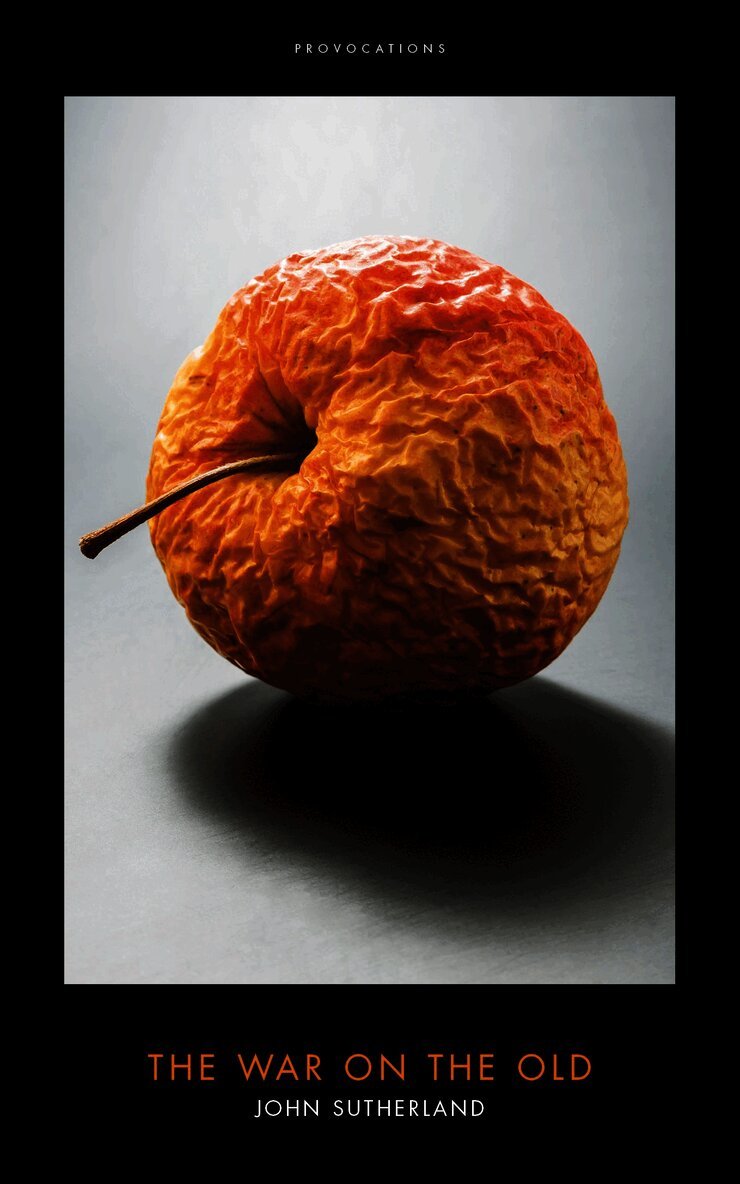
The war on the old has been declared.In the post-Brexit world, intergenerational conflict has become a visible phenomenon. There is an overwhelming sense of blame from younger generations: it was 'the wrinklies', the grey-haired plutocracy, who voted Leave; who are overburdening hospitals, shutting the youth out of the housing market and hoarding accumulated wealth.By 2020, we are told, one in five Britons will be pensioners, and living a longer retirement than ever before. 'A good thing', politicians add, through gritted teeth. The truth is that for them, 'the old' are a social, economic and political inconvenience.John Sutherland (age 78, and feeling keenly what he writes about) examines this intergenerational combat as a new kind of war in which institutional neglect and universal indifference to the old has reached aggressive, and routinely lethal, levels. This is a book which sets out to provoke but in the process tells some deep and inconvenient truths, revealing something British society would rather not think about.
108 kr
Skickas
NEW AND UPDATED EDITION OF THE BOOK THAT INTRODUCED THE TERM `SNOWFLAKE'When you hear that now ubiquitous phrase `I find that offensive', you know you're being told to shut up. While the terrible murder of the Charlie Hebdo cartoonists demonstrated that those who offend can face the most brutal form of censorship, it also served to intensify the pre-existing climate that dictates we all have to walk on eggshells to avoid saying anything offensive - or else.Indeed, competitive offence-claiming is ratcheting up well beyond religious sensibilities. So, while Islamists and feminists may seem to have little in common, they are both united in demanding retribution in the form of bans, penalties and censorship of those who hurt their feelings.But how did we become so thin-skinned? In this ned and updated edition of her book `I Find That Offensive!' Claire Fox addresses head on the possible causes of what is fast becoming known as `Generation Snowflake' in a call to toughen up, become more robust and make a virtue of the right to be offensive.