Pure Land Buddhist Studies - Böcker
Visar alla böcker i serien Pure Land Buddhist Studies. Handla med fri frakt och snabb leverans.
14 produkter
14 produkter
234 kr
Skickas inom 10-15 vardagar
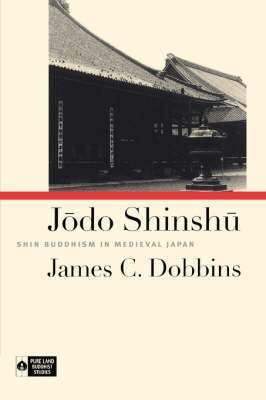
This work combines the biography of the founder of Shin Buddhism with a detailed study of the complex development of the religion, from its simple beginnings as a small, rural primarily lay Buddhist movement in the 12th century to its rapid growth as a powerful urban religion in the 15th century.
807 kr
Skickas inom 10-15 vardagar
The most complete and important book on the early history of Shin Buddhism to appear in English.... No other work in English combines the biography of the founder with such a detailed study of the complex development of Shin Buddhism from its simple beginnings as a small, rural primarily lay Buddhist movement in the 12th century to its rapid growth as a powerful urban religion in the 15th century."" – Choice
283 kr
Skickas inom 7-10 vardagar
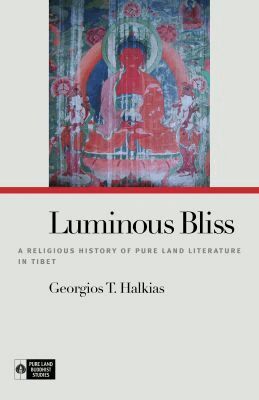
With an annotated English translation and critical analysis of the Orgyan-gling gold manuscript of the short Sukhavativyuha-sutraPure Land Buddhism as a whole has received comparatively little attention in Western studies on Buddhism despite the importance of “buddha-fields” (pure lands) for the growth and expression of Mahayana Buddhism. In this first religious history of Tibetan Pure Land literature, Georgios Halkias delves into a rich collection of literary, historical, and archaeological sources to highlight important aspects of this neglected pan-Asian Buddhist tradition. He clarifies many of the misconceptions concerning the interpretation of “other-world” soteriology in Indo-Tibetan Buddhism and provides translations of original Tibetan sources from the ninth century to the present that represent exoteric and esoteric doctrines that continue to be cherished by Tibetan Buddhists for their joyful descriptions of the Buddhist path. The book is informed by interviews with Tibetan scholars and Buddhist practitioners and by Halkias’ own participant-observation in Tibetan Pure Land rituals and teachings conducted in Europe and the Indian subcontinent.Divided into three sections, Luminous Bliss shows that Tibetan Pure Land literature exemplifies a synthesis of Mahayana sutra-based conceptions with a Vajrayana world-view that fits progressive and sudden approaches to the realization of Pure Land teachings. Part I covers the origins and development of Pure Land in India and the historical circumstances of its adaptation in Tibet and Central Asia. Part II offers an English translation of the short Sukhavativyuha-sutra (imported from India during the Tibetan Empire) and contains a survey of original Tibetan Pure Land scriptures and meditative techniques from the dGe-lugs-pa, bKa’-brgyud, rNying-ma, and Sa-skya schools of Tibetan Buddhism. Part III introduces some of the most innovative and popular mortuary cycles and practices related to the Tantric cult of Buddha Amitabha and his Pure Land from the Treasure traditions in the bKa’-brgyud and rNying-ma schools.Luminous Bliss locates Pure Land Buddhism at the core of Tibet’s religious heritage and demonstrates how this tradition constitutes an integral part of both Tibetan and East Asian Buddhism.
322 kr
Skickas inom 7-10 vardagar
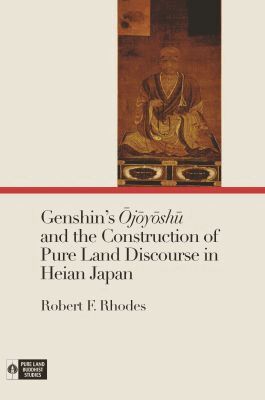
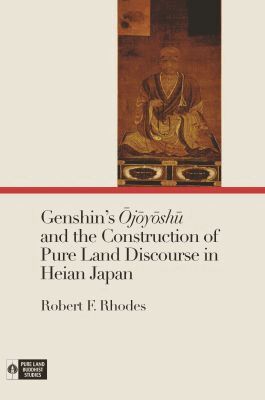
The Ojoyoshu, written by the monk Genshin (942–1017), is one of the most important texts in the history of Japanese religions. It is the first comprehensive guide to the doctrine and practice of Pure Land Buddhism written in Japan and so played a pivotal role in establishing this form of Buddhism in the country. In Genshin's Ojoyoshu and the Construction of Pure Land Discourse in Heian Japan, the first book in English on the Ojoyoshu in more than forty years, Robert Rhodes draws on the latest scholarship to shed new light on the text, its author, and the tumultuous age in which it was written.Rhodes begins by providing substantial discussion on the development of Pure Land Buddhism before the Ojoyoshu's appearance and a thorough account of Genshin's life, the full details of which have never before been available in English. Japan in the tenth century was marked by far-reaching political, social, and economic change, all of which had a significant effect on religion, including the emergence of numerous new religious movements in Kyoto. Pure Land was the most popular of these, and the faith embraced by the Tendai scholar Genshin when he became disaffected with the growing factionalism at Enrakuji, Tendai's central temple. A significant portion of Rhodes' study is a wide-ranging examination of the Ojoyoshu's Pure Land teachings in which he describes and analyzes Genshin's interpretations of Pure Land cosmology and nenbutsu practice. For Genshin the latter encompassed an extensive range of practices for focusing the mind on Amida Buddha—from the simple recitation of Namu Amidabutsu (“recitative nenbutsu”) to the advanced meditative practice of visualizing the buddha (“meditative nenbutsu”). According to the Ojoyoshu, all of these are effective means for ensuring birth in Amida's Pure Land.This impressively researched and updated treatment of the formative text in the Japanese Pure Land tradition will be welcomed by all scholars and students of Japanese religions. It also offers a fascinating window into Heian (794–1185) religious life, which will be of interest to anyone concerned with medieval Japan.
283 kr
Skickas inom 7-10 vardagar
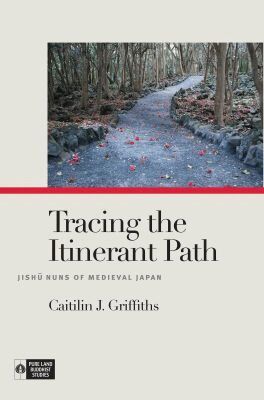
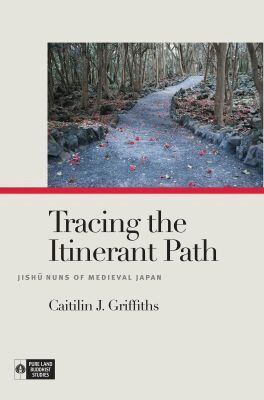
Women have long been active supporters and promoters of Buddhist rituals and functions, but their importance in the operations of Buddhist schools has often been minimized. Chin'ichibo (?–1344), a nun who taught male and female disciples and lived in her own temple, is therefore considered an anomaly. In Tracing the Itinerant Path, Caitilin Griffiths' meticulous research and translations of primary sources indicate that Chin'ichibo is in fact an example of her time—a learned female who was active in the teaching and spread of Buddhism—and not an exception.Chin'ichibo and her disciples were jishu, members of a Pure Land Buddhist movement of which the famous charismatic holy man Ippen (1239–1289) was a founder. Jishu, distinguished by their practice of continuous nembutsu chanting, gained the support of a wide and diverse populace throughout Japan from the late thirteenth century. Male and female disciples rarely cloistered themselves behind monastic walls, preferring to conduct ceremonies and religious duties among the members of their communities. They offered memorial and other services to local lay believers and joined itinerant missions, traveling across provinces to reach as many people as possible. Female members were entrusted to run local practice halls that included male participants. Griffiths' study introduces female jishu who were keenly involved—not as wives, daughters, or mothers, but as partners and leaders in the movement. Filling the lacunae that exists in our understanding of women's participation in Japanese religious history, Griffiths highlights the significant roles female jishu held and offers a more nuanced understanding of Japanese Buddhist history. Students of Buddhism, scholars of Japanese history, and those interested in women's studies will find this volume a significant and compelling contribution.
849 kr
Skickas inom 7-10 vardagar
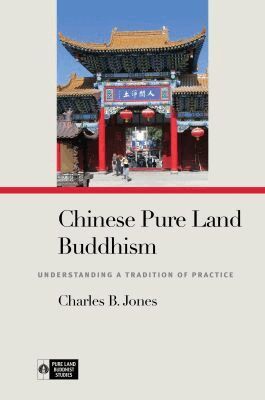
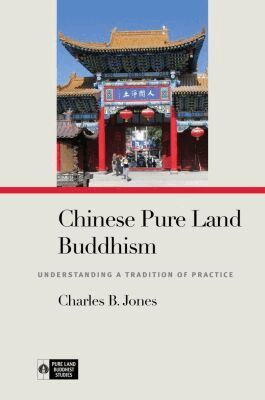
Chinese Pure Land Buddhism: Understanding a Tradition of Practice is the first book in any western language to provide a comprehensive overview of Chinese Pure Land Buddhism. Even though Pure Land Buddhism was born in China and currently constitutes the dominant form of Buddhist practice there, it has previously received very little attention from western scholars. In this book, Charles B. Jones examines the reasons for the lack of scholarly attention and why the few past treatments of the topic missed many of its distinctive features. He argues that the Chinese Pure Land tradition, with its characteristic promise of rebirth in the Pure Land to even non-elite or undeserving practitioners, should not be viewed from the perspective of the Japanese Pure Land tradition, which differs greatly. More accurately contextualizing Chinese Pure Land Buddhism within the landscape of Chinese Buddhism and the broader global Buddhist tradition, this work celebrates Chinese Pure Land, not as a school or sect, but as a unique and inherently valuable “tradition of practice.” This volume is organized thematically, clearly presenting topics such as the nature of the Pure Land, the relationship between “self-power” and “other-power,” the practice of nianfo (buddha-recollection), and the formation of the line of “patriarchs” that keep the tradition grounded. It guides us in understanding the vigorous debates that Chinese Pure Land Buddhism evoked and delves into the rich apologetic literature that it produced in its own defense. Drawing upon a wealth of previously unexamined primary source materials, as well as modern texts by contemporary Chinese Pure Land masters, the author provides lucid translations of resources previously unavailable in English. He also shares his lifetime of experience in this field, enlivening the narrative with personal anecdotes of his visits to sites of Pure Land practice in China and Taiwan.The straightforward and nontechnical prose makes this book a standby resource for anyone interested in pursuing research in this lively, sophisticated, and still-evolving religious tradition. Scholars—including undergraduates—specializing in East Asian Buddhism, as well as those interested in Buddhism or Chinese religion and history in general will find this book invaluable.
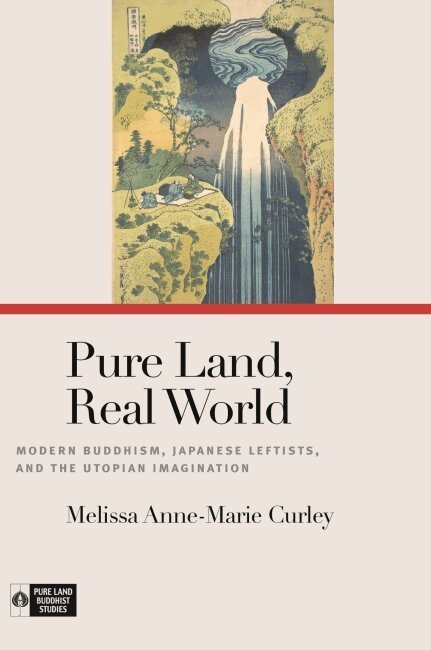
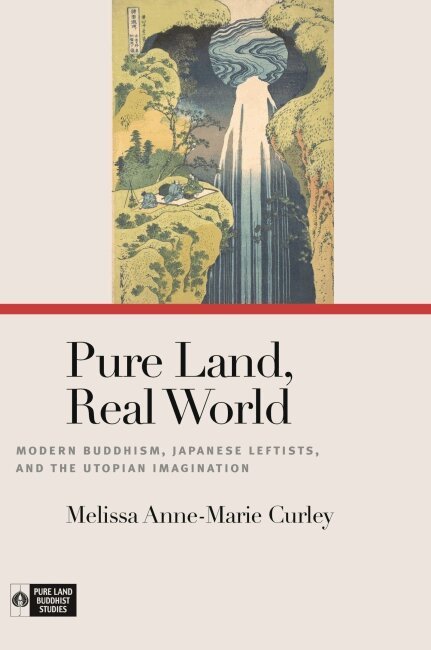
Pure Land, Real World
Modern Buddhism, Japanese Leftists, and the Utopian Imagination
Häftad, Engelska, 2022
271 kr
Skickas inom 11-20 vardagar
For close to a thousand years Amida’s Pure Land, a paradise of perfect ease and equality, was the most powerful image of shared happiness circulating in the Japanese imagination. In the late nineteenth century, some Buddhist thinkers sought to reinterpret the Pure Land in ways that would allow it speak to modern Japan. Their efforts succeeded in ways they could not have predicted. During the war years, economist Kawakami Hajime, philosopher Miki Kiyoshi, and historian Ienaga Saburō—left-leaning thinkers with no special training in doctrinal studies and no strong connection to any Buddhist institution—seized upon modernized images of Shinran in exile and a transcendent Western Paradise to resist the demands of a state that was bearing down on its citizens with increasing force. Pure Land, Real World treats the religious thought of these three major figures in English for the first time.Kawakami turned to religion after being imprisoned for his involvement with the Japanese Communist Party, borrowing the Shinshū image of the two truths to assert that Buddhist law and Marxist social science should reinforce each other, like the two wings of a bird. Miki, a member of the Kyoto School who went from prison to the crown prince’s think tank and back again, identified Shinran’s religion as belonging to the proletariat: For him, following Shinran and working toward building a buddha land on earth were akin to realizing social revolution. And Ienaga’s understanding of the Pure Land—as the crystallization of a logic of negation that undermined every real power structure—fueled his battle against the state censorship system, just as he believed it had enabled Shinran to confront the world’s suffering head on. Such readings of the Pure Land tradition are idiosyncratic—perhaps even heretical—but they hum with the same vibrancy that characterized medieval Pure Land belief. Innovative and refreshingly accessible, Pure Land, Real World shows that the Pure Land tradition informed twentieth-century Japanese thought in profound and surprising ways and suggests that it might do the same for twenty-first-century thinkers. The critical power of Pure Land utopianism has yet to be exhausted.
743 kr
Skickas inom 7-10 vardagar
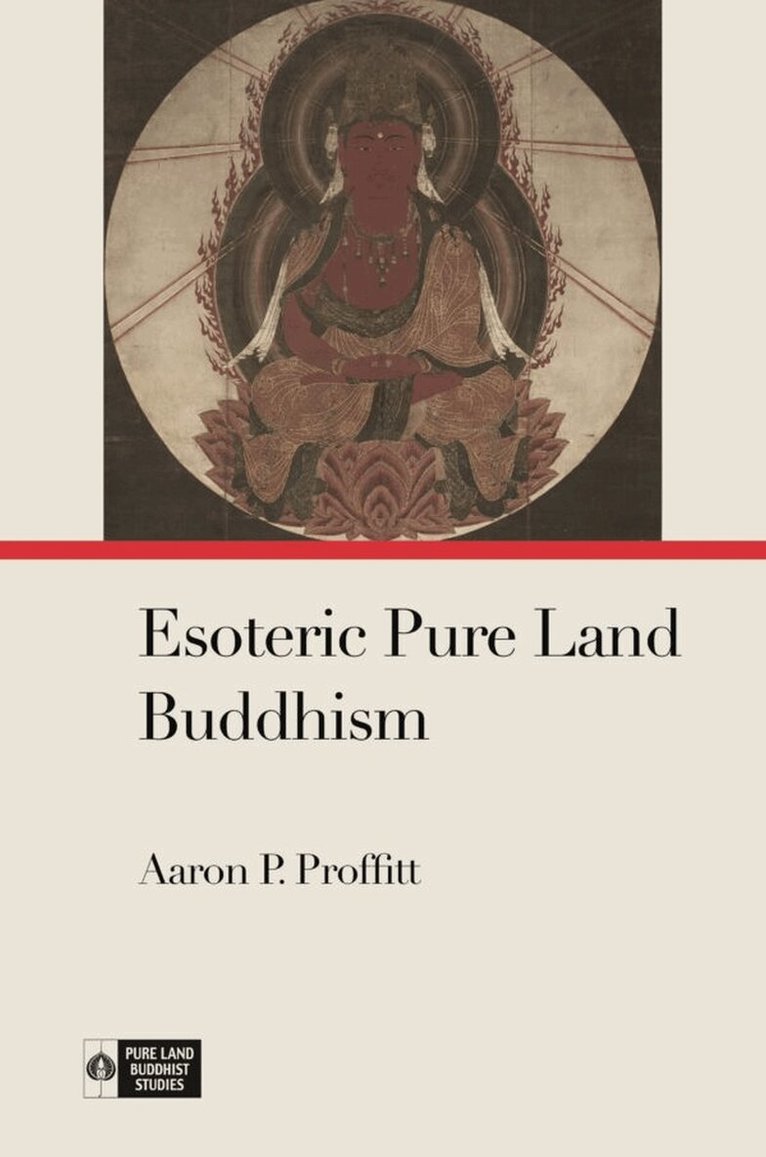
What, if anything, is Esoteric Pure Land Buddhism? In 1224, the medieval Japanese scholar-monk Dōhan (1179–1252) composed The Compendium on Esoteric Mindfulness of Buddha (Himitsu nenbutsu shō), which begins with another seemingly simple question: Why is it that practitioners of mantra and meditation rely on the recitation of the name of the Buddha Amitābha? To answer this question, Dōhan explored diverse areas of study spanning the whole of the East Asian Mahayana Buddhist tradition. Although contemporary scholars often study Esoteric Buddhism and Pure Land Buddhism as if they were mutually exclusive, diametrically opposed, schools of Buddhism, in the present volume Aaron Proffitt examines Dōhan’s Compendium in the context of the eastward flow of Mahayana Buddhism from India to Japan and uncovers Mahayana Buddhists employing multiple, overlapping, so-called esoteric approaches along the path to awakening. Proffitt divides his study into two parts. In Part I he considers how early Buddhologists, working under colonialism, first constructed Mahayana Buddhism, Pure Land Buddhism, and Esoteric Buddhism as discrete fields of inquiry. He then surveys the flow of Indian Buddhist spells, dhāraṇī, and mantra texts into China and Japan and the diverse range of Buddhist masters who employed these esoteric techniques to achieve rebirth in Sukhāvatī, the Pure Land of Bliss. In Part II, he considers the life of Dōhan and analyzes the monk’s comprehensive view of buddhānusmṛti as a form of ritual technology that unified body and mind, Sukhāvatī as a this-worldly or other-worldly soteriological goal synonymous with nirvana itself, and the Buddha Amitābha as an object of devotion beyond this world of suffering. The work concludes with the first full translation of Dōhan’s Himitsu nenbutsu shō into a modern language.
362 kr
Skickas inom 7-10 vardagar
What, if anything, is Esoteric Pure Land Buddhism? In 1224, the medieval Japanese scholar-monk Dōhan (1179–1252) composed The Compendium on Esoteric Mindfulness of Buddha (Himitsu nenbutsu shō), which begins with another seemingly simple question: Why is it that practitioners of mantra and meditation rely on the recitation of the name of the Buddha Amitābha? To answer this question, Dōhan explored diverse areas of study spanning the whole of the East Asian Mahayana Buddhist tradition. Although contemporary scholars often study Esoteric Buddhism and Pure Land Buddhism as if they were mutually exclusive and diametrically opposed schools of Buddhism, in the present volume Aaron Proffitt examines Dōhan’s Compendium in the context of the eastward flow of Mahayana Buddhism from India to Japan and uncovers Mahayana Buddhists employing multiple, overlapping, so-called "esoteric" approaches along the path to awakening. Proffitt divides his study into two parts. In Part I he considers how early Buddhologists, working under colonialism, first constructed Mahayana Buddhism, Pure Land Buddhism, and Esoteric Buddhism as discrete fields of inquiry. He then surveys the flow of Indian Buddhist spells, dhāraṇī, and mantra texts into China and Japan and the diverse range of Buddhist masters who employed these esoteric techniques to achieve rebirth in Sukhāvatī, the Pure Land of Bliss. In Part II, he considers the life of Dōhan and analyzes the monk’s comprehensive view of buddhānusmṛti as a form of ritual technology that unified body and mind, Sukhāvatī as a this-worldly or other-worldly soteriological goal synonymous with nirvana itself, and the Buddha Amitābha as an object of devotion beyond this world of suffering. The work concludes with the first full translation of Dōhan’s Himitsu nenbutsu shō into a modern language.
730 kr
Skickas inom 7-10 vardagar
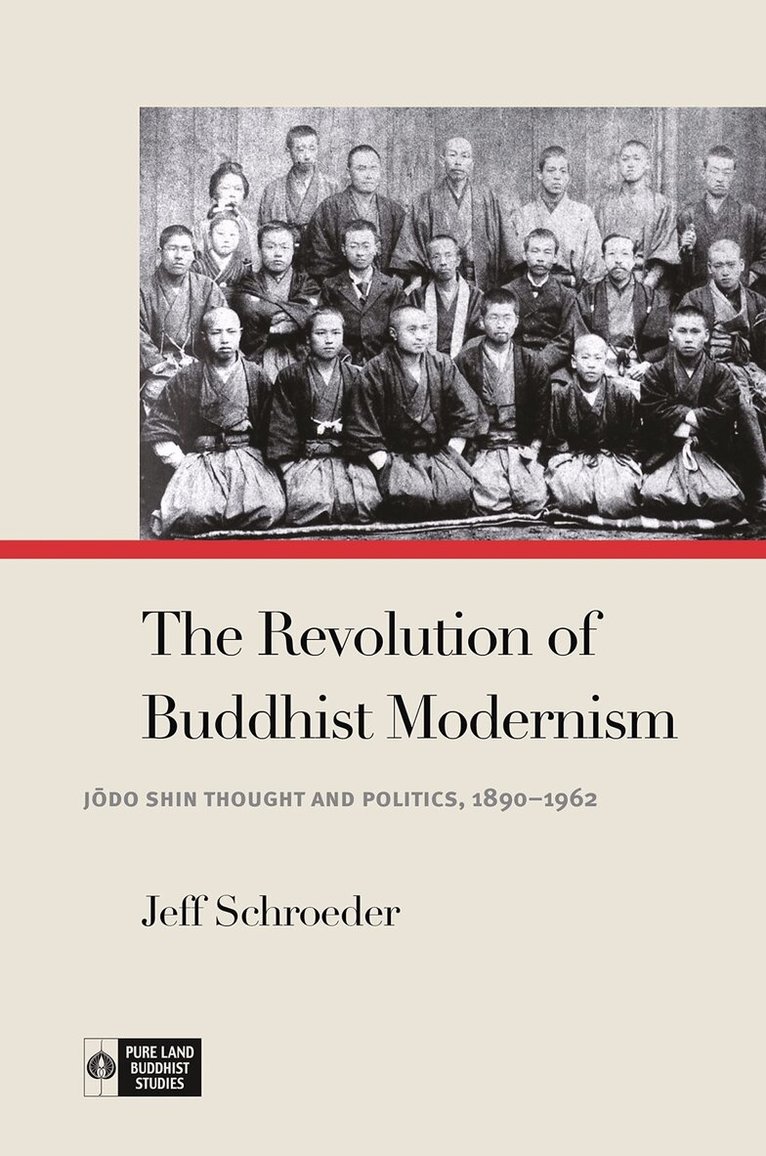
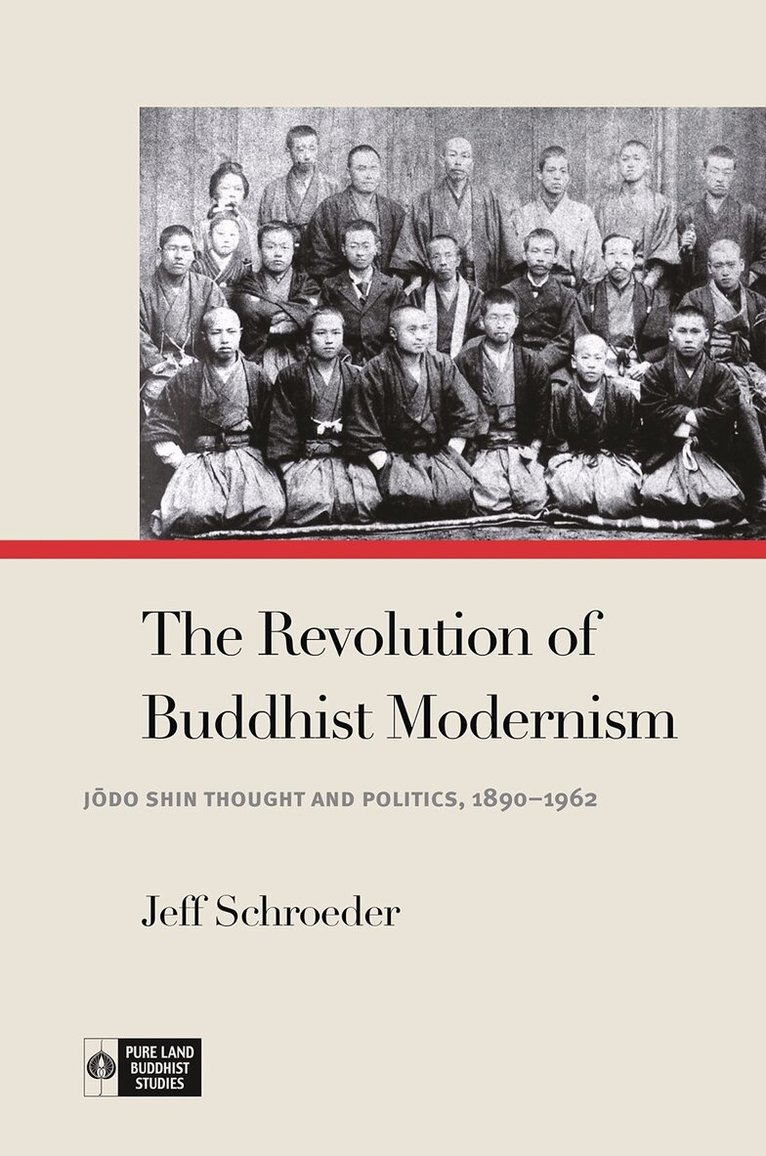
Reacting to nineteenth-century forces of colonialism and globalization, Buddhist reformers across Asia strove to modernize Buddhist teachings, practices, and institutions. "Buddhist modernism" was typically characterized by disbelief in the supernatural, rejection of ritual, deinstitutionalization, and egalitarianism. The Revolution of Buddhist Modernism provides an account of the upheaval that took place within the world of Japanese Jōdo Shin (True Pure Land) Buddhism when scholar-priest Kiyozawa Manshi (1863–1903) initiated modernist reforms. Kiyozawa and his disciples, especially Soga Ryōjin and Kaneko Daiei, reenvisioned Pure Land teachings as a path to awakening in the present world rather than rebirth in a faraway Pure Land after death. This doctrinal reinterpretation led to a range of revolutionary institutional reforms, including new experiential methods of Buddhist studies, democratization of sect institutions, and enhanced cooperation with Japan’s imperialist state.By combining intellectual history with institutional history, The Revolution of Buddhist Modernism reveals deep connections between Buddhist thought, Buddhist institutions, and national and global politics. It tracks the chaotic, fascinating history by which modernist Buddhist ideas came to be grounded in Buddhist institutions and authoritative for Buddhist communities, offering readers a compelling, ground-level view of Buddhist modernism—and traditionalism—in action.
309 kr
Skickas inom 7-10 vardagar
Reacting to nineteenth-century forces of colonialism and globalization, Buddhist reformers across Asia strove to modernize Buddhist teachings, practices, and institutions. "Buddhist modernism" was typically characterized by disbelief in the supernatural, rejection of ritual, deinstitutionalization, and egalitarianism. The Revolution of Buddhist Modernism provides an account of the upheaval that took place within the world of Japanese Jōdo Shin (True Pure Land) Buddhism when scholar-priest Kiyozawa Manshi (1863–1903) initiated modernist reforms. Kiyozawa and his disciples, especially Soga Ryōjin and Kaneko Daiei, reenvisioned Pure Land teachings as a path to awakening in the present world rather than rebirth in a faraway Pure Land after death. This doctrinal reinterpretation led to a range of revolutionary institutional reforms, including new experiential methods of Buddhist studies, democratization of sect institutions, and enhanced cooperation with Japan’s imperialist state.By combining intellectual history with institutional history, The Revolution of Buddhist Modernism reveals deep connections between Buddhist thought, Buddhist institutions, and national and global politics. It tracks the chaotic, fascinating history by which modernist Buddhist ideas came to be grounded in Buddhist institutions and authoritative for Buddhist communities, offering readers a compelling, ground-level view of Buddhist modernism—and traditionalism—in action.
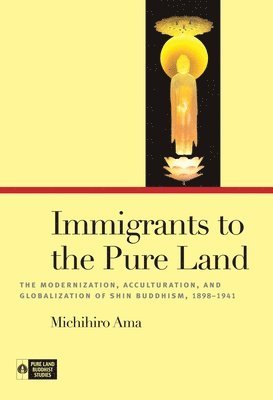
Immigrants to the Pure Land
The Modernization, Acculturation, and Globalization of Shin Buddhism, 1898-1941
Häftad, Engelska, 2023
283 kr
Skickas inom 7-10 vardagar
Religious acculturation is typically seen as a one-way process: The dominant religious culture imposes certain behavioral patterns, ethical standards, social values, and organizational and legal requirements onto the immigrant religious tradition. In this view, American society is the active partner in the relationship, while the newly introduced tradition is the passive recipient being changed. Michihiro Ama’s investigation of the early period of Jodo Shinshu in Hawai‘i and the United States sets a new standard for investigating the processes of religious acculturation and a radically new way of thinking about these processes.Most studies of American religious history are conceptually grounded in a European perspectival position, regarding the U.S. as a continuation of trends and historical events that begin in Europe. Only recently have scholars begun to shift their perspectival locus to Asia. Ama’s use of materials spans the Pacific as he draws on never-before-studied archival works in Japan as well as the U.S. More important, Ama locates immigrant Jodo Shinshu at the interface of two expansionist nations. At the end of the nineteenth and beginning of the twentieth centuries, both Japan and the U.S. were extending their realms of influence into the Pacific, where they came into contact—and eventually conflict—with one another. Jodo Shinshu in Hawai‘i and California was altered in relation to a changing Japan just as it was responding to changes in the U.S. Because Jodo Shinshu’s institutional history in the U.S. and the Pacific occurs at a contested interface, Ama defines its acculturation as a dual process of both "Japanization" and "Americanization." Immigrants to the Pure Land explores in detail the activities of individual Shin Buddhist ministers responsible for making specific decisions regarding the practice of Jodo Shinshu in local sanghas. By focusing so closely, Ama reveals the contestation of immigrant communities faced with discrimination and exploitation in their new homes and with changing messages from Japan. The strategies employed, whether accommodation to the dominant religious culture or assertion of identity, uncover the history of an American church in the making.
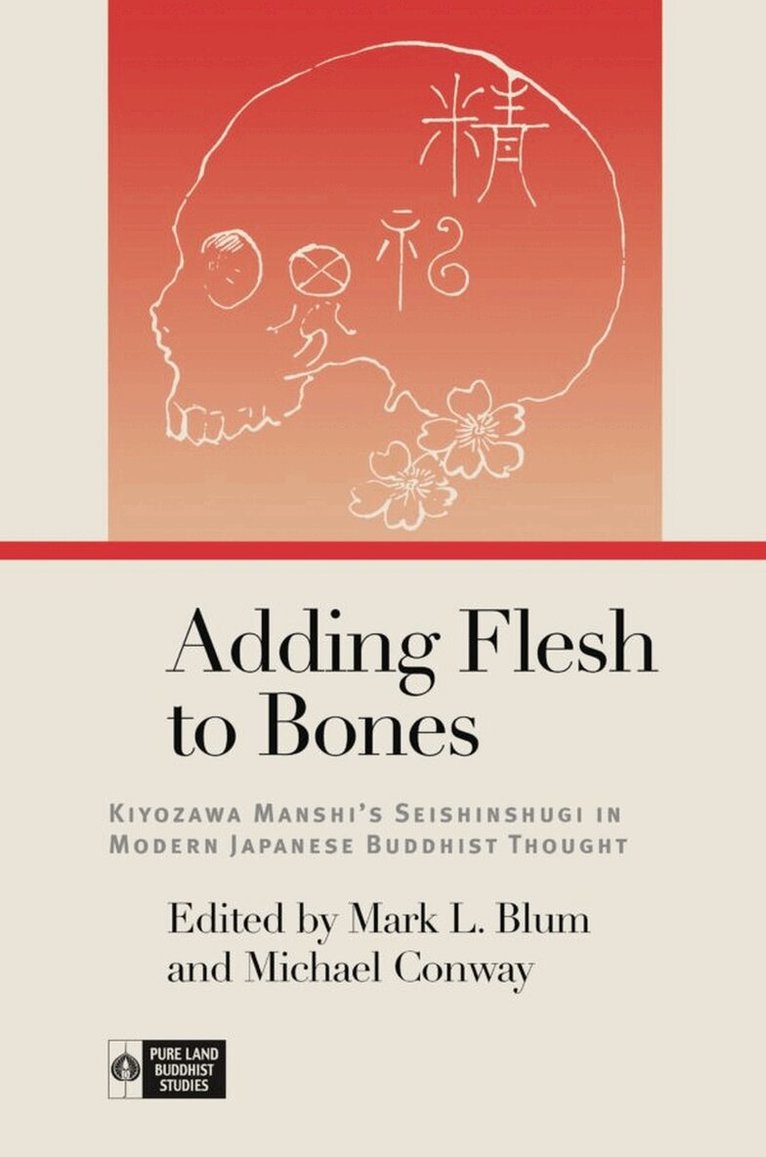
Adding Flesh to Bones
Kiyozawa Manshi’s Seishinshugi in Modern Japanese Buddhist Thought
Häftad, Engelska, 2023
362 kr
Skickas inom 7-10 vardagar
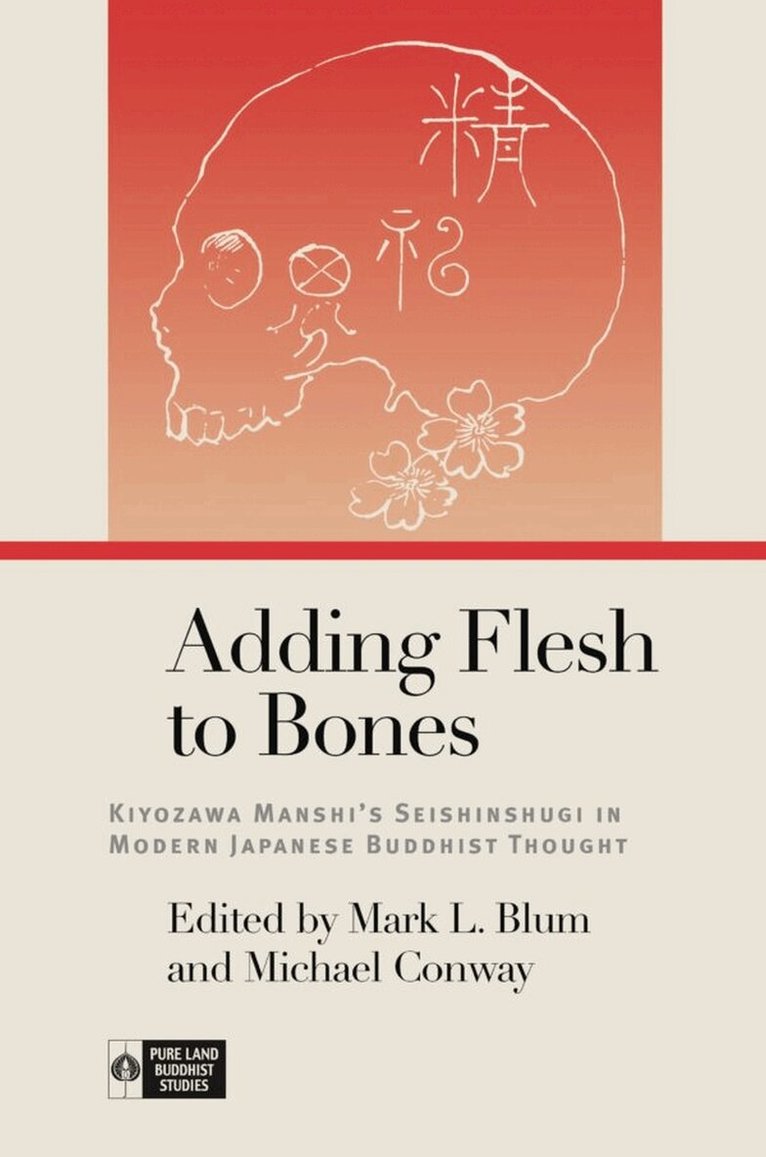
This collection of seventeen essays situates modern Shin Buddhist thinker Kiyozawa Manshi (1863–1903) and his new form of spirituality, Seishinshugi, in the broader context of Buddhism and religious thought in modern Japan. The work highlights several factors that led to the development of Kiyozawa’s ideas and demonstrates the broad influence that he and his disciples had, putting in relief both the events that led Kiyozawa to set forth his unique formulation of a modern Shin Buddhist religiosity in Seishinshugi and the ways in which those ideas became a force that shaped a large part of Japan’s religious landscape well past the middle of the twentieth century.The book is made up of historical studies that explore the significance of Seishinshugi from a variety of perspectives and chapters that attempt to introduce some of the original ideas of Seishinshugi thinkers and other modern Shin proponents such as Sasaki Gesshō (1875–1926) and Yasuda Rijin (1900–1982). The inclusion of several translations of recent Japanese scholarship on Kiyozawa and Seishinshugi provides a snapshot of the state of the field for Kiyozawa studies today in Japan.Several early chapters present issues that Kiyozawa addressed in his formulations of Seishinshugi. His relationship with Inoue Enryō (1858–1919) is discussed in depth, as is his understanding of the Tannishō and new research indicating that Seishinshugi might more closely represent the thought of Kiyozawa’s disciples than his own. This portion ends with a consideration of the reinvention of Kiyozawa’s historical image by his followers after his death. Later chapters bring together research into the specific ways in which Kiyozawa’s legacy shaped the Japanese religious and philosophical environment in the last century, including contributions on female spirituality as expressed in the Seishinshugi movement and the influence of Kiyozawa and Soga Ryōjin (1875–1971) on the Kyoto School and its implications. Other essays highlight approaches to finding meaning in Shin doctrines by Sasaki, Soga, and Yasuda, and how D. T. Suzuki, an Ōtani University colleague, fits into the movement as a whole.
283 kr
Skickas inom 7-10 vardagar
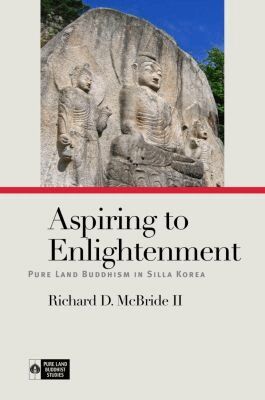
Centered on the practice of seeking rebirth in the Pure Land paradise Sukhāvatī, the Amitābha cult has been the dominant form of Buddhism in Korea since the middle of the Silla period (ca. 300–935). In Aspiring to Enlightenment, Richard McBride combines analyses of scriptural, exegetical, hagiographical, epigraphical, art historical, and literary materials to provide an episodic account of the cult in Silla times and its rise in an East Asian context through the mutually interconnected perspectives of doctrine and practice.McBride demonstrates that the Pure Land tradition emerging in Korea in the seventh and eighth centuries was vibrant and collaborative and that Silla monk-scholars actively participated in a shared, international Buddhist discourse. Monks such as the exegete par excellence Wŏnhyo and the Yogācāra proponent Kyŏnghŭng did not belong to a specific sect or school, but like their colleagues in China, they participated in a broadly inclusive doctrinal tradition. He examines scholarly debates surrounding the cults of Maitreya and Amitābha, the practice of buddhānusmṛti, the recollection of Amitābha, the "ten recollections" within the larger Mahāyāna context of the bodhisattva’s path of practice, the emerging Huayan intellectual tradition, and the influential interpretations of medieval Chinese Pure Land proponents Tanluan and Shandao. Finally, his work illuminates the legacy of the Silla Pure Land tradition, revealing how the writings of Silla monks continued to be of great value to Japanese monks for several centuries.With its fresh and comprehensive approach to the study of Pure Land Buddhism, Aspiring to Enlightenment is important for not only students and scholars of Korean history and religion and East Asian Buddhism, but also those interested in the complex relationship between doctrinal writings and devotional practice "on the ground.